
- Features of terry varieties of columbine
- Application in landscape design
- The most popular varieties: description and characteristics
- Nora Barlow
- Barlow Winky
- Barlow Pink
- Krista
- White
- Planting a plant in a garden plot
- Seeds
- Seedlings
- We create conditions for the growth and flowering of columbine
- Watering and fertilizing
- Caring for aquilegia after flowering
- Fighting diseases
- How does a flower reproduce?
- Potential difficulties in maintaining terry varieties
Both annual and perennial ornamental plants are planted to decorate gardens, homesteads, and parks. The double columbine has unusually shaped buds with a vibrant corolla. The flower grows in the same spot for several years. It grows as a bush, the height of which varies depending on the variety. It is used both as an element of landscape design and in floristry.
Features of terry varieties of columbine
A perennial plant of the Buttercup family, genus Columbine. The genus name comes from the spur-like nectar-collecting growth. It grows wild in the Caucasus, Crimea, and the Far East. It is winter-hardy and blooms in June and July.
Cultivated species grow up to 1 meter tall under favorable soil and climate conditions. Several thick, resilient stems rise from a robust rhizome, forming a shrub-like habit. The plant's decorative qualities include lacy-edged leaves and double flowers. The corolla ranges from 4 to 10 centimeters. The flowers are monochromatic, predominantly white, purple, pink, or two-tone.
Application in landscape design
Tall white, pink, and purple bushes harmonize with irises, poppies, and bellflowers in the landscape. Low-growing columbine is planted in rock gardens and in flowerbeds alongside carnations. Columbine plants of various varieties and colors, grown as a single bush, make a striking addition to any garden. The flowers look beautiful on the banks of artificial ponds and against a backdrop of coniferous plantings.

The most popular varieties: description and characteristics
Ornamental plants with long and abundant flowering or unusual corolla shapes and bright colors are especially popular among flower growers.
Nora Barlow
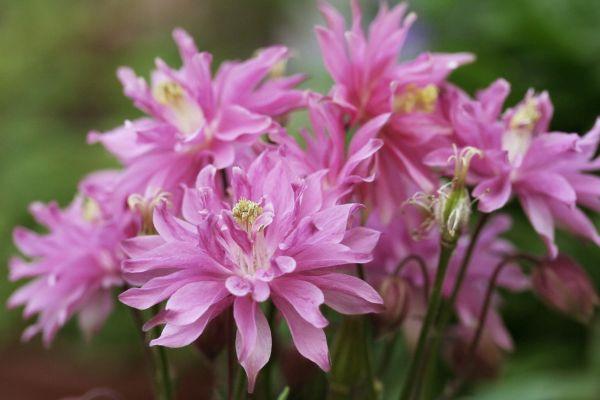
Aquilegia forms a spreading bush up to 70 centimeters high with large red-white and pink-white flowers.
Barlow Winky
A frost-hardy, low-growing variety. The bush grows 25-50 centimeters tall. The corollas come in a wide range of colors. The first columbine buds open in May, and flowering ends in August.
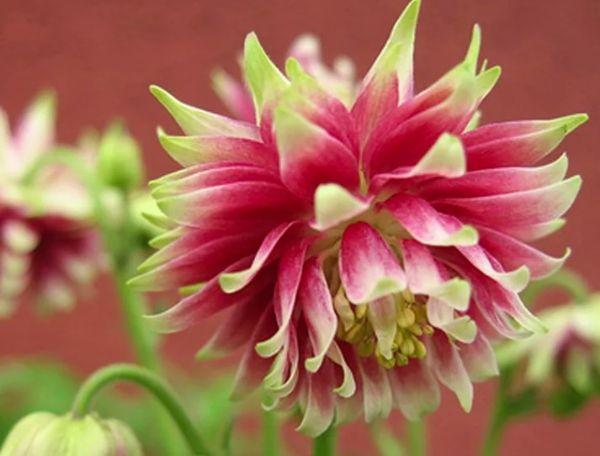
Barlow Pink
This tall columbine with bright red flowers prefers partial shade and moist soil. It blooms in June and July.
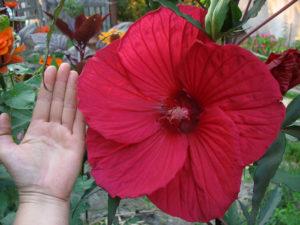
Krista
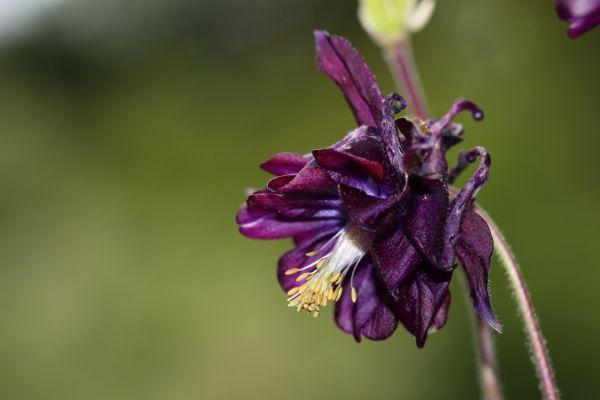
Aquilegia is distinguished by its flowers of a rich purple hue.
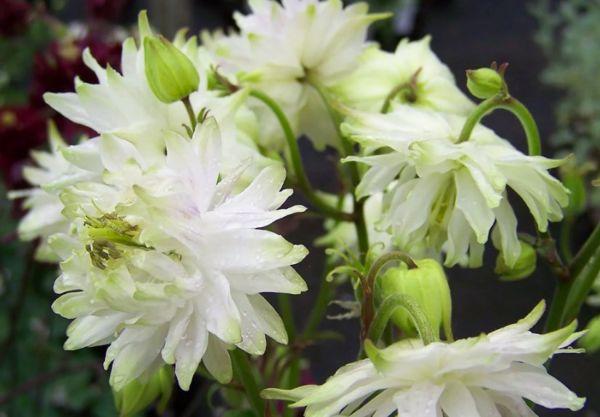
White
Aquilegia resembles the Krista variety in height, bush shape and flowers, except for the color of the corollas, which are painted white.
Planting a plant in a garden plot
Aquilegia is a plant that doesn't tolerate bright sunlight. If planted in a sunny spot without shade, it will die. In constant shade, aquilegia will bloom poorly or not at all. The ideal location for full light is indirect light, such as under a tree canopy.
The soil for planting should be loamy, moisture-retentive, and enriched with organic fertilizer. Prepare the flowerbed or garden bed in the fall: dig to a depth of 20 centimeters, remove weed roots, and add compost.
Seeds
To collect seeds, place a cloth bag over a wilting columbine flower to prevent the seeds from spilling onto the ground. Ripe seeds can be planted in the ground in the fall or wait until spring. Store the seeds in a cool, dry place.
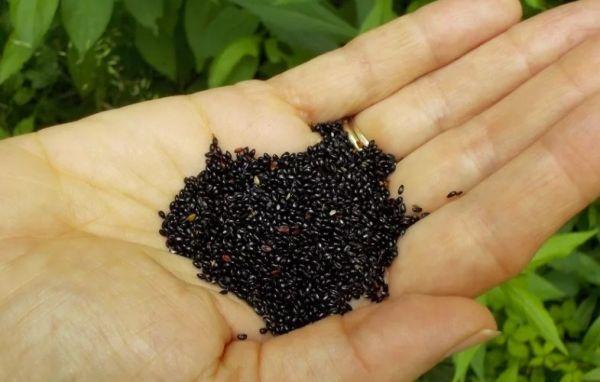
In early September, the seeds are sown in a prepared area. They are planted no more than 1.5 centimeters deep into the soil, after which they are watered generously. Ensure the soil does not dry out until the seedlings emerge. In spring, columbine is sown after the snow has melted, so that the soil has enough moisture for the entire period of seed germination.
Seedlings
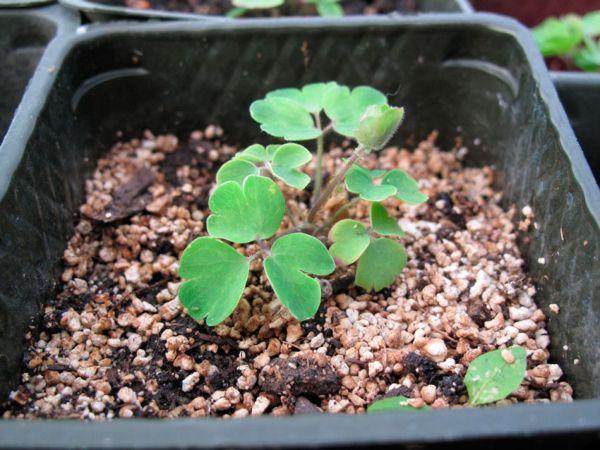
Aquilegia seeds are planted in peat pots in March. The soil is a mixture of peat and garden soil. The planting depth is 3 centimeters. The pots are covered with plastic wrap and watered with warm water every 2-3 days. After the seedlings emerge, the plastic wrap is removed, and the seedlings are grown in light partial shade at temperatures no lower than 15 degrees Celsius.
After 2-2.5 months, the seedlings are transplanted to their permanent location. By this time, the sprouts should have formed 4 true leaves. Leave at least 20 centimeters between plants.
We create conditions for the growth and flowering of columbine
After columbine plantings Watering, fertilizing, and soil loosening are required. A young plant blooms sparsely during the first season. Profuse flowering begins the following year.

Watering and fertilizing
This moisture-loving plant is watered depending on the amount of rainfall. During dry summers, it should be watered daily or the root zone should be mulched with peat. Avoid allowing the soil to dry out to the root system.
It's time to water when the top crust dries out. Spray the plant with water to ensure moisture reaches the columbine leaves. The next day, deep-loosen the soil, to a depth of 20 centimeters, removing weeds. If the soil settles, lightly hill the plant.
A week after the seedlings have rooted, apply the first fertilizer with diluted cow manure. During budding, repeat the fertilizer 3-4 more times with a complex mineral fertilizer or organic matter, combining it with watering or during rainy weather.
Caring for aquilegia after flowering
After flowering, perform sanitary and rejuvenating pruning. Weak and diseased shoots are removed. Healthy stems are shortened to the rosette of leaves. At the end of September, protect the root system from freezing by covering it with a layer of dry peat or shredded bark.
Take a look Also
Fighting diseases
Like all moisture-loving plants, columbine is susceptible to fungal infections.
Powdery mildew: symptoms of infection include the appearance of a white coating on the upper part of the leaf blade, spreading to the stems and flowers.
Favorable conditions for the development of the disease:
- relative air humidity – 60-80%;
- air temperature – 15-28 degrees;
- dry, windless weather;
- dense plantings.
The plaque eventually develops into a fluffy mold that covers the entire bush. The fungus feeds on plant sap, weakening the plant: growth slows, flowering ceases, and resistance to low temperatures decreases.
Powdery mildew prevention:
- spraying with antifungal agents before and after the leaves appear;
- using disinfected pruning tools;
- destruction of plant residues and weeds;
- thinning of plantings.
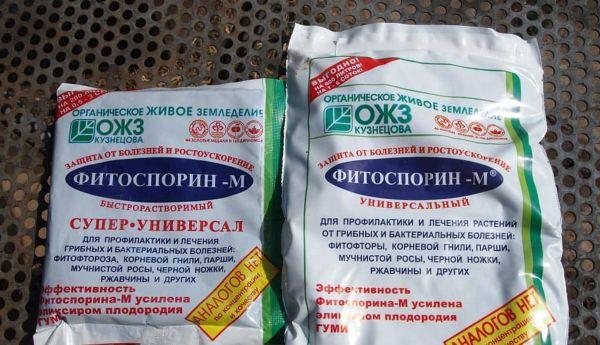
At the first signs of infection, spraying with whey or ash solution helps. At later stages, use Fitosporin.
Gray mold: a fungal infection carried by wind and insects. Mycelial growth occurs in high humidity and temperatures between 20-25°C (68-77°F). Gray spots appear on the stems and lower leaves. On shoots above the infected area, leaves and flowers die due to disrupted nutrient and water drainage.
The use of chemical and biological agents against gray mold is effective at the initial stage of infection, when isolated lesions are visible. In case of a more severe infection, the plant is destroyed, the soil is disinfected and nothing is planted in it for 3-4 years.
Mosaic disease is a viral infection and is dangerous to all plants. Symptoms of the disease include the appearance of white and yellow spots on green leaves. The virus destroys plastids, leading to reduced photosynthesis and the death of the columbine. Control measures include prevention or burning of the infected plant. Control of aphids, the main vector of the virus, also helps prevent infection.
Pests that affect columbine include butterfly caterpillars, aphids, and mites. To combat them, use a soap and soda solution, insecticides, and acaricides.
How does a flower reproduce?
In addition to seeds and seedlings, columbine is propagated by root division and cuttings. For root propagation, select a 4-5-year-old plant. Before the leaves appear, water the bush generously and remove it from the ground. Using a sharp, disinfected tool, separate a section of the root and stem, which should have at least three buds. Place the plant in a prepared hole, cover with soil, and moisten thoroughly.
Take a look Also
The time to start cuttings is April, before the leaves emerge. For cuttings, select last year's shoots, cutting them close to the root. Then, treat them with a growth stimulant and plant them in a prepared greenhouse. For better rooting, add peat and river sand to the soil.
The cuttings are planted 1-2 centimeters deep in the soil. The distance between the cuttings is 10-15 centimeters. Rooting and readiness for transplanting to a permanent location occurs in August.
Potential difficulties in maintaining terry varieties
A unique feature of columbine is its root system, which grows closer to the surface each year, increasing the risk of frost damage. The older the plant, the more carefully it needs to be prepared for winter.
Overhead watering can contribute to a fungal outbreak. Water flowers in the morning to allow the stems and leaves time to air out and dry. Avoid overusing nitrogen fertilizers, as too much can also promote powdery mildew.
Related posts:
 Planting and caring for columbine at home, the best varieties and growing rules
 How to prepare aquilegia for winter, whether to prune, and choosing a covering material
 The best grape varieties for growing in the Urals, planting and care rules in summer
 The best eggplant varieties for growing in a polycarbonate greenhouse: planting and care
 Methods for planting and propagating cherries at home
 Peach tree care and agricultural secrets, pest control
 Description and cultivation of the 15 best cherry plum varieties for the Moscow region, planting and care rules
 Carrot care guidelines for outdoor cultivation to ensure a good harvest