
- Characteristics and description of the Khozayushka variety
- History of origin
- Growing zones
- Bush
- Taste qualities of the root vegetable
- Productivity and scope of application of root crops
- Advantages and disadvantages of the variety
- Necessary conditions for growing
- How to plant a crop on a plot
- Landing time
- Preparing the site and planting material
- Scheme and depth of planting seedlings
- Proper care for potato plantings
- Weeding
- Watering
- Top dressing
- Hilling
- Diseases and pests: control and prevention
- Common scab
- Black scab
- Late blight
- Colorado beetle
- Harvesting and storage
- Vegetable growers' reviews of the Khozayushka variety
The Khozyayushka potato variety lives up to its description and gardener reviews. It is characterized by mid-season maturity, excellent flavor, and drought resistance. It is grown commercially and used to make French fries and chips.
Characteristics and description of the Khozayushka variety
The characteristics of the Khozayushki potato include the history of its origin, growing zones, description of the bushes and tubers, and yield.
History of origin
The Khozayushka variety was developed by Russian breeders at the Siberian Research Institute. The scientists crossed the Sante and Zarevo varieties. After testing in 2009, it was included in the Russian state register. Approval of the application took four years.
Growing zones
The Khozayushka variety is intended for cultivation in northern regions: West Siberia and East Siberia. The potato thrives in southern and temperate climates.
Bush
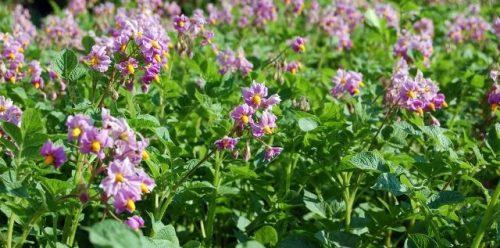
The potato forms tall bushes with dark green foliage. The leaves are large, spreading, and densely wavy. The flowering period is long, with red-violet flowers tipped with white.
Taste qualities of the root vegetable
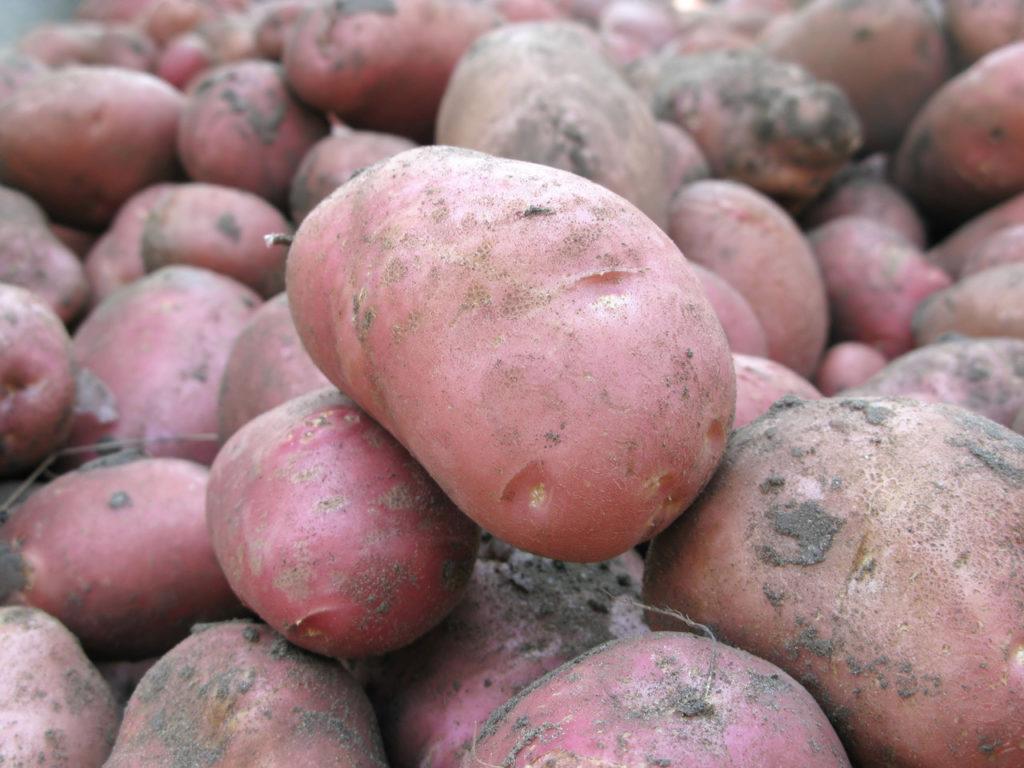
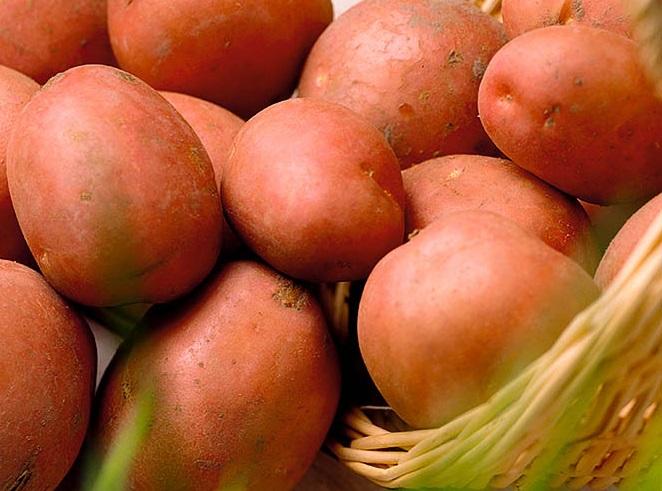
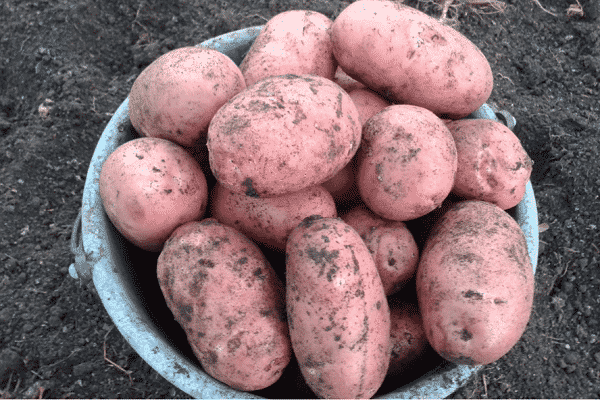
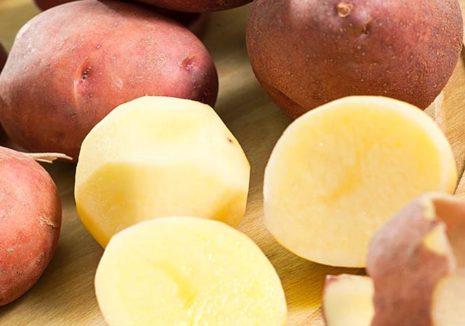
Taste testers rate the taste as excellent. The roots contain 13% starch and retain their shape when cooked. The tubers are covered in red skin, smooth, and even. They have numerous red eyes, 2-3 mm deep. The fruits are large, weighing between 100 and 200 g. The flesh is creamy and does not darken after peeling. The "Housewife" variety is considered a table variety.
Productivity and scope of application of root crops
Khozayushka's yield is average. One hectare of land yields 300 centners of crops. Ten to 12 tubers are harvested from each bush.
The maximum yield obtained under favorable growing conditions is 380 centners per hectare.
This variety is considered a table potato and is grown for both domestic consumption and commercial purposes. It is suitable for making chips and French fries, and can be fried, baked, and boiled.
Advantages and disadvantages of the variety
The Khozayushka potato has many advantages:
- Fruit ripening occurs 90–100 days after planting.
- Resistant to drought and Siberian climate.
- Resistance to potato cancer and nematode.
- Commercial appearance of tubers.
- Duration of harvest storage and transportability.
- High taste qualities.
- Low starch content.
Disadvantages include susceptibility to fungal infections.
Necessary conditions for growing
To obtain a good harvest, it is necessary to create certain growing conditions:
- The landing site should be well lit.
- Choose light, loose soil; in wet and heavy soils, create drainage.
- Crop rotation is observed.
- Preventive spraying is carried out against diseases and insects.
- Seed material is purchased from trusted sellers; the tubers must be whole, without black spots or cracks.
- On fertile soils the yield is higher.
- Potatoes prefer soil with moderate acidity.
How to plant a crop on a plot
To plant a crop, prepare the area and seed material in advance, and adhere to the planting pattern.
Landing time
Potatoes are planted when the soil warms to 10°C at a depth of 10 cm. In northern regions, this period occurs in late May. In the south, potatoes are planted in late April or early May, and in moderate climates, in mid-May.
Important! You can use the lunar calendar to estimate planting time.
Preparing the site and planting material
The planting site is prepared in the fall. The area is dug over, removing all weeds, roots, and stones. Organic fertilizers are added:
- manure;
- herbal infusions;
- chicken manure;
- compost;
- wood ash.
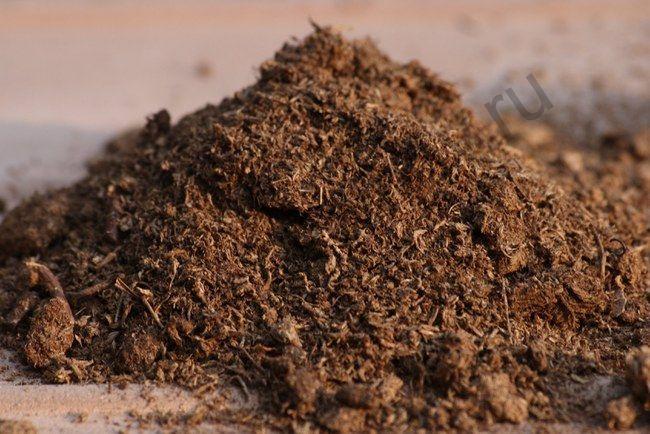
In the spring, the procedure is repeated, adding mineral complexes containing nitrogen, phosphorus, and potassium. Nitrogen improves the development of green potato mass, while phosphorus and potassium stimulate root development.
Before planting, it is recommended to soak the seeds in a solution of potassium permanganate; this improves the taste of the future fruits and disinfects the tubers.
Scheme and depth of planting seedlings
After preparing the plot, form the beds. The distance between them should be 50 cm. Dig holes 25-30 cm apart. In loose and airy soils, plant the tubers 15 cm deep, in light and moist soils 10 cm deep, and in moist and heavy soils 5 cm deep. After transplanting the seeds into the holes, they are buried, and the beds are leveled.
Proper care for potato plantings
The Khozayushka potato doesn't require much care. However, regular watering, fertilizing, and hilling improve the yield.
Take a look Also
Weeding
Weeding is carried out as weeds emerge. They deplete the soil by absorbing some of its minerals. They also slow down the development of roots and shrubs. Periodically, the soil is loosened to improve oxygenation.
Watering
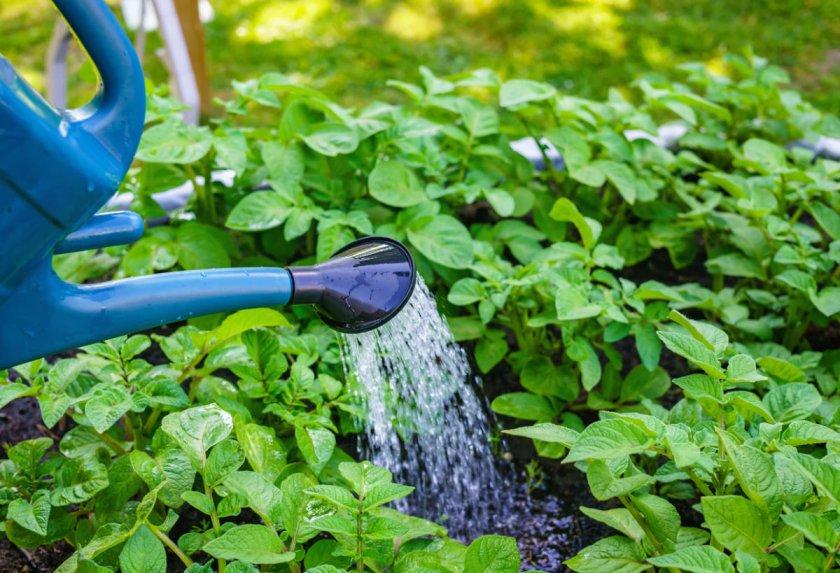
Potatoes are watered three times per season. The first time is when the plant reaches 20 cm in height, the second time during flowering, and the third time after flowering has finished. Three liters of settled water are used per plant.
Top dressing
Fertilizing is combined with watering. Mineral complexes containing nitrogen, phosphorus, and potassium are used. Potatoes are also fed with manure, which is evenly distributed throughout the beds. Fertilizers are applied both at the roots and foliarly. In the former case, dry or dissolved fertilizers are distributed around the roots of the plant. In the latter case, mineral complex solutions are used and sprayed onto the plant's leaves.
Important! Fertilize the crop only after watering, and not the other way around.
Hilling
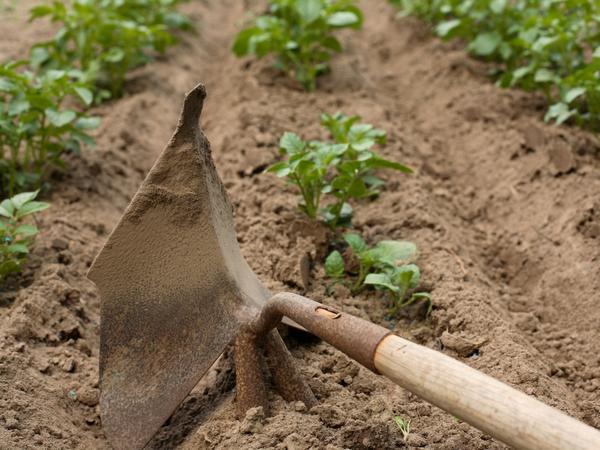
Hilling enhances root formation. It is done three times per season: the first time when the shoots reach 20 cm, the second time two weeks later, and the third three weeks later.
Diseases and pests: control and prevention
The housewife has strong immunity against potato cancer and nematodes. However, potatoes are susceptible to other diseases that must be addressed at the first sign of trouble.
Common scab
A fungal disease that affects the skin of tubers and stems. Small, brownish warts and bumps form. They impair the appearance of the tubers but do not affect their quality. Antifungal medications are used to control the disease.
Black scab
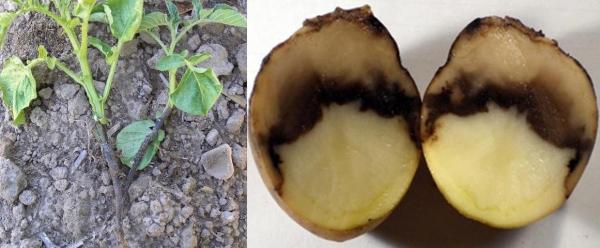
Microscopically, the fungus attacks potato tubers and stems. It forms small black bumps that impair the potato's appearance. It does not affect the quality of the fruit. Fungicides are used for prevention and control.
Late blight
The disease is caused by a microscopic fungus. Infestation begins on the lower leaves, which gradually dry out and turn black. In advanced stages, the plant wilts, and the fungus destroys the fruit. The disease quickly spreads to neighboring plants. For control and prevention, fungicides are used, with damaged areas first removed and destroyed.
Colorado beetle
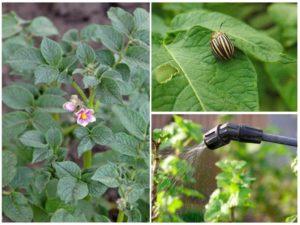
An insect that lays eggs on potato leaves. These hatch into larvae that feed on the shoots of the plant. They reproduce quickly and consume the green parts. Insecticides are used to control them. Spraying is done 2-3 times per season.
 Important! 20 days before potato harvest, stop all chemical treatments completely.
Harvesting and storage
After the growing season ends, the tops of the potato plants turn black and dry out. This occurs 90 to 100 days after planting the seeds. The potatoes are dug up with a shovel. The tubers are collected and transferred to a dark, ventilated area, where they are spread in an even layer on a mat on the floor. They are left to dry for 1 to 2 weeks.
The fruits are then packaged into fabric bags or breathable boxes and transferred to a cool, dark place at 4-5°C. The largest and healthiest roots are selected for planting. The Khozayushka variety has excellent shelf life; the roots will keep until the beginning of the following season.
Vegetable growers' reviews of the Khozayushka variety
Vladislav, 36 years old, Tyumen
I grew the Khozayushka potato for the first time this year. I planted it in late May. This variety has many advantages: it stores well, produces large fruits, tolerates drought well, and is undemanding in terms of soil. Our plants haven't had any diseases, having been treated with pesticides beforehand.
Alexandra, 45 years old, Vladivostok
The nursery recommended buying Khozayushka potato seeds. I picked a few tubers and boiled some to try them. They tasted sweet and held their shape. While growing, the plants were attacked by late blight, which I fought all season long. It didn't affect the quality of the harvest. We dug up about 10 potatoes from each plant.
Antonina, 67 years old, Vladimir
The Khozayushka potato is one of my favorite varieties. I've been growing it for five years in a row. I really like its flavor. It makes delicious dishes, and the fruit doesn't fall apart when cooked, retaining its shape. Growing Khozayushka potatoes doesn't require much care. I treat them for bugs and diseases at the beginning of the season, and I weed and water them regularly.
Related posts:
 Description of the best potato varieties of domestic and foreign selection
 Description and characteristics of the Rodrigo potato variety, cultivation and care
 Description and treatment of potato diseases, methods of control using folk and chemical means
 Why potatoes aren't growing well in the garden, and what to do to ensure a bountiful harvest
 Description and characteristics of the Krasavchik potato variety, planting and care
 Description and characteristics of the Gulliver potato variety, planting and care
 Description and characteristics of the Bellarosa potato variety, planting and care
 Description of the Sorkodnevka potato variety, planting and care, when to dig