
- Botanical characteristics of plants
- The most beautiful varieties
- Basic rules of cultivation
- Requirements for soil composition and planting site
- What flowers go well with gladioli in a flowerbed?
- When to plant: optimal timing
- Preparing for landing
- Direct landing
- Flower care
- Watering, weeding
- Fertilizer
- Tying up
- Cut flowers
- Protection and treatment against pests and diseases
- When to dig up gladioli
- Features of preparation and storage of bulbs
- Difficulties and problems in growing gladioli
Perennial flowers that grow in garden beds most often have wild relatives. For example, the beautiful gladiolus is native to the tropics and subtropics of Africa, Asia, and Southern Europe. In Rus', the plant is called "gladiolus" for its sharp leaves. This plant is popular with gardeners because it is easy to plant and care for in open ground. Different varieties of this flower can be found throughout the globe, except in northern regions.
Botanical characteristics of plants
Perennial flowers belong to the Iris family. They have:
- corm with roots and buds;
- the stem is straight, up to 1.5 meters high;
- sword-shaped and lanceolate leaves, encircling the stem;
- flowers are funnel-shaped, bisexual.
An annual corm covered with scales acquires a replacement bulb, roots and numerous buds at the end of the growing season.
Flowers are arranged in one or two rows on the stem. On the spike, the inflorescences are either closely spaced or closely packed. The flower structure can be either inverted or straight.
The most beautiful varieties
Breeders enjoy crossing different varieties of the plant to create new hybrids. Gladioli are divided into several groups based on flower size and bloom time. Large-flowered gladioli reach a height of a meter or more, with triangular flowers up to 18 centimeters in diameter. Primrose-shaped and butterfly-shaped gladioli have shorter stems but differ in inflorescence shape. Flower size and petal color vary among different gladioli varieties:
- The Snow White variety is renowned for its large flowers, with up to 20 buds forming on a stem. The plant is used for bouquets.
- It's no coincidence that the "Tsar's Gift" was so named. The petals, ruffled at the edges, are white with pink strokes in the center. The inflorescences are tightly packed on the spike.
- The Green Cockatoo hybrid is renowned for its delicate petals. A carrot-colored spot is visible against the green background.
- The Babie Leto variety has ruffled yellowish petals. The red spots at the base make this gladiolus striking. It's a plant resistant to disease and low temperatures.
- The beautiful gladiolus 'Sokolniki' is distinguished by its orange color. Up to 12 buds open simultaneously on a tall stem.
- Ballet Star stands out with its deeply ruffled petals of a delicate salmon color. This variety opens buds early, with 10 at a time.
- Gladiolus Love Me Love has double petals of a bright coral color.
- The flowers of the Transfiguration hybrid are lilac-pink. The color becomes lighter inside the funnel. Purple stamens adorn the inflorescences.
- One of the best cut flower varieties is Robin Hood. Its petals are double, velvety, and dark red.
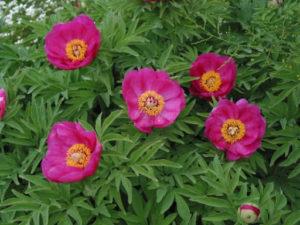

The emergence of new varieties continues, allowing gardeners to decorate their gardens with brightly blooming gladioli ears.
Basic rules of cultivation
Before planting gladioli in your garden, you need to decide on a location where they will thrive. The appearance of a flowerbed depends on the color combinations within it. Properly placed gladioli will make your garden bright, colorful, and harmonious.
Requirements for soil composition and planting site
For planting perennials, use areas of the garden where:
- a flat area, without hummocks or lowlands;
- enough sunlight;
- there is protection from cold winds;
- Before this, dahlias, marigolds, and strawberries grew.

Avoid allowing water to stagnate in the soil, otherwise the gladioli tubers will rot. It's not recommended to fertilize the soil with manure if you plan to plant bulbous plants.The soil structure for flowers should be loose, with a pH of 6.5 to 6.8. Alkaline soil will cause leaves to turn yellow, while high acidity will cause root rot.
What flowers go well with gladioli in a flowerbed?
Slender gladioli with their vibrant blooms are indispensable in landscape design. They can be planted together, combining varieties by color. They look good with low-growing annuals. However, care must be taken when choosing the right color for the buds. Avoid mixing plants with small and large flowers. Conifers, barberry bushes, and spirea placed in the background enhance the beauty of gladioli. Asters, phlox, and peonies make excellent companions for bulbous perennials. Early-blooming gladioli are planted in flowerbeds with tulips and daffodils.
When to plant: optimal timing
Gladiolus bulbs are kept in a basement over the winter and planted in the spring. Preparation for planting begins in April. They are planted when the soil, 10 centimeters deep, has warmed to 8°C (46°F). Gladiolus bulbs are heat-loving and do not tolerate low temperatures. If the soil has not warmed up enough, the newly planted plants may not germinate for a long time, which will result in the death of the bulbs.
In the south, flowers can be planted in April. In the Urals, planting time begins in May. In Siberia, the soil takes longer to warm up. Therefore, the planting period for gladioli falls in mid- to late May.
Preparing for landing
It's best to prepare the area for gladioli in the fall. Dig the soil deeply, incorporating compost or humus. Then, dilute the soil with sand if it's heavy, or clay if it's light. In the spring, dig the flowerbed again and add phosphate and potassium fertilizers.
Be sure to level the soil, breaking up any clods. If planting in low-lying areas, a drainage layer is necessary.
The bulbs are inspected before planting. They should be smooth, with shiny scales, a convex base, and roots. By the time of planting, a sprout will emerge from the bulb. If there are several sprouts, the strongest one is left and the others are broken off. The wound is sprinkled with crushed charcoal. The planting material is treated by soaking the bulbs in a solution:
- potassium permanganate;
- drug "Fundazol";
- growth stimulator "Epin" if sprouts do not appear.
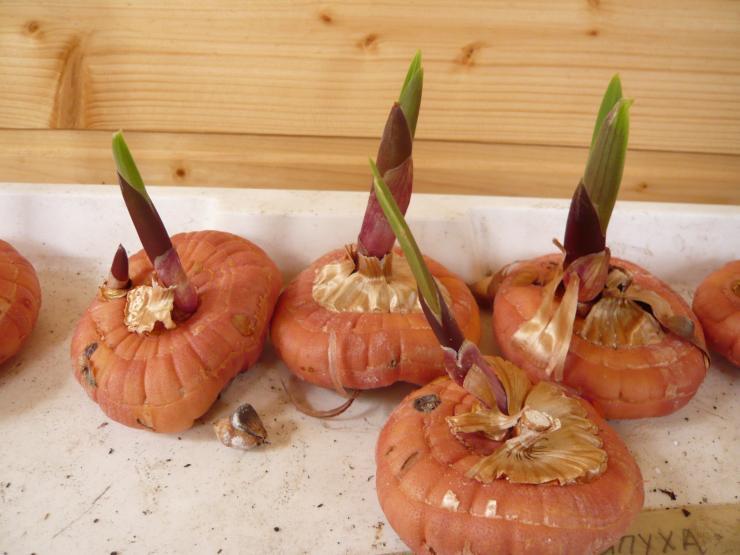
Before planting, the material is washed with water and dried.
Direct landing
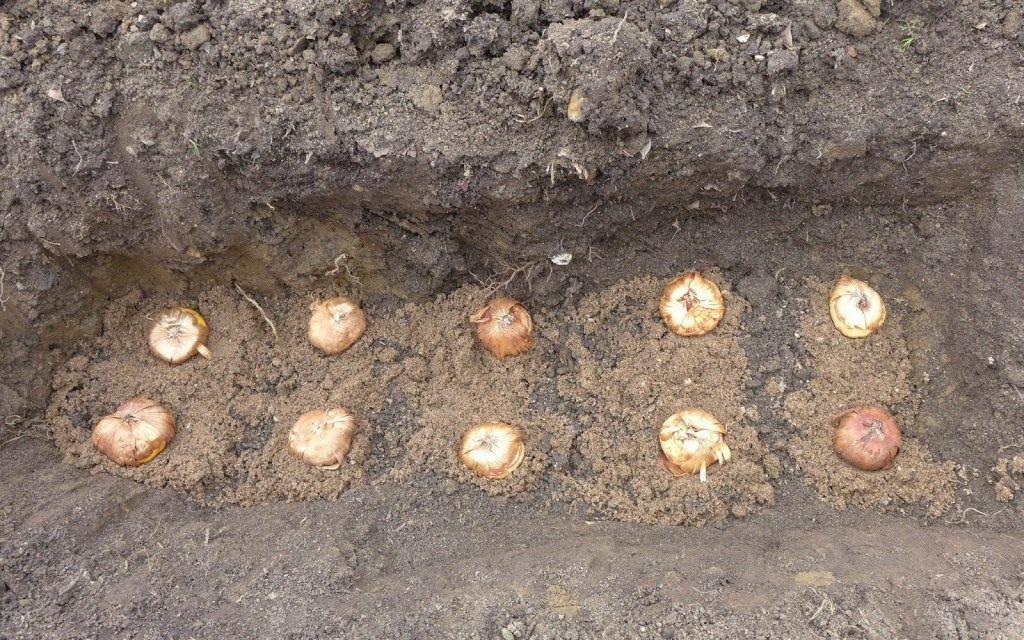
Gladiolus growth depends on the correct bulb depth. If the bulbs are planted too shallow, the stems will fall over. If planted too deep, the flowers will become diseased. In heavy soils, a planting depth of 7 centimeters is recommended, while in loose loamy soils, a planting depth of 8-10 centimeters is recommended.
Gladioli are placed in rows at a distance of 7-10 centimeters from each other.
Before planting bulbous crops, the soil is well moistened. The tubers are placed in the holes and covered with soil.
Flower care
Caring for ornamental perennials isn't difficult. Just water and feed them regularly. Stake the stems to prevent them from breaking.
Watering, weeding
Gladioli's moisture-loving nature requires careful attention to soil conditions. If the topsoil dries out, watering is necessary. Apply up to 10-12 liters of water per square meter of planting. Water at the roots or in furrows. Avoid allowing water to drip onto the leaves.
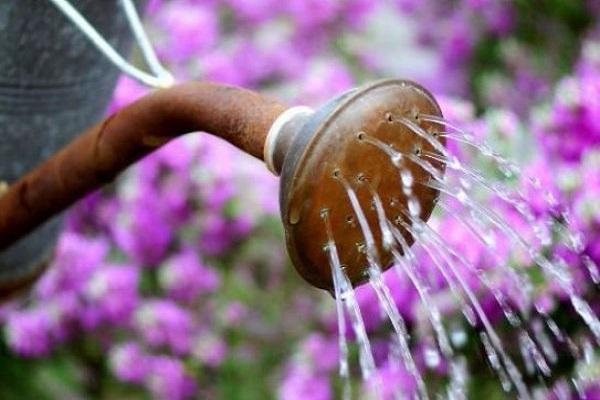
Watering frequency is once a week. In August, reduce the frequency of watering as the gladioli stop blooming. After each watering, loosen the soil. Weeds are pulled three times per season, keeping the flowerbed clean. This will help protect the plants from diseases and pests.
Fertilizer
Fertilizers are added to the flowerbed gradually:
- When 2-3 leaves appear, nitrogen fertilizer is needed. Apply either ammonium nitrate or ammonium sulfate. 25 grams of granules per square meter is sufficient.
- Gladioli need potassium and phosphorus during the formation of their sixth leaf. To 20 grams of ammonium sulfate, add the same amount of superphosphate and potassium sulfate.
- The budding period requires the addition of 30-40 grams of superphosphate, and 15-20 grams of potassium fertilizers.
Gladioli are fertilized once every 20 days during the growing season. It is recommended to spray the plants with a solution of boric acid or copper sulfate, diluting 0.15 grams of the substance in a liter of water.
Tying up
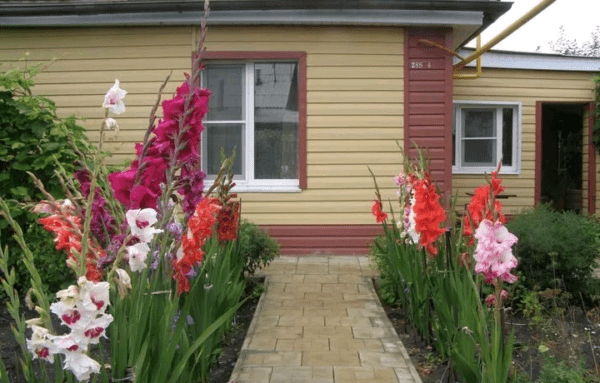
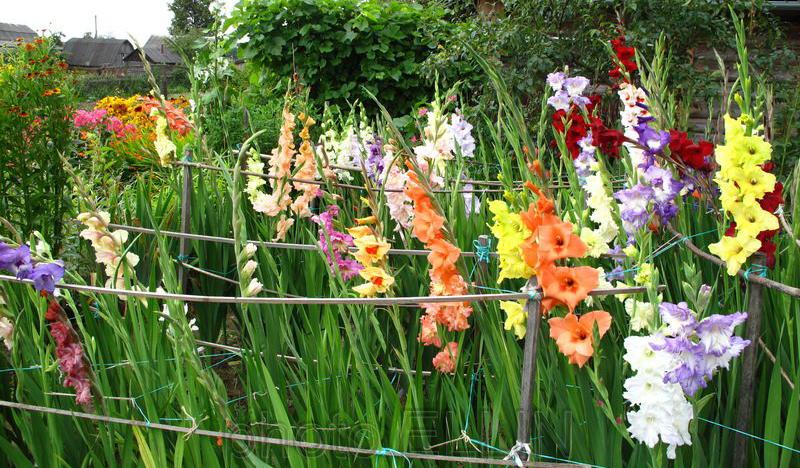
Tall gladioli are tied to stakes to prevent the stems from breaking under the weight of the blooming flower. Twine is used for tying.
Cut flowers
Gladioli must be cut correctly:
- The stem is cut with a sharp knife.
- There should be a remnant of the flower stalk left on the stem between the leaves.
- The plant's development will continue when 4-5 buds are left.
- The procedure is carried out early in the morning.
Gladioli will last up to 15 days in a bouquet. The buds will open faster if you add a piece of quicklime or half a teaspoon of ammonia to the water.

Protection and treatment against pests and diseases
Gladiolus hybrids are most often susceptible to fungal diseases. Fusarium wilt is a common affliction. The infection attacks dense plantings during wet summers. The leaves turn yellow, and reddish-brown spots can be found on the bulbs. Affected plants are dug up, and the soil is treated with "Tiazon," a mixture of equal parts sand.
In acidic soils and damp, cold weather, signs of sclerotinia are visible: drying of leaf bases and the appearance of yellowish spots on tubers. To prevent the disease, avoid fertilizing the area with fresh manure.
Prevention of fungal diseases consists of treating the bulbs with a solution of Fundazol before planting.
The most common pests in flowerbeds are thrips. They weaken the plants by feeding on their sap. Thrips carry viral infections, from which gladioli cannot be saved. It is necessary to spray flower beds with insecticides three times per season. Click beetle larvae, also known as wireworms, eat the inside of the bulbs of cultivated plants. Garden mites weaken plants by feeding on the flesh of the tubers. Pest attacks can be prevented by following crop rotation rules. Gladioli should not be planted near potatoes, carrots, or after other bulbous crops. Before storing, the tubers should be treated with insecticides.

When to dig up gladioli
Gladiolus bulbs should not be left in the ground over the winter. Even in regions with mild winters, the plants need to be dug up. To do this, cut the stems, dig under them, and pull out the bulbs. They need to be dried and cleared of soil. The timing of digging is determined by the air temperature and the end of the plants' growing season. Don't wait until consistent frosts begin, as this can damage the planting material. Harvesting the tubers is essential in mid-September.
Features of preparation and storage of bulbs
The dug up bulbs begin to be prepared for winter:
- cutting the roots;
- separating the children;
- rejecting damaged ones;
- rinsing in a solution of potassium permanganate;
- drying in a ventilated area.
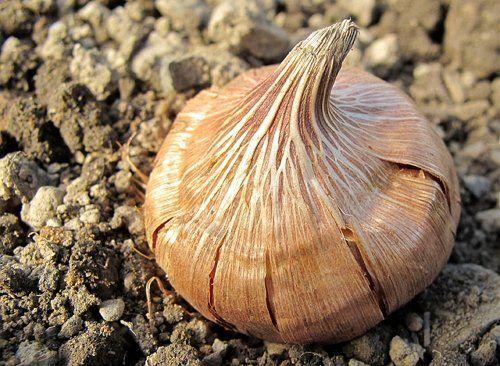
Place the prepared planting material in boxes or crates. Place the containers in a basement or cellar. The storage temperature should be around 5°C (41°F), and the humidity should be 70%. You can also store the corms in a cupboard until spring.
Difficulties and problems in growing gladioli
Experienced gardeners rarely encounter problems growing gladioli. Beginners can avoid difficulties if:
- prepare a flower bed for planting flowers in advance;
- do not plant gladioli in the same place every 2 years;
- sow green manure to fertilize the soil under flowers;
- Before planting, clean the bulbs and shoots from scales;
- plant babies separately from adult plants;
- protect plants from diseases and pests.
You can add to your collection every year. varieties of gladioli on your plot. Careful and competent care of this ornamental plant will help avoid difficulties in growing it.
Related posts:
 Description and characteristics of wild and cultivated varieties of gladioli
 When to dig up gladioli for the winter, timing and rules for storing bulbs
 How to care for gladioli after flowering, pruning and fertilizing, and storing bulbs
 Reasons why gladioli don't bloom, planting mistakes, and pest control, recommendations
 Description of the Byzantine gladiolus, planting and care for the variety in open ground
 How to propagate gladioli by seeds, cuttings, and dividing bulbs
 Why gladioli change color and how to maintain their color
 Description of Japanese gladiolus varieties, planting and care in open ground