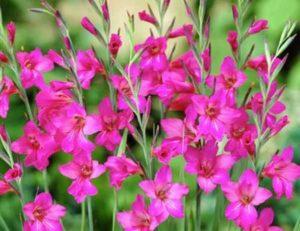
The unusual appearance of gladioli attracts many gardeners. To ensure high-quality and long-lasting blooms, it's important not only to follow the rules and timing of planting the bulbs but also to pay attention to post-bloom care. Only with proper planting material will they produce strong shoots with numerous buds the following year.
Signs that it's time to prune gladioli
When gladioli finish blooming, they become untidy, giving the impression that the garden hasn't been properly maintained. The plant's stems should be pruned. This procedure helps maintain the health of the planting material, ensures the tuber absorbs nutrients, and keeps the shoots in good shape.
It's easy to tell when gladioli are ready for pruning. Once flowering has finished, the stem can be removed. Experts advise against waiting until all the flowers have completely faded. At this point, the plant is forming seeds and expending the nutrients needed by the tuber to produce them.
Caring for gladioli after flowering: basic rules
The main goal of caring for gladioli after flowering is to prepare them for winter and maintain the bulbs' quality. To do this, you need to:
- Prune flower stalks in a timely and correct manner.
- Fertilize the plants.
- Don't miss the deadline for digging up the bulbs.
- Prepare tubers for winter storage.
- Cultivate the soil for spring planting.
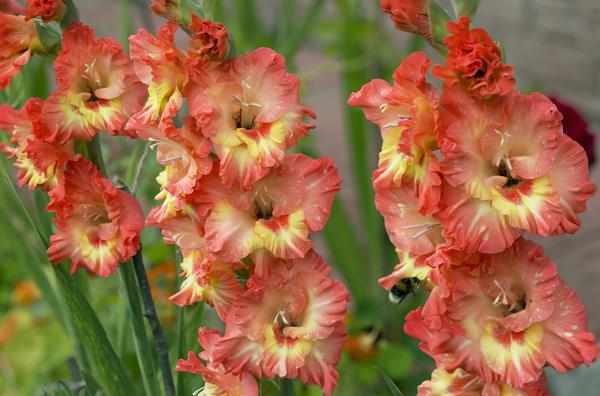
Pruning gladioli
When cutting flower stalks for a bouquet or preparing bulbs for winter, it's important to follow the same rules:
- for cutting, use a sharp knife or pruning shears, the blades of which should first be treated with disinfectants;
- the best time is evening, since the coolness at night promotes faster healing of the wound formed on the stem;
- the length of the remaining stump should be 4-5 cm;
- The leaves are cut off, leaving a part of the blades 20 cm long if these are large-flowered varieties, and 10 cm for miniature ones.
How to care for plants after cutting the flower stalk
After cutting the flower stalks, gardeners should take a number of steps to ensure the bulbs are fully ripened and ready for storage. The bulbs will need nutrients, which will accumulate exclusively within them after pruning. To achieve this, it is recommended to fertilize the bulbs and treat them with chemicals to protect against pests and diseases.
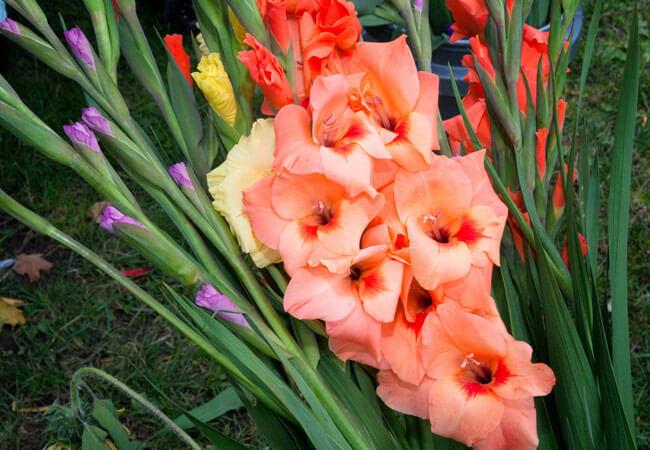
Top dressing
In autumn, gladioli are watered very rarely. Irrigation is only necessary if the air temperature is high and the soil is dry. Warm, settled water is used for watering, at a rate of 10-15 liters per square meter. Regardless of weather conditions, watering is stopped in mid-September, and the plants are prepared for winter.
Simultaneously with irrigation in the first ten days of September, after cutting the flower stalks, the bulbs are fertilized twice every two weeks.
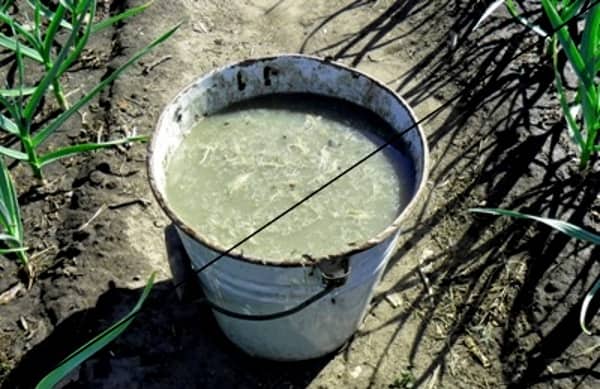
To do this, dissolve 5 grams of potassium permanganate in a bucket of water and water the plants. The solution contains manganese and potassium, which are essential for saturating the tubers with beneficial microelements. This fertilizer also serves as a disinfectant. As a result, the gladioli's resistance to disease and adverse weather conditions is significantly increased.
Experts also recommend another fertilizer: mix 200 grams of wood ash with 1 tablespoon of superphosphate and dissolve in 1 bucket of warm water. Water the gladioli with the resulting mixture after cutting the flower stalks.
Soil cultivation
As a preventative measure, the soil is cultivated by removing all weeds and digging. If the soil requires deacidification, sand or peat can be added. The same effect can be achieved by adding lime or dolomite flour. Humus or compost can be added to sandy soil, but fresh manure should be avoided, as it often spreads fungal diseases. Phosphorus and potassium fertilizers applied in the fall promote rapid and high-quality development of gladioli in the spring. To disinfect the soil, it is treated with a 2% copper sulfate solution.

How and when to dig up bulbs?
The safety of the bulbs and their flowering in the following season depend on the timing of their digging. If this is done too early, they won't be able to ripen, gain strength, and won't sprout or bloom in the spring. Delaying the process can lead to freezing or even death of the tubers.
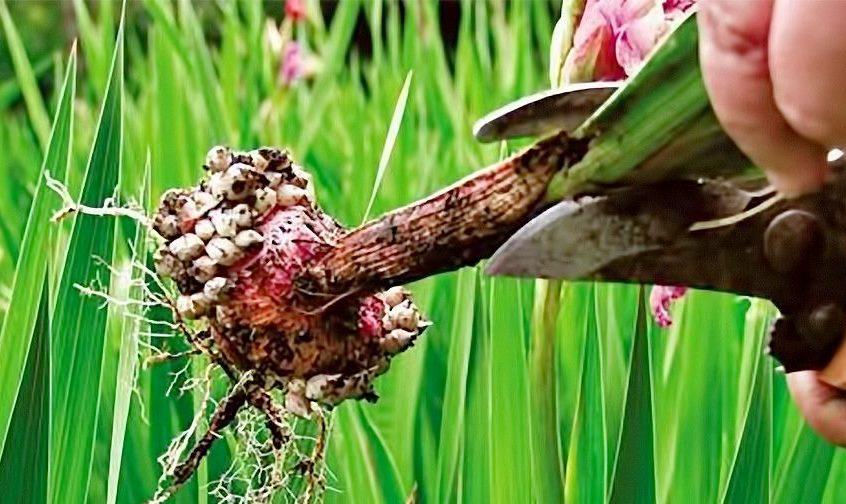
The ideal time for digging is when the remaining above-ground portion of the plant turns yellow and dies—gladioli have stopped growing and producing chlorophyll. Most often, the bulbs are dug up 40-50 days after flowering.
The early varieties are taken out of the ground first, then the late ones, and the last ones are the bulbs grown from the bulblets.
You'll need a pitchfork, a piece of tarpaulin or plastic, and a knife. Follow these steps:
- A pitchfork is stuck into the soil at a distance of 20 cm from the gladiolus stem and the bulb is placed on a tarpaulin together with a lump of earth.
- Wait until the soil dries.
- The tubers and shoots are removed from the soil.
- The roots are cut off with a sharp knife.
- Damaged bulbs and those showing signs of disease are discarded and then disposed of.
- Healthy ones are thoroughly washed, freed from soil, and soaked in Fundazol (0.1%).
- The tubers are dried in the open air for 3 days.
- Place in boxes and store at a temperature of 20-25 ⁰C until spring.
If storage rules are followed, healthy planting material will become a true decoration for your flowerbed and the entire garden plot next season.
Related posts:
 Planting and caring for gladioli in open ground, growing and the best varieties
 When to dig up gladioli for the winter, timing and rules for storing bulbs
 Description and characteristics of wild and cultivated varieties of gladioli
 Description of shallot varieties, cultivation and care, when to harvest
 Reasons why gladioli don't bloom, planting mistakes, and pest control, recommendations
 Description of the best varieties of onions, planting and care in open ground
 Why gladioli change color and how to maintain their color
 Description of the Byzantine gladiolus, planting and care for the variety in open ground