
- Delphinium: Description and characteristics of the plant
- The most popular varieties and types
- Large-flowered
- Naked-stemmed
- Belladonna
- Pacific
- Elatum
- Pink Punch
- Yellow Pearl
- New Zealand giant
- Growing seedlings from seeds
- Selection and preparation of seed material
- Timing and rules for sowing
- Organizing care for seedlings
- Transplanting and caring for delphinium in open ground
- Site selection and preparation
- Transfer
- Watering and fertilizing
- Loosening the soil
- Trimming
- Stem support
- Protection from insects and diseases
- Ramularia leaf spot
- Powdery mildew
- Ring spot
- Black bacterial spot
- Features of flower reproduction
- By dividing the bush
- Cuttings
- Seed collection
Perennial delphiniums began to be cultivated in the 19th century. They emerged thanks to the efforts of breeders who crossed large-flowered and tall varieties. There are two theories about the origin of this flower's name. One relates to the shape of the inflorescence, which resembles a dolphin's head when unopened. The other, geographical, is believed to derive from the Greek city of Delphi, where this plant was widely grown. To decorate your garden with this flower, it's important to understand its growing and care requirements.
Delphinium: Description and characteristics of the plant
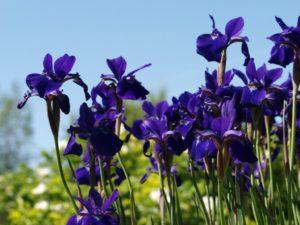
Delphinium is a herbaceous plant in the Ranunculaceae family. Depending on the species and cultivar, the plant grows from 40 cm to 2 meters in height. The flowers form pyramidal inflorescences and are colored white, light blue, blue, and purple. A distinctive feature of this plant is the sharp spur at the top of the flower, which ranges in height from 5 to 45 mm.
In southern regions, delphiniums begin blooming in late spring or early summer, with reappearance in autumn. In temperate climates, this period shifts by two weeks. Gardeners consider this plant's high winter hardiness an advantage; it can withstand temperatures down to -30°C (-30°F), making it suitable for cultivation in temperate and northern climates. However, thaws are harmful to delphiniums, as their root system is close to the soil surface. The rhizome is taproot-like, with numerous lateral shoots extending from it.
The most popular varieties and types
There are about 300 species of perennial delphiniums, but not all of them are popular among Russian gardeners. Among the most common are the following varieties.
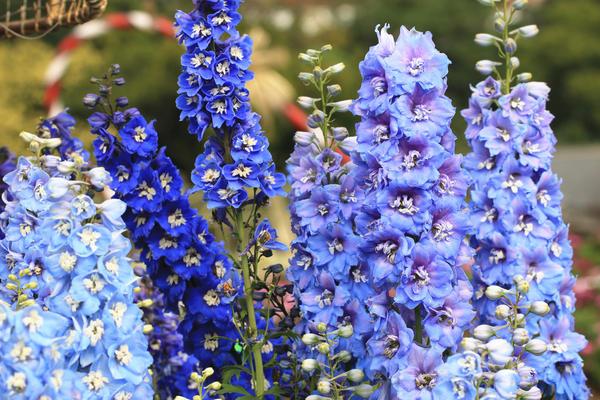
Large-flowered
An annual plant, its height varies from 50 to 80 cm. Large-flowered delphiniums have upright, branched stems with light pubescence. The leaves are narrow and trifoliate. This delphinium blooms with white, blue, or pink buds, collected in clusters and measuring about 4 cm in diameter. This blooming period varies depending on the growing region, from late spring to late summer.
Naked-stemmed
This delphinium's natural habitat is the highlands of California. Its maximum height does not exceed 1 meter. The salmon-colored flowers, with a yellow center and a diameter of 3.5 cm, form loose clusters. Specimens with bright red or orange flowers are also found in garden plots. The flowering period is June-July. However, it is important to remember that this variety is heat-loving and therefore not suitable for growing in northern regions.
Belladonna
A cross between a large-flowered delphinium and a tall delphinium resulted in a new variety called Belladonna. The plant grows to a maximum height of one and a half meters. The clusters are loose and consist of small flowers. The flowering period is mid-summer.
Pacific
A vigorous plant with tall, sturdy flower stalks. The clusters are dense, formed by semi-double flowers. If faded buds are pruned promptly, a second bloom can be stimulated in late August. The Pacific variety is popular with gardeners for its high ornamental qualities and drought and frost resistance.
Elatum
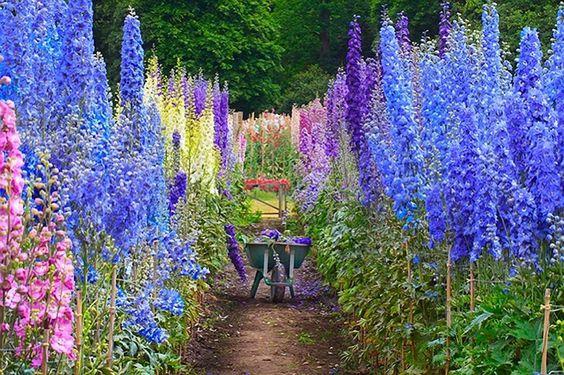
The Elatum group of varieties belongs to the tall-growing varieties. Their height ranges from 150 to 180 cm. The inflorescences are pyramidal, dense, and reach 70 cm in length. The flowers are semi-double, with a rather impressive diameter of up to 8 cm. The first flowering occurs in early summer, and with proper care, the flowers resplendent with color in late August.
Pink Punch
Characterized by rapid growth and strong stems, it is highly frost-hardy and responds favorably to hot and humid weather. Pink Punch boasts rich pink petals and ruffled flowers with brown, pink, or white eyes. It prefers sunny locations, or partial shade at worst.
Yellow Pearl
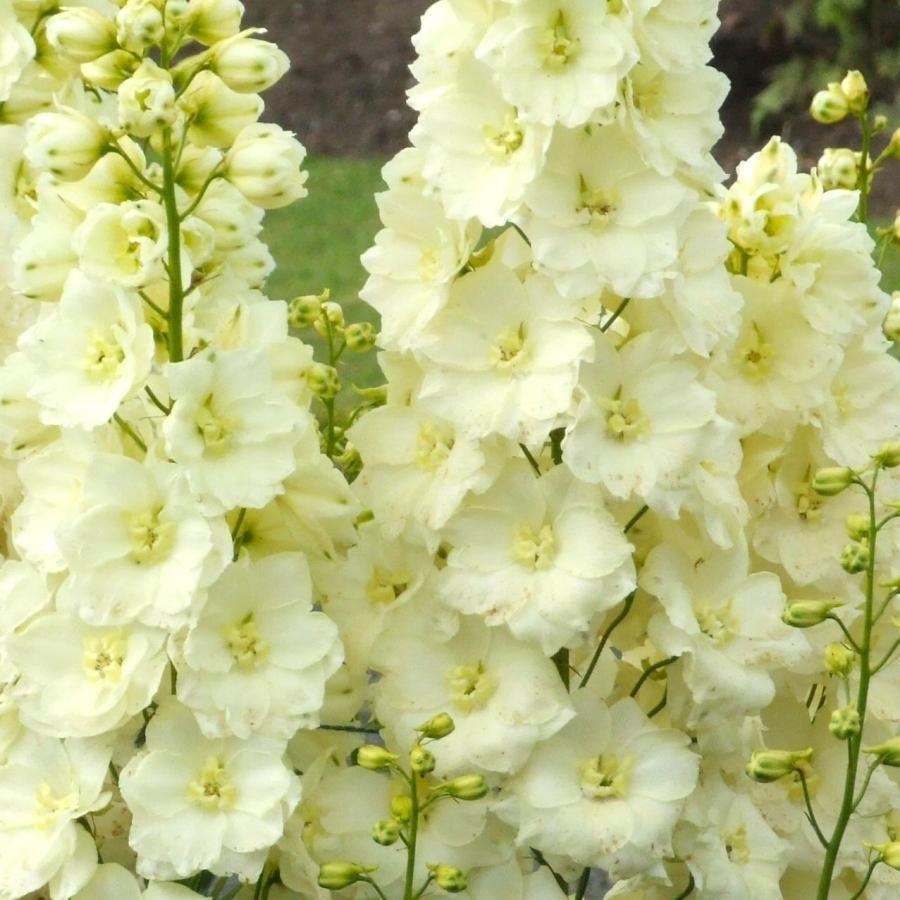
A vigorous plant, reaching a height of 150 cm, with dark green, dissected leaves. It produces abundant, double blooms, provided faded buds are removed promptly. The flowers are semi-double, reaching 6 cm in diameter. The petals are a soft yellow, with a yellow center. It is highly disease-resistant and frost-hardy.
New Zealand giant
This New Zealand giant boasts long stems adorned with multicolored plumes of large flowers. They reach 10 cm in diameter and are semi-double or double, covering almost half the length of the stem. The leaves are a rich green. With proper care, it will delight with color for up to 8 years in the same location.
Growing seedlings from seeds
Experienced gardeners recommend growing delphiniums from seeds indoors. These seedlings quickly produce full-fledged plants outdoors. Growing young delphiniums is not difficult.
Selection and preparation of seed material
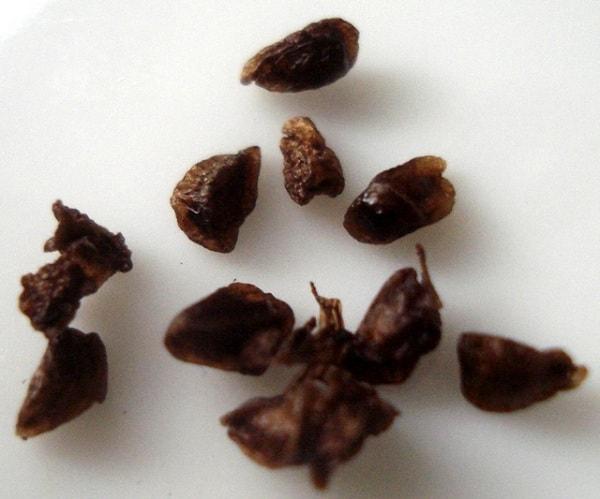
It's best to purchase delphinium seeds just before planting. If kept in a warm room, they will quickly lose their viability. Alternatively, store the seed packets in the refrigerator. If you already have delphinium in your garden, you can collect the seeds yourself.
Before planting seedlings, the material must be disinfected. To do this, place the seeds in a gauze bag and soak them in a potassium permanganate solution for 20 minutes or soak them in any fungicide diluted according to the instructions (such as Fitosporin or Maxim). Afterward, rinse them with clean, cool water and, in the same bag, soak them in a growth stimulant solution, such as Epin. Then, let them dry slightly.
Timing and rules for sowing
If you plan to grow seedlings indoors, start sowing seeds in late February. When planting outdoors, sow in mid-autumn or just before winter, immediately after the soil freezes.
To plant delphinium seeds, prepare a soil mixture with the following composition:
- humus, garden soil, peat - 1 part each;
- washed sand - 0.5 parts;
- perlite - 0.5 cups per 5 liters of mixture.
After this, the soil is kept in a steam bath for an hour to kill weed seeds and fungal spores. The soil mixture is spread into prepared containers and leveled. The delphinium planting material is evenly distributed over the soil surface and covered with the same soil mixture to a layer no thicker than 3 mm, lightly compacting it. Spray with cold boiled water from a fine spray bottle and cover with black plastic film, as delphiniums germinate better in the dark.
Place the container on a windowsill, preferably close to the glass, to maintain a temperature between 8 and 15 degrees Celsius. If it gets too hot, the sprouts may die.
Organizing care for seedlings
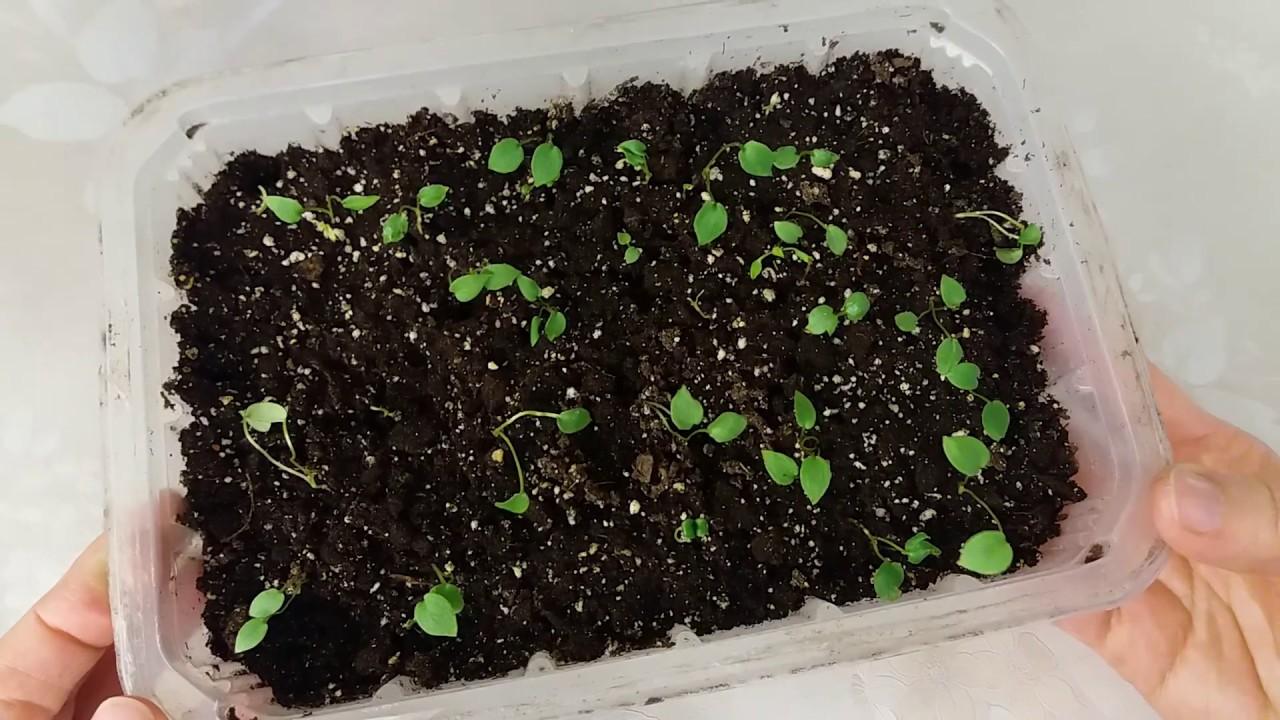
Typically, the first shoots appear within two weeks. The covering is immediately removed and the seedlings are placed closer to sunlight. As soon as the first true leaf appears, the plants are pricked out.
Transplanting and caring for delphinium in open ground
When the seedlings have formed 3-4 true leaves, they begin hardening and after 2 weeks they are transferred to open ground.
Site selection and preparation
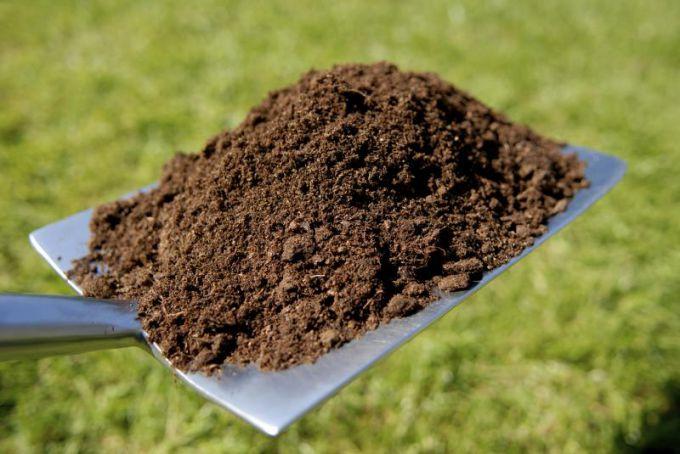
To plant delphinium, choose a sunny location. A site near a fence is ideal, as the plant dislikes drafts and gusts of wind. The soil should be sandy or loamy, permeable, and additionally, add humus.
Transfer
Delphinium seedlings are usually planted in open ground at the end of spring – at the end of May.
The algorithm consists of several simple steps:
- Dig holes 50 cm deep.
- The removed soil is mixed with compost and the hole is half filled.
- Wait 2-3 days for the soil to settle.
- The seedlings are transplanted and covered with the remaining soil.
Watering and fertilizing
The plant prefers moderate soil moisture, so watering is done during dry periods, pouring water under the roots and trying not to get it on the leaves.
To ensure abundant flowering and rooting in a new location, flowers need to be fed:
- The first time when the seedlings reach 15 cm.
- The second time during the formation of buds.
- The third - before the end of flowering.
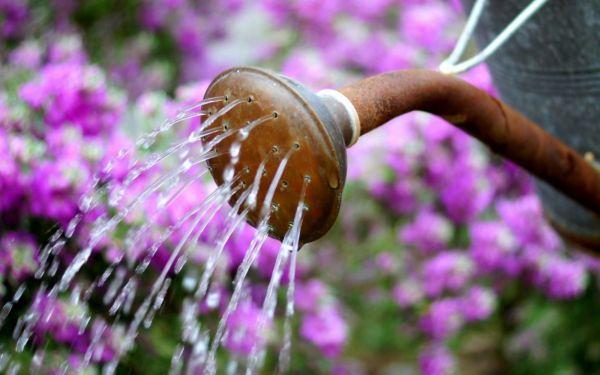
For fertilization, mineral complexes such as superphosphate or saltpeter are used, to which a little organic fertilizer is added.
Loosening the soil
After each watering, the soil under the plants must be loosened to prevent weeds from taking nutrients from the flowers.
Trimming
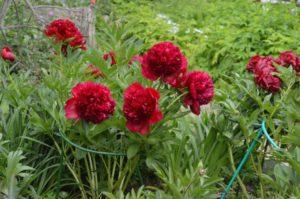
Proper delphinium care is impossible without pruning. This process begins when the plants reach a height of 30 cm. To do this, trim off 10-15 cm of the top. Also, to encourage reblooming, trim off faded buds.
Stem support
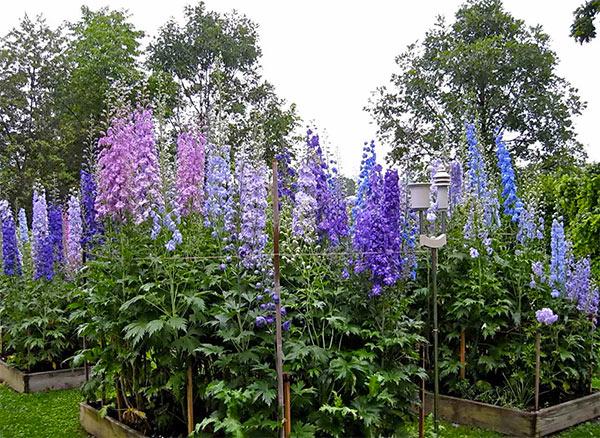
For tall varieties, supports are essential to prevent the flower stalks from breaking. This is done when the plants reach 50 cm in height and the delphinium is tied to the stakes.
Protection from insects and diseases
Occasionally, delphinium plantings are affected by the following diseases and pests.
Ramularia leaf spot
It's a fungal infection. Dark brown spots appear on both sides of delphinium leaves. If this symptom isn't noticed in time, the leaves dry out and fall off. Any antifungal agent can be used for spraying.
Powdery mildew
A grayish-white coating, which eventually turns brown, is the first sign of powdery mildew. Treatment involves applying two applications of Topaz or Fundazol.
Ring spot
This is a viral disease. Concentric, irregularly shaped yellow rings are the first symptoms of delphinium infection. There's no cure for this ornamental plant; it's dug up and destroyed outside the garden to avoid risking infection to other plants.
Black bacterial spot
Black spots of varying shapes and sizes are the first sign of the disease. The infection begins on the lower leaves, gradually spreading to the top of the plant.
To treat delphinium, use Tetracycline at a concentration of 1 tablet per 1 liter of water.
Features of flower reproduction
You can propagate the plant on your plot using simple methods.
By dividing the bush
This method is suitable for plants over three years old. This work is carried out in the spring, before the delphinium has grown beyond 15 cm. Carefully dig up the plant and divide it into two or three sections, sprinkling the cut ends with charcoal. Replant in separate containers and bring them indoors for rooting. After three weeks, transplant the delphinium outdoors.
Cuttings
Delphinium shoots growing at the root collar with a piece of rhizome attached are used. Young plants are planted in a shaded area in moist sand. Full-fledged roots should appear within two weeks.
Seed collection
To sow your own seeds for seedlings, collect them from mature plants. This is done in dry weather, when the delphinium capsules have turned brown. Dry them indoors, remove them from the capsules, clean out any debris, and place them in paper bags. This seed can be sown for up to 10 months. Planting delphinium from self-collected seeds allows you to develop new species and varieties.
Related posts:
 Description of New Zealand delphinium, growing from seeds and propagation methods
 When and how to properly transplant delphinium to another location in the fall
 The best varieties and types of perennial flowers for the Urals, cultivation specifics
 The best eggplant varieties for growing in a polycarbonate greenhouse: planting and care
 Carrot care guidelines for outdoor cultivation to ensure a good harvest
 Description of varieties of sowing peas and cultivation, to which family they belong
 How to propagate and grow peas, cultivation technology, and care in open ground
 How to properly plant peas in a greenhouse and open ground