
- Acidanthera: description and characteristics of the plant
- Flowers in landscape design
- Varieties of fragrant gladiolus
- Planting fragrant gladiolus
- Site selection and preparation
- Pre-planting treatment of bulbs
- Timing and direct planting of the plant
- Caring for the crop
- Watering
- Fertilizer
- Loosening and weeding
- Protection from insects and diseases
- Wintering and storage of corms in winter
- Methods of reproduction
- Seeds
- Children
Flowers are a beautiful addition to any garden or backyard, captivating with their vibrant colors and rich aroma. Among the easy-to-grow plants, the fragrant gladiolus Acidanthera stands out. This flower, with its beautiful large buds, rises on an elongated, sturdy stem and exudes a light, sweet fragrance. It's worth learning the rules in advance. growing and caring for fragrant gladiolus.
Acidanthera: description and characteristics of the plant
The fragrant gladiolus originated in Africa and grows on rocky slopes. Acidanthera belongs to the Iridaceae family, and in Greek it is called "sharp flower" due to its shape. The plant is distinguished by the following characteristics:
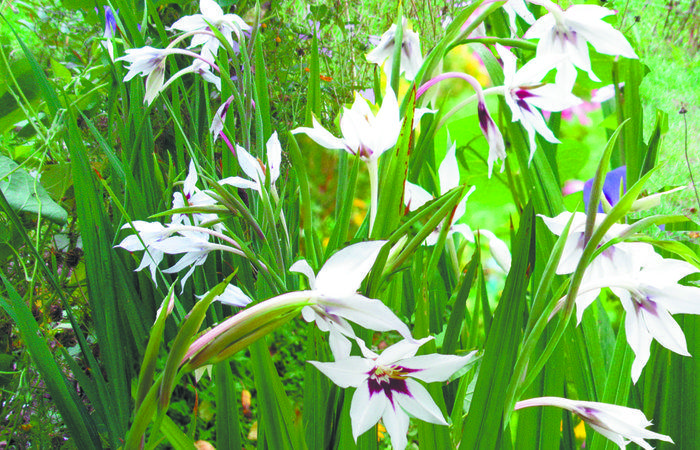
- Acidanthera has a tall, slender peduncle (1-1.9 m), with two sword-shaped, pointed leaves 50-65 cm long. The flexible shoots serve a decorative function.
- The corm is small (3-6 cm), round, covered with a brownish mesh.
- Large buds form at the top of the stem, forming a spike-shaped inflorescence. A long, curved tube helps the buds attach to the stem.
- Acidanthera is characterized by a white core covered with brown mesh scales and dark green glossy leaves with smooth edges.
- Petal colors range from white, yellow, and pink. They can be solid or multicolored.
Gladiolus blooms begin in August-September, and the flowers fall off when frost sets in. During bloom, the petals do not fall off and emit a honey-fruity aroma.
An elongated seed capsule indicates pollinated fruits, which contain small, rough seeds.
Interesting! In ancient Roman times, the fragrant gladiolus Acidanthera was believed to have magical properties, and was especially revered by gladiators—they considered the dried rhizomes an amulet and wore them around their necks before entering the arena.
Flowers in landscape design
The fragrant gladiolus (Acidanthera) is considered a perennial plant and is often used as a decorative element in gardens. Acidanthera is used for:
- Alpine garden. It mimics the natural conditions in which the flower grows as closely as possible. Alpine gardens are decorated with flowers such as asters, mimulus, pasqueflowers, chionodoxa, sedum, purslane, thalictrum, juniper, thrift, and meadow foxtail.
- A rich flowerbed. When forming a rounded planting, place the fragrant gladiolus in the center.
- Pond edging. With its tall stem and long leaves, the flower resembles the reeds used to decorate artificial ponds.
- Planting under windows. Opening the window on a warm summer evening allows you to enjoy the sweet scent of gladioli.

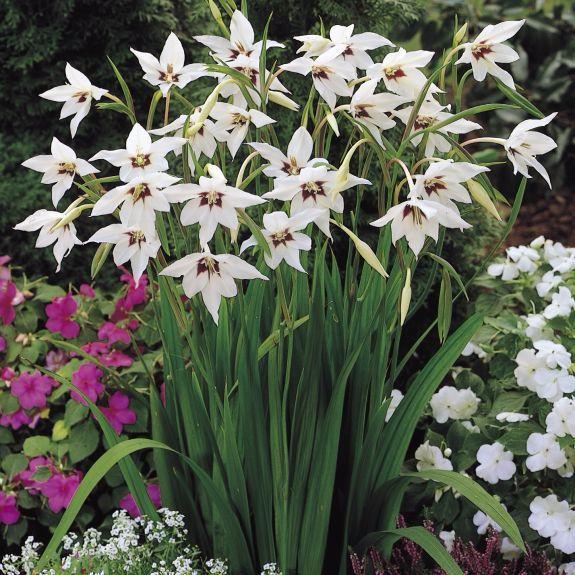
Fragrant Acidanthera is the most common cut flower. It is planted alongside perennials in shades of red, purple, and pink. Gladiolus pairs well with asters and salvia.
Varieties of fragrant gladiolus
Growers often offer gladiolus under the name Muriel. It is also available as a fragrant gladiolus or a sword lily. Acidanthera can be:
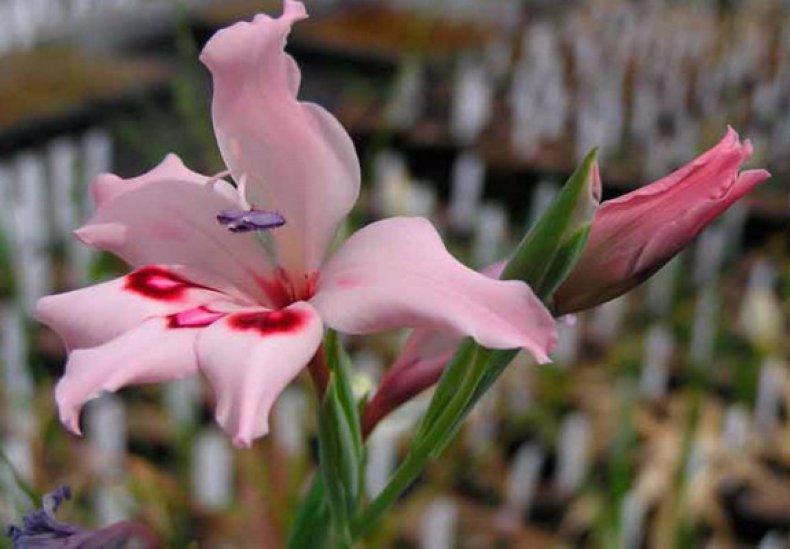
- two-color, “classic” - large buds (9-11 cm in diameter), with a red-black spot in the middle;
- bicolor - the core has different designs;
- short-tubular - the distinctive feature is a small tube and a rich crimson hue;
- tropical - has a two-sided inflorescence with five white flowers and crimson spots.
All varieties of fragrant gladiolus Acidanthera are united by their attractive appearance, presentability, pleasant aroma, and ease of care.
Planting fragrant gladiolus
There are two types of planting: preliminary and primary. This combination promotes the growth of strong, resilient seedlings. Preliminary planting involves placing the seedlings in a pot and then watering them. When the weather warms up, the plant is transplanted into the open ground.
Important to know! Acidanthera is susceptible to slug attacks due to high humidity. In rainy, cold summers, the plant may not bloom.
Site selection and preparation
The fragrant gladiolus Acidanthera is planted in a sunny spot with partial shade, protected from strong winds. In heavily shaded areas, it grows poorly and ripens poorly. The flower stalks are strong and require no additional staking.
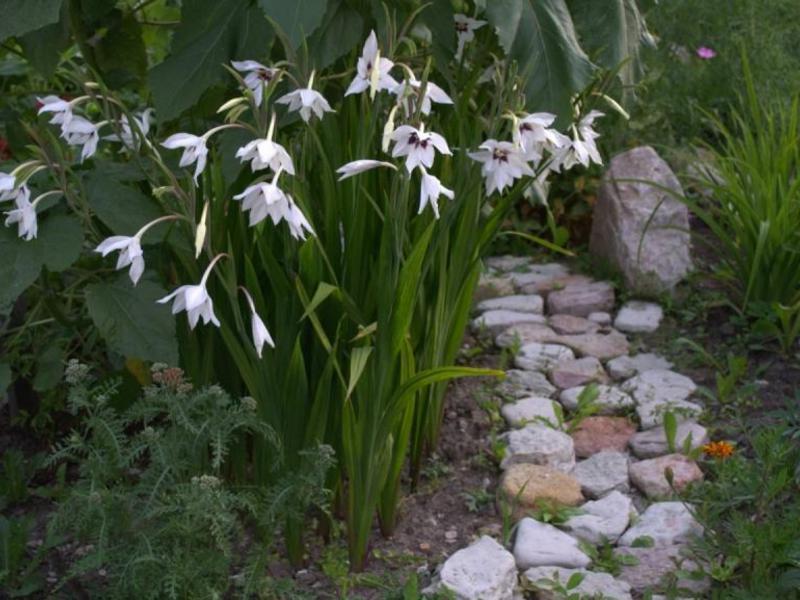
Gladiolus prefers well-drained, light, slightly acidic soil. Before planting, the soil is dug, fertilized, mulched, and watered.
Pre-planting treatment of bulbs
Dried Acidanthera bulbs must be stored at room temperature (+18…25 OC). It is strongly recommended not to place planting material in dark rooms with high humidity – low temperatures will prevent Acidanthera from blooming.
If indoor air is dry, wrap the bulbs in newspaper. Before planting, treat them with fungicides to prevent rot and disease.
Timing and direct planting of the plant
Fragrant gladiolus is planted in the spring, after the soil has warmed. Gardeners recommend planting in May. Since Acidanthera is accustomed to tropical climates, it absolutely cannot tolerate cold. Therefore, the bulbs are dug up annually, potted, and stored until the following spring.
The procedure for planting the fragrant gladiolus Acidanthera is carried out as follows:
- After selecting a location, dig a hole. The optimal planting depth is 12-15 cm.
- The bottom of the hole is lined with sand, the corms are compacted, and sprinkled with earth.
- The planting is watered with a bucket of water.

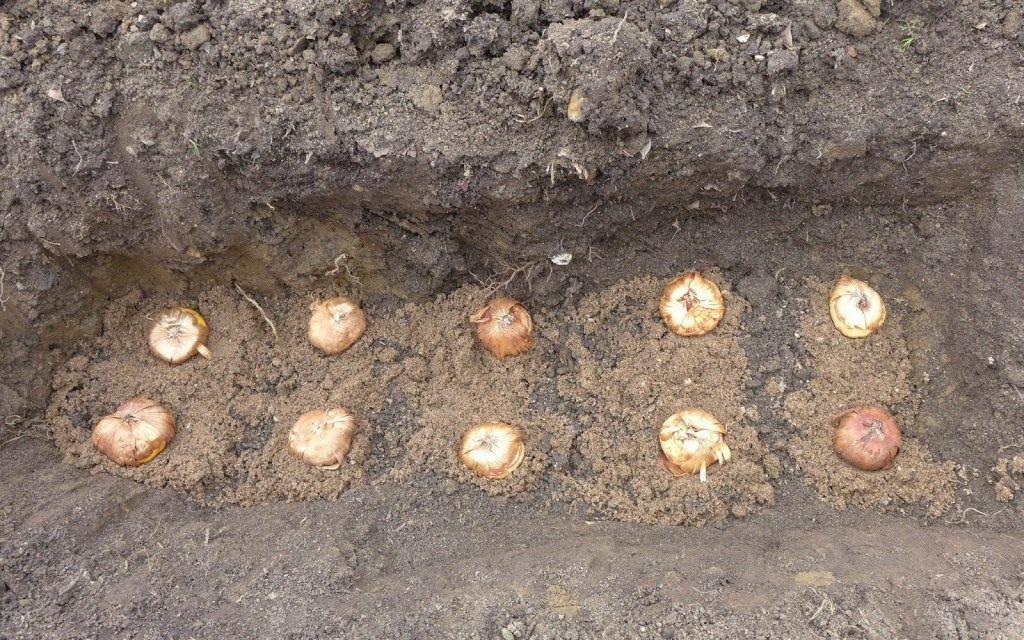
For small bulbs, the distance between them is 10-11 cm; for large specimens, it is recommended to leave a distance of 16-19 cm.
Caring for the crop
Acidanthera is not particularly demanding in terms of maintenance conditions, but still requires systematic care.
Watering
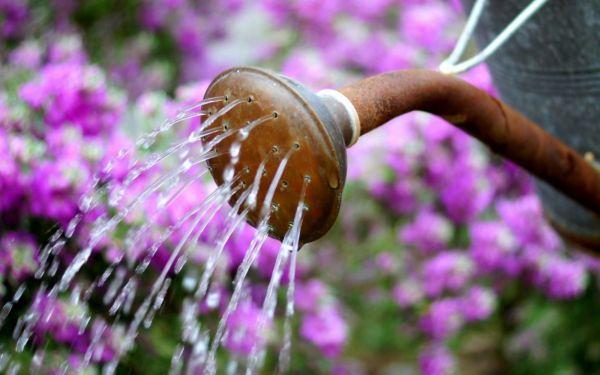
The fragrant gladiolus Acidanthera thrives on moisture, especially during hot summer days. Dry soil can cause the bulbs to dry out. During summer, water 2-4 buckets every 7 days, but avoid overwatering. After the buds bloom, reduce watering. This improves the appearance of the flower—it darkens, and its color becomes more vibrant and rich. To retain moisture, mulch the soil with mown grass, peat, or crushed compost.
Fertilizer
The fragrant gladiolus Acidanthera is fed once every 14 days. It is recommended to combine feeding with watering. For this, it is necessary to stock up on complex mineral compounds, such as nitroammophoska. If the compound contains a high concentration of ammonia, it will promote stem and leaf growth, while the buds will remain medium-sized.
Loosening and weeding
After watering, loosen the soil around the trunk to ensure oxygen reaches the rhizomes. This loosening process is performed using a three-pronged hoe—it safely and effectively lifts the top layer of soil without damaging the flower stalks and bulbs. As soon as the gladiolus begins to grow weeds, weed it. It's recommended to remove weeds early in the growth cycle, otherwise they will rob the gladiolus of nutrients and moisture.

Protection from insects and diseases
The fragrant gladiolus has a good immunity, but if planted close to other plants, there is a risk of disease. Acidanthera often suffers from:
- Powdery mildew. It can be treated with potassium permanganate (0.5 teaspoon per bucket of water). If the problem persists, spray with a solution of 1.5 tablespoons of soda ash, 1 teaspoon of liquid soap, and 5 liters of water.
- Root rot – at an advanced stage, the flower is untreatable and should be dug up and discarded. As a preventative measure, treat the bulbs with fungicides before planting.
- Rust and mosaic disease. To eliminate the disease at the initial stage, use colloidal sulfur (1 tablespoon) and water (1 bucket).
Gladiolus Acidanthera is often attacked by aphids, which can be controlled with Actellic and Tanrek. Harmful thrips can be controlled with Decis, and slugs must be collected by hand.
Wintering and storage of corms in winter
After flowering, the flower stalk should be cut off—this is necessary to allow the corm to mature. If the seeds mature, the gladiolus will not store nutrients in its rhizomes, and the first buds from the seeds will appear only after two years.
To extend the growing season, gladioli are protected from frost using a covering material such as lutrasil. At the first sign of a drop in temperature, gladioli are transferred to pots and stored in a warm place until spring. The storage area for the planting material should be warm, dry, and well-ventilated.
In September, gladiolus bulbs are dug up, stripped of their outer leaves, and dried for a month. Before drying, the bulbs are sprinkled with dry fungicides. After drying, the dried above-ground parts are removed from the rhizomes, wrapped in newspaper, and stored permanently. The bulbs can be stored in a box with fertilizers such as peat, perlite, or vermiculite.

Methods of reproduction
Fragrant acidanthera is propagated using bulbs and shoots. Each method should be considered separately.
Seeds
Acidanthera seeds are harvested in September and can also be purchased pre-seeded. The planting material is planted in February. The bottom of the pot is lined with garden soil, mixed with peat and sand. It is recommended to pre-heat the soil in the oven to prevent diseases and insects.
The seeds should be evenly distributed and covered with soil. The planting is sprayed with a spray bottle and covered with a plastic bag. The soil is watered regularly, and the pot is placed in a warm place. Shoots will begin to grow in 14-21 days. The shoots are transplanted into individual pots and grown for 2-3 years. The formed buds should bloom, strengthen, and grow. After this, they are ready for planting in open ground.
Children
During the growing season, the mother bulb produces 3-4 offspring. If properly cared for, they mature and become suitable for individual planting. In spring, they are separated and placed in a hole 5-9 cm deep. They are then cared for as an adult plant.
Related posts:
 Description of Japanese gladiolus varieties, planting and care in open ground
 Description of the Byzantine gladiolus, planting and care for the variety in open ground
 The best eggplant varieties for growing in a polycarbonate greenhouse: planting and care
 Description and cultivation of Chinese garlic, cultivation and care
 Description and characteristics of wild and cultivated varieties of gladioli
 Planting and caring for gladioli in open ground, growing and the best varieties
 Reasons why gladioli don't bloom, planting mistakes, and pest control, recommendations
 Preparation and use of fragrant tobacco against the Colorado potato beetle