
A herbaceous perennial belonging to the Asparagus family, hosta is often used to decorate gardens. Although the bush can grow in one location for 15 to 20 years, it needs to be periodically relocated to maintain its decorative qualities. Hosta is replanted in both spring and fall. Each season has its advantages and disadvantages.
The need to replant hosta
As this herbaceous perennial develops and grows, it forms a compact and attractive bush, while its powerful root system rapidly expands. During the first year after planting, the plant should never be divided or replanted. This process begins when the hosta is 5-6 years old.
The reason a plant needs a new location is because, over several years of growing in the same area, it absorbs all the nutrients from the soil. Afterward, in depleted soil, it grows and develops poorly and begins to suffer from diseases. Low-nutrient soil also affects the lushness of its blooms.
Reasons why a plant needs to be moved to another area:
- too dense bush;
- initially incorrectly chosen landing site;
- the need to propagate hosta;
- redevelopment of a summer cottage;
- for the purpose of preventing diseases and pests.
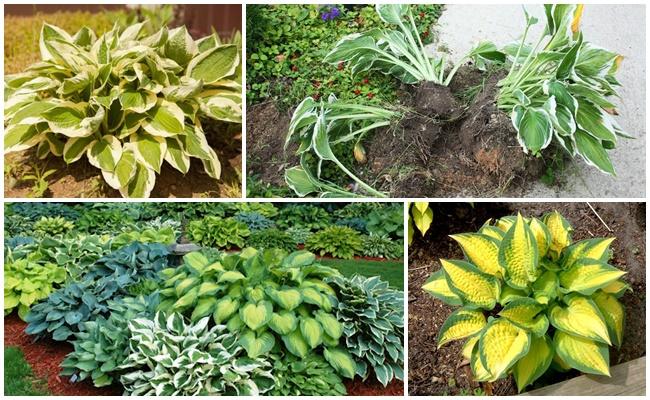
How to determine when it's time to repot a plant
Hostas are typically repotted when they reach four years of age. If you choose a hosta that's older than six years, digging it out of the ground can be quite difficult.
External signs of the crop that gardeners look for:
- slow growth and development of the bush;
- frequent susceptibility to diseases and pest attacks;
- lack of abundant flowering.
When do planting operations take place?
Any time except the active growing season and the dormant period is suitable for repotting perennials. The gardener chooses the exact timing based on the weather conditions in the growing region. For example, in the Moscow region, the procedure is recommended in the fall, while in the Urals and Siberia, it's recommended in the spring, allowing the plant time to adapt to the cold climate over the summer.
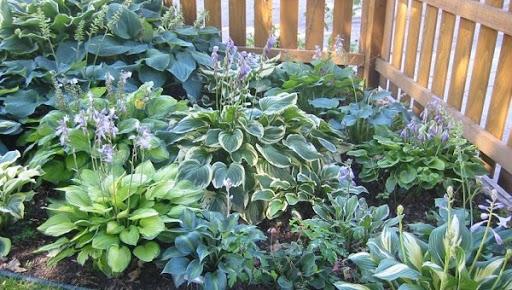
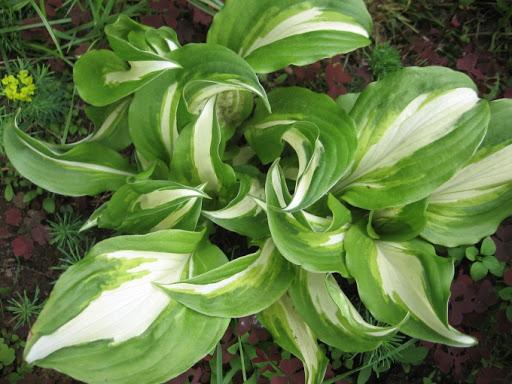
Spring
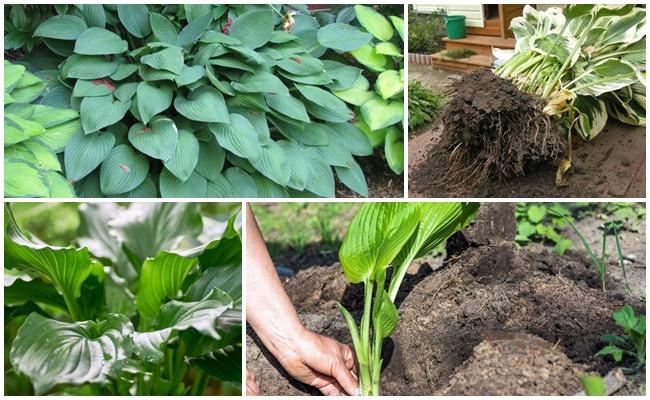
Benefits of spring work:
- since during this period the plant begins to actively flow sap, it will take root faster in a new area;
- In April, frosts and heavy rains recede, but there is still no heat, so you can do work until the first days of June;
- By the beginning of summer, the plant will have developed a root system, making it easier for it to adapt to a new location.
It is not recommended to replant at the end of the first month of summer, as extreme heat will prevent the plant from taking root properly.
Autumn
Autumn work begins in late August and continues until the end of September. In southern regions, this period can extend until early October, where winter arrives later.
Gardeners consider the following to be the advantages of replanting hostas in the fall:
- Some varieties of hosta, such as Siebold or Tokudama, do not form roots in the spring and therefore will not take root when transplanted;
- Having survived the winter, the plant will become stronger;
- Diseases during the frost period will not damage the transplanted crop.
Do flowering hostas need to be replanted?
It is possible to replant a perennial plant that has entered the flowering period, but this procedure is only carried out by gardeners who have been growing hostas for many years.
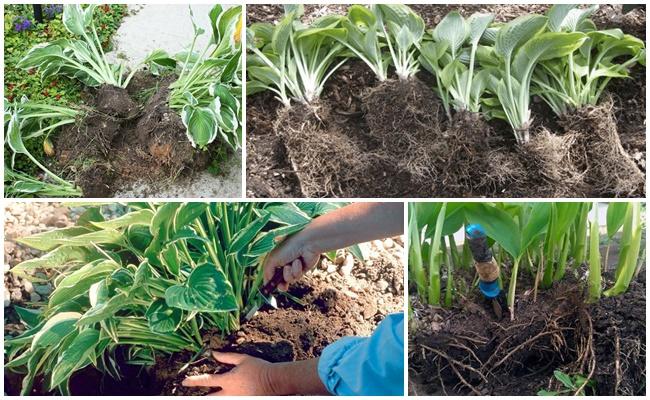
The bush is dug out of the ground and divided so that a small lump of earth remains on each division.
After transplanting, hostas are watered generously. It's recommended to leave only a few leaves on each seedling; this will reduce moisture evaporation and promote active root development. Transplanted hostas should be shaded with wooden shields from the scorching sun.
Selection and preparation of a new site
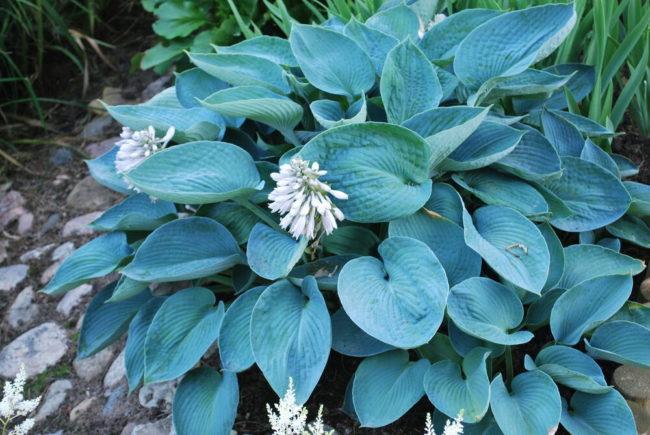
In the wild, hosta prefers places in river floodplains, so it is necessary to choose a place for it that is sunny in the first half of the day and shaded in the afternoon.
To ensure hosta quickly establishes itself in its new location, select a site with loamy, humus-rich soil. Placing the plant in sandy soil will cause the bush to shed its leaves due to a lack of nutrients and moisture. Clayey soil, on the other hand, promotes root rot due to its lack of drainage.
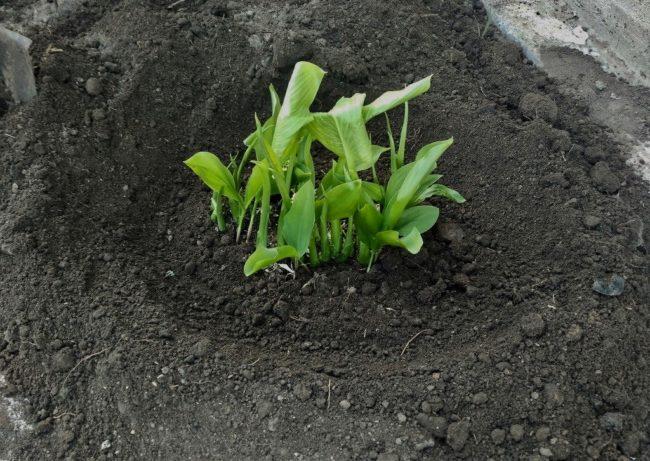
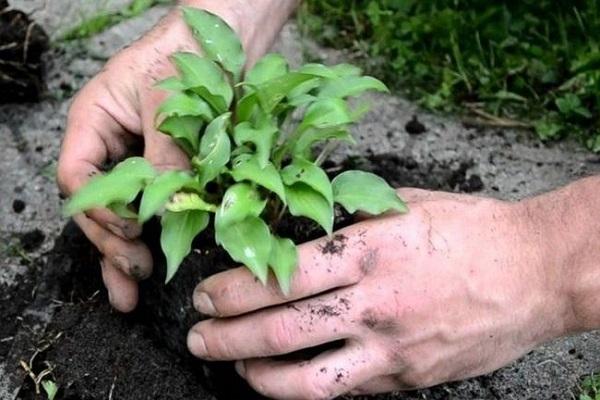
Before starting work, dig up the soil in the garden, remove weeds, and let it settle for a week. If replanting in the fall, avoid fertilizing, as this will encourage vigorous growth before the cold weather sets in.
Methods and technology of transplantation
Before planting hostas, dig holes 20 cm to 1 meter apart (depending on the variety). The holes should be slightly deeper than the plant's root system. Place a drainage layer of fine gravel or broken brick at the bottom and add a small amount of compost (if replanting in spring).
To properly move bushes to a new site, follow the following algorithm:
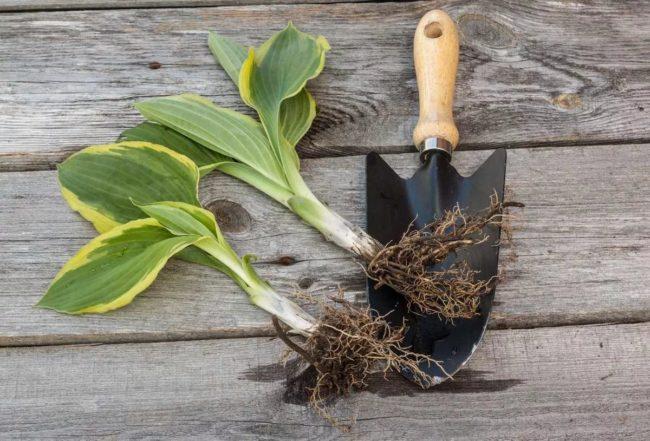
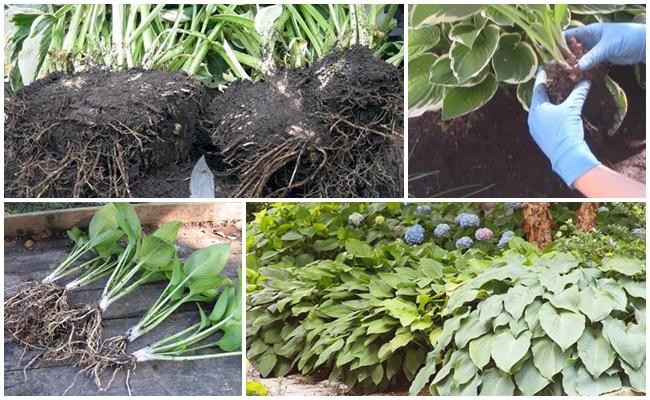
- If the entire bush is being moved, carefully dig around it on all sides and remove it along with the root ball. To avoid damaging the roots, use a garden fork rather than a shovel. Transfer the bush to the selected site and cover it with soil of the same composition as in the previous location.
- If you decide to divide the bush, rinse the roots under running water, then remove dry and damaged roots and trim the remaining ones slightly. To disinfect, soak the root system in a weak solution of potassium permanganate for half an hour. Then, carefully divide the roots into several sections with a knife, and treat the cut areas with charcoal. Next, plant the divisions in the prepared holes.
Post-procedure care
Post-repotting care for hostas depends on when the transplant was performed. In spring and summer, the plant requires regular watering—at least every 10 days—as well as nutrient additions, weeding and loosening the soil, as well as preventative insect control treatments. If the hosta was transplanted before winter, no fertilizer is needed. The plant requires protection from frost. Natural agrotextiles are used for this purpose. If winters in the region are mild, it is sufficient to cover the seedlings with dry leaves and spruce branches.
It is not recommended to use synthetic materials for insulation, as the bushes will rot under them during periods of thaw.
Mistakes of novice gardeners
When transplanting hostas for the first time, inexperienced gardeners make several common mistakes:
- trying to replant plants that are less than 4 years old;
- do not adhere to recommended deadlines;
- move the bushes to the place where hostas were already growing;
- they make cuttings that are too small and have difficulty adapting to a new area;
- use undisinfected tools when dividing the rhizome.
If you approach the hosta replanting process responsibly, the bushes will decorate the area for a long time.
Related posts:
 Descriptions of hosta species and the top 25 most beautiful varieties, growing rules
 Timing and methods of propagating hosta at home, further care
 Planting and caring for hostas in open ground, growing at home
 Caring for hosta in autumn and preparing for winter, how to prune and cover
 When is it better to transplant gooseberries to another location – in spring or autumn?
 When is the best time to transplant roses and how to do it correctly?
 The best eggplant varieties for growing in a polycarbonate greenhouse: planting and care
 The best grape varieties for growing in the Urals, planting and care rules in summer