
- Stages of preparing chrysanthemums for winter
- Fertilizing bushes
- Trimming
- Which varieties need to be dug up?
- Options for storing rhizomes
- In the cellar
- In the greenhouse
- On the balcony
- In flowerpots
- How to protect chrysanthemums from freezing in open ground
- Varieties that can survive frost in the garden
- Malchish-Kibalchish
- Lilac fog
- Chamomile
- Korean
- Oak tree
- Red Moscow
- Organizing a shelter
- Common mistakes in caring for chrysanthemums in autumn and preparing for winter
It's no wonder chrysanthemums are called the queen of autumn. Their flowers bloom when many other plants have already finished blooming. Many varieties can survive the winter outdoors. However, some require indoor storage. There are several options for preserving chrysanthemums until spring. Below is information on how to preserve chrysanthemums over winter, as well as common care mistakes.
Stages of preparing chrysanthemums for winter
Autumn is the blooming season for chrysanthemums. At this time of year, they require intensive care: watering, fertilizing, loosening the soil, and removing weeds. Many varieties can survive the winter outdoors. However, chrysanthemums need to be prepared for a safe winter, otherwise they risk freezing.
Fertilizing bushes
Nutrients are applied to the root zone 30-40 days before the onset of sustained frost. For a successful wintering, prepare and apply a mixture of potassium and phosphorus. Nitrogen is not used, as it promotes abundant growth. Fertilize the plants a few hours after watering.
Trimming
Stems are cut after the flowers have faded from frost. Leave no shoots, as dry leaves can harbor fungal spores and pest larvae. Chrysanthemums should be trimmed so that no more than 10-15 centimeters of branches are visible above the soil surface. Burn the cut shoots.
Important! Chrysanthemums should be pruned using a sharp, disinfected instrument.
Which varieties need to be dug up?
There are chrysanthemums that do not tolerate frosty weather well.
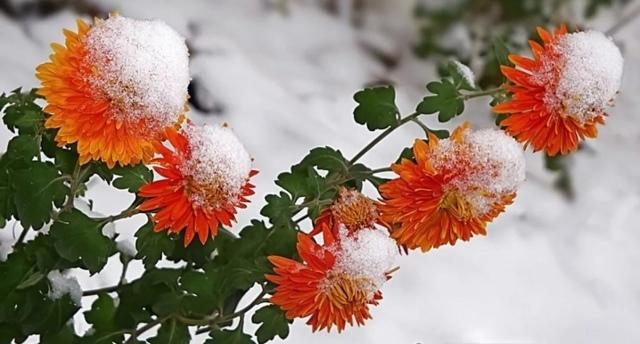


The following crop varieties need to be dug up for the winter:
- Sun.
- Flamingo.
- Gazelle.
- Natalie.
- Tricky white.
- Ares.
Keep the dug-up royal flower bushes in a cool room. If it's too warm, the shoots will begin to emerge prematurely.
Options for storing rhizomes
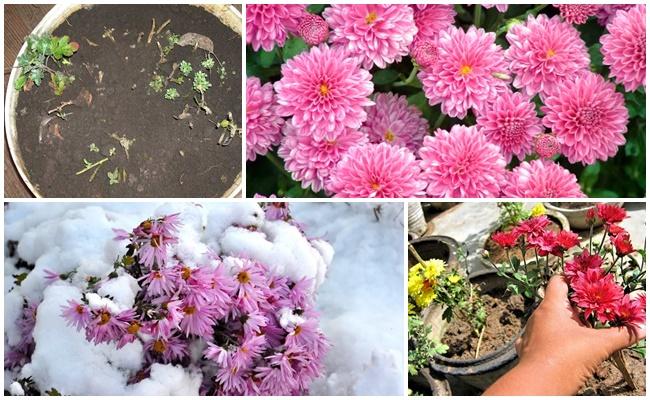
There are several ways to care for chrysanthemums during winter. But first, you can try extending their bloom period. To do this, dig up the bushes before the onset of frost and transplant them into containers. Store the harvested plants in a bright, cool room. Once they have finished blooming, cut the shoots and store them using one of the suggested storage methods.
In the cellar
The basement must be prepared in advance. The walls are whitewashed, and the shelves are treated with antifungal agents. Afterwards, the cellar is left for two weeks to air out. It's important to ensure that the basement has good ventilation.

Chrysanthemum rhizomes should be stored in the cellar at a temperature of 0-4°C. If the temperature is higher, the shoots may begin to grow prematurely. They will be thin and unprepared for spring planting in open ground. The weakened stems will not be able to form full-fledged bushes.
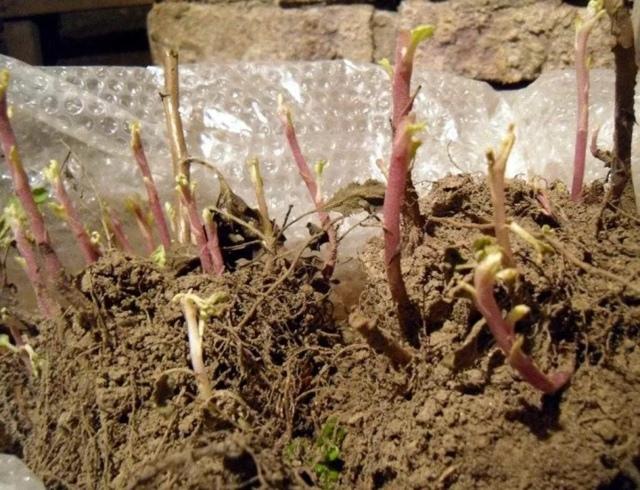
The root system with a lump of soil is placed on the cellar floor. The bushes are planted close together and covered with soil. In this environment, they will have sufficient moisture until spring. The rhizomes should be inspected periodically. If mold appears, the infected fragments should be removed, and the remaining parts treated with an antifungal agent.

In the greenhouse
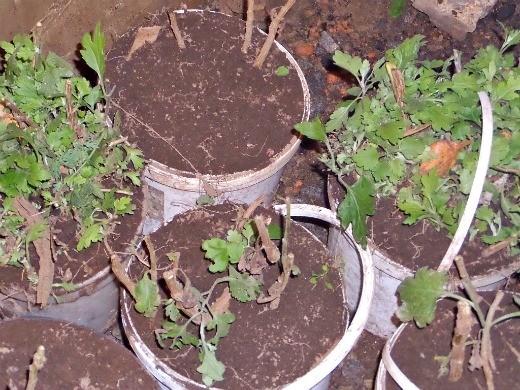
The plants can be stored until spring in an unheated greenhouse. Prepare the greenhouse by removing plant debris and treating the structure with a fungicide solution. In the fall, dig up the chrysanthemums and plant them indoors. Mulch the root area. Under these conditions, the plant continues to bloom for some time. Once the buds have dried, trim the shoots, leaving stumps 10-15 centimeters high. The cuts can be treated with an antifungal agent for disinfection. If severe frosts are expected, cover the bushes with burlap or lutrasil.
On the balcony
When frost sets in, the shoots are cut back and the rhizomes are dug up. Rural residents can store them in a basement or greenhouse. City dwellers will have to keep the plants on a balcony. If the balcony is glazed, the root system planted in a container can be left uninsulated. On an open balcony, the container is wrapped in burlap or another warm material.

The plants are planted in disinfected containers filled with peat and coarse sand. They are inspected periodically. If necessary, they are sprayed with water once a month. Care must be taken to prevent mold from appearing, otherwise the entire rhizome will die.
In flowerpots
Some gardeners grow annual chrysanthemums in pots rather than in the garden. They place them on a terrace or porch. To ensure the bushes thrive, the pot must have a drainage hole. Small stones or expanded clay are placed at the bottom, then filled with a loose potting mix.
In late autumn, cut off the above-ground portions of the plants and move the containers to a basement or balcony. Chrysanthemums can also be buried in an unheated greenhouse, along with their containers, and covered with peat or humus. Snow does not fall into these areas, so when severe frosts arrive, carefully cover the plants with burlap and spruce branches.
How to protect chrysanthemums from freezing in open ground
There are methods that can prevent chrysanthemums from freezing. Chrysanthemums overwinter most easily in central Russia. For example, in the Moscow region, where the ground doesn't freeze very deeply, trenching can be used. To do this, dig a trench 50-60 centimeters deep.




The bushes are dug up and laid out on the bottom at a 45° angle, close together. The rhizomes are then covered with soil, sawdust, and dry leaves, and covered with spruce branches. For greater winter hardiness, slate or boards are placed on top. When growing in the Urals, additional covering with film will be required. In Siberian conditions, a mini-greenhouse is constructed over the bushes. This is easiest to construct over bushes grown in a row. Arches are installed at regular intervals around the perimeter, and film is stretched over them. Snowfall in winter will further insulate the structure.
Important! Chrysanthemums grown in heavy clay soils tolerate frost better. Root systems in sandy loam soil freeze more easily.
Varieties that can survive frost in the garden
Garden perennial chrysanthemums, provided they are well-protected, can overwinter outdoors. Successful overwintering also depends on the amount of snow cover. The more snow, the warmer the chrysanthemums will be. There are varieties that can be stored in the garden over winter without digging.

Malchish-Kibalchish
This is a Korean chrysanthemum. It is a spreading bush about 35 centimeters tall. The flowers are simple, daisy-shaped, with dark pink petals. Malchish-Kibalchish is an early-blooming variety. The buds begin to open in mid-August. The blooming period lasts 1.5 months.
Lilac fog
This is one of the beautiful hybrids. The height of the bushes varies between 60 and 80 centimeters. The inflorescences reach 7 centimeters in diameter. The buds are initially dark lilac. When fully opened, the inflorescences are light lilac. This variety is distinguished by good winter hardiness.
Chamomile
The shoots reach a height of approximately 70 centimeters. This chamomile is a mid-late chrysanthemum variety. The buds open in September. The inflorescences reach 10 centimeters in diameter. The center is yellow, and the petals are white, arranged in two rows. The bushes can withstand temperatures down to -34°C, so they can be overwintered outdoors.



Korean
These plants were bred by Korean specialists. They are prized for their beautiful crowns and ability to withstand severe frosts. In late autumn, the shoots are cut back to the ground and left to overwinter in the garden. After three years, the bushes are dug up and divided into sections. The central part is removed.
Oak tree
These frost-hardy plants can survive the winter under cover, even in Siberia. To do this, the shoots are cut back, leaving 15-centimeter-long fragments. When frost sets in, the root zone is sprinkled with sawdust and leaves, and covered with spruce branches.
Red Moscow
This Korean chrysanthemum grows to about 90 centimeters tall. The center of the bud is dark red. The edges of the petals take on a crimson hue. The inflorescence reaches a diameter of 6.5 centimeters. "Red Moscow" can survive the winter in the garden under cover.
Please note! In southern regions, chrysanthemums only need to be earthed up and then mulched with peat or humus. There is no need to dig them up and store them indoors.


Organizing a shelter
To prevent chrysanthemums from freezing in the open ground over winter, they need to be properly prepared and then covered. When the first frost arrives, the shoots are cut back, leaving stumps 10-15 centimeters long. To disinfect them and the surrounding soil, you can treat them with an antifungal agent. Then, the plants are hilled up and mulched with compost, sawdust, leaves, and pine cones. For security, cover them with spruce branches. In northern regions, a structure of arches is installed. Plastic film is stretched over the top. To prevent the film from falling off, it is supported from below with stones or bricks.
Common mistakes in caring for chrysanthemums in autumn and preparing for winter
Beginner gardeners can make mistakes, which can lead to plant death. Common mistakes include:
- Nitrogen fertilizers are applied in the fall. Nitrogen promotes bush growth, which is completely unnecessary in the fall. If chrysanthemums begin to produce new shoots, they may not survive the harsh winter.
- Heat-loving varieties of the plant should not be dug up. If a gardener is unsure whether a plant will survive frost, they should dig it up and store it indoors until spring.
- Don't cut shoots with undisinfected pruning shears. This can expose the plant to disease due to untreated tools, which may harbor fungal spores.
- The plants are being covered incorrectly. Air must circulate between the bushes and the covering material. Otherwise, the chrysanthemums may be susceptible to fungal diseases.
- Plant residues are used as mulch. Mulch can be contaminated with fungi and pests, which can negatively impact the bushes.
- Avoid keeping the soil under the bushes wet when storing them on the balcony. Periodically, mist the soil with water to prevent the root system from drying out.
- Chrysanthemums are uncovered late in the spring. As soon as the sun warms up, the plants should be gradually uncovered. If you wait too long, the bushes may rot due to overwatering.
Chrysanthemums are beautiful garden plants that bloom in the fall. They can grow in the same place for many years. To survive the winter, they need to be well insulated. Heat-loving varieties are dug up and stored indoors until spring.
Related posts:
 Top 15 Korean Chrysanthemum Varieties, Planting and Care in the Open Ground
 Descriptions and characteristics of chrysanthemum species and varieties, growing rules
 Planting and care guidelines for the Multiflora chrysanthemum and the top 9 beautiful varieties
 Top 10 Chrysanthemum Varieties, Planting and Care Guidelines for Outdoor Plants
 Why chrysanthemums sometimes fail to bloom in open ground and how to speed up the process
 Timing and methods of propagating chrysanthemums at home, their cultivation
 The best eggplant varieties for growing in a polycarbonate greenhouse: planting and care
 The best time and rules for transplanting chrysanthemums to another location in the fall, care