
- General description of the plant
- Varieties
- Perennials
- Annuals
- Large-flowered
- Mid-flowered
- Small-flowered
- Bushy
- Korean
- Species by flowering time
- Average
- Late
- Early
- Varietal diversity
- Dwarf varieties
- Tall
- Winter-hardy
- Color variety
- Blue and light blue
- Pink
- Reds
- Whites
- Yellow
- Greens
- How to choose varieties: tips and recommendations
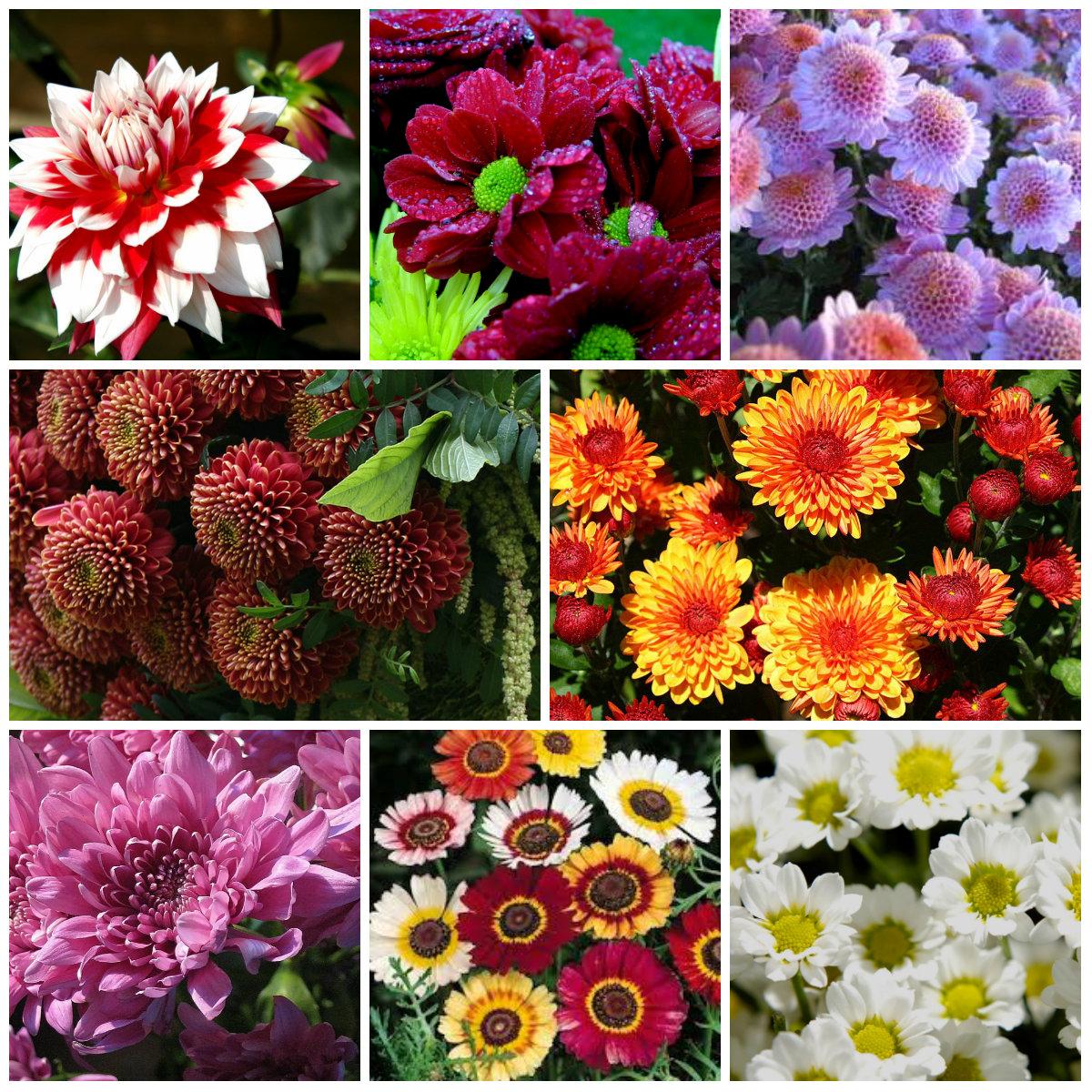
Chrysanthemums stand out from other flowers due to their diversity of species. These plants can be annual or perennial, with early or late ripening periods. Chrysanthemum species are generally classified according to these characteristics. However, gardeners also distinguish several other types of flowers based on specific characteristics and where they were bred.
General description of the plant
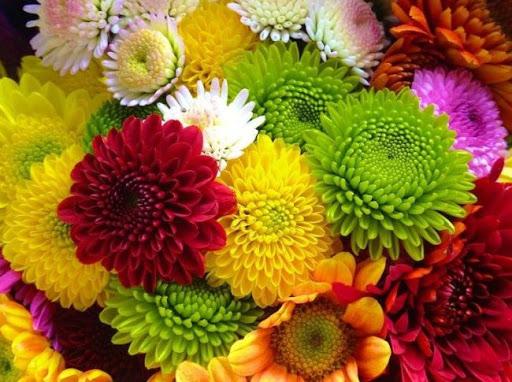
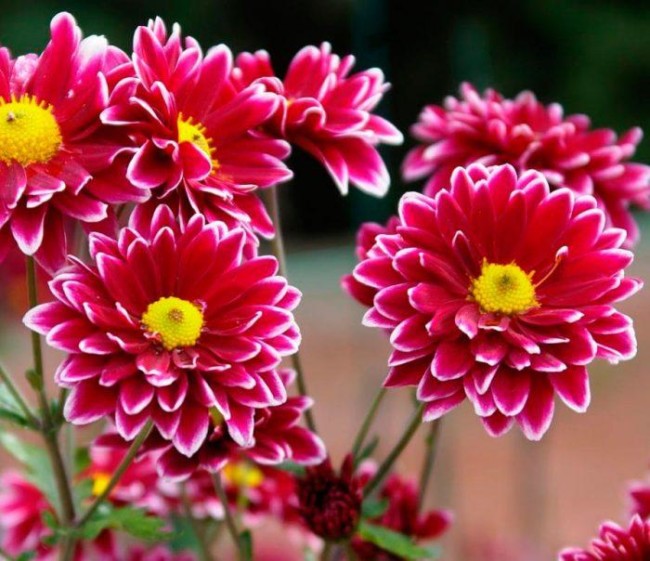
As with other plants, all garden chrysanthemums, despite the diversity of species (over 200), are similar. This wide variety of plant types has a direct impact on the appearance and characteristics of the flower. This crop is available in:
- chamomile-shaped or spherical;
- with a pompom-shaped flower;
- pink, gold, white and other colors;
- with stiff, straight shoots;
- with alternately arranged leaves of different shapes, colors and sizes;
- with ligulate marginal and median tubular flowers.
The main characteristic of chrysanthemums is that their flowers are arranged in a single row. However, this does not apply to hybrid varieties. These chrysanthemums have flowers arranged in several rows, creating lush inflorescences.
Varieties
As noted above, classification is based on various characteristics. These flowers are:
- annual and perennial;
- large-, medium- and small-flowered;
- Korean (a separate type of plant);
- bush.
The gradation is also carried out taking into account the flowering period, size and ability to tolerate low temperatures.
Perennials
Perennial chrysanthemum groups primarily comprise Korean varieties and species bred in greenhouses. These plants are characterized by the following features:
- abundant and lush flowering;
- resistance to temperature changes and other weather problems;
- good resistance to diseases.
The above advantages of perennial plants are offset by the fact that:
- impose more stringent requirements in terms of care;
- do not tolerate proximity to certain plants.
Korean varieties of this crop, which can overwinter outdoors, deserve special attention. Other perennial varieties include Golbold, Florida, and others.
Annuals
Annual crops are characterized by the following advantages:
- ability to adapt to different climatic conditions;
- frost resistance;
- long flowering period (until the first frosts);
- easy to care for.
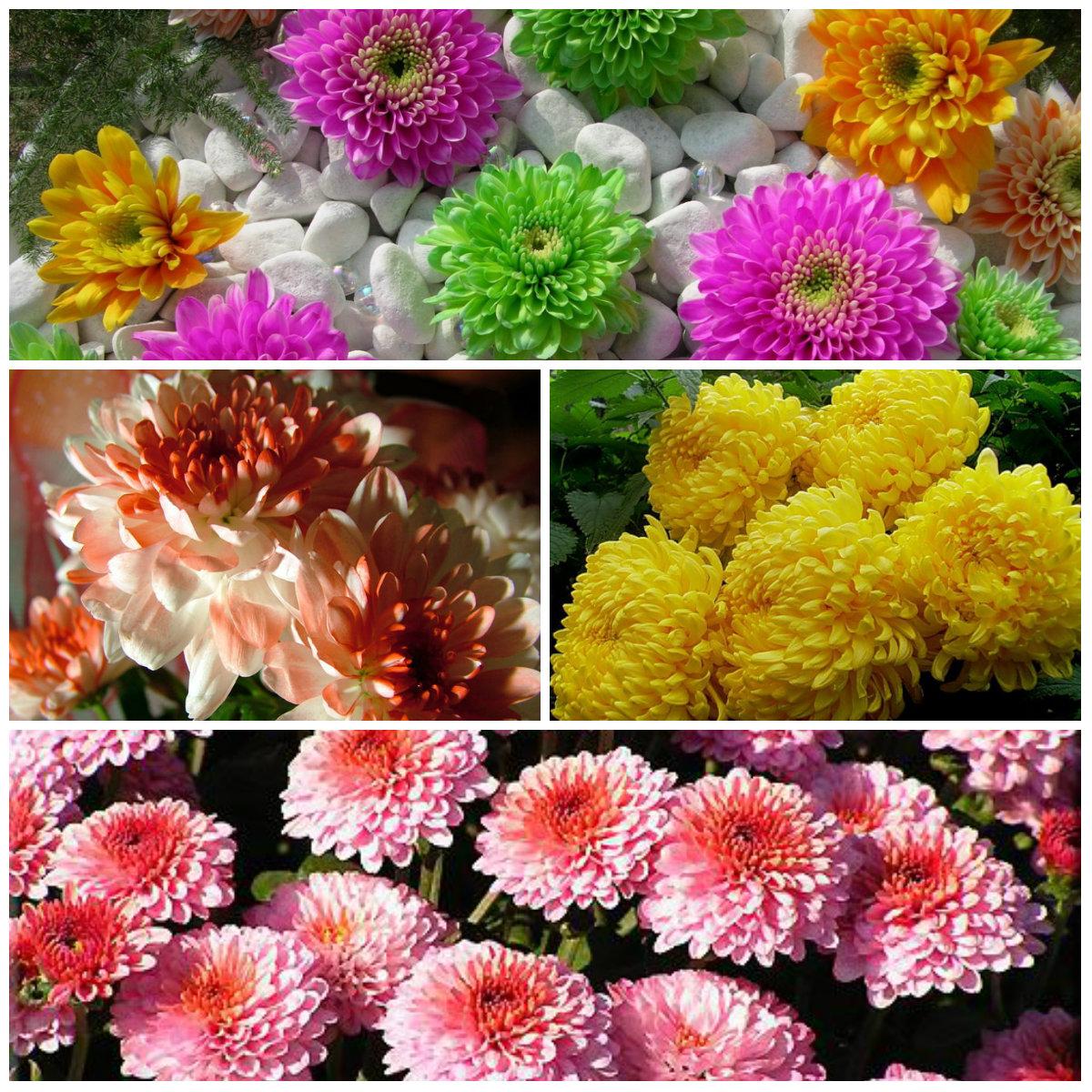
The group of annuals consists of:
- Frosh Mishung;
- Cockade;
- Tetra comet;
- Flammenstahl.
Among the disadvantages of annual flowers are the following:
- flowers need to be purchased and planted annually;
- in case of early frosts they may die.
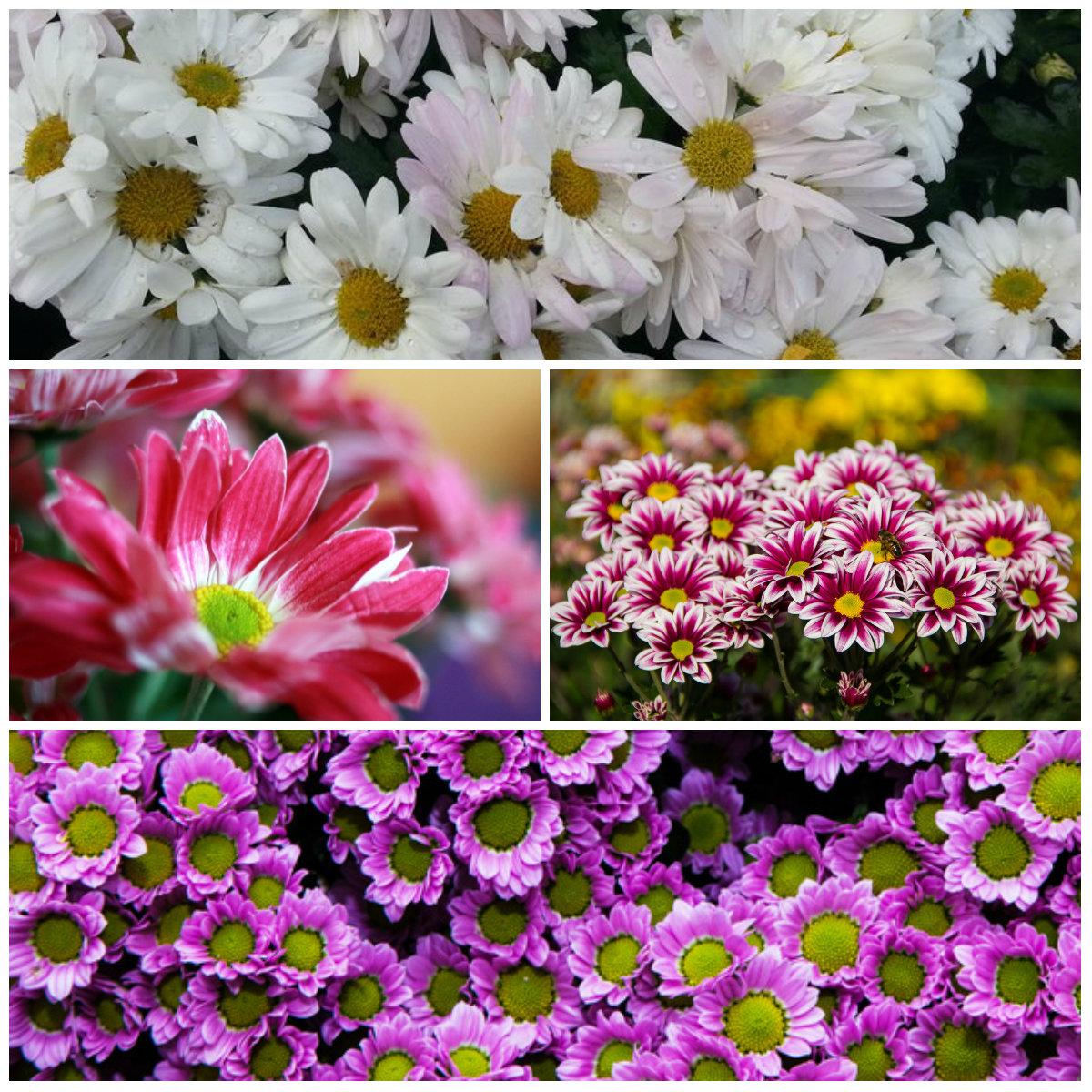
Annual plants are also grown for cut flowers. However, these flowers are primarily planted for decorative purposes.

Large-flowered
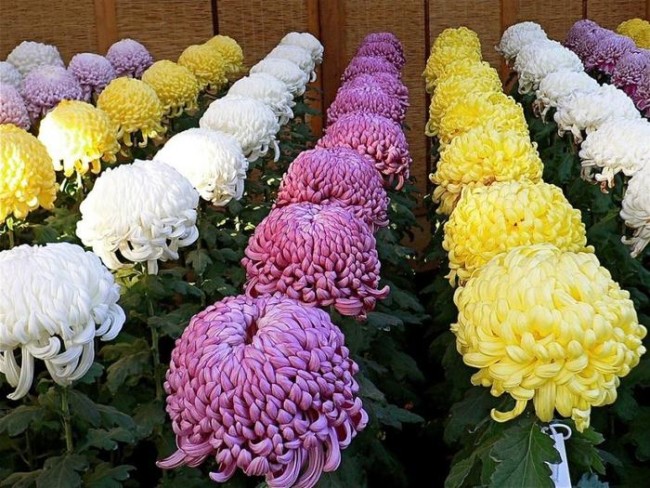
This group includes chrysanthemums with large flowers, ranging from 10-25 centimeters in diameter. Plants reach 80-120 centimeters in height. Among the large-flowered varieties, the following are worth noting:
- Lilac bislet;
- Broadway;
- Anita;
- Cremist.
In addition to large flowers, these chrysanthemums attract attention for the following reasons:
- great for large bouquets;
- are distinguished by a variety of color shades (there are varieties with leaves of different colors);
- tolerate frosts down to 3 degrees;
- belong to the group of perennial plants.
Among the disadvantages of large-flowered varieties of garden culture, the following are highlighted:
- it is necessary to dig it out of the ground before the onset of frost;
- bloom only in autumn;
- require careful maintenance.
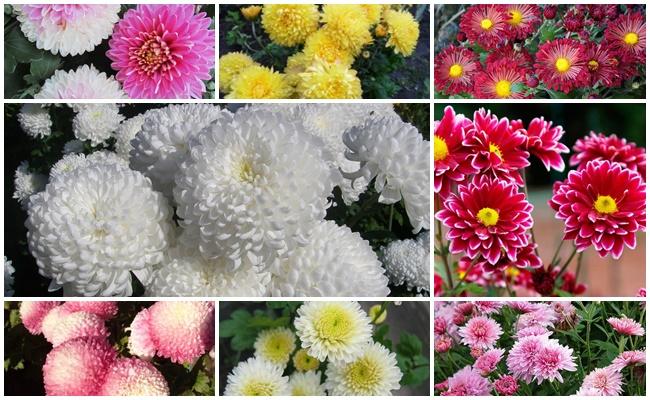
Some large-flowered varieties can survive the winter outdoors, but require shelter. There are also drought-tolerant plants.
Mid-flowered
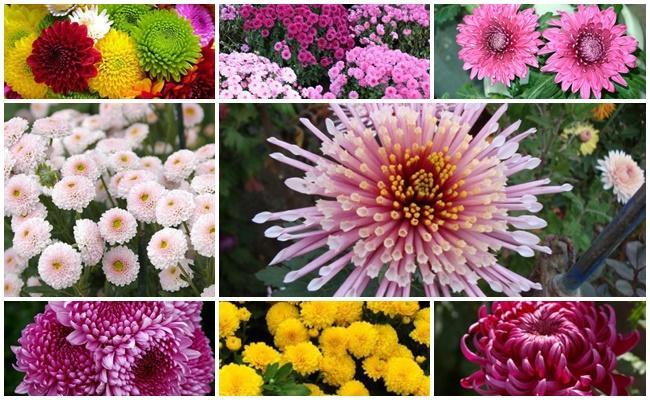
These varieties are characterized by inflorescences no larger than 10-16 centimeters in diameter. Flower stems are 30-70 centimeters long. Popular plants of this type include:
- Inga;
- Natasha;
- Zembla;
- Kornikova.
Medium-flowered varieties have the following advantages:
- suitable for growing in open ground or in an apartment (on a balcony);
- rich spherical flowers;
- The petals are predominantly needle-shaped, which allows for the creation of original compositions.
When growing mid-flowered varieties, it is important to remember that such chrysanthemums:
- do not tolerate sub-zero temperatures well;
- bloom in mid-autumn;
- demanding in terms of watering volume.
Medium-flowering varieties also adapt well to various climatic conditions.
Small-flowered
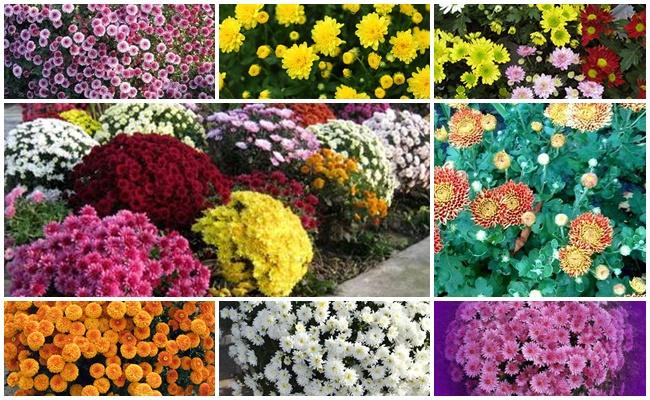
These varieties are distinguished by their inflorescences, which are no more than nine centimeters in diameter. The plant stems are tall, and the leaves are shaped like oak leaves. Among the small-flowered varieties, the following are noteworthy:
- Libele;
- Lexi;
- Lilypop;
- Mondo.
The advantages of small-flowered varieties include:
- cold resistance;
- suitable for growing at home in containers;
- abundant flowering (up to 30 flowers on a bush);
- versatility.
Gardeners consider the following to be disadvantages of small-flowered chrysanthemums:
- narrow variety of flowers (single or double);
- weak root system (easy to damage during transplantation);
- not suitable for cutting.
Among the small-flowered chrysanthemums, the Santini variety (a Dutch hybrid) stands out. This plant is grown to decorate both houses and front gardens and adjacent areas.
Bushy
This group includes a variety of chrysanthemums. It's difficult to distinguish the advantages and disadvantages of bush varieties, as these plants are similar only in their growth habits. The differences between the plants in this group are significant. Bush chrysanthemums include medium- and small-flowered varieties, with flowers of varying colors and shapes:
- Saba;
- Mona Lisa;
- Bacardi;
- Alice.
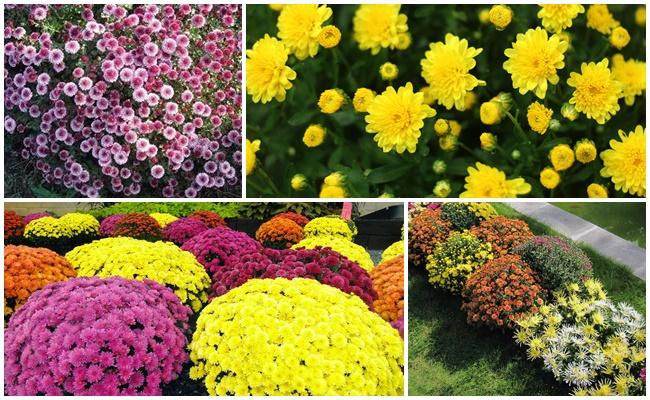
A common advantage is that a single plant can create a cohesive landscape composition. However, due to their growth characteristics, bush chrysanthemums are not typically grown indoors.
Korean
The Korean chrysanthemum group comprises hybrid perennial varieties. Artificial selection has helped develop plants with the following characteristics:
- ability to tolerate frost;
- rapid adaptation to various climatic conditions;
- Suitable for growing in latitudes with short summers and autumns.
This type includes:
- Malchish-Kibalchish;
- Amber;
- Bacon;
- Snow White.
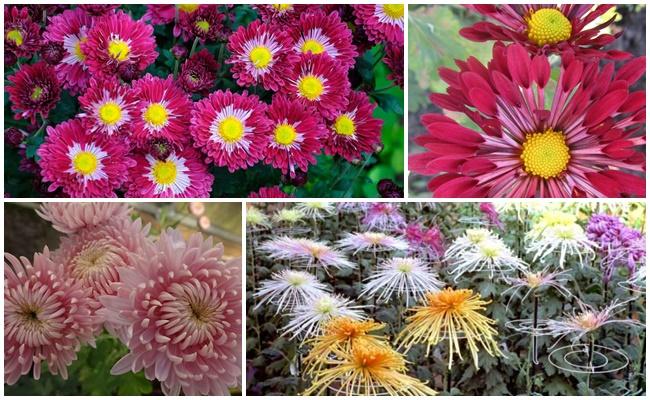
Korean varieties do not attract the attention of some gardeners for the following reasons:
- such chrysanthemums grow mainly in bushes;
- the plant has increased requirements in terms of care;
- Each variety of chrysanthemum has its own characteristics.
The latter refers to the following: hybrid chrysanthemum varieties come in low and medium heights, with flowers of varying shapes, shades, and sizes. Furthermore, some flowers are drought-intolerant, while others are well-adapted to prolonged periods of drought.
Species by flowering time
Although chrysanthemums bloom primarily in autumn, the time it takes for buds to ripen depends on the variety.
Average
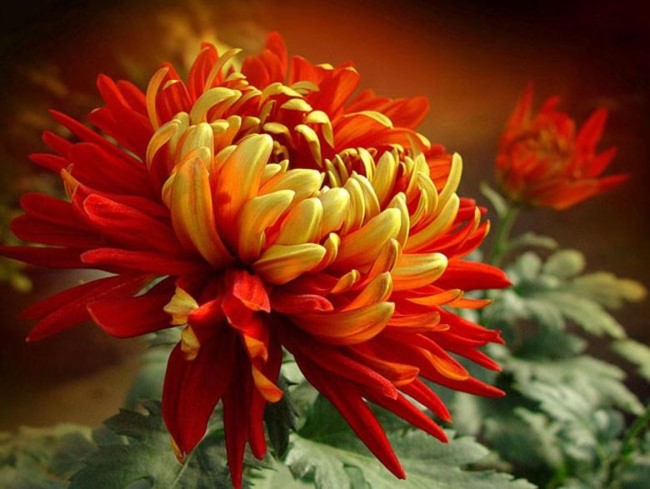
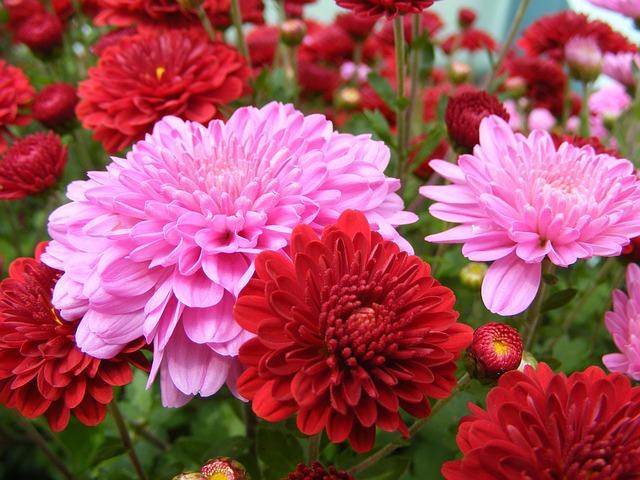
This group includes chrysanthemums (Anastasia Lily, Orange, Froggy), which begin blooming in October. The timing of bud opening in this case also depends on the plant variety. Mid-blooming varieties include primarily shrub chrysanthemums, but there are also solitary plants. This type of flower is recommended for planting near other crops that will provide natural shade.
Late
Late-blooming varieties (Larisa, Rivardi) are those that begin blooming in early November. These plants are characterized by good frost resistance. However, if temperatures consistently drop below freezing, the flowers will fall off.
Late-flowering chrysanthemums stand out from other similar flowers due to their endurance.
Perennial varieties, in particular, tolerate prolonged drought well. Late-blooming varieties are characterized by upright stems that reach a uniform height. This allows flowers to appear at the same height on the bush.
Early
Early-blooming varieties (Deliana, Handsom) usually bloom in September. However, there are also chrysanthemum varieties whose buds ripen throughout the summer. Early varieties often reach 1.2-1.5 meters in height. These plants are either solitary or shrubby.
Early-blooming chrysanthemums are recommended to be planted in the spring, immediately after the snow melts. This will ensure the first shoots appear by mid-May. However, they should not be planted directly in open ground. Before planting, the flowers must be hardened off for 10 days.
Varietal diversity
Chrysanthemums differ from each other in more than just appearance. Some varieties have been specially bred for indoor cultivation, while others are only suitable for outdoor planting.
Dwarf varieties
Dwarf (low-growing) varieties include chrysanthemums whose length varies between 15 and 45 centimeters:
- Snow White;
- Gels;
- Russian field;
- Ausma.
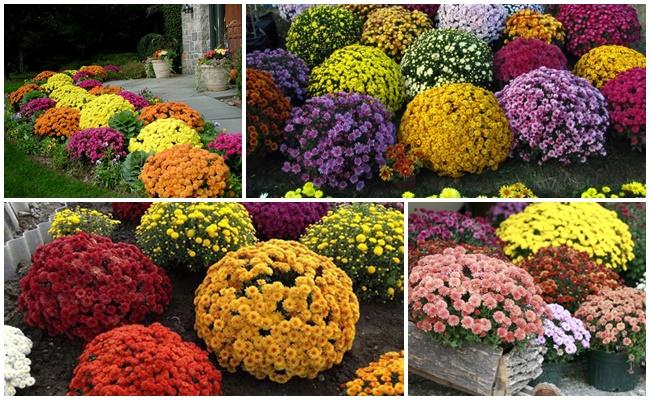
Plants in this group are distinguished by compact inflorescences, predominantly with a yellow center. Dwarf chrysanthemums begin flowering in late summer or early fall.
Tall
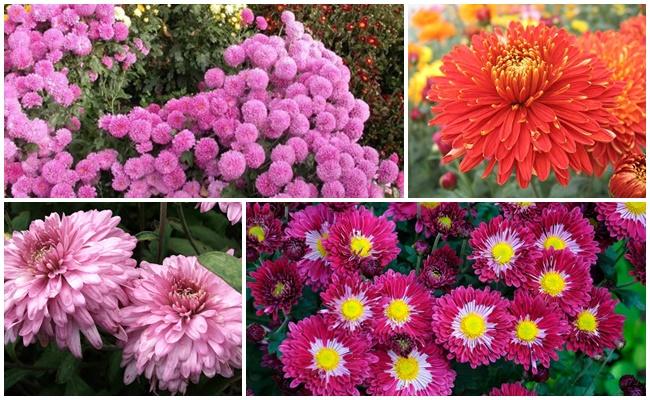
Tall chrysanthemums reach a height of 80-120 centimeters. This group includes plants with large and small inflorescences:
- Tamara;
- Minx;
- Cossack woman;
- Anessi.
Tall varieties require extra attention. Due to their large stems, the flowers require support. It is recommended to plant tall chrysanthemums in areas protected from strong gusts of wind.
Winter-hardy
Breeders have developed a small group of chrysanthemums that overwinter in open ground:
- Altgold;
- Lipstick;
- Golden Autumn.
Winter-hardy chrysanthemums are perennials that can tolerate temperatures down to -35 degrees Celsius. These plants need to be covered for the entire cold season. They also require phosphorus and potassium fertilizers to boost their immune system. Without fertilizer, the plant will die with the onset of frost. Furthermore, during cold weather, flowers should be pruned to 10 centimeters.

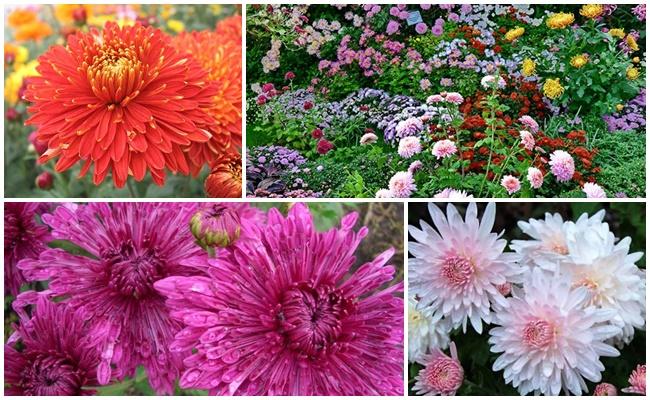
Color variety
Breeders have developed over 200 varieties of chrysanthemums, each distinguished by its unique flower color. Flowers come in pink, white, yellow, and other colors.
Hybrid varieties are characterized by two-color petals, including non-standard shades.
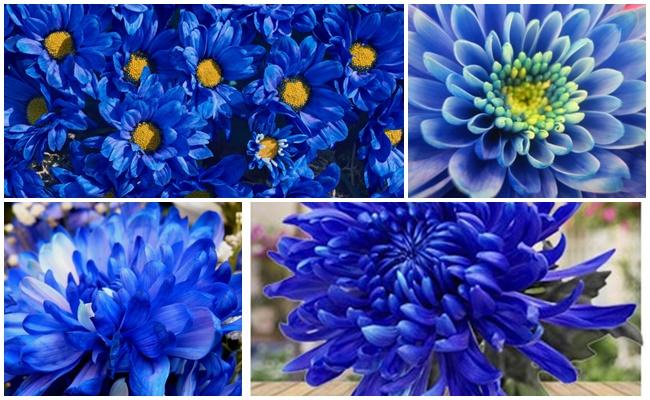
Blue and light blue
Chrysanthemums with blue and light blue flowers (the most famous being the herbaceous peony) are relatively rare. These plants stand out for their striking appearance, attracting attention. Blue flowers are distinguished by their rich, deep color.
Pink
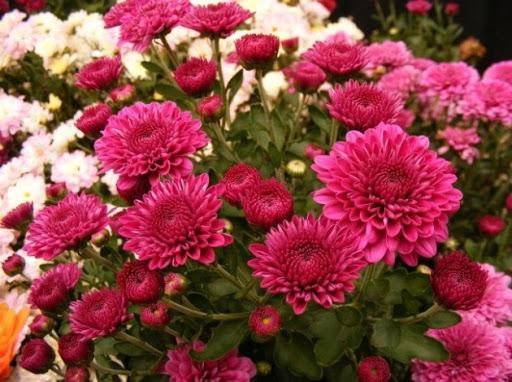
There are more varieties with pink flowers (Alenushka, Bacardi, Optimist) than those with blue or light blue ones. The shades vary widely. Some varieties gradually darken from the edges of the petals to the center.
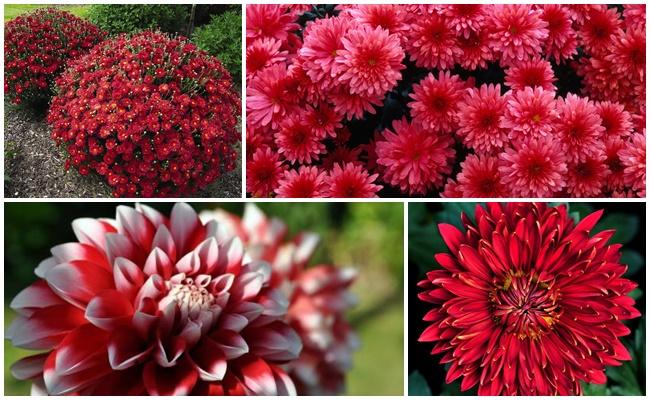
Reds
Red is also considered a common color in chrysanthemums. This shade appears on large and small flowers, low-growing and tall, annual and perennial plants. This color is typical of Dublin, Toshka Red, and Managua.
Whites
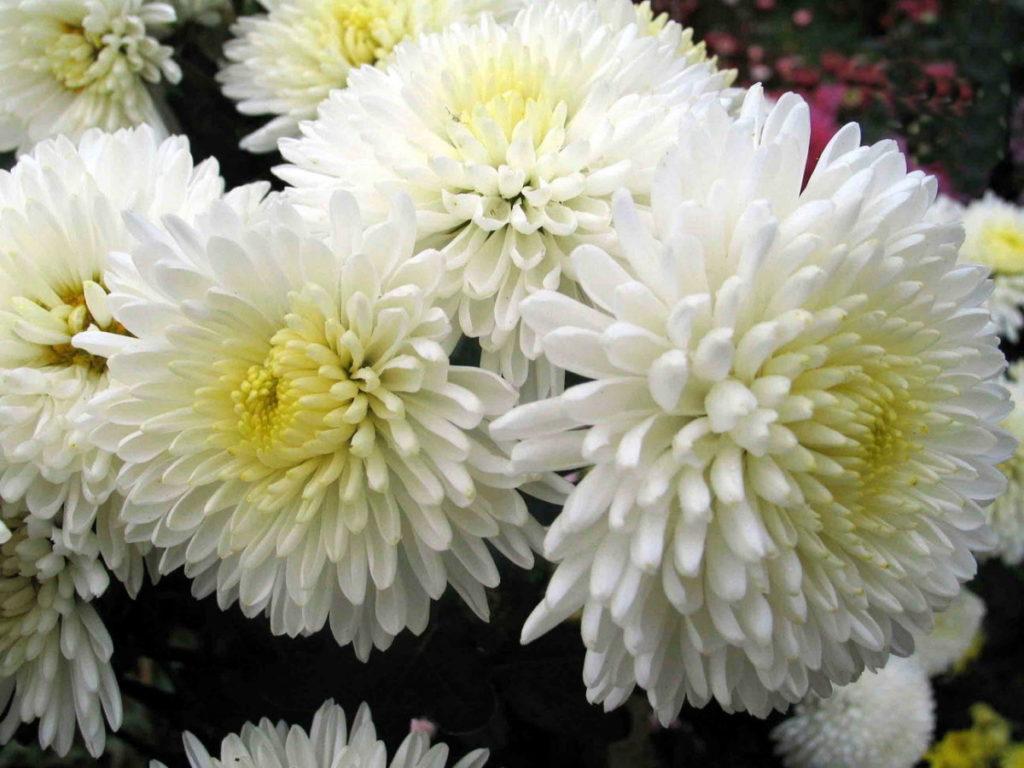
White chrysanthemums (White Eleanor, White Korean, Evelyn Bush) are considered the most beautiful. This is explained by the unique combination of shades. The white petals of these flowers grow from a bright yellow center.
Yellow
This color is found primarily in garden varieties with double inflorescences (Dune, Knopa, and Uvenannaya). The petals are generally a uniform shade. However, in some varieties, the yellow gradually darkens toward the center.
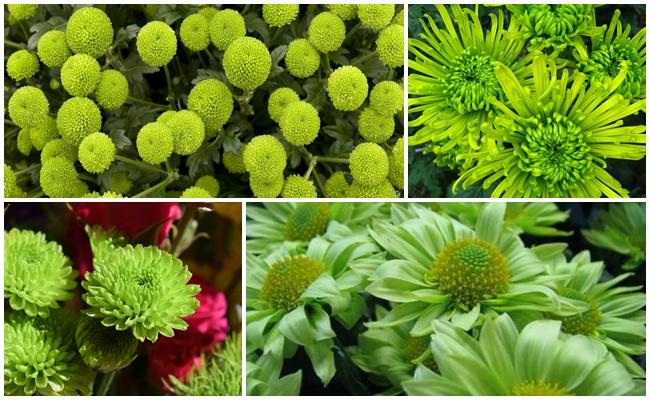
Greens
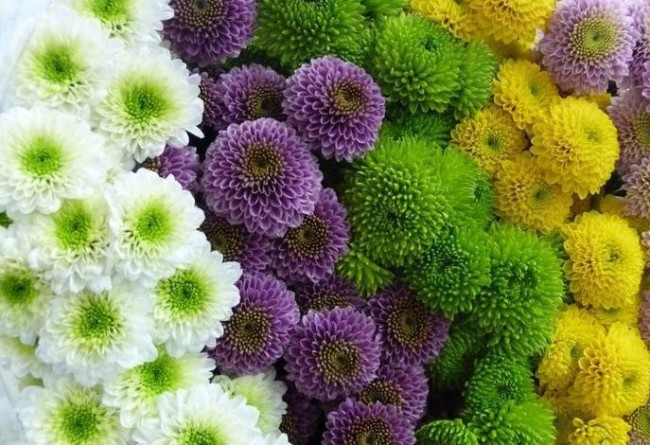
Another unique shade, more common in hybrid varieties (Yoko Ono, Green Lizard, Code Green). The green petals of these varieties are lighter than the stem and leaves.
How to choose varieties: tips and recommendations
When choosing chrysanthemums for growing in the garden, you can follow these recommendations:
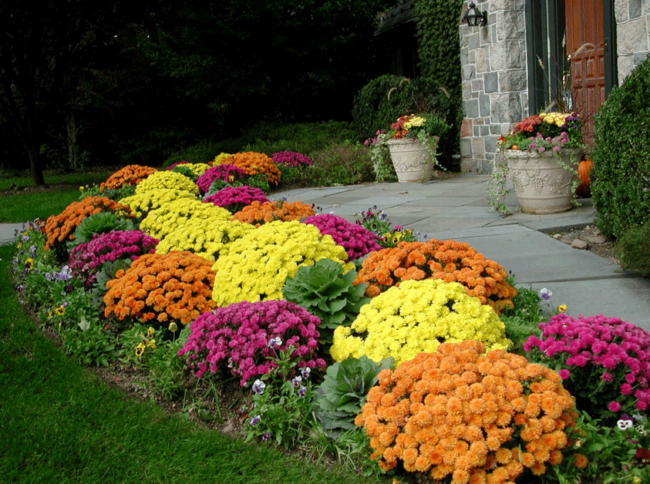
- for front gardens, you should select annual plants with small flowers;
- These plants are better suited for planting along borders or around the perimeter of flower beds;
- tall varieties are grown to create hedges or decorate walls;
- Low- and medium-sized varieties are suitable for growing in containers;
- If plants are grown for cutting, then large-flowered varieties should be purchased.
Chrysanthemums can be planted alongside asters, verbena, or echinacea. These flowers also thrive alongside cereal crops.
Related posts:
 Top 10 Chrysanthemum Varieties, Planting and Care Guidelines for Outdoor Plants
 Why chrysanthemums sometimes fail to bloom in open ground and how to speed up the process
 Planting and care guidelines for the Multiflora chrysanthemum and the top 9 beautiful varieties
 Top 15 Korean Chrysanthemum Varieties, Planting and Care in the Open Ground
 How to properly prepare chrysanthemums for winter and storage methods by region
 Timing and methods of propagating chrysanthemums at home, their cultivation
 The best time and rules for transplanting chrysanthemums to another location in the fall, care
 Top 50 best new rose varieties of 2025 with descriptions and characteristics