
- Do roses need to be prepared for winter?
- Stages and basic rules for plant preparation
- Top dressing
- Trimming
- Bending down climbing rose bushes
- Insect and disease control
- When to cover roses in different regions
- Moscow region
- Urals and Siberia
- Southern regions
- Recommendations for choosing covering material
- How to cover different types of roses: diagrams and technology
- Climbing
- Bushy
- Standard
- Park
- Groundcover varieties
- We cover the cuttings
- Mistakes of novice gardeners
One of the steps in rose care in preparation for winter is pruning. This procedure helps plants survive the cold and delight the gardener with bright, lush buds in the spring. The timing of pruning depends on the growing region and the plant variety. If the procedure is performed incorrectly, the flower will not survive the frost and will die. Preparing roses for the harsh winter begins with fertilizing.
Do roses need to be prepared for winter?
The winter hardiness of all rose species and varieties directly depends on the condition of the shoots. To stop their growth and allow them to fully mature before frost sets in, eliminate nitrogen from the fertilizer in August and, conversely, add phosphorus and potassium. These micronutrients promote shoot lignification.
Even the most frost-hardy varieties of modern garden roses require winter protection, as not all shoots fully mature before the onset of cold weather. From the first days of autumn, stop loosening the soil around the bushes, as this can stimulate the development of new shoots from dormant buds. Another step in preparing for the cold weather is pruning roses. This procedure begins in late September, when light morning frosts are observed. However, this timing varies by region and depends on the climate.
Stages and basic rules for plant preparation
If you properly care for your flowers in the fall and follow the advice of experienced gardeners, with the arrival of warmer days, the bushes will decorate your garden plot and become the highlight of your landscape design.
Top dressing
It's impossible to properly prepare rose bushes for winter without fertilizing them; the flowers won't have enough nutrients to help them survive the cold season.
Plant fertilization is carried out according to the following scheme:
- Foliar application. Its advantage is that the bushes receive nutrients very quickly, but the fertilizer doesn't affect the soil composition. Take 1 liter of hot water and dissolve 50 grams of superphosphate in it. Dilute the solution in 10 liters of water and apply it to the rose foliage. You can also add 5 grams of monopotassium phosphate to this mixture.
- Root method. To feed roses, buy ready-made mineral fertilizers at a gardening store. However, you can also make your own. To create a working solution, take 10 liters of warm water and dissolve superphosphate (15 g) and monopotassium phosphate (16 g).
- Folk remedies. According to gardeners, the best solution is to use yeast as a fertilizer. To prepare a solution, take 2 tablespoons of sugar and mix them with 10 grams of dry yeast. Dissolve the mixture in 10 liters of warm, but not hot, water. After 2 hours, add another 50 liters of water, and the fertilizer is ready. To prevent this fertilizer from leaching potassium from the soil, sprinkle wood ash around the bushes after spraying.


It is not recommended to use organic matter for autumn fertilizing or to apply it in minimal quantities, as it promotes increased shoot growth.
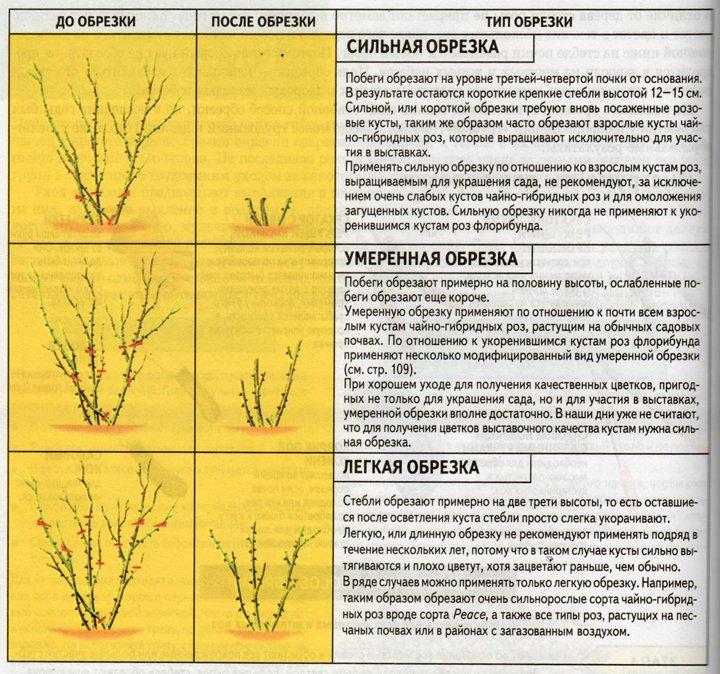
Trimming
Pruning should begin as soon as night frosts appear. Doing it any earlier will stimulate new shoot growth, which is detrimental to rose bushes before the onset of cold weather. The exact timing varies by region; in some, it's late September, while in others, it's late October or early November. This procedure is performed on both mature plants and young, one-year-old seedlings.
General pruning rules that apply to all types of garden roses:
- The first thing you need to do is cut off all the young, immature shoots; they are characterized by a red color.
- Remove all flowering stems. First, remove all flowers to prevent them from forming seeds.
- Sanitary pruning is carried out, removing diseased, broken and damaged branches.
- A thinning procedure is also carried out, for this it will be necessary to trim thin shoots that are thickening the bush.
- Old branches that are more than 4-5 years old are also completely cut off.
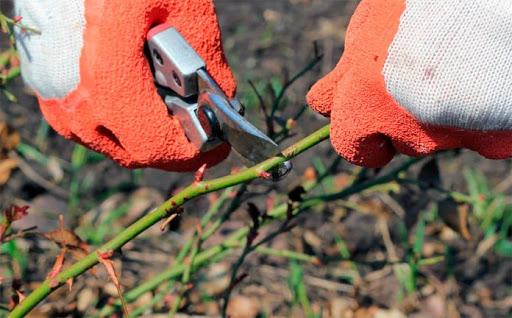

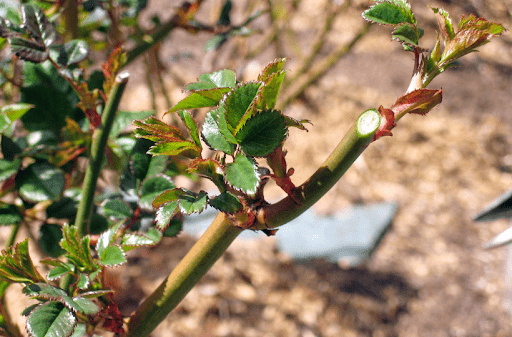
When carrying out work, pay attention to the fact that all cuts should be oblique and located 0.5-1 cm above the bud.
Bending down climbing rose bushes
If you have climbing roses growing in your garden, before insulating them for the winter, remove all the shoots from their supports and carefully bend them to the ground. It's important to follow the proper procedure, ensuring the branches don't touch the ground. To secure the shoots, use staples made of thick wire.
In southern regions, where winters are warm and short, there is no need to remove climbing roses from their supports; covering them with lutrasil or spunbond is sufficient.
Insect and disease control
Before covering rose bushes for the winter, preventative treatment against diseases and insect pests is necessary. Spraying the bushes with Bordeaux mixture is recommended. However, if frequent treatments with copper-containing products were used during the season, this will lead to bush suppression. In this case, it is better to use Fundazol at a 2% concentration. To prevent stem canker, add Fitolavin, as fungicides are ineffective against this bacterium.

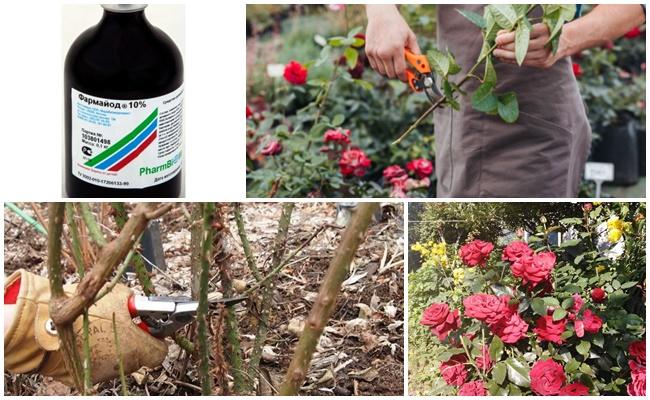
The drug "Pharmaiod" effectively combats infectious pathogens; bushes are treated with a 1% solution. To repel pests, wood ash or poison is spread around the perimeter of the plantings. To prevent mice from damaging the bushes, they are covered with spruce branches for the winter.
When to cover roses in different regions
The time to begin covering roses depends on the growing region and its climate. A good guideline is that nighttime temperatures should be around 5-7 degrees below zero.
Moscow region
In the temperate zone, the required drop in nighttime temperatures occurs in late October or the first ten days of November. In Moscow and the Moscow region, roses begin to be covered when the nighttime temperature stabilizes at -5°C.
Urals and Siberia
If roses are grown outdoors, they should be covered in late September. This work can also be continued throughout October if the first month of autumn is still too warm.
Southern regions
Residents of southern regions are the last to begin covering their roses for the winter. This procedure should be completed during November.
Recommendations for choosing covering material
When choosing a material to insulate rose bushes in the garden, consider regular polyethylene film, available at gardening stores. Experienced florists recommend using this material for sensitive plant varieties, as it maintains a layer of air underneath the film and doesn't interfere with the plant's metabolic processes. Geotextiles or lutrasil are also popular; they have similar properties, but are more expensive than polyethylene. These materials are ideal for air-dry covering.
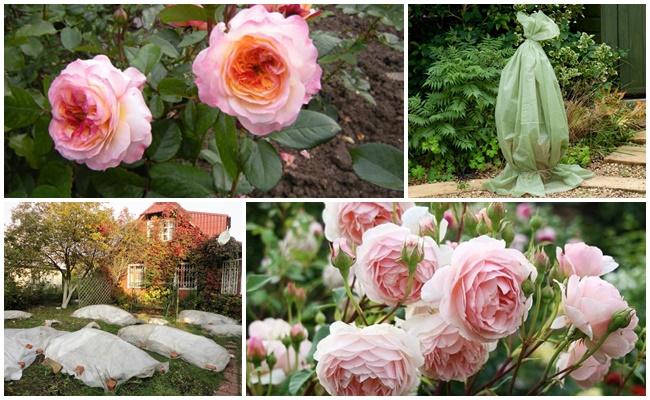
If you don't have the extra money to purchase insulation for your bushes, you can use whatever you have on hand. Worn burlap, spruce branches, or dry fallen leaves will all work.
How to cover different types of roses: diagrams and technology
There are several ways to insulate flowers before winter:
- air-dry;
- shield;
- using jute bags.
The choice of a specific method depends on the rose variety and its cold resistance.
Climbing
Garden climbing roses are insulated by first removing them from their supports and bending them to the ground. However, in southern regions, this step is optional, and the flowers can be covered directly on the supports.
Algorithm of actions:
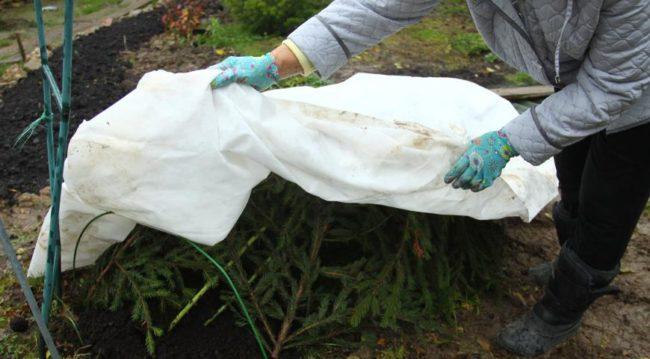
- All branches are tied with twine and laid on the ground, after first laying down a layer of dry leaves or covering material.
- Spruce branches are placed on top and the tops of the tied bundles are pressed down with a brick to prevent the shoots from straightening out.
- Spunbond is placed on top of the spruce branches; roofing felt can also be used.


When insulating climbing varieties, it is important to leave an air gap between the plant and the material to prevent the roses from rotting.
Bushy
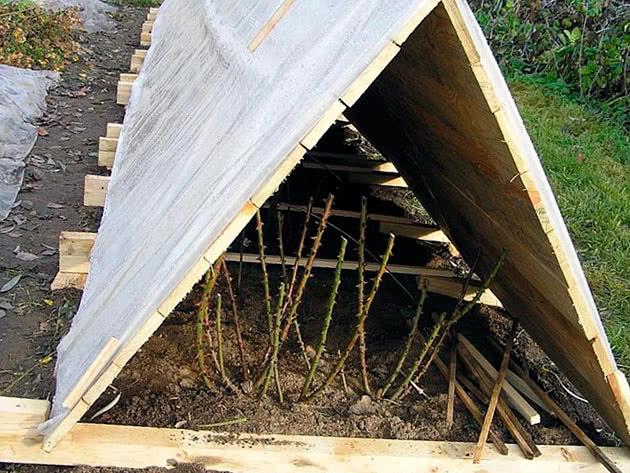
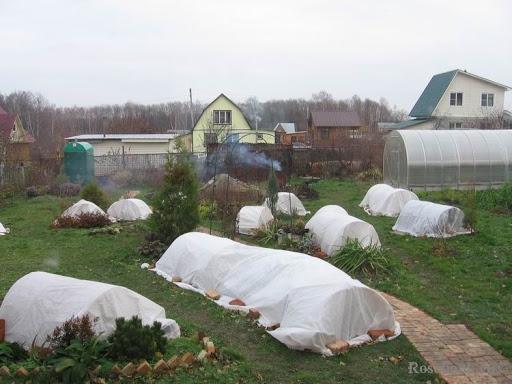
For these varieties of roses, the air-dry method is suitable; by creating an air gap, the necessary microclimate for the plants is maintained.
The work is carried out according to the following instructions:
- The arcs are installed and reinforced with slats so that they bend under the weight of the snow.
- Any covering material is stretched over the top in several layers and secured at the base of the arches with bricks or pieces of board.
Take a look Also

To preserve bush roses until spring in cold regions, the base of the plants is additionally insulated with spruce branches before covering.

Standard
Since a standard rose is a graft onto a resistant variety, it is necessary to insulate the grafted part of the plant.
Covering is carried out according to the following algorithm:
- First, the crown is wrapped with spunbond in 2-3 layers.
- Carefully bend the trunk to the ground so that it does not break.
- A peg is driven in nearby and the plant is tied to it.
- Spruce branches are placed on the rose, dry leaves are sprinkled on top and then spruce branches again.
Park
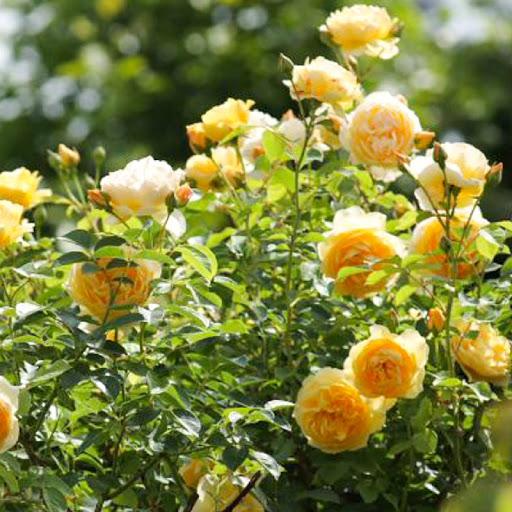
Most varieties of park roses are characterized by high winter hardiness and require insulation only when grown in northern regions. To cover the plants, they must first be bent to the ground. Since park roses have very rigid trunks, it is necessary to dig under the bush on one side to avoid breaking the plant, and only then bend it. Spruce branches or a layer of dry leaves are placed on top and insulated with spunbond.


Groundcover varieties
The insulation process depends on the height of the plants:
- Low-growing varieties are covered with spruce branches and then covered with thick fabric. You can also create arches and stretch agrofibre over them.
- Medium-sized rose branches are tied with twine at the top and wrapped in jute bags. The root area is additionally sprinkled with a layer of sawdust.
- Tall varieties should be bent to the ground, first covered with spruce branches. An air shelter is created on top.
We cover the cuttings
If rose cuttings were planted in the fall, they must be protected from cold and snow. Arches should be installed over the cuttings and wrapped in insulating material.
Mistakes of novice gardeners
When covering bushes for the winter, novice gardeners sometimes make mistakes. The most common is failing to observe the deadlines. Bushes that are covered prematurely produce young shoots that don't have time to harden and die when the cold weather sets in. When covering plants, ensure there's an air gap between them and the material. Otherwise, the roses will rot over the winter and won't produce new shoots in the spring.
Related posts:
 Top 7 varieties of shrub roses, their planting and care in open ground for beginners
 Description of the Cordana rose, planting and care at home
 Top 50 best new rose varieties of 2025 with descriptions and characteristics
 How to plant roses in autumn and at what distance, and further care
 Growing Climbing Roses and the Top 10 Varieties, Planting, and Care in the Open Ground
 When is the best time to transplant roses and how to do it correctly?
 Planting and caring for park roses in open ground, growing rules
 Stages and rules for caring for roses by season, when to prune, protection from diseases