
- The benefits of propagating roses yourself
- Methods and technology of rose cultivation
- Cuttings
- Timing and rules for harvesting cuttings
- Rooting methods
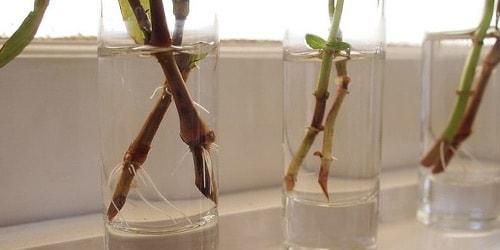
- In the water
- In the ground
- We use potatoes
- In a bag or newspaper
- Further landing at a permanent location
- Seed propagation method
- How and when to harvest seeds
- Preparing seeds for planting
- Timing and sowing patterns
- Caring for seedlings
- Other methods
- Layering
- Graft
- Nuances in growing different types of roses
- Climbing
- Bushy
- English
- Mistakes of novice gardeners
Growing garden flowers involves numerous nuances that few people know about. There's a wealth of information available on how to grow and propagate roses. First, you need to choose the appropriate propagation method and then prepare all the necessary materials. Don't expect quick results, as rose propagation is a long process that requires patience.
The benefits of propagating roses yourself
Growing roses at home is a fascinating process. Every beginning gardener dreams of growing a rose from scratch. The advantages of growing roses at home:
- the ability to choose the breeding method;
- preservation of varietal characteristics during cuttings;
- rejuvenation of rose bushes;
- renewal of old plants;
- the ability to control the process from seed production to bud formation;
- obtaining new species.
The disadvantages of growing rose bushes include the plants' fussiness, the creation of rooting conditions, and the specifics of performing the necessary operations.
Methods and technology of rose cultivation
There are two types of propagation for rose bushes: seed and vegetative. Vegetative propagation methods include cuttings and grafting, which help produce varieties without losing quality. Seed propagation allows for the development of new varieties that may differ from the original species. Combining and mixing seeds is a time-consuming process requiring exceptional patience from the gardener.
Cutting is a method that accomplishes several tasks:
- helps to plant bushes;
- rejuvenates the culture;
- promotes the propagation of the parent variety.
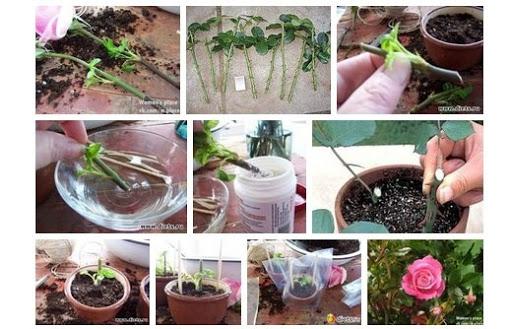
Cuttings
Cuttings are a method whereby a portion of the parent plant is separated and conditions are created for the rooting of the separated cutting. Cuttings are an artificial method of vegetative propagation of rose bushes, with a nearly 100% chance of producing a new plant.
Important! Propagation by cuttings is only possible with semi-woody cuttings taken during the flowering period.
Timing and rules for harvesting cuttings
To achieve good results from cuttings, it's important to propagate the bush correctly. To separate a portion of the mother rose, choose a period when the stem has become semi-woody or woody. This occurs in summer or fall, around the turn of August and September, when the bush begins to bloom.
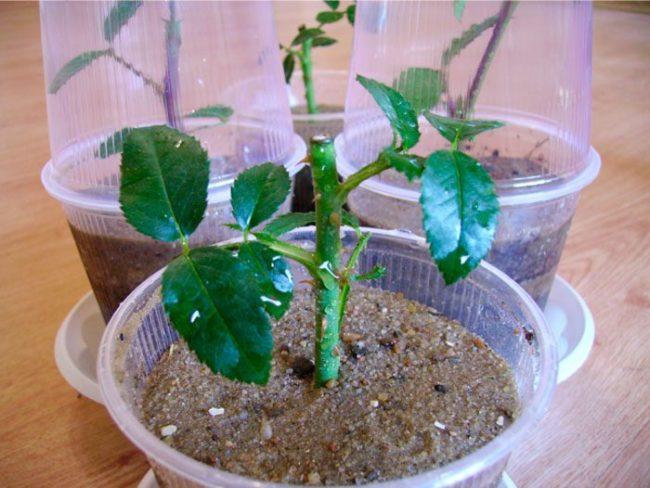
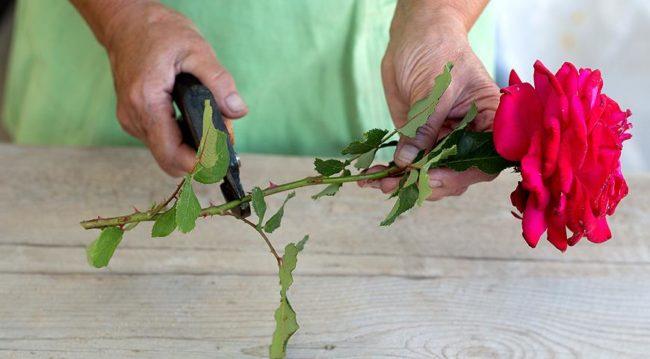
What the cuttings should be like:
- thick shoots up to 2-3 centimeters in diameter;
- on the shoot - from 3 to 5 buds;
- the shoot is cleared of thorns;
- shoot length – from 12 to 15 centimeters;
- the cut is made at an angle.

Don't use weak shoots; they won't root. Only strong material will root.
Note: A sign of rose stem lignification is the loss of thorns.
Rooting methods
After the shoot is cut, a period begins that determines the final outcome. This is rooting of the cutting. There are several ways to root the cutting.
In the water
Dwarf varieties can be successfully rooted in water. Use clean, boiled water. After each evaporation, add water to the 2.5-centimeter mark. Basic requirements for water rooting:
- using dark glass jars;
- adding a few drops of growth stimulator to water;
- creating greenhouse conditions by covering the container with plastic film and placing the container under a lamp.
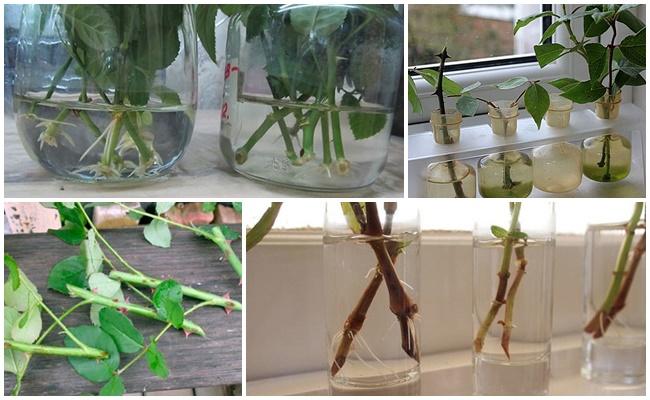
Water rooting will prevent shoots from developing a strong root system. The shoot will suffer from a lack of oxygen, so tall varieties that require a strong rhizome are not rooted in water.
In the ground
The soil method involves using prepared soil. The mixture for rose cuttings should be light and loose to ensure adequate oxygen supply to the cuttings. The cuttings are placed into the soil at an angle, covered with plastic, and then stored in a bright location.
We use potatoes
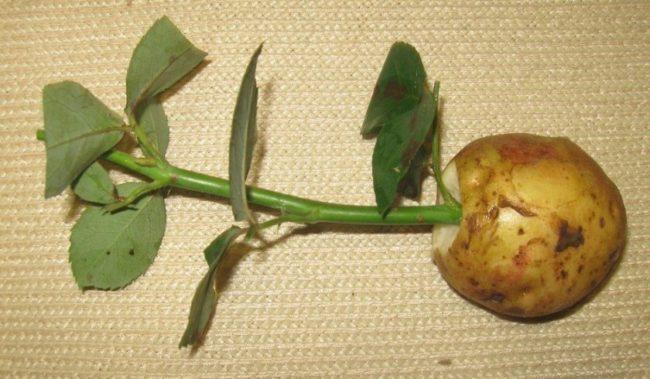
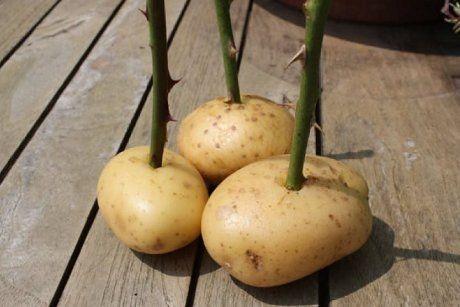
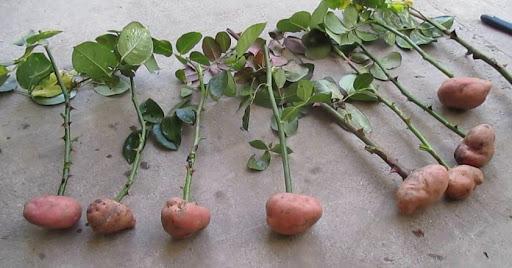
A raw potato creates a moist, nutritious environment for the rose cutting, which promotes rooting. A hole is made in a clean potato, into which the cutting is placed. The potato is placed on moist soil. The pot is covered with plastic to create a greenhouse effect.
In a bag or newspaper
One option is to fill a bag or newspaper cone with rose potting mix. Place the cutting at an angle. Tie the bag or cone and secure it until rooting occurs.
Further landing at a permanent location
The rooted shoot can be planted in a pot or transferred to the ground, provided that the temperature and soil conditions are met. A weak, under-developed cutting can be planted in a pot, but it should be placed under a jar and left to grow further. Only strong plants with a good root system are planted in open ground so they have time to adapt and become fully established before the onset of frost.
Seed propagation method
Dwarf and tall varieties can be propagated by seed. This method requires patience. It takes a long time from the start until the bush flowers. Various varieties that are difficult to obtain as seedlings can be propagated by seed. The seeds must be prepared: germinated, hardened, and selected.

How and when to harvest seeds
Seed collection begins in the second half of August or September. Choose a strong, attractive plant. The flowers are cut at peak bloom. Carefully cut the seed pod open with a sharp garden knife, remove the seeds, and begin processing.
Preparing seeds for planting
Seeds are prepared for planting in stages:
- After extraction, the seeds are washed with warm water;
- spread on gauze, immerse in hydrogen peroxide solution for 20 minutes;
- form a base from two layers of paper towel soaked in hydrogen peroxide;
- The substrate is placed in a plastic bag and stored until planting.
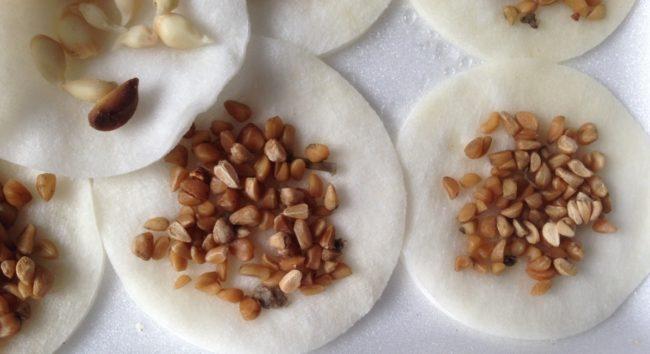
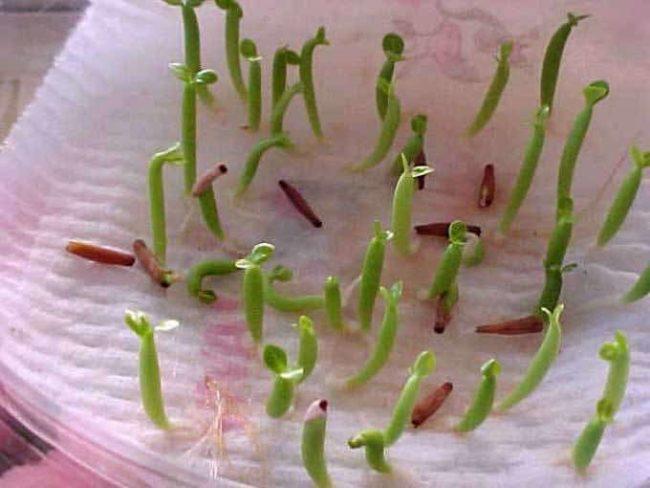

To increase germination rates, place the substrate on a refrigerator shelf. Cold treatment helps harden the planting material, enhancing its protective properties.
Note: The substrate must remain moist throughout the storage period.
Timing and sowing patterns
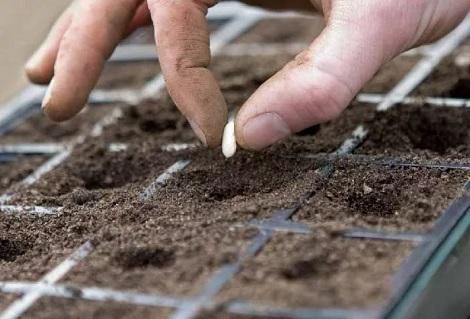
It's recommended to sow in the fall to allow the plants to establish themselves before transplanting outdoors. Seeds prepared according to the required standards are planted 1 centimeter deep, with a 10-centimeter spacing between seeds. To maximize germination, it's recommended to use special trays for planting. Cover the trays with glass and store them where the temperature doesn't exceed 20 degrees Celsius. Once the sprouts emerge, remove the glass, and after the acclimation period, transplant the seedlings into individual containers.
Caring for seedlings
The seedlings require maintaining optimal light and temperature conditions:
- daylight hours – at least 10 hours (especially in winter);
- air temperature – no more than +20 degrees;
- regular soil moistening.
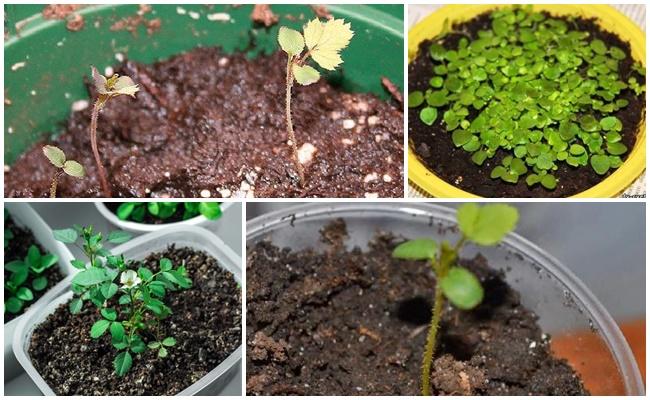
Growing at home requires constant monitoring of the cuttings. Avoid over-drying or over-watering the soil, as both conditions can trigger root diseases.
Other methods
Tall, dwarf, and climbing varieties are propagated by layering. This method allows rooting at any time. Grafting is used to rejuvenate, renew, or create a new plant.
Attention! Rosehip bushes are used for grafting.
Layering
Horizontal layering rooted well in small rose varieties or groundcover roses. The layering is not separated from the mother plant, but placed on the soil in a prepared trench, cut into the bud, and covered with soil. Layering is recommended in the second half of summer to allow rooting to occur before the onset of cold weather. The following season, the horizontal layering is separated from the bush and planted as a separate plant.

Graft
To perform budding, you need a base of rose hips or a wild rose species and a rootstock. The rootstock is the stem of a rose bush that is at least 2-3 years old. The rootstock can be obtained from a cut flower, provided it was at the peak of its bloom when cut.
The scion, cut from the stem, is trimmed of thorns and uneven surfaces, leaving only one living bud. An incision is made in the base, the bark is carefully peeled back, and the rootstock is placed along the entire length of the incision, pressing firmly on the side containing the bud. The graft is secured with tape or adhesive tape.
Important! The grafting was successful if, after two weeks, the petiole has dried and the bud has flowered.
Nuances in growing different types of roses
The diversity of rose varieties and species allows for a wide range of propagation methods. However, experienced gardeners advise paying attention to the specific characteristics of the variety.


Climbing
Large-flowered climbing roses are grown using standard structures. The climbing vine is trained along the standard to allow for proper care. These varieties are typically propagated by cuttings or layering. Planting from seed completely eliminates the possibility of preserving the species, is time-consuming, and offers no practical value.
Take a look Also

Bushy
Mature, overgrown bushes are propagated by dividing the selected bush. This method helps rejuvenate and expand a plant that takes up a lot of space. Proper planting allows you to get two or three full-sized bushes from a single mature bush.

English
Classic English varieties impress with their abundance of buds and robustness. A true English rose variety is difficult to obtain. Planting is usually done in spring or fall, using only proven seedlings. To ensure no varietal characteristics are lost, bushes are propagated exclusively by separating shoots from the mother stem.
Mistakes of novice gardeners
Experienced gardeners recommend starting with hardy varieties that offer enhanced protective qualities. Despite numerous recommendations, many make common mistakes:
- The planting location was incorrect. Roses love light and warmth. Planting in a shaded or waterlogged area will lead to wilting and the development of various diseases.
- Deepening grafted roses. The graft joint becomes a weak point for a grafted plant when planting. If the graft joint is placed above soil level, growth will be distributed between the base and rootstock, favoring the rootstock. If the graft joint is placed 2-3 centimeters below the required level, the bush will not take root.
- Poor summer care. This is a mistake caused by carelessness on the part of owners. Some neglect to remove spent blooms from the plant. This leads to disruptions in preparing the plant for the next season.
- Incorrect pruning. Ignoring strong shoots that don't bear flowers slows down the budding of the entire bush. Comprehensive and timely pruning allows you to expect prolonged flowering.
50% of all care mistakes are due to improper watering. Roses do not tolerate waterlogged soil. Excess moisture leads to the development of gray mold, root collar rot, and stem diseases..
If a rose doesn't receive enough moisture, its root system lacks the strength to grow foliage and stimulate flowering. Rose bushes need to be watered in a circle around the stem, 5-10 centimeters from the main stem. Water provides the rose with minerals from the soil, which the rhizomes need for vigorous growth and color.
Related posts:
 Top 7 varieties of shrub roses, their planting and care in open ground for beginners
 Description of the Cordana rose, planting and care at home
 Top 50 best new rose varieties of 2025 with descriptions and characteristics
 Growing Climbing Roses and the Top 10 Varieties, Planting, and Care in the Open Ground
 Planting and caring for park roses in open ground, growing rules
 How to plant roses in autumn and at what distance, and further care
 When is the best time to prune roses in the fall and how to do it, and the timing of preparation for winter by region.
 When is the best time to transplant roses and how to do it correctly?