
- Double Hibiscus: Description and Characteristics
- Use in landscape design
- The best varieties
- Yellow
- Peach
- Red
- Pink
- White
- Planting a plant
- Preparing seedlings and the site
- Timing and technology of sowing and planting seedlings
- How to care for a plant
- Optimal temperature and humidity
- Watering and fertilizing
- Relocation to a new location
- Preparing for the winter period
- Protection from diseases and pests
- Methods of reproduction
- Possible difficulties
Double hibiscus belongs to the Malvaceae family and grows as a woody shrub or herbaceous flower. The plant is adapted to tropical and subtropical climates and is not recommended for cultivation in colder climates. Gardeners plant young double hibiscus seedlings in pots and move them to balconies or loggias. For Hawaiians, this flower is a national treasure, considered a symbol of feminine beauty.
Double Hibiscus: Description and Characteristics
Double hibiscus is native to China, Asia, Africa, America, and Australia. Breeders dubbed the plant the "Chinese rose" due to the unusual shape of its buds. The petals are arranged in rows, creating a multi-layered structure.
Hibiscus is a versatile plant, used to decorate flowerbeds, sidewalks, and boulevards, or as a houseplant. The shrub grows to 2.5-3 m, with smooth stems and variegated, bright green leaves.
The bud opens to a diameter of 13-19 cm, and 24 hours after flowering it becomes a kind of seed box.
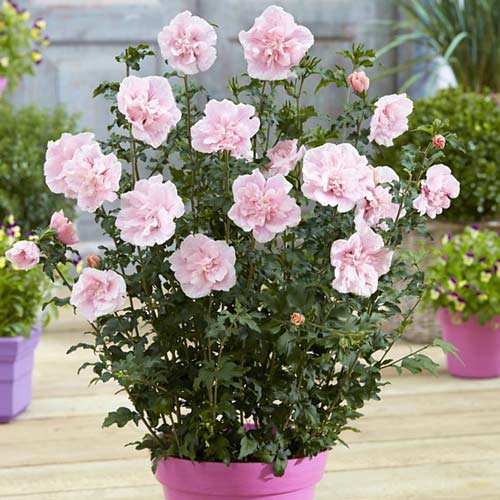
The plant is considered a double flower due to its multi-layered petals. The flowers are bright and large, while the leaves are thin and glossy. The petals are rounded at the bottom, resembling a fuzzy ball. This variety is suitable for growing in a greenhouse or conservatory.
Use in landscape design
Terry hibiscus is used by landscape designers in different ways:
- They are planted in a bouquet of 4-6 single-color or multicolored flowers. As the shrubs grow, their foliage will close, forming a single large planting with numerous flowers. A bench or swing can be placed next to the flower area.
- A pair of trees are planted next to each other, their trunks intertwined during the growing season. During flowering, the foliage will take on a spherical shape.
- Hibiscus is planted individually; against the background of bright green grass it will look bright, eye-catching, and attractive.
- The plant is suitable for flowerbeds and mixed borders. Low-growing specimens are used to create borders.
- Roses make excellent companions for double hibiscus. It's recommended to choose low-growing roses.
- This herbaceous plant decorates screens, walls, fences, and gazebos. Its vibrant buds and emerald leaves complement white wrought iron or wooden garden furniture perfectly.
- The tree-like shrub is planted behind a fence or gate; it goes well with coniferous trees and junipers.
- You can decorate a stream or pond with marsh hibiscus.
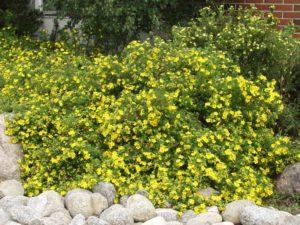
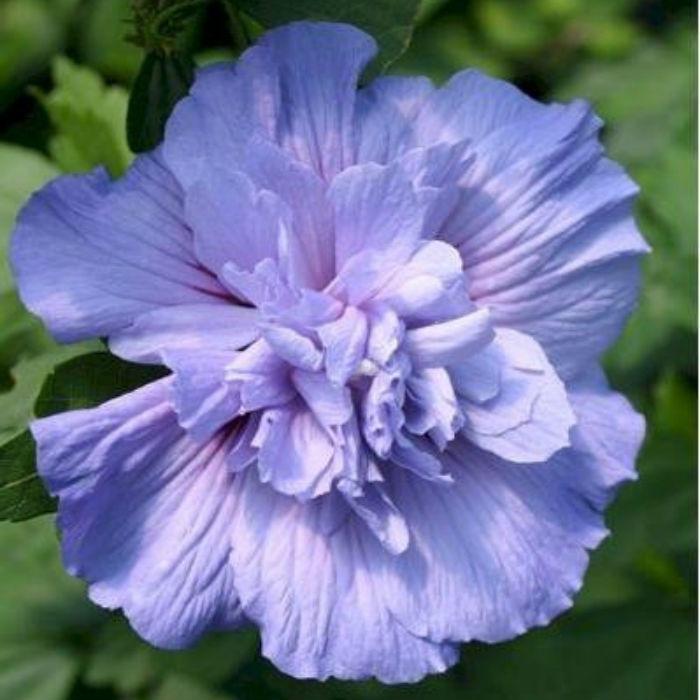
Double hibiscus is considered a weed-free plant, making it ideal for decorating entryways and front areas. It pairs well with catnip, mint, and lavender.
The best varieties
Double hibiscus blooms for 20-24 years, with individual specimens reaching a maximum height of 2.9-3.2 m. Through selective breeding, approximately 300 varieties have been developed.
Yellow
Yellow hibiscus is a typical double-flowered plant. It differs from the China rose in bud size and color. Yellow flowers are often used in landscape design to enhance garden spaces.
Peach
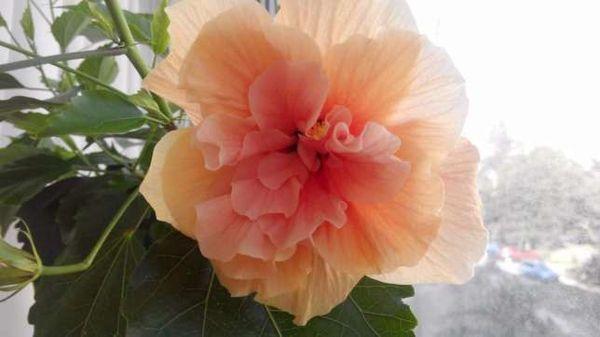
Peach flowers are often confused with pink ones due to the similarity in shade. The close-fitting petals create a dappled appearance. Peach hibiscus are used to decorate arbors and verandas.
Red
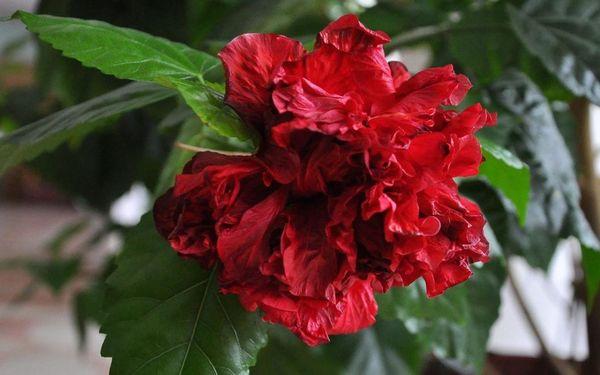
The most common variety, similar to the China rose. The bright green foliage stands out against the large red buds. The vibrant coloring gives the plant a distinguished, striking appearance.
Pink
This variety grows as a small tree, abundantly covered with emerald leaves throughout the season. When open, the double buds are 13-15 cm in diameter. Pink hibiscus is used to decorate winter gardens and home greenhouses.
White
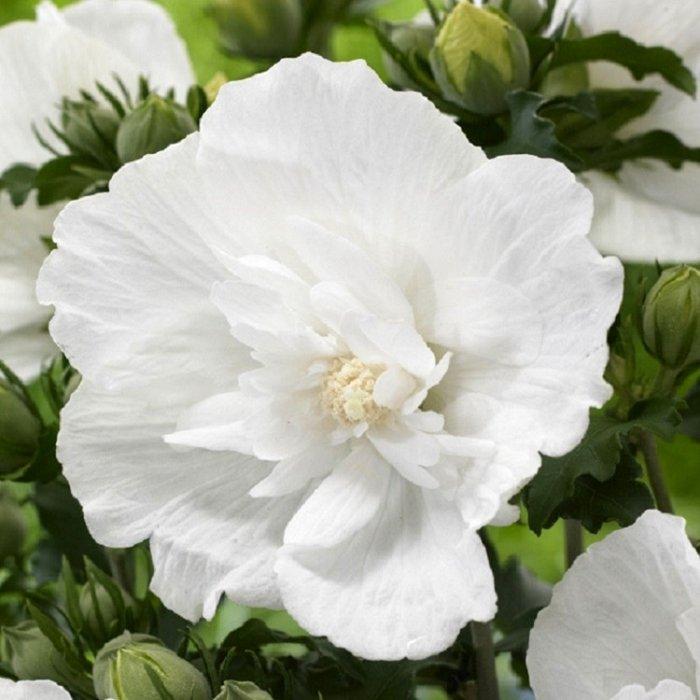
This variety is represented by a shrub 1.5-3 m tall and 1.5 m wide with numerous bright green leaves. The height and width of the mature plant are the same. White hibiscus plants adorn gardens, front gardens, and entryways.
Planting a plant
An important consideration when planting is the choice of soil. The soil should be permeable to air and moisture, porous, and loose. The bottom of the pot should be lined with drainage material. The soil should be mixed with pine needles, leaf mold, peat, sand, manure, and charcoal. The soil should be neutral in pH.
With increased or decreased acidity, it is difficult for the plant to be saturate with mineral substances.
Preparing seedlings and the site
Before planting, the area is prepared by digging, loosening, watering, and fertilizing with organic fertilizer. The pruned branches are placed in a bucket of room-temperature water, and the newly grown roots are transplanted into the prepared soil. The seeds are soaked in a solution of potassium permanganate diluted with water to disinfect them and prevent the development of diseases. The sprouted seeds are planted in the prepared soil.
Timing and technology of sowing and planting seedlings
Seedlings are planted in January-March. When propagated by cuttings, the planting material takes root in July-August. Branches can take root in the spring during pruning.
Planting of seeds is carried out as follows:
- They are soaked in a growth stimulator for 12 hours.
- The seeds are washed, laid out on wet gauze, and covered.
- Prepare the soil by pouring a sand-peat mixture onto the bottom of the pot.
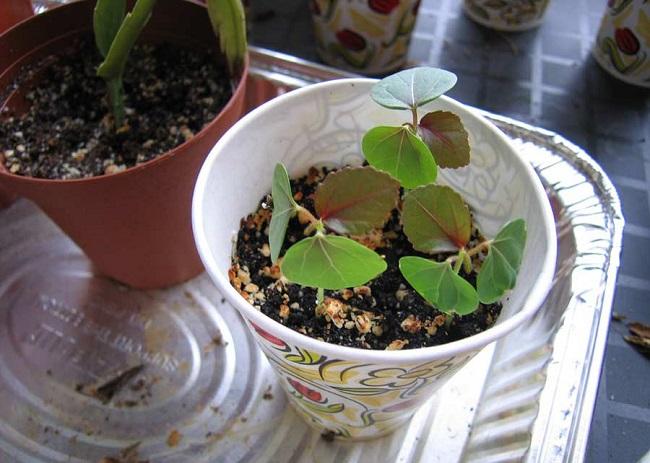
- When shoots appear, they are transplanted into a pot and watered.
Cover the pot with a plastic bag or lid. When 2-3 leaves form, transplant the hibiscus to a larger pot. Hibiscus propagated by seed blooms after 2-3 years.
The method of propagation by cuttings is slightly different:
- The branches are placed in a bucket of water and then planted in the soil.
- After placing the hibiscus in the pot, 2-3 leaves should remain on the surface.
- The pot is covered with a glass bottle.
- After rooting, the flower is placed in a pot with a substrate of mixed moss and peat.
The first bloom of a double hibiscus from cuttings occurs after one year. The pot for planting shouldn't be too large, otherwise the plant will be overflowing with leaves rather than flowers. The bottom of the container must be lined with drainage - this eliminates water retention in the root system and prevents rotting.
How to care for a plant
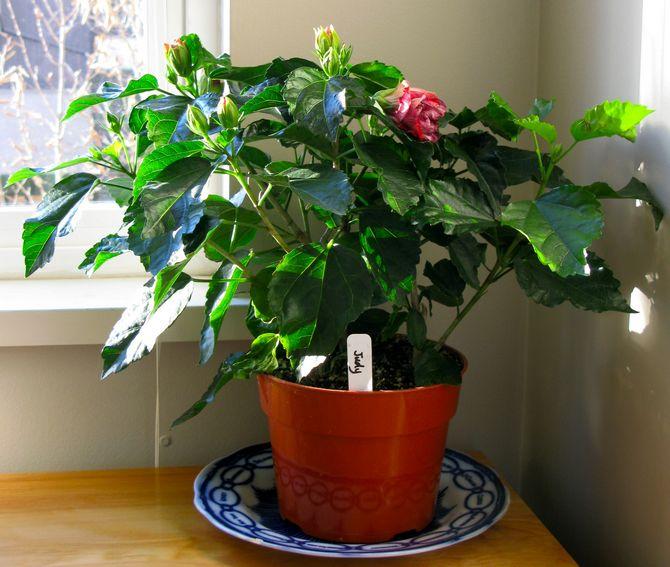
Hibiscus care includes regular watering and fertilizing. Proper care determines the rate of growth, development, and flowering of hibiscus.
Optimal temperature and humidity
The best conditions for terry hibiscus in summer are temperatures of +20…24 OC. In winter, the acceptable temperature is considered to be +14-17 OThis temperature shouldn't drop below C, otherwise the flower will die. In summer, the pot is placed on the balcony; in winter, it's brought indoors. Humidity levels should be increased.
If the air in the room is dry, mist the plant regularly with a spray bottle. The optimal humidity level is between 60% and 85%.
Watering and fertilizing
Before flowering, place the hibiscus in a location with maximum natural light—a balcony, loggia, or veranda. The pot should be placed in a shaded area—direct sunlight should not hit the leaves, as this will cause them to dry out. The pot should have holes to allow excess moisture to evaporate after watering. The presence of drainage at the bottom of the pot is a must when planting a plant.

Watering frequency is determined by the soil's drying time. Hibiscus is watered with soft, settled water, and the water from under the pot is drained 30 minutes after watering. Excessive moisture can cause root rot. Double hibiscus is fed in the spring with potassium and phosphorus fertilizers. Subsequent feeding is done in the summer, when it begins to actively grow. Nitrogen fertilizers are not recommended for watering. For irrigation, it is best to use soft, settled water with a small amount of sugar added.
Relocation to a new location
Young specimens are repotted annually. Mature hibiscus are repotted every 2-3 years. If there are no signs of disease, the top layer of soil is refreshed. Remove 5-7 cm of soil from the surface of the pot and add fresh, fertilized soil.
Preparing for the winter period
In winter, the hibiscus pot is moved to a warm room and provided with adequate lighting using phytolamps. A poorly lit plant will experience poor growth, flowering, and wilting. Feeding frequency is gradually reduced. Feeding is introduced after watering.
Protection from diseases and pests
Double hibiscus leaves often turn yellow due to chlorosis. This is a consequence of frequent watering with chlorinated and calcified water. Gardeners recommend using settled water for irrigation. The plant is susceptible to spider mites and scale insects. These can be controlled with soapy water and Actellic.
Methods of reproduction
Terry hibiscus is propagated in three ways:
- Using cuttings. This procedure can be performed at any time of year. The best rooting occurs twice a year: in mid-February-March and mid-July-August.
- Using seeds. This method of propagation is distinguished by its productivity.
- By dividing the bush. This method is complex and is not suitable for houseplants.
Of all the hibiscus propagation methods, gardeners prefer cuttings. The procedure is simple and guarantees a high survival rate.
Possible difficulties
The following problems may arise while growing a flower:
- yellowing and falling of leaves due to lack of nitrogen and iron;
- failure of buds to open or falling off; the situation can be corrected by abundant watering and fertilizing;
- abundant foliage with a small number of buds - hibiscus does not receive the required amount of light, an excessive amount of organic matter is introduced;
- the leaves are wilting - the reason is insufficient watering;
- the leaves become covered with pink spots due to the abundance of minerals;
- The root system dries out - the reason lies in the low temperature.
The flower isn't particularly demanding in terms of care; regular maintenance is essential. When growing a double hibiscus, a gardener must learn to understand the plant's needs; only then will the flower delight the eye with a lush crown and large, vibrant blooms.
Related posts:
 Description and characteristics of the marsh hibiscus, planting and care in open ground
 Care and propagation of garden hibiscus, planting and growing rules
 Rules for planting and caring for herbaceous hibiscus, growing features
 The best eggplant varieties for growing in a polycarbonate greenhouse: planting and care
 How to properly plant peas in a greenhouse and open ground
 Methods for planting and propagating cherries at home
 How to grow ginger in the open ground at your dacha, planting and care
 Description of the best varieties of onions, planting and care in open ground