
- Botanical description of Potentilla Goldstar
- Advantages and disadvantages of the shrub variety
- Examples in landscape design
- Planting and care
- Site selection and preparation
- Preparing planting material
- Optimal time and planting patterns
- Watering schedule
- How and what to fertilize the plant with
- Loosening and weed removal
- Pruning a bush
- Shelter during the winter period
- Diseases and pests: prevention and treatment
- Reproduction
- Layering
- Seed collection
- Cuttings
- By dividing the bush
Cinquefoil is planted as a decorative feature in home gardens. It's easy to care for and blooms beautifully. A decoction made from the branches is used in folk medicine as a healing remedy. One popular variety is the Cinquefoil Goldstar. Below is information on planting and care, its advantages and disadvantages, propagation, and landscaping.
Botanical description of Potentilla Goldstar
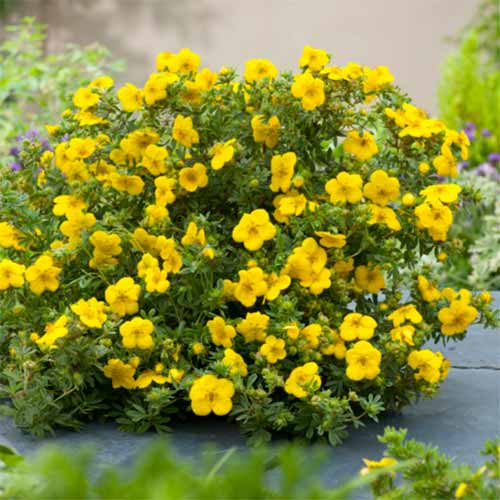
The shrub's shoots grow up to 80 centimeters. The crown diameter is 1.2 meters. The upright branches of the Goldstar cinquefoil are thin and strong. The leaves are lanceolate, shaped like a bird's foot. The upper surface of the leaf blades is green, while the underside is silvery.
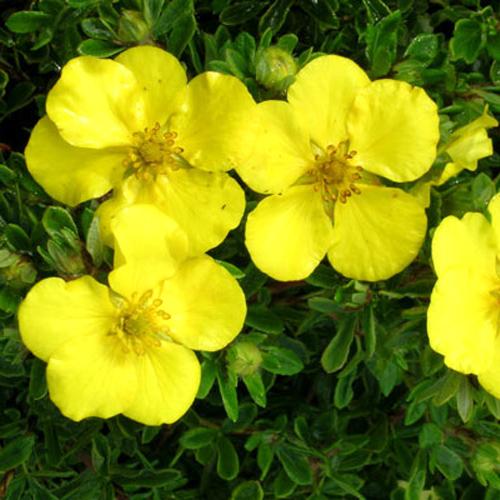
Shoot growth per season is 15 centimeters. Large flowers, up to 5 centimeters in diameter, form on the branches. They grow singly or in clusters. The petals are yellow. Flowering of the shrubby cinquefoil "Goldstar" begins in June and ends in September.
Advantages and disadvantages of the shrub variety
The positive qualities of culture include the following characteristics:
- decorative type of bushes;
- long flowering;
- ease of care;
- long life cycle of plants;
- good immunity;
- winter hardiness.
Among the disadvantages, one can highlight the poor resistance of the Goldstar cinquefoil to powdery mildew.
Examples in landscape design
This plant makes a good foreground for trees and tall shrubs. It's planted in rockeries, alpine gardens, and mixed borders. Goldstar cinquefoil can be used to create a hedge or as a border along a path.
The plant looks equally impressive when planted alone against a lawn. It can also serve as a backdrop for low-growing ornamental plants. Craftsmen also create topiary from cinquefoil.
Planting and care
Given that Goldstar cinquefoil can grow in the same spot for over 20 years, the site must be carefully selected. The duration and beauty of its blooms depend on the gardener's care. The bushes require timely watering, fertilizing, loosening the soil, and removing weeds from the trunk area.

Site selection and preparation
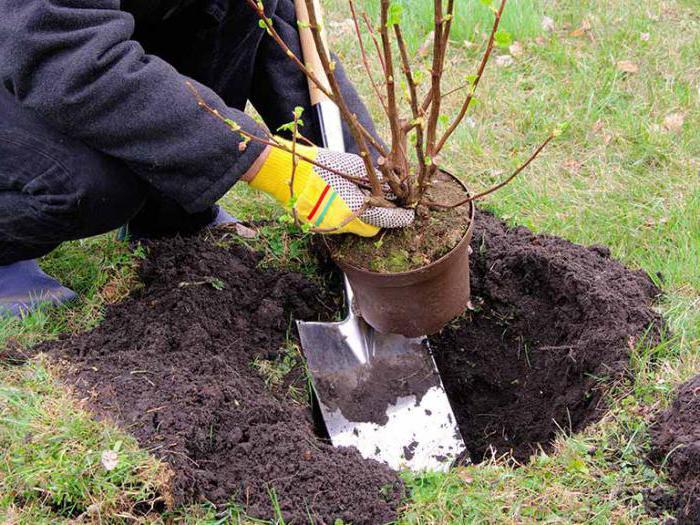
The site should be well-drained and protected from cold winds. Prepare the area two weeks before planting. Clear any debris, and dig a hole. Choose loose, fertile soil that is slightly alkaline or neutral.
Preparing planting material
A seedling purchased from a nursery or garden center is immediately planted in the ground. If the root system has dried out, soak it in a container of water for 1-2 hours. To speed up the establishment of the cinquefoil, you can add a growth stimulant at the recommended dosage. Any root system that is too long should be trimmed.
Optimal time and planting patterns
In cold regions, cinquefoil is planted in the spring, as soon as the weather warms up. In the south, planting in the fall is permitted. Dig holes at least 60-80 centimeters apart. This is necessary to ensure good air circulation between the plants.
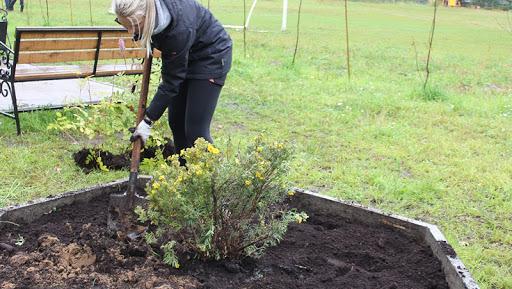
Planting of Potentilla Goldstar is carried out as follows:
- dig a hole measuring 70x70 centimeters;
- fine crushed stone and expanded clay are placed on the bottom;
- add a layer of soil mixed with 100 grams of mineral fertilizers;
- fill the remaining space with loose substrate;
- plant cinquefoil and water it generously.
Important! Do not plant the bushes too deep, otherwise flowering may be delayed.
Watering schedule
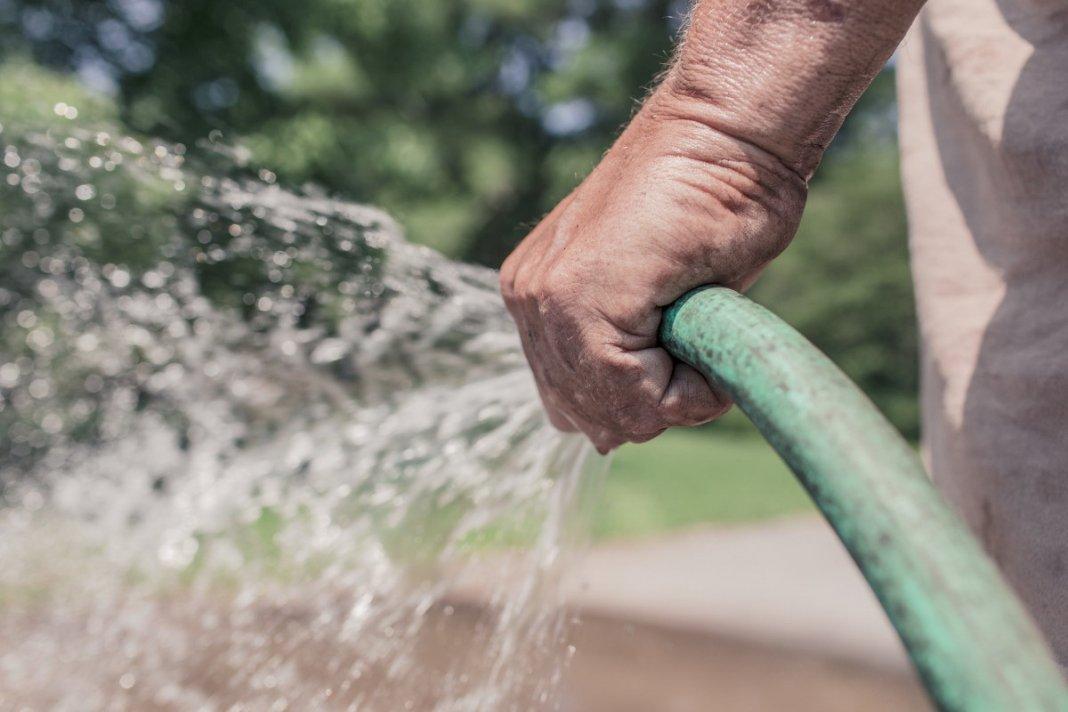
Young bushes are watered twice a week. Subsequently, watering is adjusted based on weather conditions. Reduce watering during periods of frequent rainfall. Allow the topsoil to dry out between waterings. Allow the water to settle before watering the cinquefoil. To ensure the bushes overwinter safely, water the soil generously in mid-autumn.
How and what to fertilize the plant with
If cinquefoil was planted in fertile soil, the first feeding is done after two years. Nitrogen fertilizers are applied in the spring. During budding, the soil is fertilized with a potassium-phosphorus mixture. After flowering, potassium is added to promote good winter survival.
Please note! Fertilizer should be applied a few hours after watering the plants.
Loosening and weed removal
The soil around the roots is loosened 1-2 days after watering. This prevents the soil from drying out. Loose soil allows air and moisture to more easily reach the cinquefoil's root system. Weeds hinder plant development and can also carry diseases and pests. Therefore, they are removed with garden tools while loosening the soil.
Pruning a bush
Plant inspection and sanitary pruning are performed throughout the season. Dry, diseased, broken, and inward-growing shoots are removed. Old, unsightly branches are pruned to rejuvenate the bush. Pruning can also be used to shape the cinquefoil into any desired shape.

Shelter during the winter period
Goldstar cinquefoil is winter-hardy. Mature bushes do without cover. A layer of compost, straw, or tree bark around the root zone is sufficient. Young bushes planted this season can be covered with agrofibre.
Diseases and pests: prevention and treatment
The Goldstar cinquefoil has good resistance to diseases and pests. It can be affected by adverse weather conditions or gardener errors. For example, heavy rainfall and cold watering can increase the risk of powdery mildew.
The disease is treated by spraying with copper-containing preparations. In the spring, plants are treated preventatively with the same substances. Insecticides are used to control pests. To prevent their reappearance, plant debris is removed from the root zone.
Reproduction
Potentilla Goldstar is propagated by several methods: layering, division, and cuttings. When propagating by seed, keep in mind that the young plants may not inherit all the parental traits. This method is more labor-intensive than others. It is typically used in breeding projects to develop new plant varieties.
Layering
The shoots intended for propagation are stripped of foliage. They are then placed in furrows 5-8 centimeters deep and secured to the ground with wire. The cuttings are watered and covered with soil. Soon, a root system will form on them. The grown bushes are separated from the mother bush and planted separately.
Seed collection
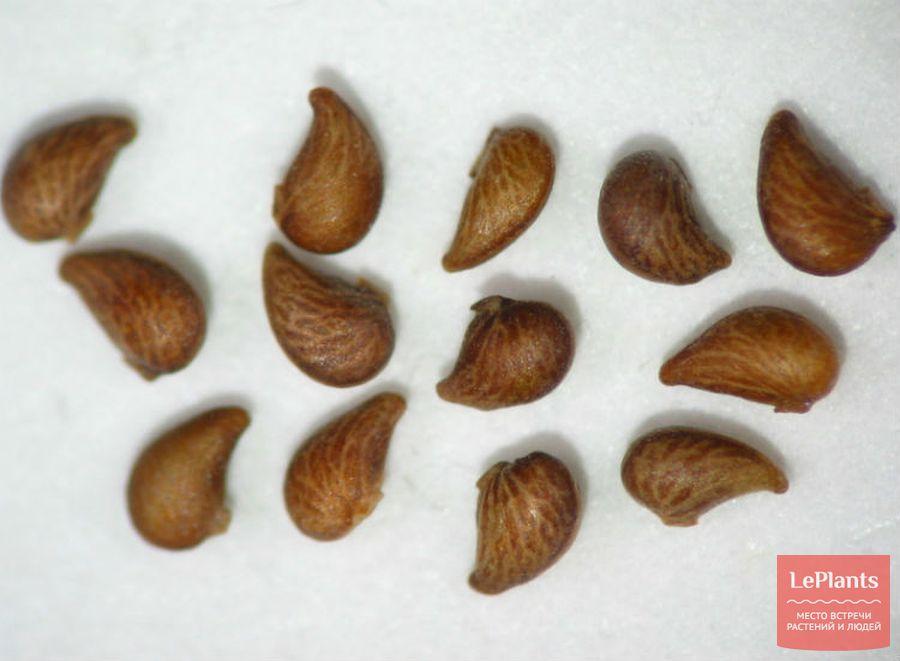
In early autumn, seed pods form on the bushes. These are collected and dried. The seeds are planted directly into the ground in spring or autumn. If the gardener is wary of risking the seeds, they can plant them in a container first. Once the seedlings have grown, they are thinned out and planted in small pots. After a year, the bushes are ready for planting in the ground.
Cuttings
Reproduction by this method is carried out as follows:
- cut into pieces 8-12 centimeters long;
- the cuts are sprinkled with a rooting enhancer, for example Kornevin;
- plant several pieces in a pot;
- watered;
- the container is covered with film.
The mini-greenhouse is ventilated daily. When the top layer of soil dries, water it. After rooting, the cuttings are allowed to grow and then planted in the garden at a distance of 60-80 centimeters. This spacing is necessary for the successful development of the bushes. Well-ventilated plants are less susceptible to disease.
By dividing the bush
Plant division is done in spring or fall. Choose Goldstar cinquefoil plants that are at least four years old. The bushes are dug up, the root system is washed, and the root system is separated with a sharp, disinfected tool. Each section, with shoots and root system, is planted in a prepared location. To conserve moisture, the soil around the bushes is mulched.
Related posts:
 Rules for planting and caring for cinquefoil in open ground, growing and pruning
 The best varieties and types of cinquefoil, their description and growing characteristics
 Description and rules for growing the Red Ice cinquefoil variety, planting and care
 Nepalese cinquefoil varieties, their cultivation and use in landscape design
 Useful properties and contraindications of Potentilla erecta
 Description and methods of using Potentilla Goldfinger, planting and care rules
 Planting, growing, and caring for white cinquefoil in open ground
 Description and characteristics of the Potentilla variety Princess, planting and care instructions