
- Factors that determine the readiness of onions for harvesting
- Signs of maturity
- Leaf color
- False stem
- Tops
- Methods to speed up ripening
- More sun for heads
- Trimming roots
- Undermining the roots of bulbs
- Watering with salt water
- Destruction of feathers
- When they clean up in the Black Earth Region
- Harvesting and storage of crops
- The dangers of untimely harvesting of onions
- Typical mistakes
- Mathematical method of counting
Onions are the most popular vegetable. They are prized for their flavor and medicinal properties. There are approximately 70 varieties, each with its own ripening and harvesting time. The safety of the harvest in the Central Black Earth Region depends on the correct timing of onion harvesting. What signs indicate ripeness, and what to do if the onion is late in ripening?
Factors that determine the readiness of onions for harvesting
Every plant and vegetable has a harvesting time determined by a number of factors. Onion maturity and readiness for harvesting depend on the following factors:
- from the time of landing;
- soil varieties and types;
- as well as from the weather conditions of the area.
Early winter varieties of onions are harvested earlier than those planted in the spring. In the central regions of our country, onions usually ripen in late July.
If the summer was hot, this promotes rapid growth and ripening of the root crop, which means it is harvested in the last ten days of July.
The Central Black Earth Region includes the Voronezh, Belgorod, Lipetsk, Kursk, and Tambov regions. Winters in the Central Black Earth Region are markedly mild, with temperatures rarely dropping below -25°C (-25°F), making it possible to plant early- and mid-season onion sets in the ground in late autumn before winter.
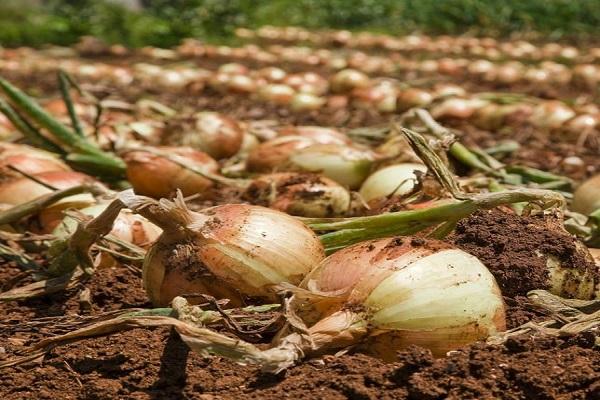
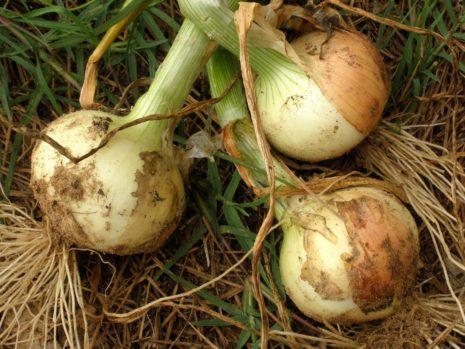
To determine when to harvest onions, regularly monitor the bed where this bitter yet nutritious root vegetable grows. When the onions are ripe, their roots die back, and the necks become dry and almost closed. The roots become covered with dense, dry scales, bright yellow, white, or red depending on the variety. These signs indicate the vegetable's ripeness.
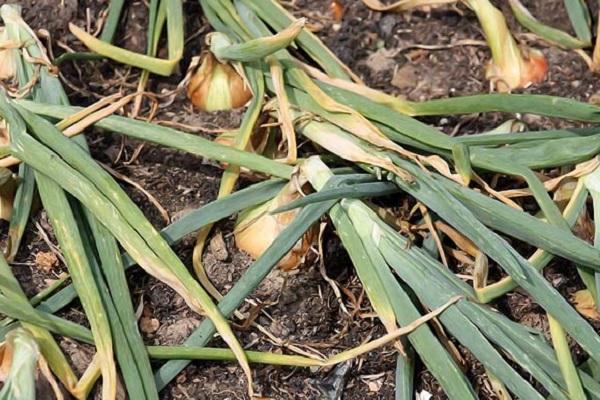 Important. Therefore, the most important ones signs of onion ripeness: the presence of a dry shell with a dry neck indicates that the harvesting time has come.
Early varieties ripen quickly, approximately 80 days after planting. If early onion sets are planted in the spring, in April, they will ripen 10 days later than winter varieties. Mid- and late-season varieties have a longer growth and vegetation period and are planted early. These varieties ripen in late July to early August. In dry, warm weather, more than half of the onion beds will be ready for harvest by the first ten days of August.
Signs of maturity
Leaf color
The leaves of a bitter vegetable crop indicate its readiness for harvest, indicating that it's time to harvest it from the garden. When new foliage stops growing, most of the leaves dry up and fall to the ground, indicating that it's time to dig them up.
False stem
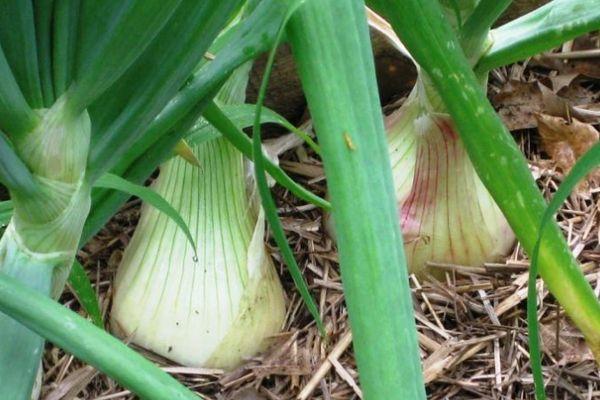
The hollow, tubular onion leaves sprout in such a way that the bases of all the leaves nest within each other, forming a pseudostem, which is held upright by the newly emerging leaves. When the emergence and growth of new, fresh leaves ceases, the pseudostem collapses and becomes soft, losing its juiciness and elasticity. This is proof that the onions are ready for harvesting.
Tops
In mature onion beds, widespread yellowing and lodging of the leaves is observed. The tops dry out, turning yellow, soft, and no longer standing upright. There's no need to cut off the dried tops completely: they can be carefully braided into beautiful braids. Hanging them in the kitchen, the onions keep well at room temperature.
Methods to speed up ripening
If the onion harvest time has arrived and there are no signs of ripeness, the necks remain juicy, and the scales haven't dried out, gardeners have various ways to speed up the ripening of onion bulbs. To do this, limit the amount of nutrients supplied to the bulbs from the roots. Fertilizing, loosening the soil, and watering, which all promote leaf growth, are stopped.
More sun for heads
A few days before the scheduled harvest, remove the soil from the root vegetables and expose them. Exposure to plenty of warm sunlight will speed up the ripening process.
Take a look Also

Trimming roots
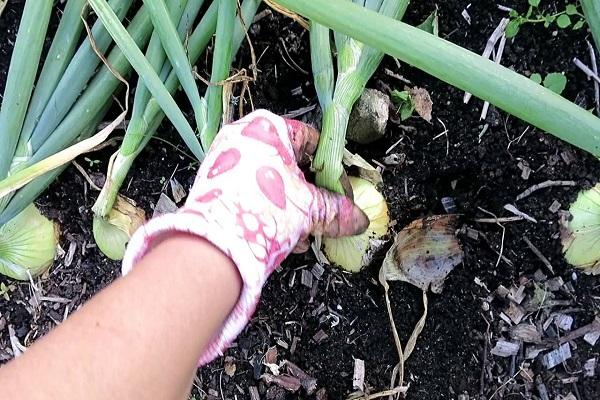
If the onion harvest time has arrived and there are minimal signs of ripeness, you can prune the roots. To do this, use a pitchfork to lift the soil beneath the onions and gently lift the roots, while gently undermining the roots.
Undermining the roots of bulbs
Plucking the roots of onions will also help the bitter vegetable ripen. To do this, it's recommended to trim the roots with a sharp tool about 5 cm below the base of the onion.
Watering with salt water
Watering the unripe vegetable beds with salt water will also speed up the bulbs' ripening process. Prepare the solution by adding 2 tablespoons of salt to a bucket of water.
Destruction of feathers
Some gardeners mow down the onion tops. However, this method isn't considered entirely successful. You have to wait until the tops turn yellow and fall over before harvesting.
When they clean up in the Black Earth Region
In the Black Earth Zone, the duration of active growth of vegetable crops and plants is about 180 days.
The mild climate in the nearby Belgorod and Voronezh regions makes it possible to plant onions in open ground starting in late April.
With this sowing and cultivation regime, it is possible to harvest the vegetable early in the last days of June and at the beginning of July.
Harvesting and storage of crops
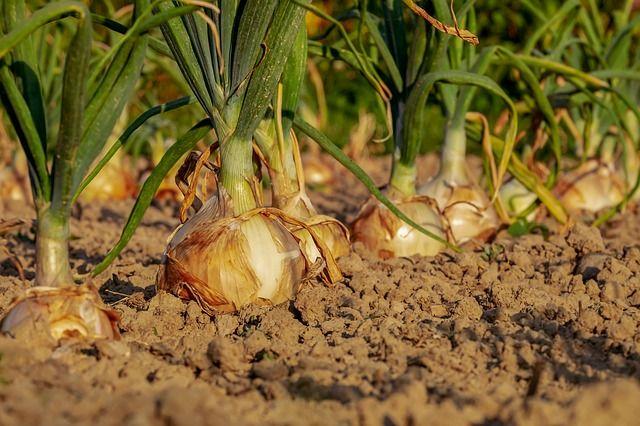
Onions are typically harvested by pulling them out by the tops; in compacted soil, a pitchfork without sharp teeth is used. After the onions have dried, their leaves are trimmed off, leaving a 4–5 cm long neck. The roots can be removed by breaking them off by hand, or they can be trimmed with scissors or a sharp knife.
Store the bulbs in a dry place: special plastic crates or cardboard boxes are good options. In rural homes, it's convenient to hang the bitter vegetable braided into a braid.
The dangers of untimely harvesting of onions
If you don't heed the advice of experienced gardeners about harvesting root vegetables, you could lose part of your harvest. If you rush the harvest and don't wait for them to fully ripen, the onions will be too soft because the protective scales haven't had time to form. If you overdry the onions, the dry "clothing" will crack and peel off, exposing the bulbs.
Take a look Also
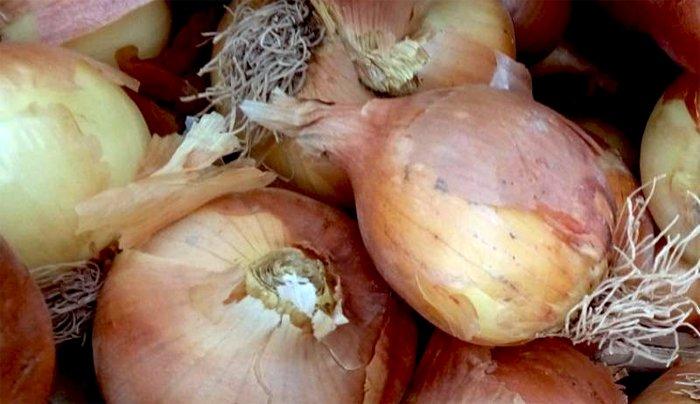 Therefore, rushing or delaying harvesting will result in the onion bulbs not having a long shelf life.An overripe onion bulb will begin to peel off its scales and begin to sprout new roots. A ripe onion is easily pulled out, while an overripe onion will be difficult to remove from the ground. Such a vegetable with fibrous roots looks unappetizing and loses its shelf life.
Typical mistakes
Some gardeners mow down onion tops to speed up ripening. This method reduces the yield of the vegetable. Mowing prevents nutrients from reaching the roots.
Helpful tip: Don't trim onion tops to speed up ripening.
Mathematical method of counting
It's not always possible to determine the onion harvest time based on external changes. The leaves can turn yellow and fall over for various reasons. Therefore, many resort to mathematical calculations to determine the time to harvest the root vegetable.
When growing this crop, gardeners have found that the vegetable ripens approximately 70-80 days after planting. This means that if planted on May 20th, the bulbs will be ready for harvest in the first ten days of August. In the old days, onions weren't left in the garden after St. Elijah's Day—August 2nd.
Related posts:
 When to harvest onions planted in autumn and spring from the garden for storage, how to determine the timing
 Description of the best varieties of onions, planting and care in open ground
 How and when to plant onions to get large bulbs
 When to harvest leeks from the garden for storage, ripening times
 50 types and varieties of perennial onions with descriptions, cultivation, and care
 Control of onion pests using chemical and folk remedies
 The beneficial properties of white onions, description of varieties, cultivation and care
 When to harvest onions for storage in 2025 according to the lunar calendar