
- Characteristic
- General description
- Taste qualities
- Beneficial properties
- Distinctive features
- Varieties
- Chelyabinsk
- Memory
- Likova
- Odessa winter
- Gribovsky
- Growing
- Landing rules
- Site selection and preparation
- How to prepare planting material
- Planting diagram
- Frost protection
- At home
- Care
- Watering
- Hilling
- Top dressing
- Weeding and loosening
- Garter
- Reproduction
- Cleaning and storage
- Diseases and pests
The multi-tiered onion is considered to have originated in China. It was introduced to Europe about two thousand years ago. It's a hybrid crop, and although it has only a few varieties and isn't as well-known as onions or leeks, it has steadily gained popularity among onion enthusiasts in recent years.
Characteristic
Onion is a perennial plant that reproduces only vegetatively through basal and aerial bulblets. It possesses no less beneficial properties than other similar crops.
General description
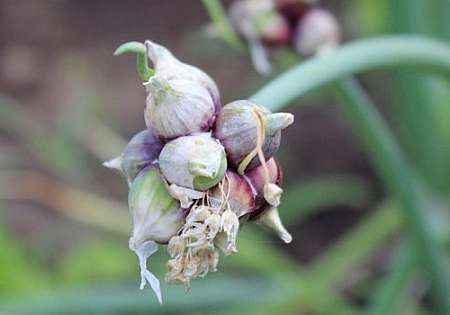
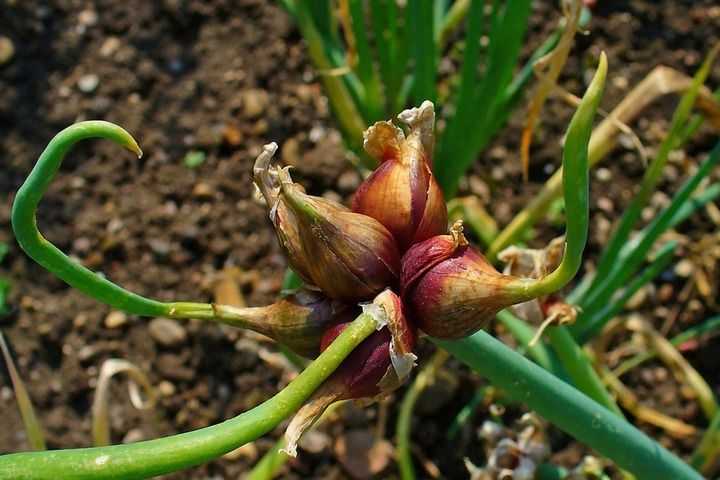
This onion received its name for its unusual appearance. Its stalks produce bulblets rather than inflorescences, which in turn produce stalks, at the ends of which more bulblets emerge. This creates several tiers. This plant can have either two or four tiers, but with each "tier," the bulblets become progressively smaller.
You can also come across other names for it - “Egyptian”, “horned”, “walking” or “viviparous”.
The largest bulbs are 3 cm in diameter and can be purple, yellow, or brown. The leaves resemble onions—hollow inside, round, and dark green.
Taste qualities
All parts of this onion are edible. Its greens have a more pungent flavor than those of common onions. The bulbs are juicy and crisp, and are often used in pickles and marinades.

Beneficial properties
The plant contains a large amount of phytoncides, giving it antiviral and anti-inflammatory properties, particularly beneficial for the gastrointestinal tract. The plant also contains a large amount of ascorbic acid, which has a beneficial effect on the body's immune system. The highest concentration of ascorbic acid is found in the leaves.
It stimulates the body's production of collagen and elastin, which help normalize blood pressure, slow age-related changes in the skin, and regenerate mucous membranes. Eating this vegetable stabilizes the cardiovascular system and improves vascular tone. It can have a pain-relieving effect when consumed as part of a diet, making it recommended for people with gastritis with low acidity during remission.

It is used as an antiseptic, as the vegetable has strong disinfectant properties. These properties are effective both when consumed internally and applied externally.
Take a look Also

Distinctive features
Characteristic features:
- The main difference is, of course, the plant's appearance. No other onion grows in multiple tiers.
- The underground bulb has a loose structure and over time divides into several parts.
- The greens do not become coarse for a long time, which cannot be said about the varieties more familiar to gardeners.
- The plant bears fruit throughout the growing season.
- After several years of growth, the plant's roots reach up to 1.5 m in length.
- Under snow cover it can withstand frosts down to -45 °C.

Varieties
The crop does not have that many varieties.
Chelyabinsk
This variety is distinguished by its exceptional early maturity. If covered with plastic, the harvest will begin as soon as the snow melts. This plant is not affected by the return of spring frost. The greens of the Chelyabinsk variety are tender, soft, and juicy.
Memory
This is also an early variety with a fast growth rate. It produces a high yield, with up to 6 kilograms of greens harvested per square meter. The inflorescences produce up to 8 bulblets.

Likova
An equally early variety with a high yield. Up to 4 kilograms of greens can be harvested in just 3 weeks. This variety has a more pungent flavor. The inflorescence contains approximately 8-10 bulblets. The underground bulb is smaller than that of other varieties.
Odessa winter
The plant height is 25-40 cm. The leaves are light green and have a pungent flavor. The underground part is oval-shaped with a characteristic purple husk. The yield is slightly lower than other varieties.
Gribovsky
Dense, medium-height bushes, with the first harvest occurring just 21 days after planting. This variety is specifically adapted to Siberia and the Urals.

Growing
Multi-tiered onions do not have seeds, so they are grown from so-called bulblets.
Landing rules
To plant vegetables, follow these simple rules to ensure a large harvest with the maximum amount of nutrients.
Site selection and preparation
When choosing a planting site, keep in mind that multi-tiered onions begin growing even before the snow melts. Therefore, the site should be open, sunny, and protected from drafts. It's best to choose a site at a higher elevation where moisture can't accumulate.
The ideal soil for this crop is fertile, well-drained, and aerated soil with a neutral pH, such as loam. Planting in acidic soil will result in poor growth and slow development.
 Good to know! You can deacidify the soil by adding chalk, gypsum, limestone, or wood ash.
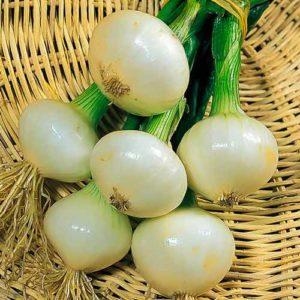
The area for planting vegetables is dug up and amended with compost or humus; mineral fertilizers are also suitable. The best time for planting is late summer to early fall. If you plant the crop at this time, the plants will have time to take root before the frost sets in.
How to prepare planting material
For propagation, it's best to select bulbs from the second and third tiers. Before planting, soak the bulbs in a weak solution of potassium permanganate for 3 minutes. Afterward, dry them with paper towels. This is necessary to prevent fungal diseases during plant development.
Planting diagram
Dig holes 4-5 cm deep, spaced 15 cm apart, and plant the prepared bulblets. Cover with soil and water to ensure the bulblets take root.
The crop is planted this way. Initially, the planting holes are spaced more densely. In the spring, when the young greens emerge, they are pulled out along with the bulbs, thereby thinning the beds. By summer, this thinning is complete, and the remaining plants begin to actively grow and develop.
Frost protection
In early spring, when the snow has already melted, beds with multi-tiered onions are mulched in case frost returns, because without snow, the plants will have a harder time surviving severe frosts.

At home
During the winter, the plant can be forced to produce greenery indoors. To do this, select bulbs of similar size and place them in shallow containers of warm water. Place them on a warm windowsill or other bright, warm location.
Care
Caring for beds with this crop isn't difficult. Just water, feed, and tie up the bushes regularly.
Watering
The plant loves moisture, but it's best not to overwater it. Watering the beds three times a week with settled, warm water is sufficient.

Hilling
This manipulation is encouraged, but not mandatory in growing perennial onions.
Top dressing
The first feeding is done in early spring, followed by two more during the growing season. Phosphorus-potassium mixtures, compost, and urea are used as fertilizers.
Weeding and loosening
Weeding is necessary to prevent weeds from robbing the soil of nutrients and from harboring pests like onion flies. It's done as needed. Loosening the soil helps the underground bulbs receive the necessary amount of oxygen. It's done 2-3 times per season.

Garter
Multi-tiered onions grow tall, and their tiers often cause the plants to collapse. Therefore, they are tied up. To do this, the upper tiers are tied into bundles. Stakes are driven into the ground to secure the plants.
Take a look Also
![When to store onions in [year] according to the lunar calendar](https://harvesthub.decorexpro.com/wp-content/uploads/2018/07/kogda-ubirat-luk-1-300x200.jpg)
Reproduction
The vegetable is propagated and planted as both an annual and a perennial. It can grow in the same location for up to five years without replanting. This crop is most often propagated using the mother bulb, as it divides into several parts during development. These parts are then separated and replanted. Propagation through aerial bulblets is also possible. These also take root well, quickly root, and produce green foliage.
For propagation, bulblets are collected immediately after the formation of root tubercles on the onion base. This should be done in August, and they should be planted no later than 2 weeks after harvesting, as they germinate quickly.
Cleaning and storage
Harvesting begins when the stalks are ripe, when they develop a bluish bloom, turn brown, and easily separate from the stalks. The bulbs should be stored in a cool place, but the temperature should not fall below 2°C. Warm conditions will cause the bulbs to sprout quickly and die. The storage area should be well-ventilated and have low humidity.
Diseases and pests
The plant rarely gets sick, but is still susceptible to downy mildew and powdery mildew. In the former case, the plant's leaves begin to yellow and wilt for no apparent reason, while in the latter case, they become covered with a powdery coating. Both diseases are fungal and are treated in the same way. To combat them, plants are treated with Bordeaux mixture or a solution of soda ash.
Pests also sometimes appear on onion plants. Most commonly, these are the onion fly and weevil. To prevent them, sprinkle ash, pepper, or tobacco dust between the rows. Also, remove wilted and dried leaves and other debris.
Multi-tiered onions are a "grateful" plant. They require little care, but if you follow all the recommendations, you can grow them in not only 3 but also 4 tiers, significantly increasing the yield.
Related posts:
 Description and characteristics of the best seeds of pea varieties and types
 Description of varieties of sowing peas and cultivation, to which family they belong
 Description of blight-resistant tomato varieties for open ground and greenhouses
 The best eggplant varieties for growing in a polycarbonate greenhouse: planting and care
 Descriptions of the 20 best cherry varieties for the Moscow region, their planting and care
 How to prune grapes step by step for beginners
 80 Best Eggplant Varieties for Different Regions with Descriptions and Characteristics
 The best grape varieties for growing in the Urals, planting and care rules in summer