
- What to do if there are bugs in the beans?
- Where do insects come from?
- What harm do they cause?
- How to fight?
- How to preserve beans for the winter?
- Where and in what to store beans?
- How to prepare for storage?
- Pests
- Bean weevil
- Sprout fly
- Slugs
- Aphid
- Diseases
- Powdery mildew
- Anthracnose
- White rot
- Root rot
- Bean mosaic
- Bacterial spot
- Protective measures
- Preventive
- Active
- Chemicals
Legumes play an important role in the human diet. They are used in soups and side dishes and are grown both commercially and in home gardens. They are arguably the most popular legume in our country. Every farmer strives to preserve their harvest and protect their crops from numerous pests and diseases. So how can you ensure that your beans grow smoothly and last as long as possible? There are many ways to prevent bean bugs.
What to do if there are bugs in the beans?
It's a shame when your entire harvest is ruined by tiny insects. This is a common problem. Even if you store beans in a clean room, there's no 100% guarantee they won't become a pest infestation.
Where do insects come from?
It's easy to figure out where pests are coming from. All kinds of bugs are brought in with store-bought cereals, pasta, and flour. They settle in cracks and crevices and multiply rapidly. It's impossible to monitor this process. Another possibility is that they come to warmer rooms to escape the cold. That's why it's recommended to store legumes in a cool place.
Important! If beans are not properly sorted before planting, the risk of acquiring unwanted tenants greatly increases.
What harm do they cause?
The most common pest is the bean weevil, which attacks fruits while they're still ripening. It reproduces quite quickly. Naturally, such fruits are no longer edible, losing their nutritional value and nutrients. If the problem isn't detected in time, the entire harvest can be lost.
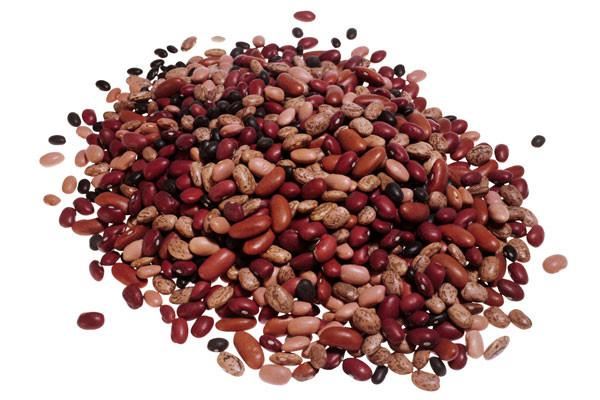
How to fight?
Housewives often don't know what to do about bean bugs. Attention can prevent serious crop losses. Beans need to be sorted frequently. If the bugs have just appeared and haven't yet damaged many beans, treating them with cold or hot air can help. Discard any severely infested beans immediately. Place the remaining beans in the freezer or oven for a while.
The larvae will not survive if exposed to extremely low or high temperatures.
Small household tricks can also help protect beans. For example, bean weevils don't tolerate strong odors, so it's helpful to add unpeeled garlic cloves to the bean bags. Cloves, bay leaves, or nutmeg are often placed in the room where beans are stored.
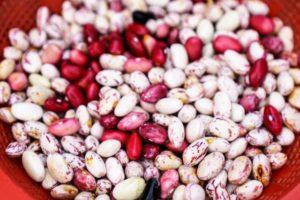
Important! Containers for storing beans are periodically sanitized. This is an effective preventative measure.
How to preserve beans for the winter?
Green beans are canned and frozen, while whole beans are stored differently, as they require special conditions. The optimal storage temperature for this product is up to 10°C. OC and humidity less than 50%. At these temperatures, bugs do not appear.
Where and in what to store beans?
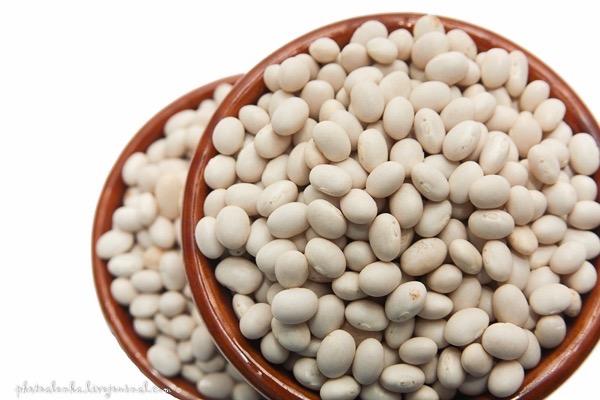
It's best to store the peeled grains in cloth bags or glass jars with tight-fitting lids (metal or glass). Plastic lids will allow air to pass through. To prevent this, soak the bags in a solution of table salt and dry them completely.
Store in a cool place (refrigerator, balcony, or basement). Optimal humidity is 50%.
Bean seeds germinate in a warm room. Eating the sprouts is not recommended.
How to prepare for storage?
The harvested pods are pre-dried. They are laid out on tables in the yard, gathered into bundles, and hung on the veranda. When the pods are completely dry and the shells begin to open, it's time to begin shelling.
Sometimes the beans are heated before being baked. The oven temperature should be no lower than 90 degrees Celsius.
Pests
Many homeowners have noticed that up to ten larvae can develop in a single bean seed. They chew through the seed, leaving behind waste products. Such waste is unfit for consumption and cannot be used as seed.
Bean weevil
The beetle, approximately 2-5 mm in size, is oval and has a black shell. It is characterized by vigorous activity and rapid reproduction. It destroys bean crops within a year.
The most effective control method is low temperatures. The planting material must be completely healthy. If the bugs do appear, treat the crops with Decis or Metafox (two applications are sufficient). The first application should be shortly before flowering, and then repeated ten days later. Harvest the beans before the pods dry out and open.
Take a look Also
Sprout fly
The insect is gray with black stripes on its back (about 5 mm in size). If pupae remain in the soil over the winter, they will emerge as flies by May. They lay eggs in the soil. If there is a drought, the eggs will die, and there will be no offspring. The larvae usually attack crops. These pests prefer cool air, which is when they are most active.

Slugs
These are large mollusks (up to 7 cm in length). They leave behind clearly visible silvery-white trails. Slugs are invisible during the day; they are active in the dark. Slugs are most afraid of low humidity and temperatures below 7 degrees Celsius.
These pests are easily lured by dark beer. To do this, bury a plastic bottle without a lid in the ground up to the neck and fill it halfway with beer. The slugs simply drown in the liquid. Repeat this process several times for maximum effect.
Aphid
It's quite small (only 1-5 mm). Preventative measures are ineffective against it. Its favorite places are young shoots and the undersides of leaves. The insects suck the sap from them and transmit viral diseases.
To control pests, water the plants with a 4% green soap emulsion and liquid nettle fertilizer. These substances are harmless to humans, but aphids are very sensitive to them. Chemicals are used only in extreme cases. Dill, thyme, and fennel can also be planted near the beans.
Diseases
Beans, like any plant, are susceptible to disease. These problems often arise due to improper agricultural practices. Gardeners often don't understand why young beans turn black. There can be several possible causes, all related to fungal or viral infections.
Powdery mildew
At first, the leaves are covered with a whitish coating, which later turns grey. Reduces bean yield by a quarter.
Anthracnose
The leaves and stems of plants become covered with sunken, oblong spots. Over time, these spots turn brownish-red. This leads to necrosis.

White rot
It most often appears where the plant touches the ground. It begins with water-soaked spots that are then covered with a mycelium (similar to cotton wool).
Root rot
It can be caused by bacteria. It is very dangerous for seedlings and young plants. It appears as hard pads with a white or purple coating. Stems may have constrictions that prevent nutrients from reaching the plants.

Bean mosaic
Bugs and aphids act as carriers. Dark and light green spots can be seen on the leaves, forming a pattern. These then develop into blisters and deform the leaves. Plant development is slowed.
Bacterial spot
It's very difficult to control. It's characterized by dark brown spots with yellow edges. This disease causes the beans to become stunted, and the beans fail to fully ripen.
Control is effective only in the early stages of the disease. The same measures are used as for fungal diseases.
Protective measures
A responsible approach to planting and storing beans, as well as constant monitoring of the crops, will help you avoid problems with the harvest.

Preventive
Plant only high-quality beans, follow crop rotation rules, and fertilize regularly. The varieties should be immune-resistant. Avoid planting beans in cold, damp soil, burying the seeds too deeply.
Active
Before planting beans, the soil is thoroughly cleared and all weeds are removed. It's best to begin planting as early as possible (as soon as the soil warms to 10 degrees Celsius). Manure must be incorporated into the soil; it should not be left on top. It should only be applied in the fall, as its smell will attract insects in the spring. Beans are soaked in a growth stimulant.
Chemicals
For chemical pest control, Bordeaux mixture and oxychloride are best. Biological products such as Trichodermin, Gaupsin, Planriz, and similar ones are also good options. However, they are best used before flowering.
Beans require the same care as other garden plants. Those who want to get a good harvest and preserve it throughout the winter are advised to follow the tips above.
Related posts:
 Description of the 90 best varieties of beans for open ground with names
 Description and properties of the 50 best varieties of asparagus beans, benefits and harms
 How and where beans grow, planting and care rules in open ground
 The benefits and harms of red beans for the human body: for women, men, and children
 The best recipes for pickled beans in jars for the winter are so good you'll lick your fingers.
 Recipes for making pickled green beans for the winter at home
 Health benefits and harms of black beans, varieties, contraindications, and recipes
 The health benefits of beans for women and men, harm and contraindications