
The choice of varieties for growing in your own garden is influenced by the crop's taste and nutritional value. A bean that combines these qualities is Lima beans. They take their name from the capital of Peru, where they are especially common.
Few people know what it is. But once you learn about its beneficial properties, it will take its rightful place in your garden and on your table.
Description of the variety
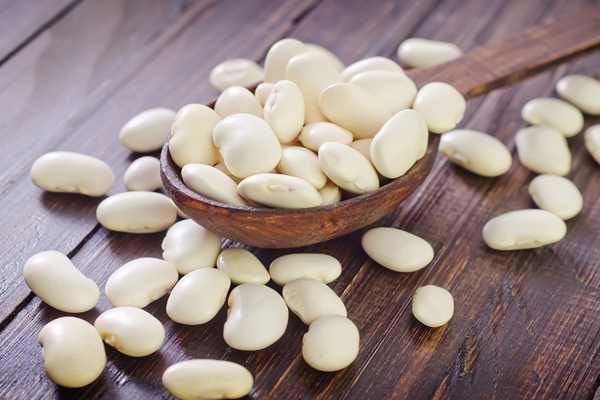
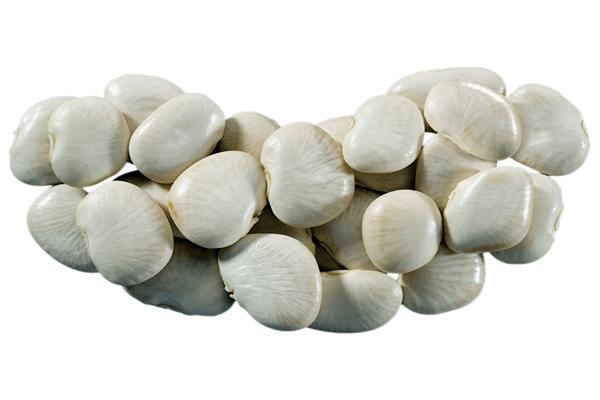
The plant's full name is Lima bean (or Sweet Bean). It's also known as Butter Bean, due to its creamy flavor.
It is consumed during the milky ripeness period, and this is how it differs from ordinary beans.
The most widespread varieties are:
- Sugar;
- Bushy small-grained;
- Armenian;
- Fawn-motley.
Advantages and disadvantages
The various positive and negative aspects of this bean variety become the deciding factor when deciding whether to grow Lima beans in a plot or not.
So, the pros:
- the culture is rich in vitamins and other useful substances; 0.5 kilograms of it contains as much of them as a whole kilogram of meat;
- has medicinal properties: it is beneficial for the muscular system, promotes weight loss, is an antioxidant, and cleanses the stomach;
- The aroma of its leaves repels insects – it is a natural repellent.
The disadvantages are minor; these are, rather, contraindications for diabetics and people suffering from urolithiasis.
How to Grow Lima Beans
Once you know exactly how heat-loving Lima is, that it equally does not tolerate frost or extreme heat, it is worth putting in some effort and growing it on your site.
The crop requires moderate moisture during its normal growing season. It also does not tolerate stagnant moisture in the uppermost layers of the soil. It grows well in neutral and slightly acidic soil, but noticeably slower in heavy soils.
It will bear fruit even in clay, rocky, and mountain soils. It only requires organic fertilizer. Nitrogen fertilizers are not necessary unless the soil is extremely poor.
Plant the seeds at a depth of 3-6 centimeters. Cover the area when temperatures drop. Seedlings should appear within a week.

Lima should be sown when the soil temperature is at least 15°C. If it's lower, the seeds will rot.

Care Features
A very important step is hilling the beds when the first true leaves emerge. This will protect the tender shoots from strong winds.
Otherwise, the care is standard:
- weeding;
- loosening (twice a season);
- watering (do not flood or allow to dry out);
- top dressing.
Climbing varieties will need supports.
Pests and diseases
Lima has developed immunity to viral diseases. However, it is susceptible to powdery mildew and leaf spot.
This plant is not susceptible to bean weevil, but other insects can cause harm if the bushes are not treated in time.
Harvesting and storage
Ripening times vary depending on the variety. Climbing beans take a month, while bush beans take less. Seeds are harvested even earlier.
To determine if the beans are ready, pierce them. If they are overripe, this will be difficult.
Fresh lima beans will last no more than 2 weeks in the refrigerator. The seeds can be stored in the freezer all winter.
The pods, peeled and dried, are stored in a tightly closed container for up to six months.
Baby Lima Bean Recipes
Dishes that feature baby lima beans as a key ingredient are quite specific and require a fair amount of time to prepare.
Secrets of heat and quality processing
Any home cook knows how long beans take to cook. There are a few little secrets that can significantly reduce cooking time:
- Soaking. Before cooking, soak the beans in water, leaving them in a cool place for 6-8 hours.
- Cook for 45 minutes, skimming off any foam constantly.
Important! It is not recommended to use a pressure cooker!
- Do not add any salt or seasonings until cooking is complete.
Curry with boiled lima beans
Ingredients:
- beans – 400 grams;
- onions – 3;
- concentrated tomato paste – 2 tablespoons (you can finely chop 3 tomatoes);
- sun-dried tomatoes – 10 pieces;
- coconut milk – 0.4 liters;
- curry – 1 tablespoon;
- water – 0.4 liters;
- vegetable oil – 2 tablespoons;
- cilantro - a bunch;
- salt and chili – to taste.
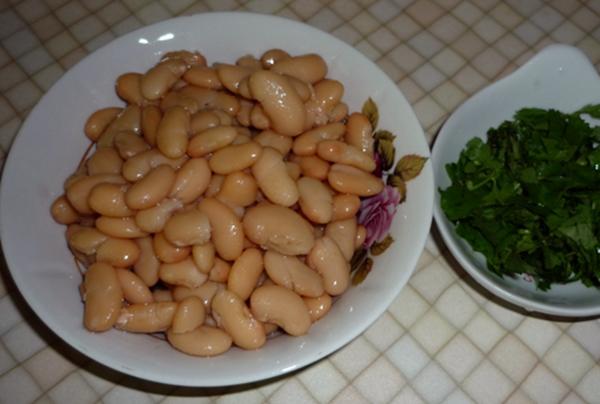
The beans should be pre-cooked. The chopped onion is fried in oil with spices. Then the tomato is added, and while continuing to fry, water is added, and the mixture is simmered for 5 minutes.
After this, you can add salt, pour in the coconut milk, and heat it through. Now add the beans and sun-dried tomatoes. Cook for 2 minutes, and the dish is ready.
Cilantro serves as its decoration.
Asturian aromatic fabada
Ingredients:
- beans – 0.4 kilograms of lima beans;
- smoked pork knuckle;
- pork belly (smoked or salted) – 0.4 kilograms;
- blood sausage – 0.2 kilograms;
- chorizo sausage – 0.2 kilograms;
- garlic – 3 cloves;
- bay leaf – 1;
- black peppercorns – 0.5 teaspoon;
- saffron threads - a pinch;
- salt and pepper – to taste.
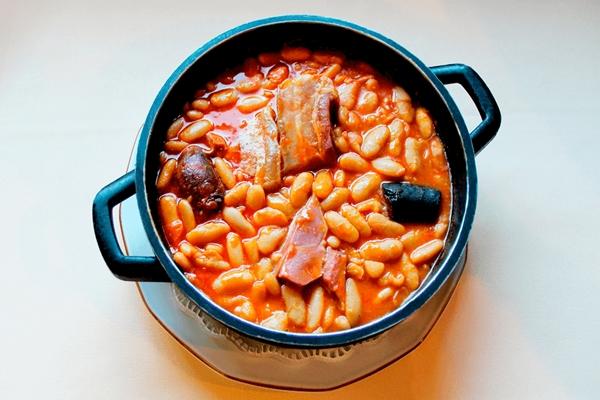
Place the shank and brisket over the stove. Bring them to a boil, then drain the liquid and pour boiling water over the meat, removing any foam, then combine with the pre-soaked beans. Pour 2.5 liters of water over the mixture and bring to a boil on the stovetop, skimming off any foam.
After this, add saffron, bay leaf, and pepper, and simmer over low heat for 2 hours. Do not stir or add salt.
When the meat is cooked, remove it, trim the meat, and cut it into small pieces. Retain only 3 tablespoons of fat.
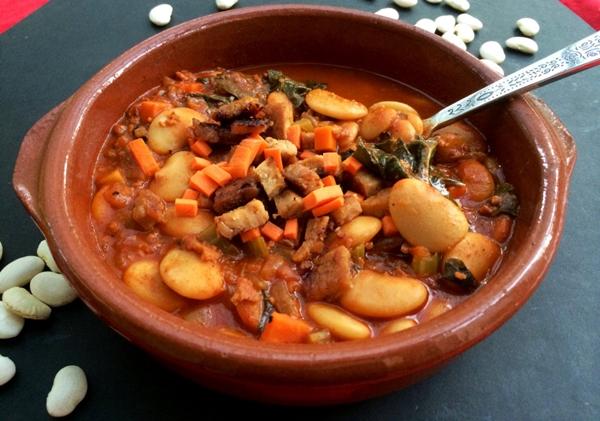
The chopped fat is fried and rendered, chopped garlic is added for just a few minutes, then removed with a slotted spoon and immediately added to the container with the beans. In the remaining fat, slices of sausage, previously sliced, are fried until crispy.
Place the pot back on the heat, add the meat and sausage to the beans, and wait for the soup to boil. Season with salt and pepper and continue cooking for another 5 minutes.
Traditional Spanish soup is served hot.

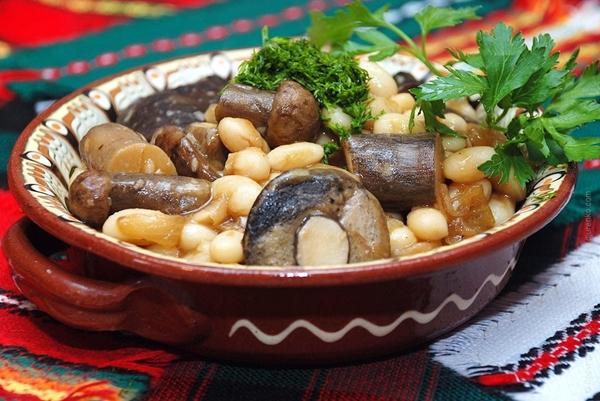
Stewed beans with wild mushrooms
Ingredients:
- forest mushrooms – 1 kilogram;
- beans – 0.3 kilograms;
- tomatoes – 3 pieces;
- garlic – 3 cloves;
- parsley - a bunch;
- dry marjoram – 1 teaspoon;
- basil – 1 tablespoon;
- salt and pepper – to taste.

Once the beans have boiled, add crushed garlic and a bunch of fresh parsley and simmer for about 40 minutes. Then add the chopped tomato and simmer for another hour.
The mushrooms are chopped, fried for 7 minutes in oil with the addition of garlic, salt and spices, and then the remaining tomatoes, pre-cut into large slices, are added.
Remove all additives from the pot with beans, and let the beans simmer with mushrooms for 15 minutes.
The dish is served hot and sprinkled with finely chopped herbs.
 When climate conditions permit growing lima beans, don't give up. The benefits of this crop are undeniable. If you've never planted it in your own garden, you're missing out.
Related posts:
 Description of the 90 best varieties of beans for open ground with names
 Description and properties of the 50 best varieties of asparagus beans, benefits and harms
 How and where beans grow, planting and care rules in open ground
 The benefits and harms of red beans for the human body: for women, men, and children
 Planting seedlings and seeds, growing and caring for asparagus beans in open ground
 Health benefits and harms of black beans, varieties, contraindications, and recipes
 Recipes for making pickled green beans for the winter at home
 The best recipes for pickled beans in jars for the winter are so good you'll lick your fingers.