
Every food lover is constantly searching for foods that can add variety to their diet, adding not only new flavors but also health benefits. Today, we'll look at one such food: black-eyed beans. This member of the legume family has a mild, delicate flavor, is easy to prepare, and is packed with nutrients. Let's learn more about it.
Story
India is considered the birthplace of black eye beans. The first mention of it can be found in documents written as early as 500 AD. From India, the product spread to other Asian countries, and then, thanks to its popularity, it was exported to South America. The beans later migrated to the United States, where they are still grown today.
George Washington himself was one of the most ardent supporters of this product. He tried to spread it to as many states as possible, not only because of its taste but also because of its positive impact on the soil in which the beans were grown.
Description of the variety
The plant belongs to the legume genus and reaches a height of up to 30 centimeters. Black-eye's leaves and growth stages are similar to other legumes. The only differences are that the flower corollas are curved like the prow of a boat rather than spiraling. This variety has the following characteristics:
- Ripening takes place within 4 months.
- Heat-loving plant.
- The amount of sunlight does not have a significant effect on ripening.
- Grows in loamy soils. Can be grown in clay and sandy soils.
- Depending on environmental conditions, one plant can produce up to three kilograms of beans.

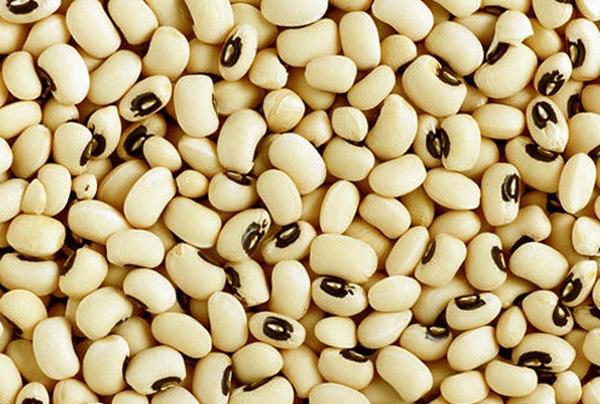
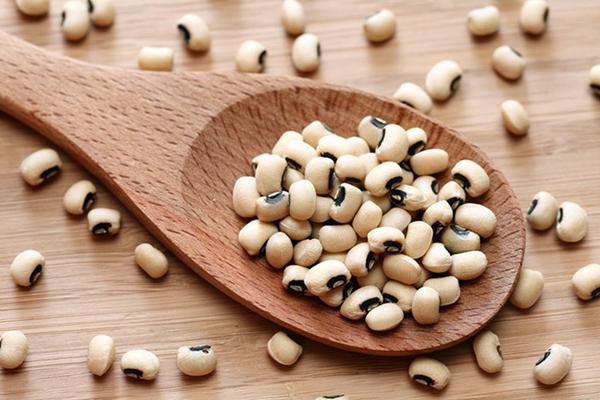
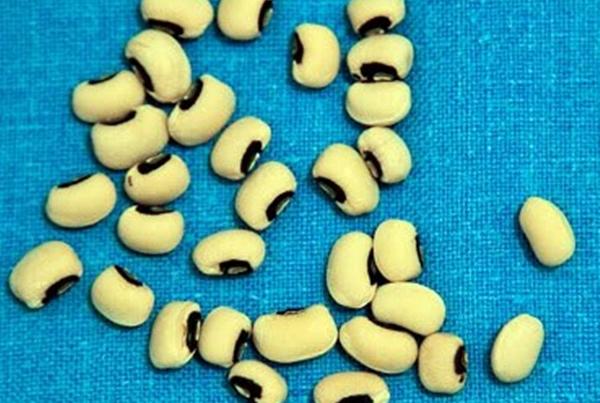
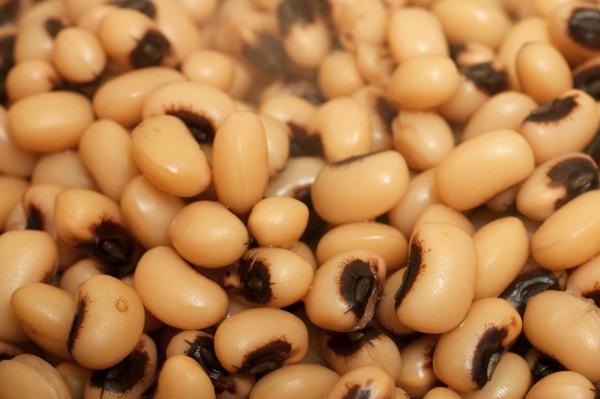
Please note! The plant got its name for a reason, as it looks like white beans with a black eye on the abdomen.

Beneficial properties
It has the following beneficial properties:
- high content of vegetable protein, which completely replaces animal protein;
- contains calcium, iron, potassium and vitamins A, B, C, PP;
- helps remove excess fluid from the human body.

How to choose
When choosing, please adhere to the following rules:
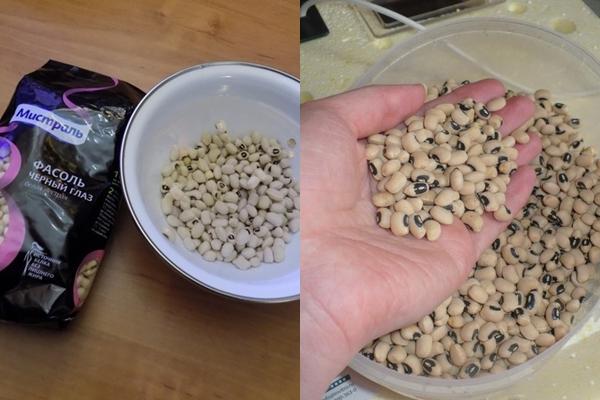
- choose transparent packaging that will allow you to verify the quality of the product;
- Avoid buying beans that have signs of damage or are covered in mold;
- a quality product has a bright, rich color;
- Pay attention to the expiration date indicated on the packaging.
Growing
If you want to grow Black Eye yourself, you need to keep the following nuances in mind:
- Don't plant beans in the same spot every year. Instead, space them out every three years or rotate the planting location.
- In spring, it is necessary to add mineral fertilizers to the soil, and closer to autumn, the emphasis should shift to organic fertilizers.
- The seed planting depth is 10 centimeters.
- The beds should not be made closer than 80 centimeters, and the distance between plants should be about 70 centimeters.
- Before planting, seeds should be soaked in a solution of potassium permanganate for 20 minutes.
Care Features
Caring for beans consists of:
- loosening the soil and removing weeds;
- For proper growth, the plant needs support;
- control the soil moisture, it should not be too wet or too dry;
- Monitor the ripening process of the pods—as soon as they ripen, don't be afraid to pick them. This approach will speed up the growth and ripening of new fruits.
Harvesting
Mature pods have dry shells. This is easily determined by touching them. With proper care, the harvest can be every 45 days after the seeds sprout. Once the pods are ripe, remove all the beans, which can then be eaten or used as seedlings.

Storage rules
Black eye can be stored in different ways:
- boiled beans can be stored in the refrigerator for 6 days;
- in the freezer the shelf life increases to six months;
- the canned product has a shelf life of 1 year;
- In dry form, Black Eye can be stored for up to 2 years.
Benefits and harms
Benefits in treatment:
- arrhythmia;
- rheumatism;
- kidney diseases.
Do not use if:
- gout;
- cholecystitis;
- gastritis.
Important! Older adults over 60 should reduce their bean consumption, but don't eliminate them completely.

Pests and diseases
Beans are highly disease-resistant and require little maintenance. In some cases, nematodes may infest the plant's roots. This can damage subsequent crops. As a preventative measure, the day before planting, you can generously water the soil in the beds with boiling water. The high temperature will kill all pests.
Application
The product has a fairly wide range of applications:
- in cooking;
- in cosmetology;
- in medicine;
This is achieved thanks to the rich chemical composition of the product.
In cooking
It is used in cooking in almost every cuisine in the world and is indispensable in dishes such as:
- lobio;
- peasant bean soup;
- Salad "Mood";
- cutlets without meat.
The product preserves well and is later used as an ingredient in appetizers and a wide variety of salads. It can be eaten both cold and with hot dishes.
In medicine
In medicine, it's used for diabetes. The arginine contained in the product helps the body synthesize insulin. Regular consumption of beans can help normalize a person's metabolism. A bean decoction can help relieve:
- kidney stones;
- rheumatoid arthritis;
- ailments associated with inflammation of the bladder.
Before using beans for medicinal purposes, consult a doctor, as folk remedies and self-medication are not always beneficial.

In cosmetology
Creams and masks containing beans are a real find for those concerned about their skin's health. They help:
- cleanse pores;
- smooth and reduce wrinkles;
- act as a tonic;
- If you have age spots on your skin, they will help soften their color, making it more transparent and less noticeable.

Related posts:
 Description of the 90 best varieties of beans for open ground with names
 Description and properties of the 50 best varieties of asparagus beans, benefits and harms
 How and where beans grow, planting and care rules in open ground
 The benefits and harms of red beans for the human body: for women, men, and children
 The best recipes for pickled beans in jars for the winter are so good you'll lick your fingers.
 Health benefits and harms of black beans, varieties, contraindications, and recipes
 Recipes for making pickled green beans for the winter at home
 Planting seedlings and seeds, growing and caring for asparagus beans in open ground