
- The effects of under- and over-hydration
- Irrigation methods
- Basic rules
- Bottle-based dosing system
- Using plastic containers
- Multiple holes in the hose (jet irrigation)
- Using a wick
- Industrial methods
- Drip
- Rain
- Gravity-flowing
- Subsurface
- Irrigation rates
- Factors
- Soil moisture level
- Watering method
- Granulometric composition of the soil substrate
- Depth of the irrigated layer
- Recommendations
- Helpful tips
- Mulching
- Fertilizing and irrigation
- Reviews
To grow the most nutritious zucchini, it's not enough to simply plant seeds or seedlings in open ground. The plants require proper and timely watering, and you need to know how often and which methods are best. After all, the chosen watering method significantly impacts not only the yield but also the health of the plant.
The effects of under- and over-hydration
Zucchini is most sensitive to moisture stress during the initial stages of development. During this period, the root system is actively developing and mass is growing. If, for some reason, the plant doesn't receive sufficient moisture during this period, it can lead to:
- abnormal development;
- weak formation of female flowers;
- slow plant development;
- insufficient weight of future vegetables.
Overwatering is also not good for zucchini. The plant may experience the following problems:
- decrease in the general immunity of the culture;
- the appearance of fungal diseases;
- decrease in sugar content, and consequently, loss of taste;
- overgrowth and then oppression.
Irrigation methods
Several methods are used for watering zucchini, which will help you grow the maximum amount of vegetables rich in nutrients.
Basic rules
There are several rules for watering zucchini. It should be:
- timely;
- regular;
- take into account varietal characteristics.
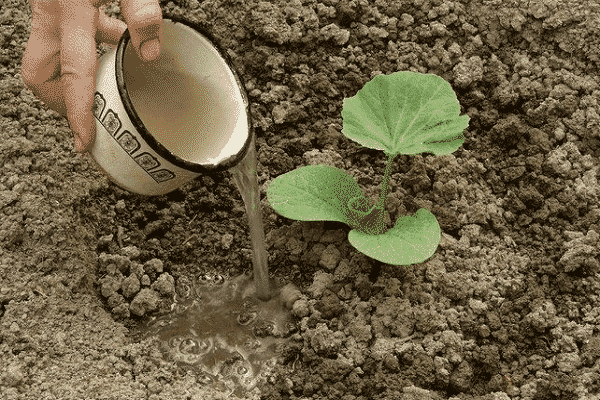
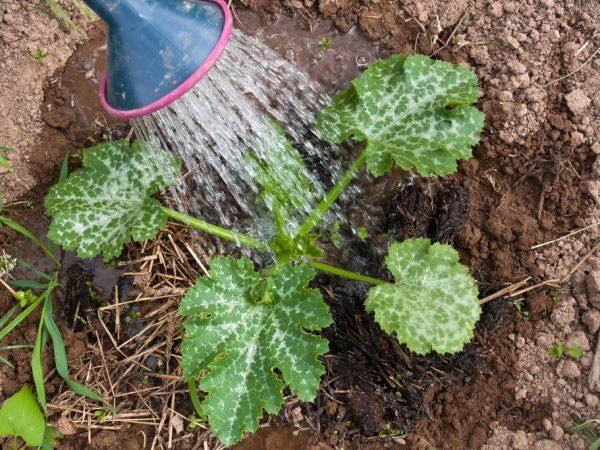
The first watering should be done immediately after planting seedlings or seeds in the soil.
Particular attention should also be paid to irrigation during flowering and fruiting periods.
As the zucchini grows, it develops a strong root system. To ensure proper and timely root development, it's important to water the zucchini at a rate of 30 liters per square meter.

Bottle-based dosing system
This humidification option is one of the simplest and most accessible, as it requires no additional purchases. All you need are used plastic bottles, which are readily available in every household.
For this method, you need to select bottles as large as possible. The bottoms are cut off, and 5-6 holes are made in the lids, the size of which should allow water to drip through rather than leak.
Next, measure 15-20 cm from the plant and dig a hole 10-15 cm deep. Place the prepared bottle, lid down, into the hole at a 45° angle. Fill the bottle with water and add more as needed.

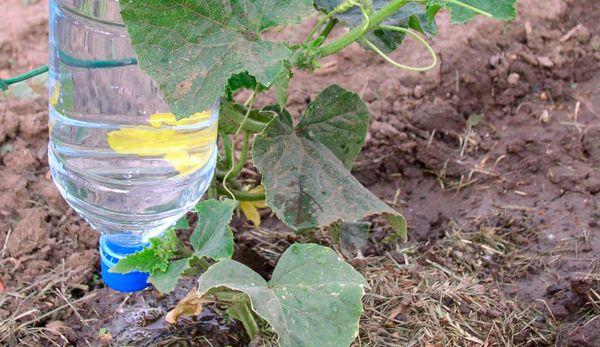
This method will help deliver water directly to the roots, which will significantly reduce liquid consumption.
Using plastic containers
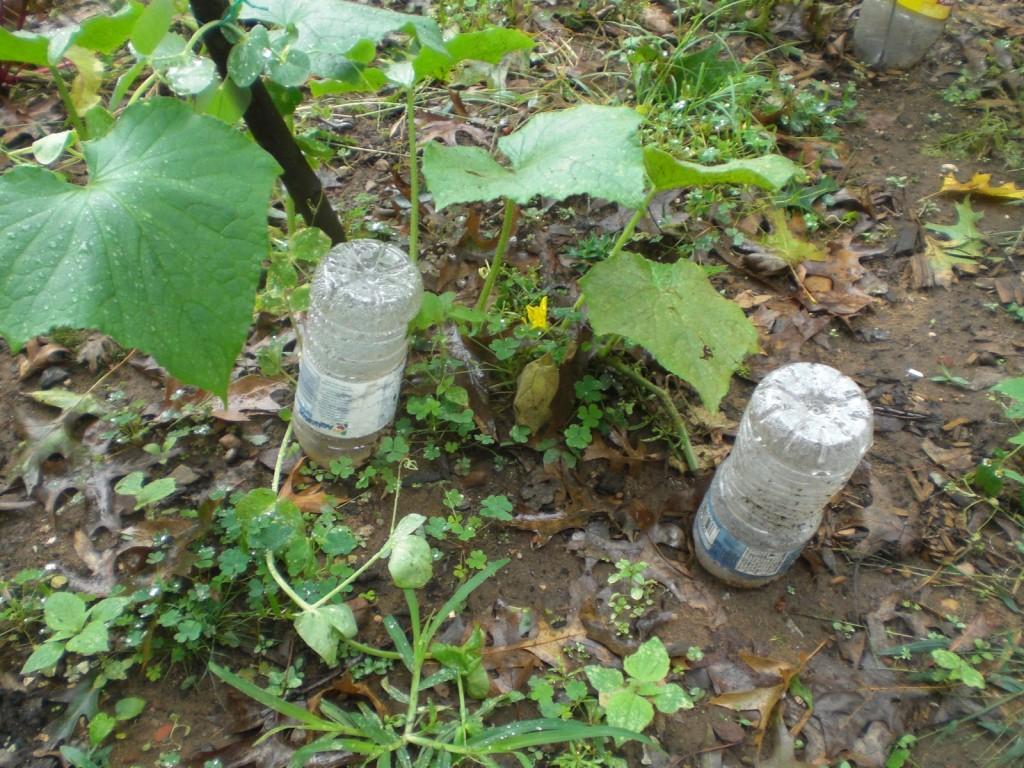
Plastic bottles are also suitable for this type of watering, but there's no need to punch holes in the lid. Bottles with the bottoms cut off are hung upside down, with the lid slightly ajar to allow water to drip.
This unit should be positioned so that dripping water hits the plant's roots. To prevent a hole from forming in the area where the water will constantly drip, place organic mulch or a small piece of film there.
Multiple holes in the hose (jet irrigation)
Another interesting method involves using a hose. Small holes are cut in it, level with the zucchini plants. The hose is buried slightly in the ground and connected to the water supply. This method delivers water directly to the roots of the plants.
If everything is done correctly and the water supply is adjusted, the soil above the hose should remain dry.
Using a wick
Containers such as buckets, basins, or large plastic bottles are buried along the row of zucchini plants. They are spaced approximately 2 meters apart. A thick rope of fabric is made to act as a wick. It is buried along the entire length of the row to a depth of no more than 15 cm. The ends of the fabric are dipped in water.
Industrial methods
Depending on the field's topography, water availability, and the owners' financial capabilities, a choice of irrigation method is made on an industrial scale.
Drip
This is the most modern, high-tech, and easy irrigation method. A special polymer drip tape is laid between the rows. The water flow rate is programmed and the system is turned on. This is how root watering is achieved.
Rain
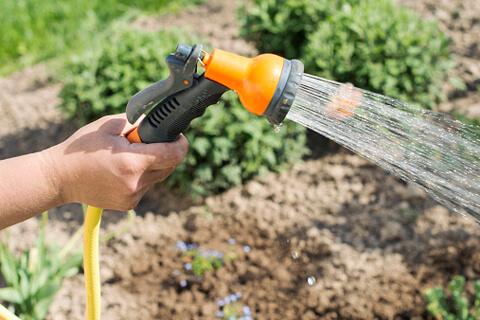
Sprinkler irrigation is used in large zucchini farms. To irrigate, pipes with sprinklers are installed and placed throughout the field. A pump is connected, which forces water through the pipes and into the sprinklers. The droplets are large.

There are special sprayer attachments that can be used to create a mist-like spray. This type of watering uses minimal water.
Gravity-flowing
For this type of irrigation, either deep furrows are dug between plants and flooded, or the entire area is flooded. Gravity irrigation is used in both commercial crops and home gardens.
Take a look Also
Subsurface
Select a long metal or plastic pipe and drill holes in it. Dig it into the ground to a depth of up to 40 cm. Position the holes so that they are directly under the plant's bushes. This way, when watering, the water will moisten the root system while keeping the soil above and the leaves dry, which is crucial during the day.

Irrigation rates
There's no set water dosage for zucchini. It should be calculated individually for each region and each plot.
Factors
There are several factors that influence the amount of water needed for irrigation.
Soil moisture level
This figure depends on the soil in which the zucchini are planted and how long it retains moisture. It also depends on the rainfall in the region and weather conditions. If cloudy weather prevails, the soil will retain more moisture.
Watering method
Different irrigation methods use different amounts of water, so before calculating the required amount of liquid, determine the irrigation method.
Granulometric composition of the soil substrate
The amount of water required also depends on the soil's particle size distribution. This analysis will provide an understanding of the substrate's permeability.
Depth of the irrigated layer
It is also important to take into account the thickness of the layer that needs to be wetted during watering when calculating.
Recommendations
Zucchini is 77% water, so moisture is essential. It distributes nutrients throughout the plant and regulates the plant's temperature.
Zucchini should be watered regularly, without interruption. In hot, rainless weather, the watering amount should be increased.
It's best to use warm water for irrigation; its temperature should be at least 20°C. Cold water can shock plants. This causes the capillaries in the zucchini rhizomes to contract, preventing them from receiving the necessary moisture. Watering with cold water can also increase the risk of diseases, most often fungal ones.
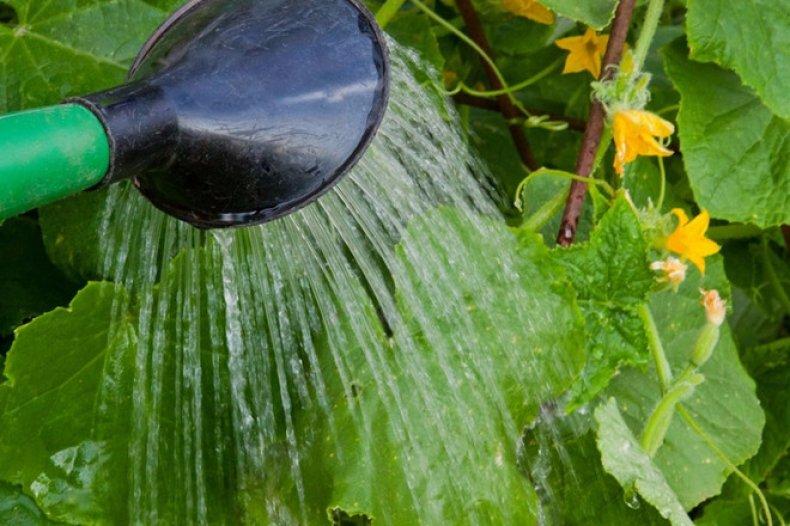 Good to know! Rainwater is ideal for watering zucchini, as it doesn't contain substances harmful to plants, such as chlorine. Rainwater is collected in containers during rainfall and then used to irrigate the plants.
Helpful tips
To ensure the harvest meets expectations, certain rules must be followed. It's important to loosen the soil periodically. This will allow the plants to receive the necessary amount of oxygen and improve water penetration to the roots.
Avoid moisture deprivation, especially in hot weather. This will affect not only plant development but also the taste of the vegetables, which will have a bitter taste.
Mulching
Mulching helps retain moisture in the soil longer, thereby saving on irrigation water. Mulch prevents moisture from evaporating from the soil surface, allowing more of the water to reach the plants. Mulch also protects the root system of plants from overheating in hot weather.

Mulch the zucchini area with peat or compost. The mulch layer should be at least 3 cm thick. This will not only retain moisture in the soil but also inhibit the growth of weeds, which rob the zucchini of nutrients.
Fertilizing and irrigation
Before planting zucchini, fertilize the soil so the plant doesn't need nutrients for a while. Apply liquid fertilizer only after watering; otherwise, you risk burning the plant.
The first feeding is with "Agricola for pumpkin crops" or "Agricola Vegeta." For 1 tablespoon of the solution, you'll need 10 liters of water. Pour 1 liter of the solution under each bush. The second feeding is done during fruit set. During this time, plants need potassium, phosphorus, and nitrogen. Therefore, it's important to choose products containing these nutrients. "Effekton" is a good choice; it's diluted in water at a rate of 2 tablespoons per 10 liters of water.
The third time, zucchini are fed during the period of intensive growth. Combination products, such as "Effekton O," are suitable for this purpose. Dilute 2 tablespoons per 10 liters of water.
Reviews
Tatyana: "I use mulching all the time. It's very convenient; weeds practically don't grow, and I have to water much less often. This saves not only time but also water."
Sergey: "Zucchini really do need to be watered generously. If you leave them without water in the heat, they'll ultimately leave you without a proper harvest."
Svetlana: "I always have a bountiful harvest of zucchini. I've been using the buried plastic bottle method for years now. It's very convenient and economical."
Related posts:
 How to properly plant zucchini in open ground, cultivation technology and care
 TOP 20 simple recipes for pickled zucchini for the winter
 What is the best way to feed zucchini in open ground and greenhouses during flowering and fruiting?
 What to do if the leaves of zucchini in open ground turn yellow and how to deal with it
 Proper cultivation and care of zucchini in open ground, how to increase the yield
 How to cook fried zucchini with garlic for the winter, finger-licking good recipes and without sterilization
 TOP 13 delicious recipes for spicy zucchini for the winter
 21 step-by-step recipes for making zucchini jam for the winter