
The most important thing for summer residents is fertilizing their crops. So, what should you feed your zucchini during flowering and fruiting to maximize your fall harvest? The market offers a variety. organic and mineral fertilizers, which are used depending on the growing season. Choosing the right fertilizer for zucchini can significantly increase the crop's yield.
Basic fertilizing for zucchini
Fertilizing zucchini is a necessary step in caring for them. If you don't fertilize the beds, the plants will produce few fruits. Yeast feeding or boric acid treatments can help increase yield.
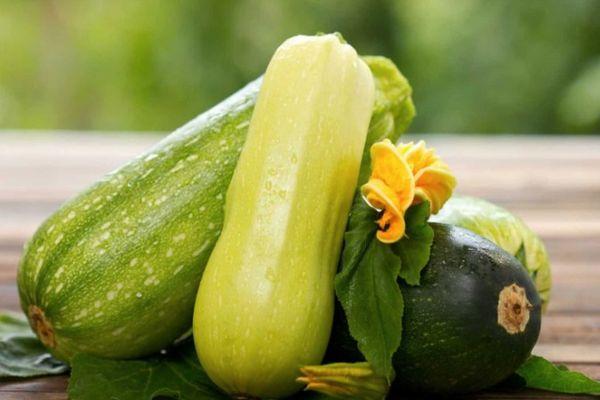
Organic fertilizers promote seedling growth:
- mullein;
- wood ash;
- bird droppings;
- weed-based infusions;
- manure.
Zucchini fertilized with organic fertilizers produces a good harvest in the fall. In some soil types (for example, in light sandy soils), organic matter is quickly lost, while in clay soils, on the contrary, it remains for a long time. Depending on the soil type, the frequency of adding organic matter to zucchini should be adjusted.
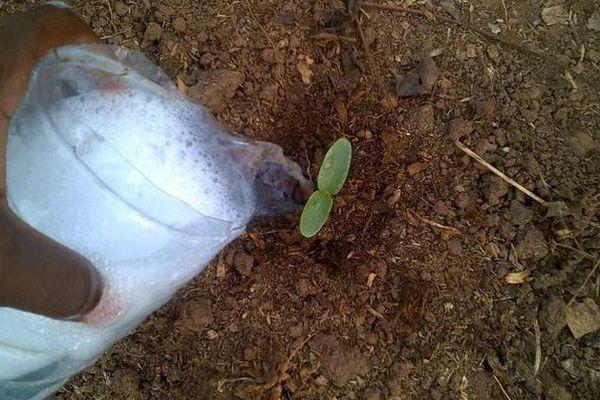
Among the minerals that are essential for zucchini, the following stand out:
- phosphorus;
- nitrogen;
- potassium;
- sulfur;
- magnesium;
- calcium.
The bushes are fed with ammonia and ammonia. If there is a lack of minerals in the soil, plants will often get sick, since the immune defense, due to the poor soil, is reduced. As a result, the harvest will leave much to be desired.
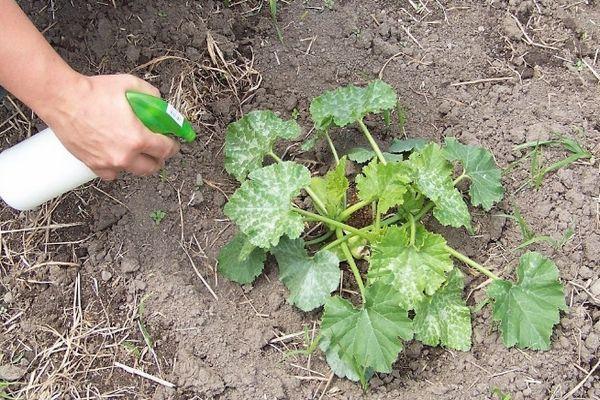
The above-mentioned minerals are water-soluble and easy to use for fertilizing. However, they are also quickly lost from the soil along with water. Therefore, if it rains after applying fertilizer to the beds, it is recommended to repeat the procedure. This is especially true if the rain was heavy.
It is important to know that some types of fertilizers cannot be mixed together.
For example, lime and ash should not be used together with large quantities of mineral fertilizers. These types of substances are applied to the soil separately, with short breaks. Potassium and urea are mixed with any type of mineral fertilizer. Phosphorus fertilizers are not recommended for use with wood ash and lime. Mixing these types of fertilizers is often not only pointless but also harmful to the zucchini.
How to fertilize zucchini after planting in the ground
First feeding of seedlings Zucchini cultivation in open ground is carried out after planting the seedsFertilizing is necessary to stimulate growth, promote foliage growth, develop strong root systems, and strengthen the immune system of young seedlings. Fertilizer is applied after the seedlings have developed two pairs of fully developed leaves. Fertilize the finished seedlings one week after planting them in their permanent location.
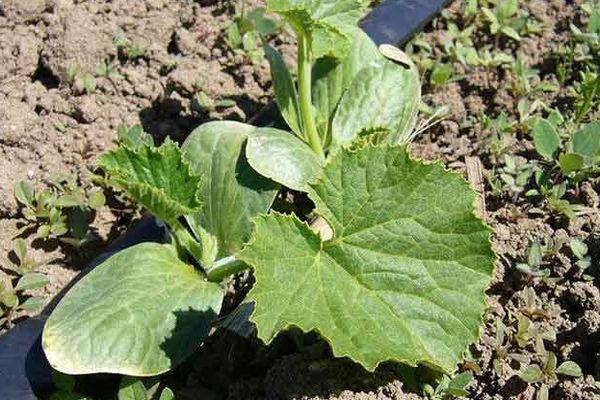
The following compositions are used as fertilizers:
- Mix 400 grams of mullein with 45 grams of nitrophoska. Dilute with water. Mix the fertilizer mixture thoroughly. Apply approximately 500 milliliters per plant.
- Pour 1 kilogram of fresh grass with water and leave for 15 days to allow the fertilizer to ferment. Then add ash and mix thoroughly. Water each bush with 300 milliliters;
- saltpeter, superphosphate and potassium sulfate are mixed in a ratio of 30:35:25 and diluted in 1 liter of water;
- Rossa Universal has proven itself to be a good choice. It's a liquid concentrate containing all the necessary minerals. Two tablespoons of concentrate are required for one application.
- Pour two packets of yeast into 1 liter of water (sugar or honey can also be added, but this is optional). The fertilizer should be infused for 24 hours;
- Pour 1 kilogram of mullein into 2 liters of water and let it steep for several days. Once the fertilizer begins to ferment, use it to water the zucchini.
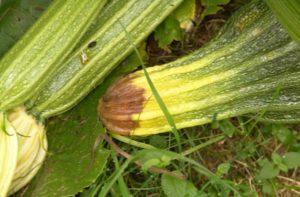
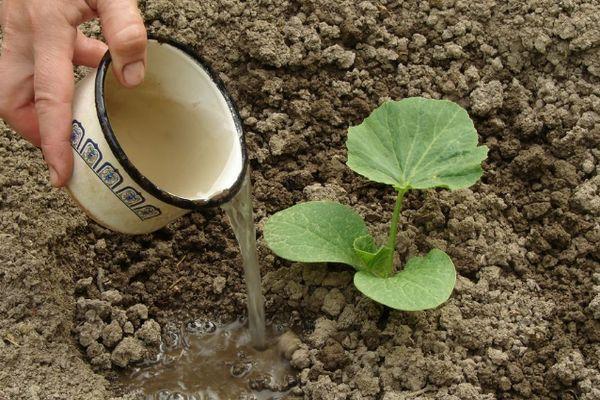
The first feeding is necessary if the soil where the zucchini is growing is not fertile. In this case, the plants will be weak without additional feeding. If the soil is fertile, skip the first application of fertilizer. Feeding during flowering and fruit formation is more important.
How to feed zucchini during flowering
Foliar and root feeding of zucchini during flowering are crucial steps in preparing for the future harvest. During this period, plants especially need additional fertilizer to ensure healthy inflorescences and fewer empty flowers. The plants begin to actively absorb liquids and nutrients from the soil, which often leads to water deficiencies and shortages of nutrients beneficial to zucchini.
The main thing is not to overfeed the bushes, otherwise all the nutrients will go into the foliage, and practically no inflorescences will appear.
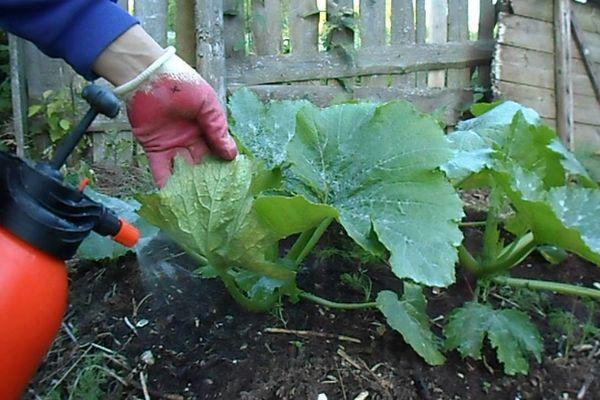
During flowering, use the following fertilizers for zucchini:
- To fertilize zucchini during flowering, use Bud. Dilute 20 grams of the product in 300 milliliters of water. This amount is sufficient for one plant. The fertilizer is applied to the roots.
- The structure of the zucchini inflorescence is such that the flowers are practically scentless, so they often remain unpollinated. To attract bees to the beds, the zucchini are treated with sugar syrup. Dissolve 550 grams of sugar in 1 liter of water. Spray the inflorescences with the sugar syrup several times a week. This measure will significantly increase the yield.
- A certain amount of manure is mixed with bird droppings (1 kilogram of fertilizer per 3 liters of water). The solution is thoroughly mixed and left to ferment. Then, the zucchini beds are watered at the roots several times a week.
- Dissolve 600 grams of wood ash in 1 liter of water and leave for 24 hours. After 24 hours, the fertilizer is ready and can be applied to the roots of bushes.
- Effecton mineral fertilizer. It promotes flower bud formation. It contains organic and mineral components. For each plant, dilute 30 grams of the product in 1 liter of warm water.
- Agromix stimulates inflorescences and ovaries. Sprinkle 30 grams of granules over the zucchini beds, then water them with warm water. Water until the granules dissolve in the soil.
- Another effective fertilizer is wood ash. There are two ways to make it. The first is to scatter the ash over the garden bed and then water it. The second is to dissolve the ash in water and water the zucchini with the resulting solution.
- Crushed eggshells are used as fertilizer.
Take a look Also
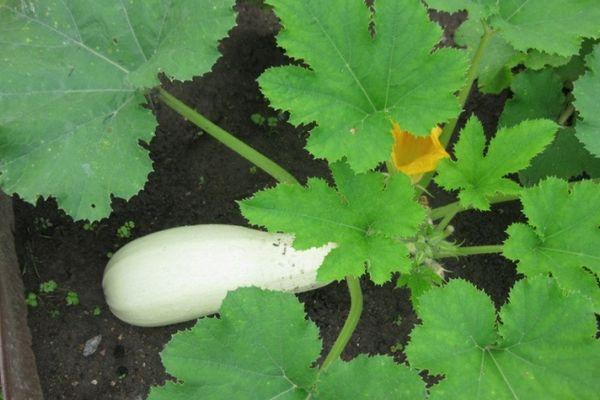
When fertilizing the soil, it's important to monitor the appearance of the zucchini. If the number of flowers decreases despite regular fertilization, while the plants become bushier, this indicates an excess of nutrients in the soil. Stop fertilizing for a few weeks.
How to feed zucchini during fruiting
Fertilizing zucchini during the fruiting and setting period is also important, especially if the soil is deficient in nutrients.
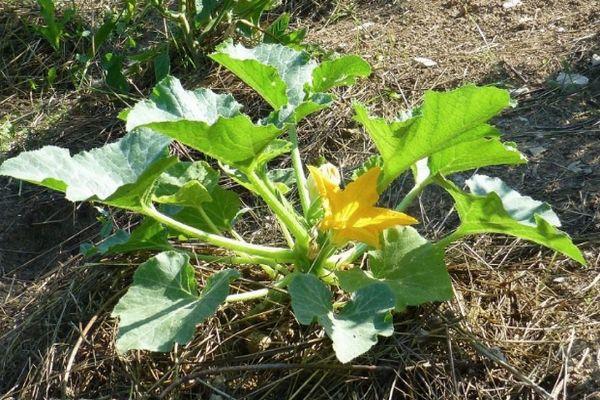
During the fruiting period, zucchini are fed with the following fertilizers:
- One of the most effective ways growing zucchini The Native Americans invented this method. Zucchini was their main crop, and to increase the yield, they planted three crops in a single plot: zucchini, beans, and corn. The corn provided support for the beans, and as the beans grew, they released nitrogen into the soil, which was essential for the zucchini to produce fruit. This simple method allowed them to achieve a good harvest and save land.
- Superphosphate and potassium nitrate are used as fertilizer for zucchini. Take 50 grams of each fertilizer and dilute it in 1 liter of water. Water the zucchini plants with the resulting solution.
- One of the simplest fertilizers for zucchini is made from weeds growing in the garden. This fertilizer is easy to prepare in large quantities. To prepare it, take 2-3 kilograms of fresh grass and add water. Leave it in a closed barrel for several days. The fertilizer will bubble and foam for the first few days. To speed up the fermentation process, add yeast or bread crusts. Once the solution is ready, dilute it with water at a ratio of 2:10. Then add a glass of wood ash. This fertilizer lasts for several days.
- A bread crust-based fertilizer is helpful during the fruiting period if you don't have yeast on hand. To prepare the fertilizer, take any bread crusts or dried bread. Cover with water and leave for several hours in a warm place (preferably in the sun). Before applying, add a small amount of iodine to the bread crumb. Water the zucchini with the bread-based solution 2-3 times a week.
- Dissolve 2 tablespoons of Effekton fertilizer in a bucket of water (if you don't have it, use nitrophoska in the same amount). Spray the plants with a spray bottle or apply the fertilizer to the roots. It will be effective in either case.
What additional fertilizer should I use to help zucchini grow?
When fertilizing zucchini, always monitor the plants' appearance. If the plants are growing foliage but not producing flowers or fruit, stop fertilizing immediately. If the zucchini are growing poorly despite the gardener's best efforts, either increase the amount of fertilizer or look for alternatives. Most likely, the fertilizers you're using are not suitable for zucchini.
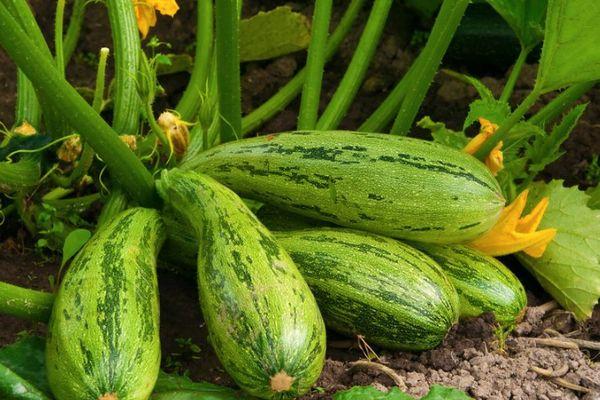
The use and application of any type of fertilizer should be clearly outlined. It's important to consider the zucchini's growing season and the nutrients it requires at that time.
The following means are used for plant growth:
- Iodine fertilizers are often used to stimulate growth and prevent disease. Iodine is applied in the spring, before planting seedlings. It helps disinfect the soil. Dilute half a bottle of iodine per liter of water. Water the soil with the resulting solution.
- Boric acid is used to promote faster growth and a strong root system. It also boosts the plant's immune defenses and improves the flavor of zucchini.
- Using an ammonia solution helps seedlings germinate faster and grow more vigorously. The bushes produce more ovaries.
- To promote active plant growth, use a solution based on iodine and boric acid. To prepare it, take half a teaspoon of boric acid and 15 drops of iodine. Dissolve the mixture in 10 liters of warm water. Mix the solution thoroughly, then let it cool to room temperature. Afterwards, water the beds.
- Mix iodine with milk. This recipe will keep your zucchini healthy and prolong their fruiting period. Regularly watering your beds with this solution will prevent pests from appearing on your zucchini.
When using any type of fertilizer, it's important to use moderation. Both a nutrient deficiency and an excess negatively impact zucchini. In both cases, you won't be able to get a good zucchini harvest.
Related posts:
 How to properly plant zucchini in open ground, cultivation technology and care
 TOP 20 simple recipes for pickled zucchini for the winter
 Proper cultivation and care of zucchini in open ground, how to increase the yield
 What to do if the leaves of zucchini in open ground turn yellow and how to deal with it
 How to cook fried zucchini with garlic for the winter, finger-licking good recipes and without sterilization
 How often should you water zucchini in open ground? Irrigation rates and methods.
 21 step-by-step recipes for making zucchini jam for the winter
 TOP 13 delicious recipes for spicy zucchini for the winter