
Zucchini belongs to the Cucurbitaceae family, and growing them is relatively easy: plant your favorite variety, and come fall, you'll remember and harvest a crop of delicious, juicy fruits for caviar or other winter preserves. However, sometimes, pumpkins can pose problems for their growers. For example, it's unclear why even the most unpretentious zucchini turn yellow, and what causes this mysterious phenomenon.
Why do zucchini turn yellow?
Zucchini are blooming and setting fruit well. However, some ovaries may fall off, which is perfectly normal. However, yellowing zucchini in the garden is hardly a normal occurrence, as it indicates disease, improper farming practices, and possible crop loss.
In open ground
To preserve your squash bounty, you need to know the causes of discoloration and fruit rot. These typically boil down to the following:
- Failure to properly rotate crops, planting cucurbits in the same plot year after year. This applies to watermelons, melons, cucumbers, and other members of this family.
- Overwatering and waterlogged soil. Zucchini are drought-tolerant, so frequent watering is not necessary. A rainy summer, however, is a different matter, as the gardener has no control over the fruit, which will quickly turn yellow and rot.
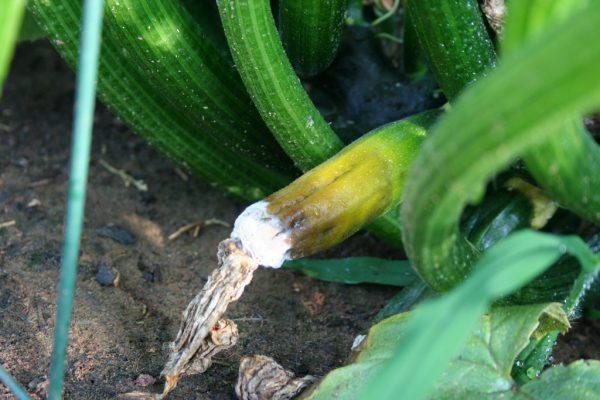
- The soil has a high concentration of nutrients. Pumpkins grow without fertilizer in good soil. Overfeeding them results in the formation of a lush, green mass that blocks light and air flow. Under these conditions, yellowing of the fruit is common.
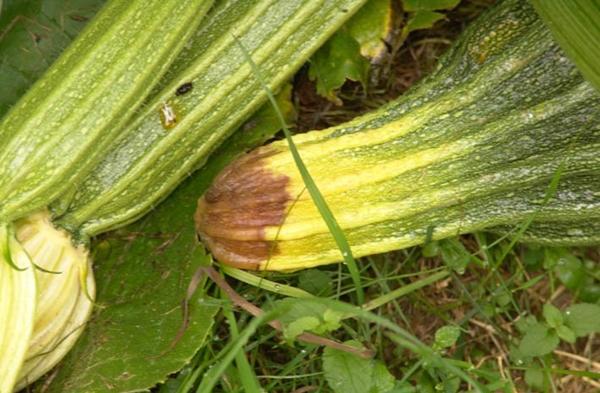
- Powdery mildew and white rot are the most common diseases. The disease usually begins at the tips, gradually affecting the entire fruit. Without preventative measures and carelessness, the entire crop can be lost.
Try to avoid overwatering, thickening the bushes, and in rainy summers, place wooden planks under the fruit so that the zucchini do not come into contact with wet soil.

In the greenhouse
Growing indoors can avoid some problems because it's easier to control the microclimate indoors. There's no need to worry about overwatering, as long as you maintain a consistent watering and ventilation schedule. It's easier to monitor the plants' health because they're all visible.
Crop rotation is difficult to maintain because the greenhouse area is limited and moving plants of the same family over significant distances is difficult.
Difficulties also arise with the development of diseases, since plants are located close to each other and fungal infections in the form of spores easily move from one plant to another.
For prevention it is necessary:
- purchase disease-resistant seeds;
- ensure that temperature changes are not sudden;
- do not create high humidity and condensation on the walls of the greenhouse;
- remove weeds and excess leaves and tops.
With proper agricultural practices and a healthy microclimate, problems with yellowing and rotting fruits can be avoided. If problems do arise, first aid measures are necessary.
Violation of the irrigation scheme
Vegetable growers don't usually think about proper watering of zucchini, especially since they don't require much water. But to prevent yellowing and rotting, you need to follow certain rules:
- Watering should be done with settled, warm water (+20°C). Irrigation should be carried out after the soil has dried out.
- The interval between waterings depends on rainfall. If temperatures reach +30°C and the weather is dry, watering every 3 days is recommended.
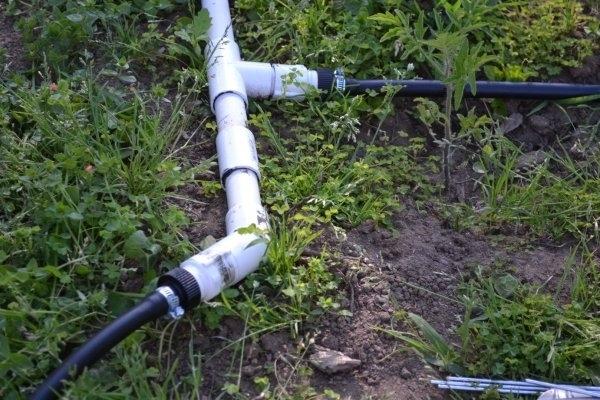
- Water infrequently but thoroughly: a soil layer up to 50 cm deep should be moist. To achieve this, use 10 liters of water per square meter during fruit set, and 20 liters during fruit development.
Overwatering exposes the upper part of the roots and causes the fruit tip to rot. Insufficient moisture causes bitterness in the fruit.
What to do if seedlings turn yellow
Yellowing of young zucchini shoots indicates the plant is experiencing stress. This can be caused by overwatering and root rot, lack of nitrogen, or low light. If the seedlings are weak, they tend to stretch and turn yellow. Getting rid of this problem is simple:
- fertilizing with organic matter or complex mineral composition;
- additional lighting for 4-6 hours;
- weekly top-ups with a weak urea solution;
- treatment with "Epin", which relieves stress in plants.
As the seedlings grow, their cotyledon leaves dry out. This is completely normal, as they continue to grow and develop larger leaves.
Why did the fruits and leaves turn yellow?
During the growing season, zucchini foliage may turn yellow. This is a natural process in late summer. However, yellowing of the leaves during growth raises questions. There can be many reasons for yellowing leaves on a plant:
- development of powdery mildew;
- lack of light, heat or nutrients;
- dense plantings;
- chlorosis disease.
Control measures depend on the cause of the discoloration and can be either agronomic or chemical. If the problem is noticed early, there's no need to delay addressing it.
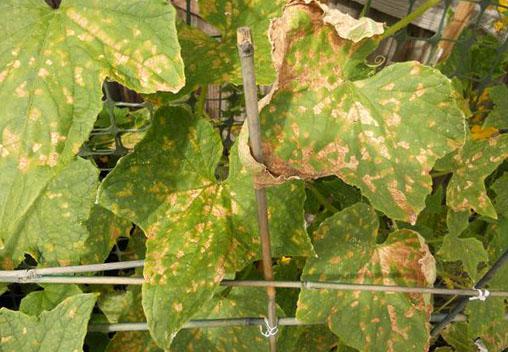
Powdery mildew
Powdery mildew is the most dangerous disease affecting pumpkins. Breeders are working to address this problem and developing resistant varieties. However, in rainy weather, dense plantings, and excess nitrogen, the problem becomes more acute.
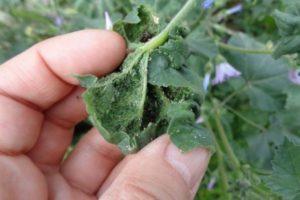
Powdery mildew is a fungal disease and its visible manifestation is a powdery coating on leaves and stems. Gradually, the leaves die, the stems become twisted, and the fruit spoils and rots. The disease progresses rapidly, so treatment should be sought immediately.
If preventative measures haven't been taken and the disease has fully developed, remove old and diseased leaves, flower stalks, and infected fruit from the bushes. Afterward, spray with a special fungicide, available at any garden center. All parts of the plant should be treated to completely destroy the fungus and its spores.
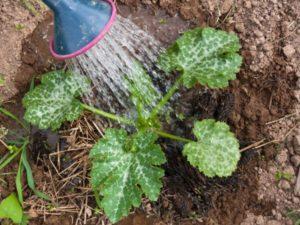
If the infestation is minor, folk remedies will help. A soap-soda solution and a whey solution have proven effective.
What to feed for prevention
Preventative measures are always the most effective and simplest compared to subsequent methods for combating yellowing and rotting of zucchini. Here are some of them:
- avoid dense plantings, remove excess shoots;
- limit the amount of watering to a minimum;
- buy seeds of disease-resistant hybrids;
- do not saturate the soil with excess nutrients;
- observe crop rotation.
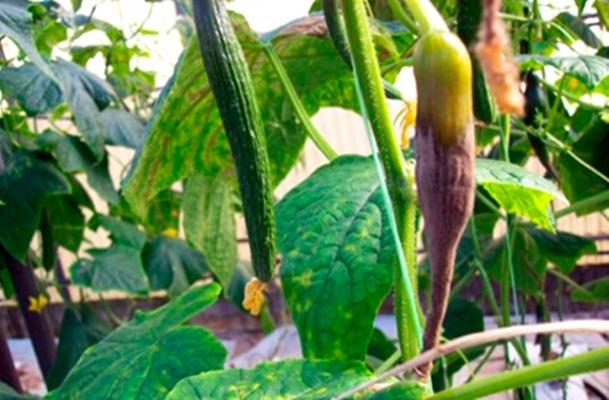
Also, zucchini is fed:
- Dissolve two tablespoons of nitrophoska or the special preparation "Effekton" in a bucket of water. Fertilize at the roots or by spraying the leaves of the plant.
- The following mixture will also provide the necessary mineral supply. For this, you'll need 30 grams of superphosphate and 1 gram of boric acid. Apply the fertilizer to the roots of each plant.
- Wood ash. There are several ways to apply this fertilizer. The simplest, which provides additional pest protection, is to sprinkle dry ash on the plantings.
All this will help you avoid problems and avoid the hassle of wondering why your zucchini are turning yellow. Simple farming practices will help you harvest large, healthy fruits.
Related posts:
 How to cook fried zucchini with garlic for the winter, finger-licking good recipes and without sterilization
 TOP 20 simple recipes for pickled zucchini for the winter
 Descriptions and characteristics of round zucchini varieties, growing and care rules
 What to do if the leaves of zucchini in open ground turn yellow and how to deal with it
 Amazing recipes for zucchini in tomato sauce for the winter, you'll lick your fingers, with and without sterilization
 What is the best way to feed zucchini in open ground and greenhouses during flowering and fruiting?
 A recipe for quickly preparing lightly salted zucchini in a bag, saucepan, or jar, along with storage instructions.
 TOP 13 delicious recipes for spicy zucchini for the winter