
- Advantages and disadvantages of late-ripening crops
- In which regions can late-ripening varieties be grown?
- The best late-ripening cucumber varieties with descriptions
- Stork
- Athlete
- Courage
- Brownie
- Solar
- Droplet
- Nezhinsky
- Indestructible 40
- Phoenix
- Stella F1
- Three Sisters
- Antoshka F1
- Steppe
- Abundant
- Annika
- Regal F1
- Rais
- Recommended late cucumber varieties for greenhouses and hotbeds
- Emelya F1
- Alekseich F1
- F1 Benefit
- Tom Thumb
- Murashka F1
- Late-ripening cucumber varieties for open ground
- Fontanelle F1
- Competitor
- Ant F1
- Masha F1
- Erofey
- Mid-season cucumbers
- Vyaznikovsky 38
- April F1
- Libella F1
- F1 Fun Company
- Table
- Mother-in-law F1
A garden plot typically includes numerous cucumber plants of a single, early-ripening variety. This variety allows the plot owner to get fresh vegetables as quickly as possible. However, few gardeners know the benefits of planting late varieties. varieties of cucumbers for open ground.
Advantages and disadvantages of late-ripening crops
Certainly, most summer residents prefer to grow early ripening varieties of cucumbersHybrids can produce a wonderful harvest in just six weeks. However, this approach also has its downsides. It's not uncommon for early cucumbers, which already produced their first fruits in July, to turn yellow shortly thereafter and then dry out completely.
For this reason, experienced gardeners recommend choosing late-ripening varieties. A significant drawback of such hybrids is their long maturation period, which can take up to two months. However, thanks to their strong root system, they can bear fruit for a long time in the garden and produce bountiful fruit all summer long, until the onset of severe frost.
In which regions can late-ripening varieties be grown?
Late-ripening varieties are typically found in regions with late summers. These are areas where the ovaries of these fruits will survive the first frosts for a long time. These varieties can also be grown in special greenhouses. Foreign hybrids are practically unsuitable for northern regions, as the conditions for their cultivation differ significantly from the climate of the central part of the Russian Federation.

For growing cucumbers, gardeners recommend choosing hybrid cucumbers bred by domestic breeders, as these cucumbers are optimally adapted to the local climate and are also resistant to local diseases and pests.
Hybrid varieties are also the most productive and are ideal for commercial purposes.
The best late-ripening cucumber varieties with descriptions
Late-ripening green vegetable varieties differ in several characteristics, knowledge of which will help you grow a healthy and robust plant. Choosing the right variety for open ground depends directly on climatic and weather conditions, disease resistance, and other factors. Some varieties also have different fruiting periods, which are indicated in the description.

Stork
This versatile cucumber is insect-pollinated. It's disease-resistant, produces high yields, and is ideal for storing, transporting, pickling, and canning. The Aist cucumber has crisp flesh and a bumpy skin.
Athlete
This variety is insect-pollinated and ripens in 60 days. The hybrid has long vines and fruit, producing a bountiful harvest; however, it tends to become bitter in hot weather. It is transportable.

Courage
This variety is self-pollinating and produces abundant fruit, regardless of soil conditions or weather. The fruit ripens in 50 days. The flesh is juicy and firm, without a bitter taste. It has fairly long stems and a medium-sized bush. It is often used for canning.
Brownie
This hybrid ripens in 60 days. It produces fruit until mid-October and can yield up to 9 kilograms per square meter. It's well-suited for canning because it lacks bitterness.
Solar
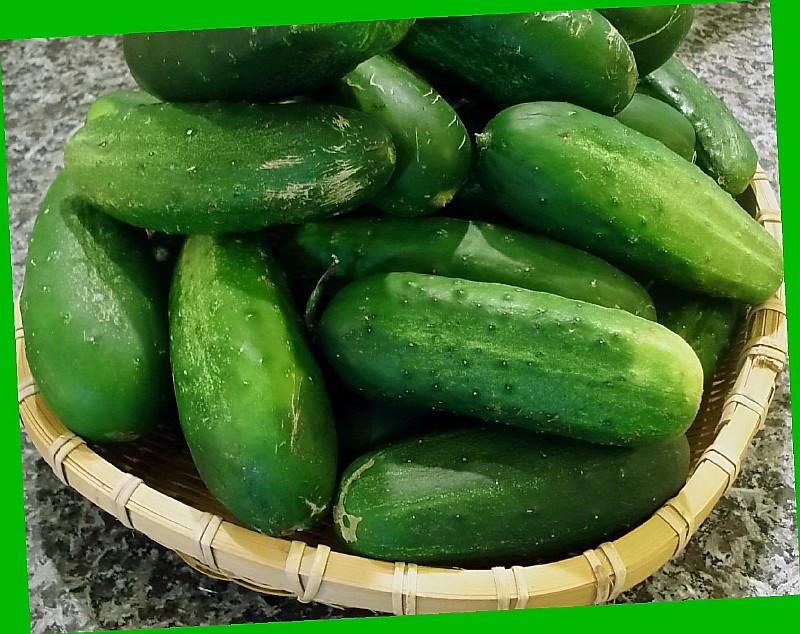
The ripening period is one and a half months. The bush is medium-sized, but the shoots are long. It rarely gets sick and tolerates adverse climatic conditions. The Solnechny cucumber is suitable for canning and long-term storage; it lacks bitterness.
Droplet
This bee-pollinated hybrid produces its first fruits in two months. It has short vines and small fruits with firm flesh. Kapelka tolerates transportation and low temperatures well. Its downsides include being susceptible to most diseases and requiring frequent watering.
Nezhinsky
The first harvest is in 50-65 days. This non-self-pollinating variety produces abundant fruit, with extremely juicy flesh and is resistant to fungal infections and drought. Suitable for canning and long-term storage. It is transportable.

Indestructible 40
Harvest time: 50 days, fruiting until frost. Storage: Good, but not suitable for canning. It has bright green skin and soft flesh. Drought- and frost-resistant.
Phoenix
Ripening period: 55 days. Produces fruit until frost and is disease-resistant. It has long shoots and stems. It tolerates long storage and heat well. It requires frequent watering.
Stella F1
The first fruits appear in a month and a half. High yield, adapted to pests and diseases. Pollination is not required. The fruits reach 23 centimeters and are free of bumps. Stella requires warmth and has received many positive reviews.

Three Sisters
A mid-season hybrid, it bears fruit in 50 days. It produces abundant fruit, with juicy, firm flesh and no bitterness. Tri Sestritsy is resistant to adverse weather conditions and pests. The fruits of Tri Sestritsy are pimpled and reach 12 centimeters.
Antoshka F1
A mid-early variety, the first fruits appear on the 60th day. The bush is tall, with long vines. It bears fruit all season long, with the fruits reaching 14 centimeters. The Antoshka variety is not frost-tolerant and requires watering.
Steppe
Fruiting begins on the 47th day. It is insect-pollinated, produces a high yield, and is suitable for canning. Cucumbers reach 12 centimeters. This vigorous plant is adapted to steppe diseases.

Abundant
The first harvest is observed after 52 days. Insects are required for pollination. It is intended for salads. Izobilny is resistant to pests and frost. The cucumbers reach 14 centimeters and are not bitter.

Annika
The first fruits appear after two months. It is characterized by high yields. The Annika hybrid is disease-resistant. The fruits are small—only 8-10 centimeters—and do not taste bitter. It is pollinated by bees.
Regal F1
The harvest can be completed on the 45th day. Cucumbers can weigh up to 17 kilograms. The hybrid transports well and is suitable for winter storage. Regal F1 is resistant to fungal diseases and adverse weather conditions. Cucumbers reach 18 centimeters.

Rais
The hybrid produces fruit in 58 days. It boasts a high yield—up to 28 kilograms can be harvested. The Rais variety is resistant to various diseases and poor weather. It is primarily used for canning.
Recommended late cucumber varieties for greenhouses and hotbeds
A number of late-ripening hybrids are suitable for growing only in special greenhouses or hothouses, since cucumbers do not tolerate low temperatures.
Emelya F1
The first harvest begins on the 45th day. This late hybrid is grown in greenhouses. It is suitable for canning or fresh consumption. It is distinguished by its long vines and robust bush.

Alekseich F1
It bears fruit in a month and a half, producing female flowers. The fruits reach 8 centimeters and are versatile. This F1 variety is virtually disease-resistant and requires little watering.
F1 Benefit
Ripening period: 45 days. Pollination is not required. The fruits reach 12 centimeters, are covered with tubercles, and the flesh is not bitter. The hybrid tolerates drought and cold well.
Tom Thumb
The first harvest begins on the 39th day. It is resistant to diseases and frost. The fruits reach 11 centimeters, are excellent for canning, and are easy to transport.

Murashka F1
An early-ripening variety, harvesting begins in 42 days. It requires no pollination and produces high yields, with fruits up to 12 centimeters in size and no bitterness. It is disease and pest resistant.
Late-ripening cucumber varieties for open ground
Several of the most popular varieties are sought after by experienced gardeners. These hybrids have received increased attention due to their characteristics and distinctive properties.
Fontanelle F1
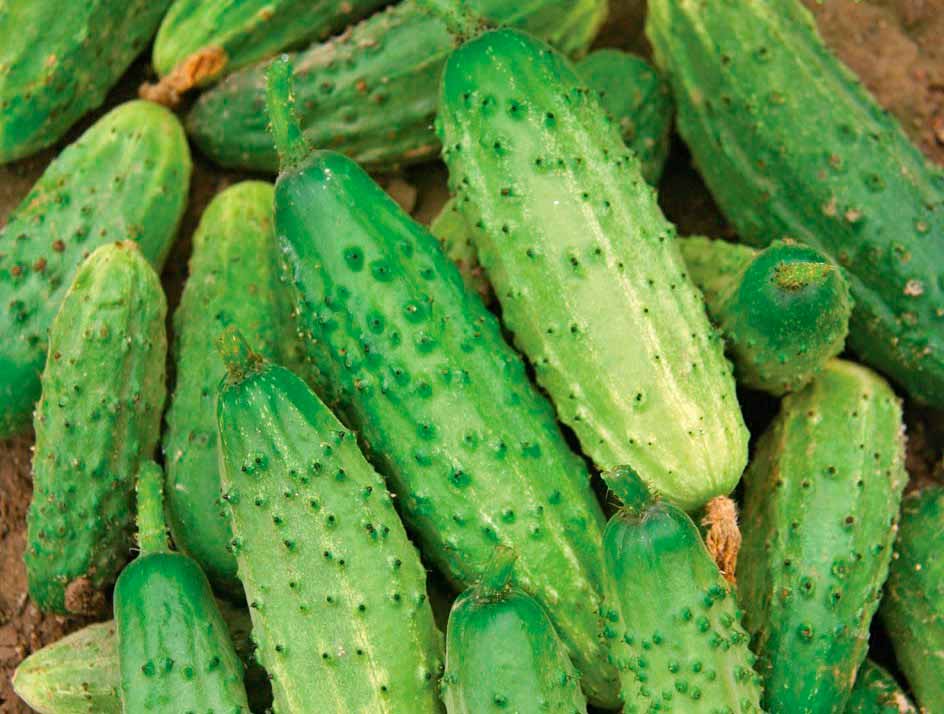
This hybrid is pollinated by bees and has long stems. The first fruits ripen in 50 days. It has tasty, juicy flesh without bitterness. The Rodnichok F1 variety is extremely heat- and drought-resistant, and is particularly resistant to disease.
Competitor
It bears fruit on the 45th day. The fruits reach 10 centimeters, and the hybrid also has long shoots—up to two meters. This variety requires careful watering and is suitable for storage and canning. However, it has a tough, dense skin, which is why it is almost never used for commercial purposes.
Ant F1
Designed for growing in special greenhouses, it self-pollinates and boasts a vibrant flavor. Suitable for both winter storage and fresh consumption, it has immune protection against various diseases.

Masha F1
The first harvest can be obtained on the 40th day. An extremely productive and versatile variety, this hybrid is frost- and disease-resistant and boasts a long fruiting period.

Erofey
This variety is pollinated by bees and is well suited for winter storage. It has a mixed flowering pattern, long branches, and a bushy habit. The fruits are short, only 6 centimeters long. It is resistant to fungi, drought, and early frosts.
Mid-season cucumbers
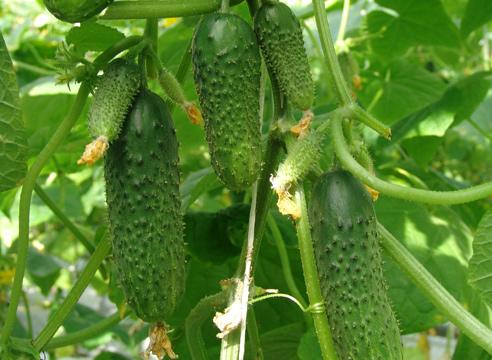
There are quite a number of mid-season hybrids. The main characteristic of this variety is that it begins bearing fruit in 45-55 days. These cucumbers typically produce a high yield.
Vyaznikovsky 38
The hybrid ripens and bears fruit in 55 days; it is pollinated by bees. The fruits grow up to 9 centimeters and have numerous tubercles. A versatile variety, it is resistant to diseases and adverse climatic conditions.

April F1
The first harvest can be collected on the 50th day. This hybrid produces numerous ovaries and does not require insects for pollination. The variety is suitable for canning; the fruits are juicy and firm, without bitterness. It is resistant to diseases and fungi, but does not tolerate frost or drought.
Libella F1
This hybrid is pollinated by bees, and the harvest can be obtained in as little as 50 days. The variety has long shoots, and the fruits are up to 15 centimeters in size. It also boasts a moderate yield. The cucumbers have a mild bitterness and whitish spots. The main characteristic of this variety is its high iodine content.
F1 Fun Company
This variety produces its first fruits within a month and a half. The Veselaya Kompaniya variety yields up to 9 kilograms. It is prized for its flavor and is suitable for canning or fresh consumption. This hybrid is also resistant to most diseases and adverse weather conditions. The cucumbers are cylindrical, grow up to 12 centimeters, and weigh 90 grams.

Table
The hybrid begins bearing fruit on the 50th day. This variety is distinguished by its distinct flavor characteristics, without bitterness. It features a branched bush with long vines. Suitable for canning or eating fresh, it yields up to 8 kilograms of cucumbers.
Mother-in-law F1
This hybrid produces its first harvest as early as 45 days and is self-pollinating. The flesh of this variety is tender, juicy, and crisp. It is resistant to diseases, most pests, drought, and frost. It is suitable for canning. Like the Vesyoly Gnomik variety, this hybrid also boasts good transportability.
Related posts:
 80 Best Eggplant Varieties for Different Regions with Descriptions and Characteristics
 50 Best Carrot Varieties with Descriptions and Characteristics
 Description of the best pepper varieties for greenhouses and open ground in 2025
 What varieties of tomatoes are best to plant in a polycarbonate greenhouse?
 Descriptions of the 20 best cherry varieties for the Moscow region, their planting and care
 TOP 30 best varieties of cold-resistant cucumbers with descriptions and characteristics
 Description and properties of the 50 best varieties of asparagus beans, benefits and harms
 The best eggplant varieties for growing in a polycarbonate greenhouse: planting and care