
- History of the culture's development
- What are the benefits of Marinda cucumbers?
- Description of the species
- Bush and leaves
- Flowering and harvest
- Technical requirements of the Marinda F1 crop
- Optimal climatic conditions for growing
- Soil requirements
- Susceptibility to diseases and insects
- Planting and growing
- Sowing seeds in open ground
- Planting seedlings in a greenhouse
- How to care for the variety
- Frequency of watering
- How and with what to fertilize bushes
- We shape and tie up the bushes
- Weeding and loosening
- Treatment against diseases and pests
- Gardeners' reviews of the variety
Based on gardener reviews and the description, the Marinda F1 cucumber is a unique vegetable crop. Its many positive qualities will appeal to every gardener. However, to get a decent harvest, it's important to know the rules for growing cucumbers, as well as the requirements for agricultural practices.
History of the culture's development
The Marinda F1 cucumber is a foreign cultivar. This first-generation hybrid was developed by the Dutch breeding company MONSANTO HOLLAND BV in the 1980s. Since the early 1990s, the cucumber has been cultivated in Europe. In 1994, having passed all testing, the crop was included in the State Register. Since then, the Marinda hybrid has become very popular in both small and large domestic gardening farms.
What are the benefits of Marinda cucumbers?
According to the description and gardener reviews, the Marinda F1 hybrid is an easy-to-grow cucumber. These cucumbers are ideal for growing outdoors and in greenhouses.
The following qualities are also considered to be the advantages of the variety:
- high germination rate of seed material;
- adaptation to climatic conditions;
- long-term fruiting;
- commercial qualities of fruits;
- self-pollination;
- versatility;
- high yield.
At the same time, experienced farmers note the variety’s high resistance to various cucumber diseases and insect pests.
Description of the species
Some gardeners note the similarity between the Marinda hybrid F1 and domestic cucumber AmurHowever, these are different crops. Therefore, to avoid making mistakes when choosing vegetables for your garden, you should familiarize yourself with the specific description of the Marinda cucumber.
Bush and leaves
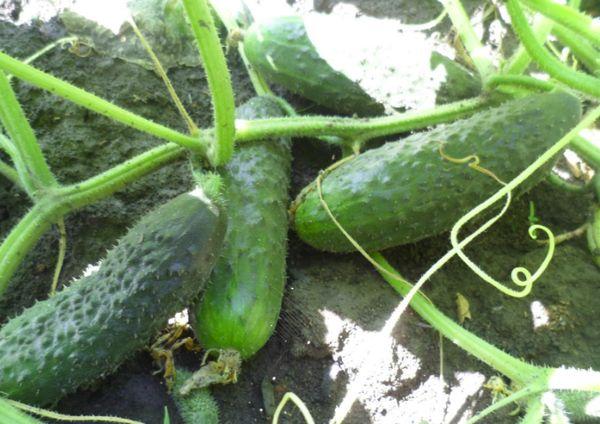
The Marinda F1 hybrid is indeterminate, meaning it has no growth restrictions. On average, a mature bush reaches 4 meters in height.
The plant develops rapidly, culminating in the formation of a flower bud. After the cucumber bud forms, the elongated shoot begins to produce lateral fruiting clusters.
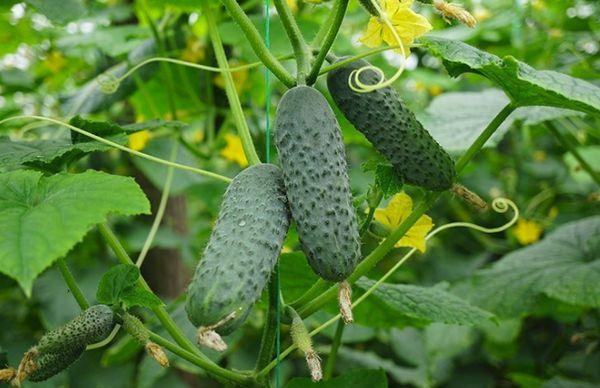
A mature bush is characterized by moderate vine growth and a small number of leaves. This structure simplifies cultivation and harvesting. Furthermore, this cucumber can be grown horizontally or vertically.
Flowering and harvest
The growing season, from seed germination to the first cucumbers, lasts 40-55 days. The average yield of this variety is 25-30 kilograms of fruit per square meter.

The Marinda hybrid has a female flowering type. The plant produces medium-sized yellow flowers. The fruit sets in clusters. A single cluster produces 5 to 7 cucumbers. All cucumbers are distinguished by their attractive appearance and excellent taste.
Description of fruits:
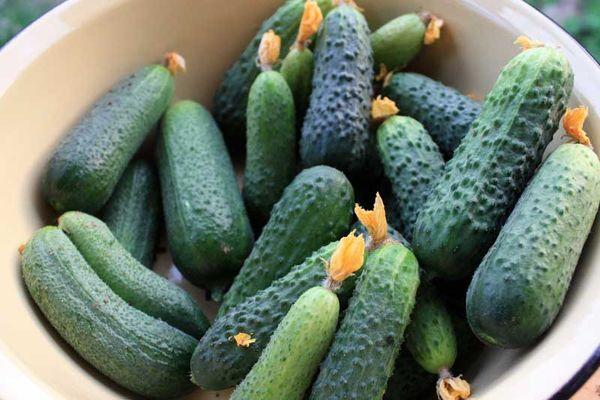
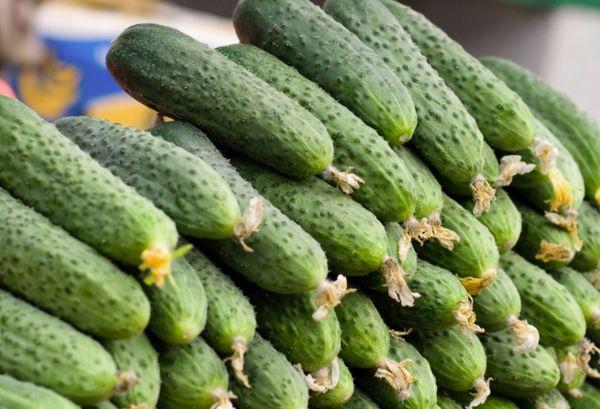
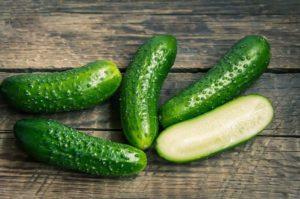
- The length of the vegetables, on average, reaches 8-10 centimeters, weight – 70-75 grams.
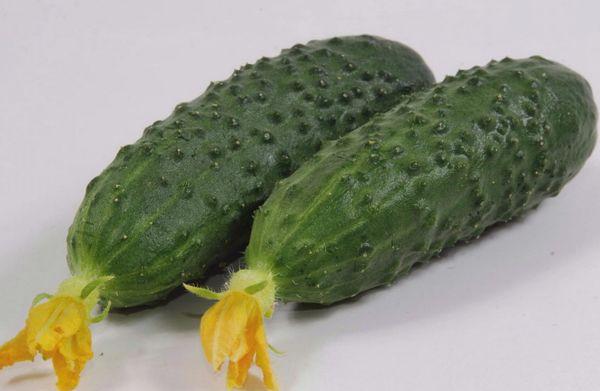
- Cucumbers are smooth and cylindrical in shape.
- The fruit's skin is dark green, dense but thin. Its surface is covered with small bumps and spines.
- The cucumber flesh is juicy and firm. The seed chamber is small.
- The taste of the fruit is characterized by a sweetish aftertaste, without bitterness, and a pleasant, strongly pronounced aroma.
Marinda cucumbers are good for fresh eating, pickling, and pickling.
Technical requirements of the Marinda F1 crop
Growing Marinda cucumber requires compliance with certain technical conditions.
Let's consider the basic requirements of culture.
Optimal climatic conditions for growing
The description of the Marinda variety indicates that this vegetable crop quickly adapts to any weather conditions. However, according to gardeners, the cucumber responds well to full sunlight, with a daylight duration of 12-14 hours.
High yields were observed when plants were grown in temperatures ranging from 24 to 28 degrees Celsius. The crop does not thrive in 30-degree heat or at temperatures as low as 10 to 15 degrees Celsius. Therefore, it suffers from cold and drought.
Soil requirements
A well-lit, wind-free location is considered optimal for growing this hybrid. High yields have been observed in fertile, loose soil with a low water table. It is also desirable for the soil to be permeable and aerated, with low nitrogen levels.
Avoid excessive acidity and heavy soil, otherwise the plants will be thin and the harvest will be meager.
Susceptibility to diseases and insects
The Mirinda variety, unlike its relatives, is highly resistant to various diseases. It resists the following diseases:
- powdery mildew;
- downy mildew;
- sclerotinia.
However, in some cases, cucumbers can be susceptible to diseases such as angular leaf spot and anthracnose. As for insects, they generally pose no threat to the plants. With timely treatment, hybrid bushes quickly recover from pest attacks.
Planting and growing
The Marinda hybrid's cultivation technology includes both seedling and non-seedling methods. The first method is used for fruit production in greenhouses. The second method is used for open ground cultivation. Each method is carried out individually and requires specific conditions.
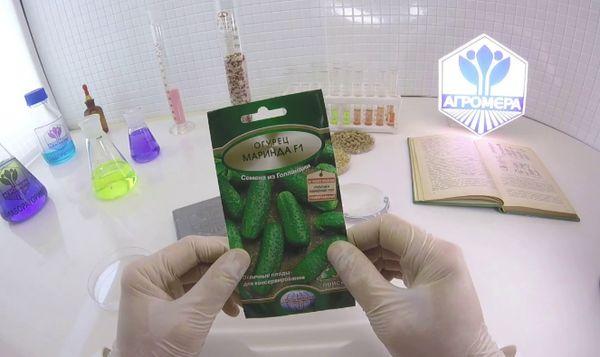
Tip! Regardless of the growing method, before planting Marinda cucumbers, it's recommended to first prepare the seeds. You can use a saline solution for this.
It's prepared with 1 liter of water and 1 tablespoon of salt. Soak cucumber seeds in the prepared concentrate for 15 minutes. Remove any seeds that float to the surface during this time. Dry any seeds that remain at the bottom of the container and use them for sowing.

Sowing seeds in open ground
Before sowing seeds in open ground, it is recommended to soak them in a nutrient solution for 24 hours.
Seeds should be planted only in well-warmed soil. The optimal daytime soil temperature is considered to be 15 degrees Celsius. A few days before planting, it is recommended to fertilize the soil with a mixture of peat and humus. It is also advisable to add sawdust.
The seeds are planted in a 50x30 cm pattern, at a depth of 1-2 cm. After sowing, the seeds are covered with soil and watered with warm water.
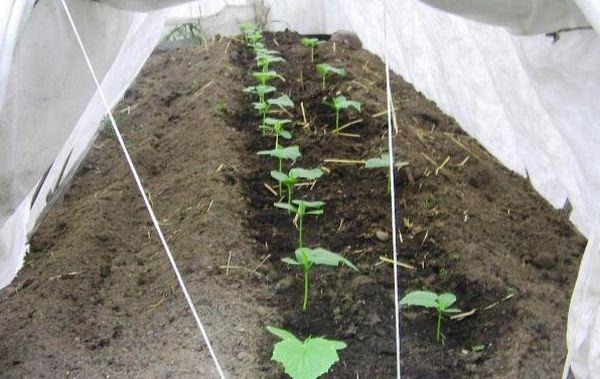
At the end of planting work, the seed beds are covered with film until the first shoots appear.
Planting seedlings in a greenhouse
Planting seeds for seedlings is carried out 20-30 days before the expected planting of seedlings in the greenhouse.
After the specified time, the soil in the greenhouse is disinfected with a potassium permanganate solution and watered generously. Then, based on the greenhouse's dimensions, the beds are marked out. The optimal height for the beds is considered to be 20-30 centimeters, the width 60 centimeters, and the row spacing 75 centimeters. A trellis will also need to be installed in the greenhouse to support the seedlings.
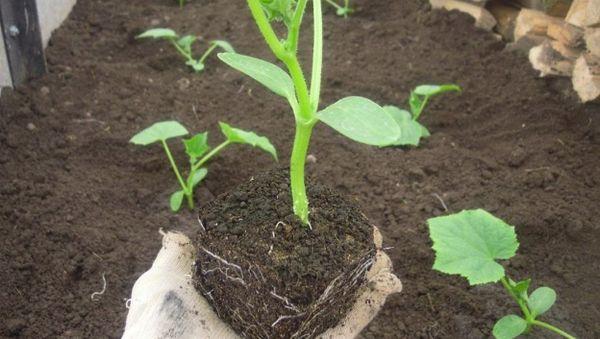
Once all the preliminary work has been completed, the seedlings are planted. Young cucumbers are planted in a 50x30 cm pattern, at a depth of 3-4 cm.
How to care for the variety
The yield and marketability of Marinda fruit directly depend on proper agricultural practices. Caring for the crops is simple and requires no experience, so even a novice gardener can handle it.
Frequency of watering
Marinda cucumbers are quite moisture-loving plants. Therefore, they need to be watered daily. To keep the soil moist throughout the day, mulching is recommended.
The following materials can be used as mulch:
- compost;
- straw;
- husk;
- sawdust.
Marinda cucumbers have a shallow, spreading root system. Therefore, it is recommended to irrigate the entire soil surface above the green plant mass.

How and with what to fertilize bushes
The Marinda hybrid responds well to nitrogen, mineral, and phosphorus fertilizers. These are applied before the cucumbers' foliage begins to grow, during flowering, and during the fruiting phase. Liquid fertilizers are applied to the roots of the plants. Ideally, fertilizer should be applied every 10 days, before heavy watering or rainfall.
We shape and tie up the bushes
Marinda cucumbers don't have many branches, so shaping the bush doesn't require much time. Simply pinch the top of the plant when it has 4-5 true leaves. Lateral shoots are removed after 2-4 leaves have formed.
If Marinda cucumbers are grown outdoors, they are tied to a support immediately after the seedlings emerge. Indoors, the plants are tied to a trellis two weeks after planting.

Weeding and loosening
It is recommended to weed and loosen the soil in vegetable beds at least once a week. It's best to perform these procedures after each watering. This is because weed roots emerge more easily from moist soil. Furthermore, moist soil facilitates air flow, which fully saturates it with oxygen.
Treatment against diseases and pests
To prevent the negative impact of diseases and pests, plants should be inspected regularly. If any deformation of leaves, stems, or fruits is detected, cucumbers should be immediately treated with appropriate products.
Fungicides are typically used to combat plant diseases. Folk remedies based on laundry soap are used to eliminate insect pests.
Gardeners' reviews of the variety
Yurova Lyudmila, 54 years old, Irkutsk
"In our region, growing vegetables without greenhouses and hotbeds is quite difficult. And even indoors, it's not always possible to get the desired harvest. But this is not the case with the Marinda variety. I plant these cucumbers every year, and I'm always pleased with the quality and yield. The fruits are beautiful and appetizing. The flesh is crisp, slightly sweet, without bitterness."
Sysoev Vadim, 46 years old, Chelyabinsk
"Personally, I didn't like the Marinda hybrid. Yes, it's easy to care for, but its yield isn't that high."
Related posts:
 Description of the best varieties of Chinese cucumbers, planting, growing and care
 Description of unusual methods for planting and growing cucumbers
 TOP 30 best determinate cucumber varieties with descriptions
 How to properly plant cucumbers in open ground with seeds, and at what depth
 Why cucumber leaves are drying out and what to do, how to treat them in a greenhouse and in the ground
 TOP 30 best varieties of cold-resistant cucumbers with descriptions and characteristics
 How to plant cucumbers in open ground under film: timing and cultivation technology
 How to care for cucumbers in open ground from planting to harvesting