
Vegetable crops are grown throughout Russia. However, the suitability of the variety for each region must be strictly observed. For example, for the northern regions, gardeners recommend choosing the Amur f1 cucumber. We'll explain in detail the advantages of this hybrid in this article.
Description of the variety
The Amur cucumber is a parthenocarpic vegetable cultivated domestically. The hybrid was developed by the Manul company in the late 1990s. In 2000, after passing trials, the variety was included in the State Register.
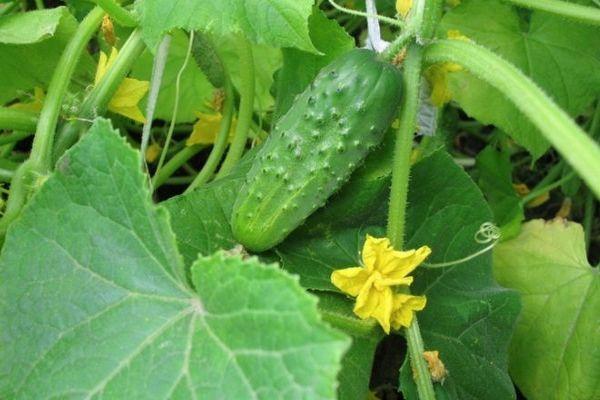
According to the breeders, the Amur cucumber is a high-yielding, early-ripening hybrid. The growing season from seedling emergence to ripening of the first fruits is only 30–35 days. Most of the harvest can be harvested within a month.
General description of cucumber Amur f1:
- bush - vigorous, with self-regulating branching;
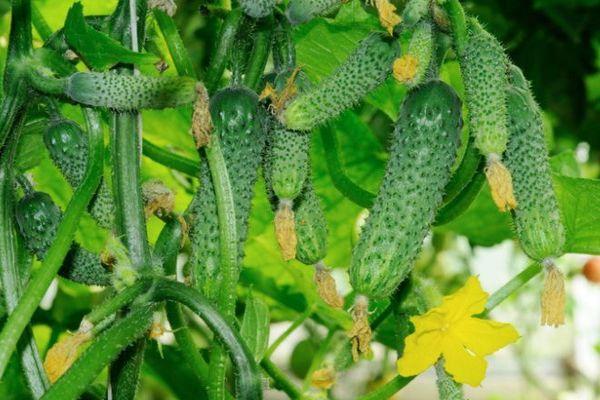
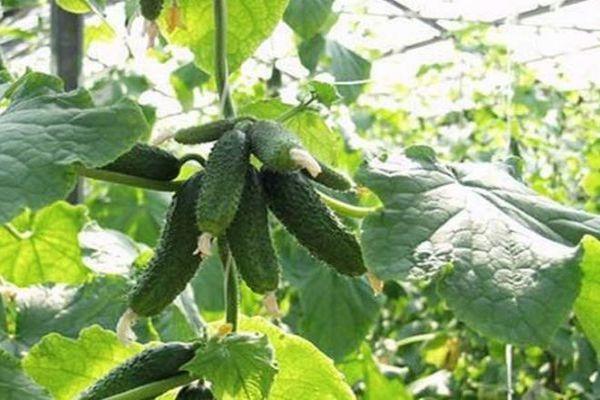
- ovary - cluster-shaped arrangement;
- leaves are medium-sized, slightly wavy, dark green;
- reproduction stage - self-pollination;
- ripening is uniform;
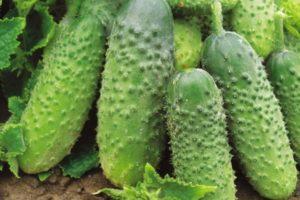
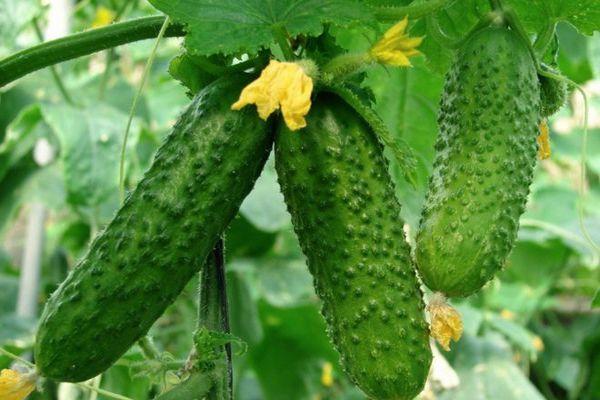
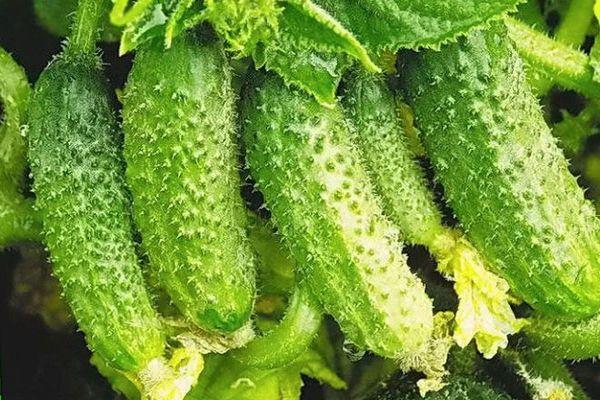
- cucumbers - white-spined, finely tuberculate, weighing 90-110 g, 12-15 cm long;
- taste qualities are excellent;
- yield - 25-28 kg per 1 sq. m.
The Amur hybrid is considered a versatile crop. Its cucumbers are successfully used for canning, pickling, and fresh consumption.
Growing
A special feature of the Amur hybrid is that it grows well both in greenhouses and in open ground. However, the breeding method depends strictly on the climatic conditions of the region.
Open ground
Amur cucumbers are typically grown outdoors in central and southern Russia. This method involves seed cultivation.

Open ground cultivation scheme:
- The seed material is disinfected with a weak solution of manganese and soaked for germination.
- The planting area is dug up, loosened and fertilized with mineral and organic fertilizers.
- When the soil warms up to +15–18 degrees, it is treated with a strong, hot homogeneous mixture of manganese.
- A day after disinfecting the soil, seeds are planted according to a 15x100 cm pattern, with a planting depth of 2–4 cm.
- The seed material is covered with soil and mulched with a peat layer of 1–1.5 cm.
At the end of sowing, the beds are covered with plastic film until the first shoots appear.
Indoor cultivation
This growing method requires some preliminary work to obtain seedlings. However, using it, the Amur plant produces one of the first vegetable crops to yield a harvest ready for the summer table.

The process of growing seedlings itself occurs as follows:
- Drainage holes are made in the bottom of the peat pots.
- The containers are filled with fertile, warmed, disinfected soil.
- One seed is carefully placed into each pot at a depth of 1.5–2 cm.
- The seed material is covered with soil and watered from a spray bottle.
After the work has been completed, the peat pots are covered with plastic film and placed in a dark place until the seedlings appear.
The process of transplanting seedlings is carried out when the soil in the greenhouse has warmed up well.
Care Features
A detailed examination of the Amur variety's characteristics, as listed on the seed packet, reveals that it's a fairly demanding crop. However, if all agricultural practices are followed, every gardener will be pleased with the quality and abundant yield.
So, let's consider what kind of care the Amur hybrid needs:
- Regular watering. Cucumbers should be watered at least twice a week, in the morning or evening, when there is no direct sunlight. The optimal amount of water is considered to be 25 liters per square meter.
- Plant fertilizing. Vegetable crops require complex fertilizers throughout their growth period. The first application is during flowering, the second at weekly intervals, and the third during fruiting.
- Weeding. To prevent weeds from robbing vegetables of nutrients, they must be removed as they appear. It's best to weed by hand, as using a plow can damage the plant's root system.
- Preventative Maintenance. To prevent cucumber diseases and pest damage, regularly inspect the vegetable crop. If any defects are detected, immediately use insecticides or folk remedies.

During the development and growth of cucumbers, the soil will also need to be loosened. This agricultural technique will help enrich the soil with oxygen, which will have a beneficial effect on the root system.
Advantages and disadvantages
The Amur hybrid, like ordinary varietal crops, has its advantages and disadvantages.
Among the advantages we can highlight:
- attractive appearance;
- taste qualities, without bitterness;
- long-distance transportation;
- shelf life;
- harvest return;
- early maturity;
- frost resistance;
- immunity to pests and diseases;
- universal purpose.
As you can see, the Amur cucumber has many positive qualities. However, despite this, it does have one significant drawback: it requires a lot of care.
Pests and diseases
Among all cucumber varieties, the Amur hybrid has good resistance to pests and diseases. It is particularly resistant to fungal infections. However, if care is not followed, there is a risk of developing such diseases as:
- sclerotinia;
- powdery mildew;
- Cancer;
- Cladosporiosis.
Among insects, ants and whiteflies are worth mentioning.
Harvesting and storage
The Amur hybrid is primarily valued for its large, consistent harvest. Among all cucumber varieties, it can yield approximately 4-5 kg of high-quality fruit per bush within a month. Therefore, harvesting should be done every 2-3 days. Carefully inspect all bushes, as overripe cucumbers lose their marketable appearance and flavor.
As for storage, if you put cucumbers in an airtight bag and put them in the refrigerator, they will look like they came straight from the garden for 2-3 weeks.
So, we've outlined the main characteristics and description of the Amur hybrid. We've also discussed its growing and agricultural practices. Whether to purchase this vegetable crop is entirely up to you. But as gardeners' reviews attest, no one has ever regretted their choice.
Reviews
Smirnov A.V., Krasnoyarsk Krai: "I've been growing Amur cucumbers for several years now. I'm always satisfied with the quality and quantity of the harvest."
Olesya, Altai Krai: "Amur is one of my favorite hybrids. The cucumbers are always smooth, delicious, and crispy. They look especially appealing when preserved. The jars don't get cloudy or explode."
Anna, Sverdlovsk Oblast: "I also liked this hybrid. The abundance of its harvest is simply astounding. When the first cucumbers appear, we can't keep up with the harvest."
Related posts:
 Description of the African horned cucumber variety Melotria, cultivation and care
 Description of the best varieties of pickling and barrel cucumbers for greenhouses and open ground
 TOP 30 best varieties of cold-resistant cucumbers with descriptions and characteristics
 Description of the best varieties of Chinese cucumbers, planting, growing and care
 TOP 20 best varieties of medium-sized cucumbers with descriptions and characteristics
 Description of the best, most productive and new varieties of cucumbers for 2025
 Description and characteristics of the 30 best hazelnut varieties, cultivation
 Top 50 Best Cucumber Varieties for Polycarbonate Greenhouses with Descriptions