
- Description and characteristics of the plant
- Main pros and cons
- Beneficial properties
- Growing the African mini cucumber Melothria
- Choosing a landing site
- The landing process
- Seed method
- Planting seedlings
- Cucumber Care Tips
- The leading role of fertilizing and watering
- Topping
- Protecting Melothria from pests and diseases
- Harvesting and storage
- Reviews from experienced gardeners
Russian lovers of exotic plants have already become acquainted with the amazing horned cucumber, Melothria, which came to us from central Africa. In the central part of the country, the African mini cucumber has already appeared in some gardens. But while it's only just beginning to expand into Russia, gardeners are somewhat skeptical. And in vain: this miracle cucumber "with a secret" is ready to take pride of place in the collection of exotic crops native to the central part of the country.
Description and characteristics of the plant
Melothria scabra is another member of the Cucurbitaceae family. It is a perennial vine, cultivated as an annual in our country. Both its fruits and roots are edible.
Melothria resembles our climbing cucumber in appearance, but it also has its own characteristics:
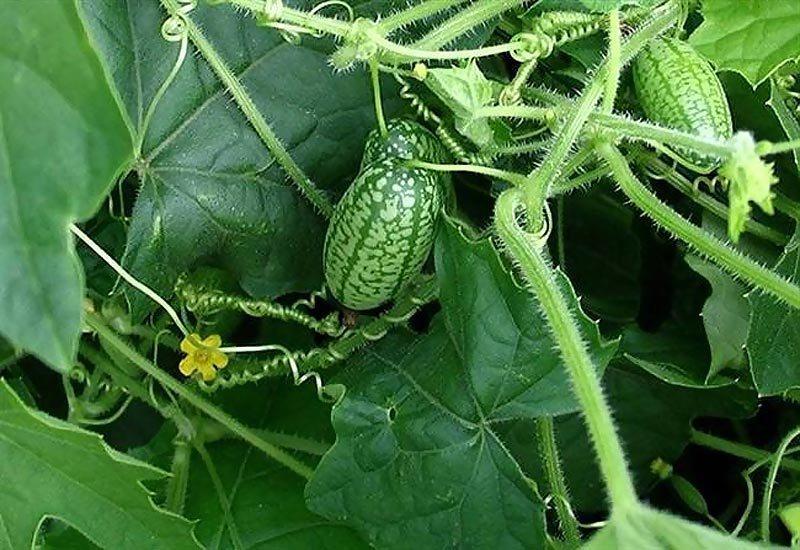
- the liana-like stem grows up to 3 m in length;
- triangular leaves resemble cucumber leaves;
- the surface of the leaves is smooth, without roughness;
- three-lobed leaf with serrated tips;
- monoecious plant blooms with yellow flowers;
- flowers are bisexual: female flowers are located singly, male flowers are collected in pairs;
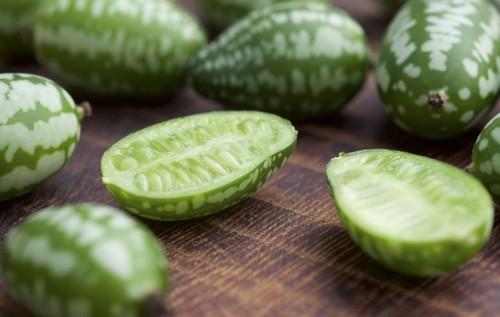
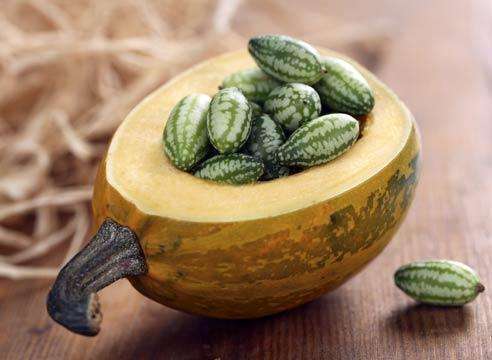
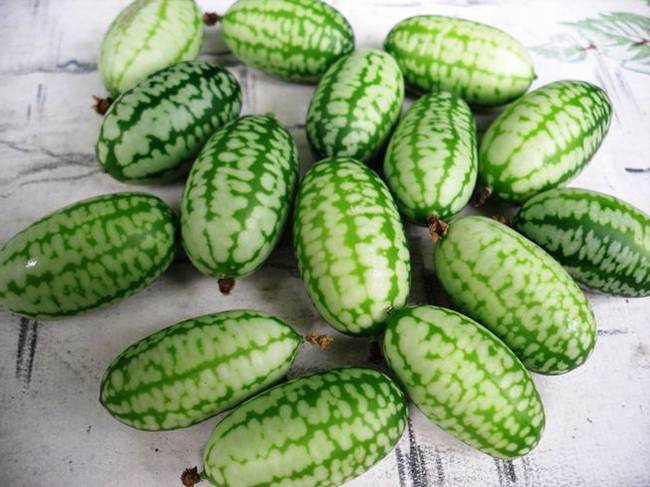
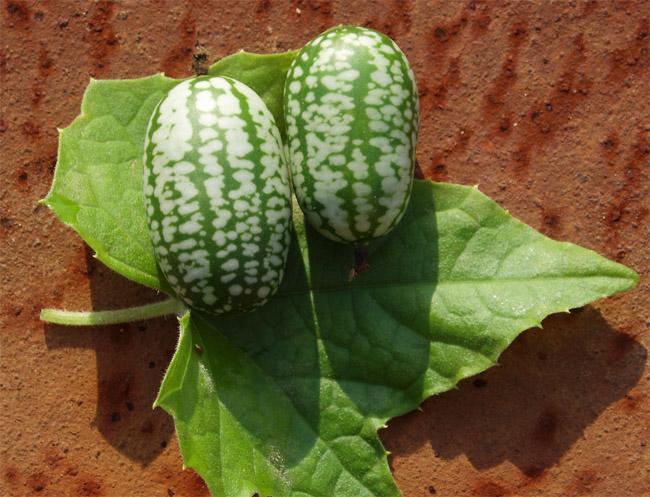
- the fruits look like small watermelons, 2 to 4 cm in diameter;
- The fruits taste like a regular cucumber, the rough skin has a slight sourness.
The Melotria scabra (watermelon cucumber, horned cucumber) produces edible red roots. They resemble a long radish weighing 400 grams. The flavor is difficult to replicate until you try it yourself: it's a mixture of cucumber, radish, and melon. The roots don't store well; they quickly become wilted and should be consumed immediately.
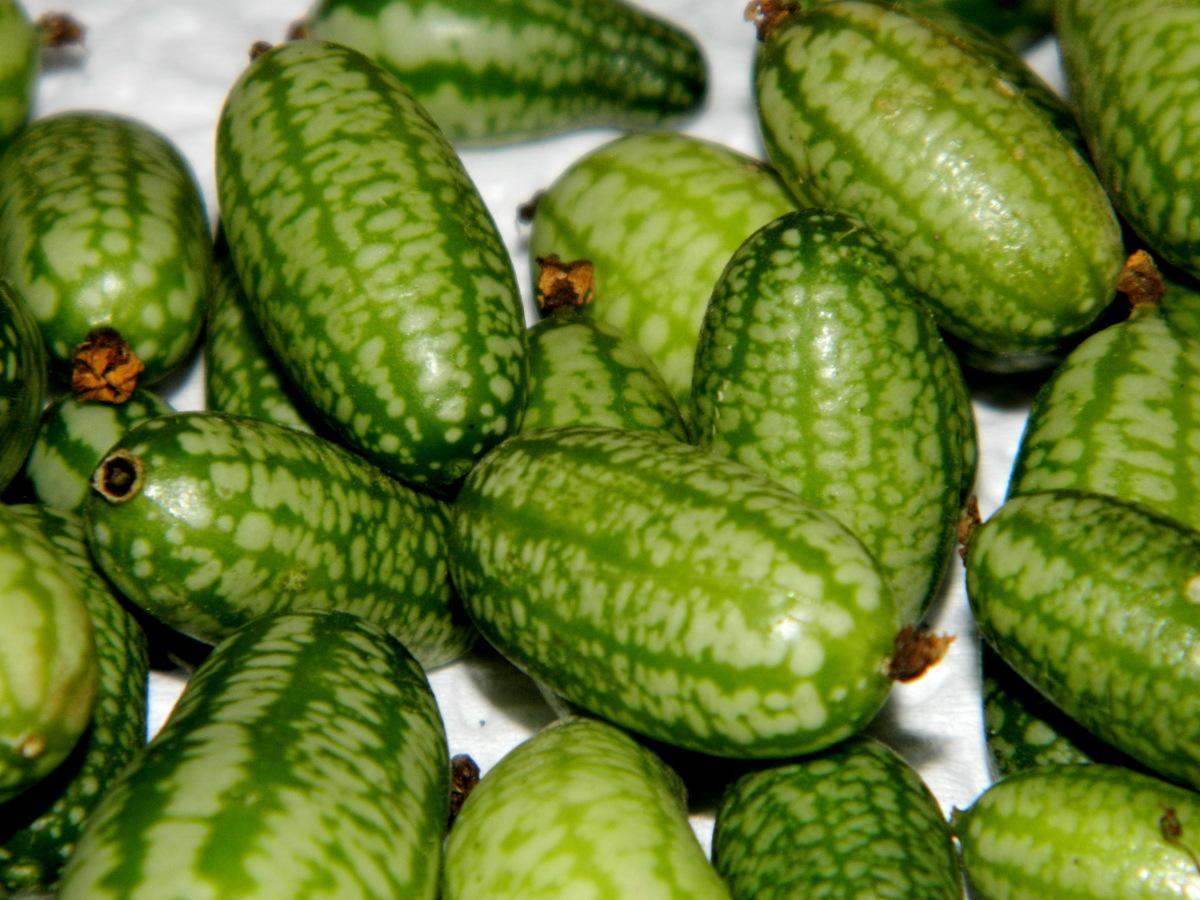 Note! The plant has a decorative appearance, so Melothria can be used as a vine, decorating gazebos or pergolas. However, the plant should be pruned according to a specific pattern to achieve an overall decorative appearance.
Main pros and cons
The horned cucumber has many advantages:
- easy to care for;
- fruits and root vegetables are tasty and healthy;
- used as a vegetable and ornamental plant;
- refers to low-calorie, dietary products.
The disadvantages include:
- slow seed germination;
- high moisture requirements;
- poor tolerance to continental climate.
Note! The origins of the Melothria raise some questions. Some botanists believe it originates not in Africa, but in Central America. This explains its other names—Mexican sour watermelon and Mexican sour gherkin.

Beneficial properties
The composition of these unusual cucumbers contains a whole range of useful compounds:
- minerals, among which the most significant are: fluorine, phosphorus, potassium, magnesium, iron, sodium;
- "vitamin cocktail": PP, C, A, group B;
- pectins and fiber.
Due to its composition, Melothria scabra has properties that are important for the body:
- normalizes blood pressure, positively influencing the functioning of the cardiovascular system;
- removes waste products, slags, and toxins;
- normalizes the percentage of cholesterol in the blood;
- improves gastrointestinal tract function;
- has an anti-inflammatory effect;
- supports the functioning of the immune system.
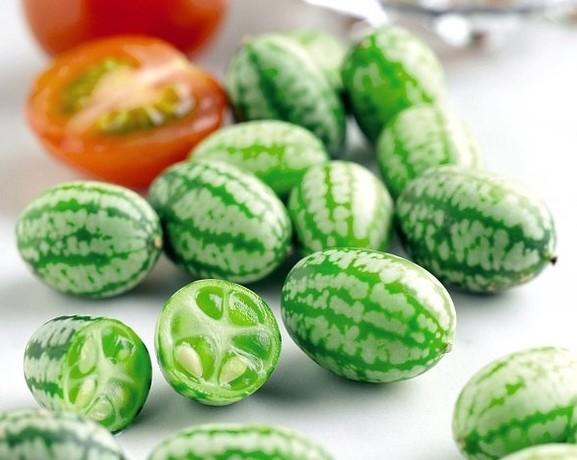
Due to their water content, the fruit contains only 14 calories, and the fiber content satisfies hunger well. This allows mini cucumbers to be used in various diets, satisfying you with this unusual food while helping you lose weight.
Growing the African mini cucumber Melothria
The cultivation techniques for Melothria are similar to those for regular cucumbers. However, since the fruit is imported, its cultivation techniques have some unique characteristics.
Choosing a landing site
African cucumbers are heat-loving crops, so the planting site should be open and sunny, free from drafts and cold winds. Loose, nutritious soil is an important aspect of cultivation.
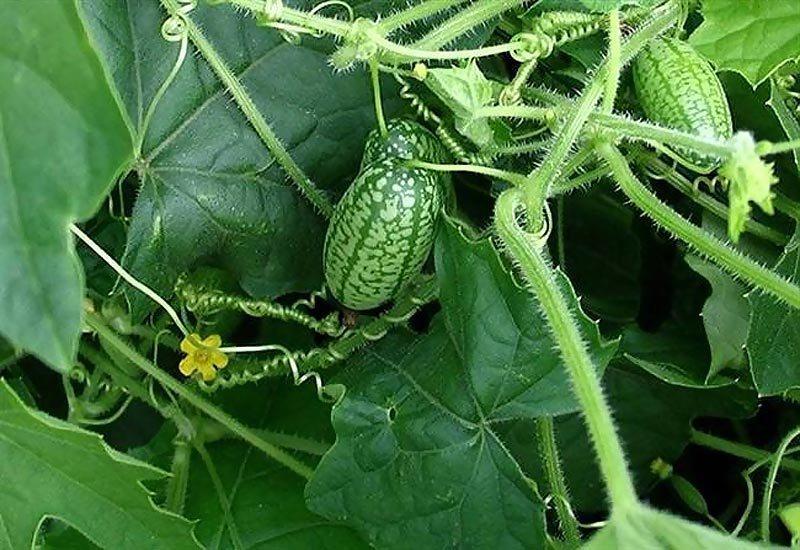
This vine is conveniently planted along a fence or by creating a special support for the vines to climb. Melothria can be grown in boxes on a balcony or spread over arches. It can bear fruit and simultaneously decorate the area.
Tip! Watermelon cucumbers grow well after onions, peas, and tomatoes. Avoid planting them in areas where squash or pumpkins were grown, as they share common diseases and pests.
The landing process
In the temperate climate zone, only one variety is grown: Melothria Kolibri. It can be planted from seed or from seedlings, which are usually started in the second ten days of May. However, a vine grown from seed does not have time to produce a harvest. Horned cucumbers are grown from seed for ornamental purposes. If fruit is desired, the only option is to grow from seedlings.
Seed method
It's difficult to get fruit from this exotic southern plant when grown from seed. While Russian cucumber seeds germinate quickly, vines take 2-4 weeks. Even with pre-soaking, seedlings will take a while to emerge. African cucumbers are grown from seed only for decorative purposes.
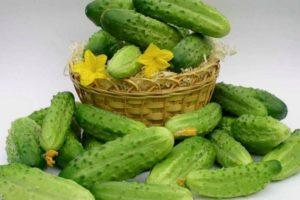
The best time to plant seeds is late May, when the soil has warmed up. The speed of germination depends on the ambient temperature. Sow seeds in a shallow furrow, 2 seeds per 20 cm (to ensure germination), at a depth of 2-3 cm. Fill the furrow with moist soil and lightly compact.
Planting seedlings
The seedling method guarantees fruit production because it allows for a significant time lag. Seeds for seedlings are planted in late February or early March. The following steps are used to obtain seedlings:
- disinfect the seeds in a pink solution of potassium permanganate;
- treat with a growth stimulator for 30 minutes;
- Place the seeds in prepared cups with the nutrient mixture, burying them slightly;
- moisten the top layer with a spray bottle;
- when seedlings appear, provide illumination;
- On the eve of planting, carry out hardening procedures by taking the bushes out into the open air;
- When three true leaves have formed and the root system is developed, the seedlings are ready for planting in the ground.
Planting time is late May. Seedlings are planted in holes 60x60 cm apart and watered thoroughly.
Note: A trellis or support is installed near the plant to encourage the vine to grow upward, forming a long stem. It clings to the support itself using tendrils. Large vines are additionally tied to create optimal growing conditions.
Cucumber Care Tips
Melothria scabra does not require special care, but certain procedures during its cultivation are vital for the plant.
The leading role of fertilizing and watering
African cucumbers are moisture-loving plants. Without regular watering, expecting good growth and fruiting is pointless. Water the vine regularly: every two days, add a bucket under the plant. The water should be warm, well-settled, and avoid splashing on the foliage.
Everything should be done in moderation: avoid overwatering Melothria, as excessive watering negatively impacts the exotic plant's development. After moistening, loosen the soil, remove weeds, and mulch. This eliminates the need for additional watering and prevents soil crusting, as moisture is retained well. Watermelon cucumbers are fed with nitrogen-rich fertilizers (according to the instructions) if foliage growth is desired and the plant is grown as an ornamental. Potassium-phosphorus fertilizers are needed to stimulate fruit formation for a productive harvest.
Tip: During heavy rainfall or sudden cold snaps, Melothria Colibri requires protection. Cover the vine with plastic to help it survive continental climate extremes.
Topping
The vine doesn't require pinching. It's trained to create decorative features in parks and gardens, guiding the shoots in the desired direction. Once the watermelons are produced, the vine forms its own shoots.
Protecting Melothria from pests and diseases
The plant should be grown away from other melons. In this case, Melothria is virtually disease-free. If affected by powdery mildew, treat the exotic plant with a soap solution. If the infestation is severe, the vine dies. Preventative treatment of the seeds and adult plants with phytosporin helps against fungal spores.

Harvesting and storage
The first fruits appear 20 days after planting the seedlings. They are harvested gradually as they grow. The watermelon should reach 2 cm in height to maximize its nutrient content. The harvest continues until the end of August, sometimes until the first frost (depending on planting timing).
With proper care, one vine produces up to 6 kg of green mini cucumbers. Preserves are made using traditional recipes for regular cucumbers. These watermelon cucumbers are eaten fresh and pickled. Their tart flavor makes them ideal for making stews and solyankas.
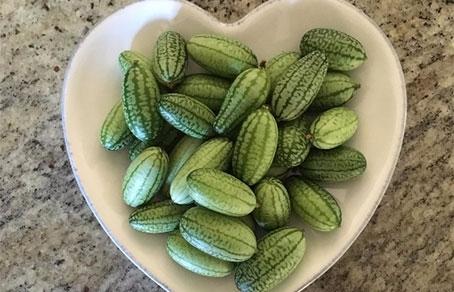
When the Melothria fruits reach 2 cm in diameter, they are ready to eat. Larger cucumbers become overripe and lose their flavor. Once all the fruits have been harvested, it's time to dig up the roots. One bush produces up to 1.5 kg of delicious (if you like it) roots.
Reviews from experienced gardeners
Olga, 55 years old, Zhukov
A friend suggested growing some unusual African cucumbers. They turned out to be easy to care for. I didn't take much care of them, but I ended up with a harvest of unusual, slightly tart fruits.
Victoria 33 years old, Vyazma
I grew a watermelon cucumber from seedlings and got a decent harvest. The mini cucumbers delighted me with their unusual, pleasant flavor. I made preserves for the winter using our cucumber recipes.
Andrey, 21 years old, Chisinau
I love trying new things and growing exotic plants. Melothria's fruits are extremely small and need to be picked early to prevent them from becoming overripe. It's an interesting and easy-to-care-for plant. It's attractive as an ornamental, but for a good harvest, it's better to grow regular cucumbers.
Melothria scabra is gradually conquering Russian territory, but it won't replace our traditional cucumbers. It's often grown as an exotic crop to add variety to the menu or as a decorative vine for garden plots.
Related posts:
 Description of the best varieties of pickling and barrel cucumbers for greenhouses and open ground
 Description of the best varieties of Chinese cucumbers, planting, growing and care
 The best eggplant varieties for growing in a polycarbonate greenhouse: planting and care
 The best grape varieties for growing in the Urals, planting and care rules in summer
 Description of the best, most productive and new varieties of cucumbers for 2025
 Recipes for cold, hot, and original appetizers for the New Year 2020
 Descriptions of the 20 best cherry varieties for the Moscow region, their planting and care
 Characteristics and description of the Izyashny cucumber variety, yield and cultivation