
To increase the yield of garden plants (zucchini, tomatoes, and others) and prevent disease, crops need to be regularly treated for pests and fertilized according to established schedules. Liquid mineral fertilizers are often used for this purpose. Experienced gardeners recommend using boric acid for cucumbers every season, which will enrich the crop with essential micronutrients.
Can cucumbers be treated with boric acid?
Boric acid is a crystalline substance containing 17% of the main component. In medicine, it is used as an antiseptic for wound disinfection. Boric acid is harmless. It does not cause allergic or other adverse reactions when in contact with skin or mucous membranes.
Boric acid began to be used for spraying cucumbers for pest control.This substance is used as a fertilizer primarily on acidified and sod-podzolic soils. Plants growing in peat soils experience boron deficiency. Its use is contraindicated when crops are grown in black soil.
The need for periodic treatment of the cucumber root system with boric acid is explained by the fact that microorganisms constantly present in open soil or in a greenhouse absorb microelements supplied with watering or fertilizers.
Therefore, spraying your garden with this substance can improve crop yield. This is because boron, unlike other micronutrients, remains in the soil for a long time. However, it's important to remember to apply the correct dosage and watering timing. If the mineral concentration in the soil increases, plants become diseased.
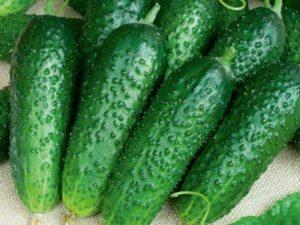

Benefits and harms
If you dilute boric acid in the correct proportions and feed cucumbers on time, then this fertilizer will:
- will ensure an increase in the concentration of oxygen in the soil;
- normalizes nitrogen synthesis, thereby improving ovary formation;
- will saturate future fruits with calcium;
- stimulates root development;
- increases resistance to adverse factors;
- enhances the production of chlorophyll, giving the leaves a rich green color;
- stimulates metabolic processes, which has a positive effect on the taste of the fruit.
However, if the proper boric acid application procedures are not followed, using the solution on cucumbers is dangerous. Frequent application of the solution causes the leaves to turn yellow, curl, and fall off. Furthermore, elevated boron concentrations in cucumbers are dangerous for humans (especially those with kidney problems).
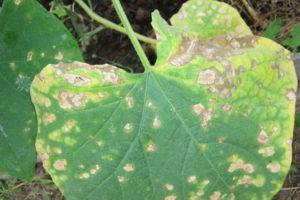
Signs of boron deficiency in cucumbers
Spraying cucumbers with boric acid for the ovary and foliar zone will be necessary if the following phenomena occur:
- blanching of leaves;
- lack of flowering;
- shoot shedding;
- small cucumbers;
- insufficiently productive bush (few fruits);
- fragile stems.
The appearance of even one of the above signs indicates the need to feed the plant with boron.
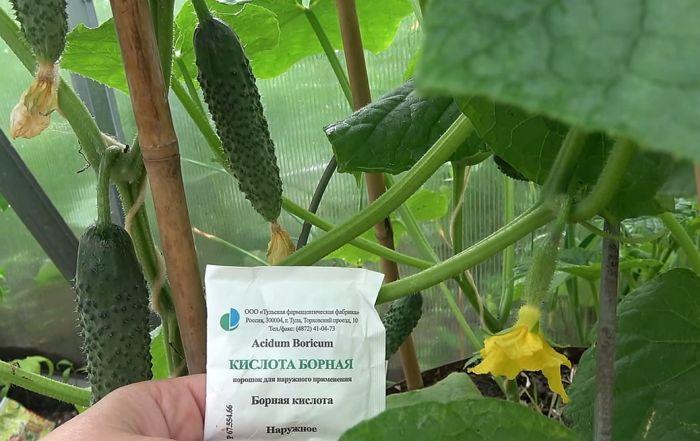
How to properly water cucumbers with boric acid?
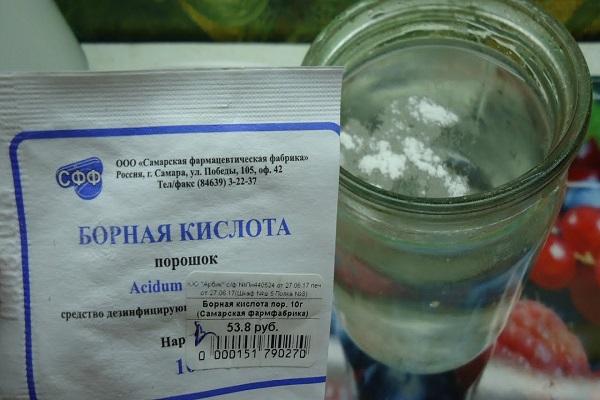
Fertilizing cucumbers with a weak solution of boric acid is recommended. To prepare the fertilizer, mix the purchased solution with water. The solution should be diluted in warm water. Boron crystals do not dissolve in cold water.
The solution is prepared according to the following algorithm:
- The water is preheated to 50 degrees.
- One teaspoon of crystals is mixed with half a glass of water.
- After cooling, 2 liters of water are added to the mixture.
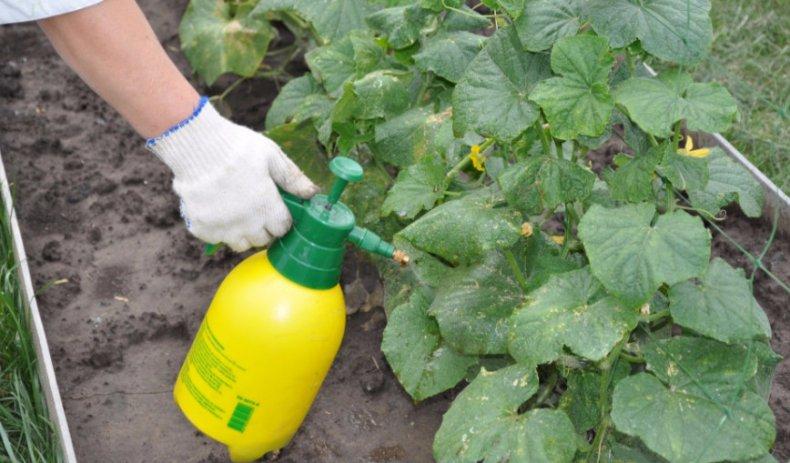
According to gardeners, it's essential to strictly adhere to the specified proportions. Otherwise, the plant leaves will be burned during treatment. For one 10-square-meter garden bed, 10 liters of the mixture is sufficient. It's recommended to spray the leaves on both sides.
Processing times
Boric acid is used:
- for seed treatment before sowing;
- when growing seedlings;
- during the period of flowering and formation of cucumbers.
The plant can be treated both before planting in the ground and during the fruiting period.
Seed treatment
Two types of solutions are used for seed treatment. To prepare the first, mix a liter of hot water with 0.2 grams of powder. The seeds are then soaked in the resulting solution.
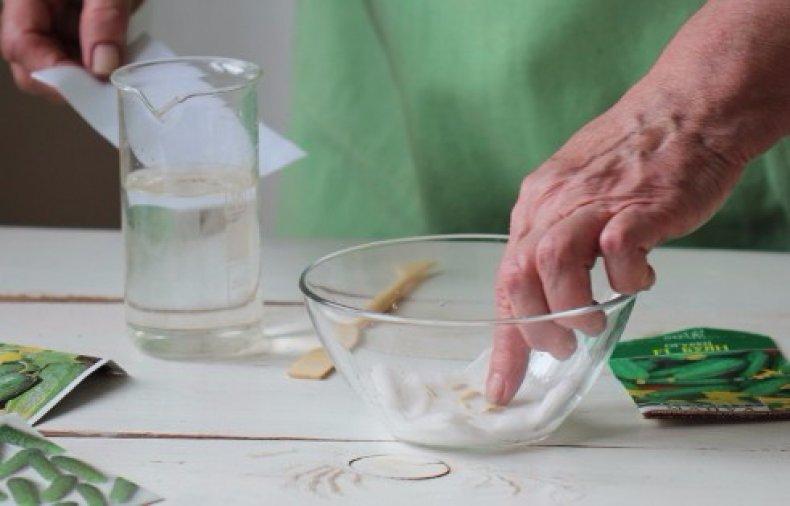
The second recipe is suitable for fertilizing the soil before sowing seedlings. To do this, soak onion peels in a small amount of water for four hours. The resulting mixture is then mixed with a wood ash solution, taken in a similar proportion.
Next, add 5 grams of baking soda, one gram of potassium permanganate, and 0.2 grams of boric acid powder to a liter jar. Soak the seeds in the resulting mixture for several minutes. When germinating seedlings, add the boric acid solution shortly before transplanting them outdoors.
Spraying
During the fruiting period, cucumbers are sprayed with various compounds:
- a few crystals of potassium permanganate, 2 tablespoons of ammonia and half a teaspoon of boric powder dissolved in 200 milliliters of water - for fruit setting;
- half a teaspoon of boric powder (diluted in 10 liters of water) and 200 milliliters of chlorella suspension (in one liter) - to increase viability.

Spraying cucumbers with the above mixtures is recommended during the flowering period. The first solution is also effective against aphids and pathogenic bacteria. The second mixture is used to strengthen the plant's immune system, thereby reducing the risk of fungal diseases.
It is recommended to spray the beds in the morning or after sunset. Do not apply the product in high humidity conditions.
Use of boric acid and iodine
This mixture is recommended for use during the active flowering period to strengthen cucumbers and increase yield. To prepare the nutrient mixture, you will need 1.5 grams of boric acid powder dissolved in 200 milliliters of water, a few crystals of potassium permanganate, 200 milliliters of milk, a tablespoon of urea, and 60 drops of iodine. Then bring the total volume to 10 liters.
 The use of such fertilizer stimulatespromotes leaf development, increases the number of ovaries and improves cucumber resistance to fungal diseases.
Using boric powder and brilliant green
To prevent late blight and powdery mildew during the budding period, it is recommended to treat the crop with a solution made by mixing 0.2 grams of boric acid and a few drops of brilliant green dissolved in a liter of water. The former will strengthen the plant's overall immunity, while the latter has an antiseptic effect, inhibiting the activity of pathogenic microorganisms. This mixture also promotes early fruit set, thereby shortening the fruit formation period.
Related posts:
 Description of the best varieties of Chinese cucumbers, planting, growing and care
 Description of unusual methods for planting and growing cucumbers
 TOP 30 best determinate cucumber varieties with descriptions
 Why cucumber leaves are drying out and what to do, how to treat them in a greenhouse and in the ground
 TOP 30 best varieties of cold-resistant cucumbers with descriptions and characteristics
 How to properly plant cucumbers in open ground with seeds, and at what depth
 How to care for cucumbers in open ground from planting to harvesting
 Description of the best varieties of bee-pollinated cucumbers, rules for their formation and care