
People who regularly grow cucumbers often encounter yellowing leaves. Before growing this vegetable, it's important to understand why cucumber seedlings turn yellow and what to do to treat the problem.
Reasons why cucumber seedlings have yellow leaves
Many gardeners are interested in why they turn yellow and the leaves of the cucumber seedlings are drying outThere are several reasons, the specifics of which should be examined in more detail.
Lighting
Sometimes, cucumber plants' lower leaves turn yellow. This problem indicates that the plant isn't getting enough sunlight. Insufficient light often occurs when seedlings are planted near taller vegetable crops.
Sometimes, a lack of light occurs because the seedlings are growing too close together. The tops gradually grow, and their leaves block sunlight. To solve this problem, you'll need to periodically remove large leaves. This must be done carefully to avoid accidentally damaging the young seedlings. If the seedlings are being grown indoors, move them to a bright window.
Sunburn
The plant may dry out due to sunburn, the main symptom of which is the appearance of yellow spots on the leaves. This is most often caused by improper watering.
Experts recommend pouring the liquid under the roots so that it does not get on the leaves.
However, some inexperienced gardeners spray cucumbers, and water gets on the leaves. If they get wet on a sunny day, yellow burns will form on the surface. Therefore, watering should be done early in the morning or in the evening, after sunset.
Watering
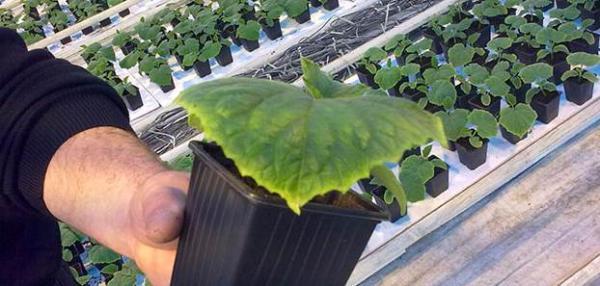
Cucumbers are considered a moisture-loving vegetable crop, but their bushes can dry out due to a lack of moisture in the soil. Leaf wilting can also occur due to overwatering. In temperate climates, each seedling is watered 3-4 times every 10 days. During droughts, the soil should be watered daily or every other day if the vegetables are planted in a greenhouse.
Experienced gardeners recommend using at least five liters of water per plant. This amount is sufficient to ensure the liquid reaches the plant's root system.
Root damage
Leaves may turn yellow due to damage to the root system. Most often, roots of seedlings are damaged when transplanting them to their permanent location. Inexperienced gardeners break the root shoot when removing the seedling from the pot, which leads to poor growth.
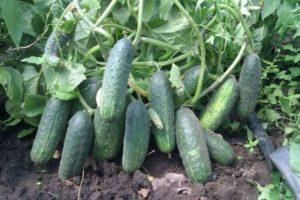
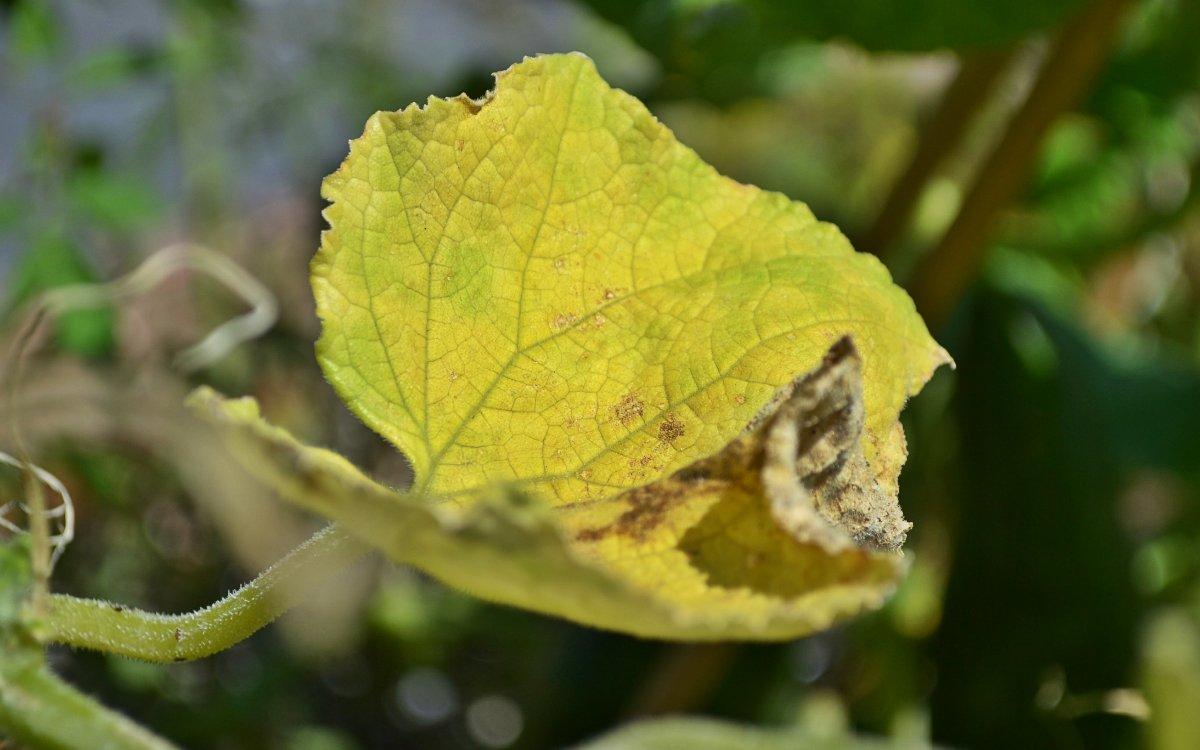
The root system can also be damaged by using very cold water when watering. This type of water can cause root rot and yellowing of the leaves.
Top dressing
Cucumbers, like most other vegetable crops, require fertilizer. If they lack nutrients, every leaf on the plant will turn yellow. Fertilizer should be applied at least twice a season. Two to three weeks after transplanting the seedlings into the garden, the soil should be fertilized with organic matter. Experts recommend using bird droppings, manure, wood ash, and compost.
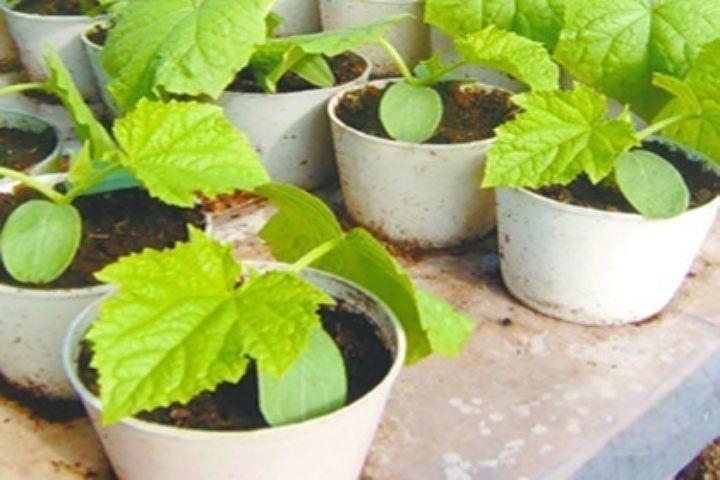
In subsequent times, vegetables are fertilized with mineral or complex fertilizers to saturate the soil with phosphorus, nitrogen and potassium.
If there is not enough nitrogen
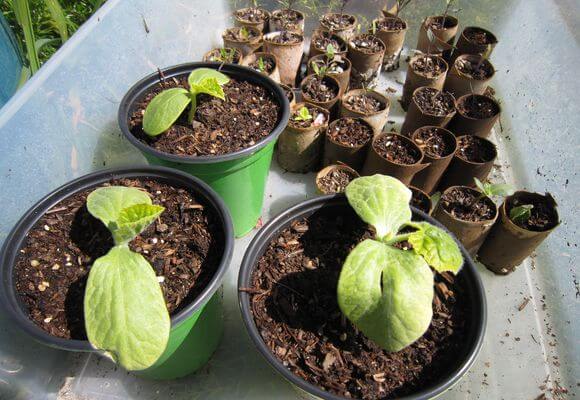
If you plant vegetables in poor soil, they will lack nutrients. Most often, young cucumbers lack nitrogen fertilizer. There are various signs that can help you identify nitrogen deficiency early. These include:
- Shoot formation. Plants that lack nitrogen become weak, and therefore their shoots develop very slowly.
- Leaf size and color. Without sufficient nitrogen fertilizer, leaves stop growing and remain small. Their surface also becomes covered with yellowish spots.
Phosphorus deficiency
The color of the leaf blades may change if cucumber beds aren't treated with phosphorus fertilizers. Initially, the leaf tips turn bluish. Then, the blades turn red, dry out, and gradually turn yellow. Phosphorus deficiency affects only older leaves.
Therefore, the upper leaves remain green, while the lower ones gradually change color.
In early summer, when active growth begins, young shoots stop appearing and developing due to insufficient phosphorus. The number of ovaries also decreases, and cucumber fruiting declines.
Potassium deficiency
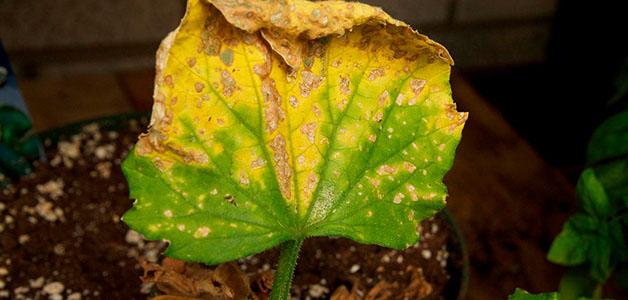
It's quite difficult to detect potassium deficiency in a timely manner, as yellowing doesn't appear immediately. Initially, only the edges of the leaves turn yellow, while the rest of the surface remains green. If you don't add at least a cup of potassium fertilizer under the bush, the foliage will turn completely yellow, dry out, and fall off.

Diseases and pests that cause yellowing and drying of leaves
The main causes of yellowing include common diseases and dangerous insects that attack bushes planted in open ground.
Among the most dangerous diseases are the following:
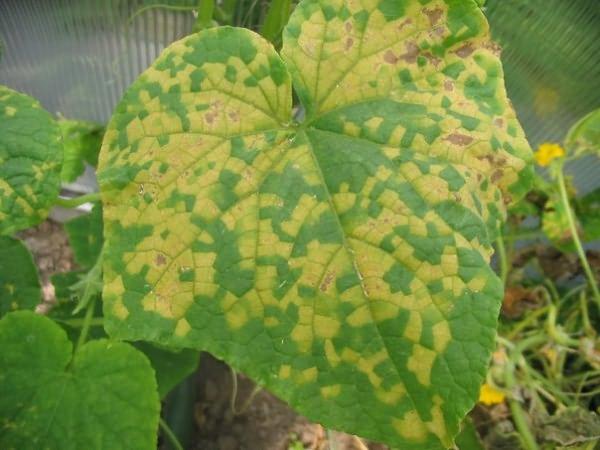
- Powdery mildew. If undisinfected seeds were planted, the seedlings may become infected with powdery mildew. This disease causes the leaf surface to turn pale and yellowish. Without treatment, the plant will dry out completely and die.
- Root rot. This condition occurs in greenhouse-grown plants. The main factors contributing to the disease include overwatering and overwatering seedlings with cold water. Root rot causes the lower leaves to dry out completely and fall off.
- Fusarium. This disease is considered the most dangerous because it is incurable. All infected bushes must be dug up and burned to prevent further spread of fusarium.
Pests that can damage cotyledon and dicot leaves of cucumbers include:
- Spider mites are dangerous pests that feed on the sap sucked from vegetable leaves. Small yellowish spots on the leaves indicate their presence.
- Mole Cricket. This insect thrives in moist, fertile soils. While living in the soil, it feeds on plant sap. Both young and adult mole crickets migrate along stems to the leaves. Mechanical control is essential. Digging up the area and spraying the beds with soapy water will help get rid of the pests.
How to combat yellowing leaves
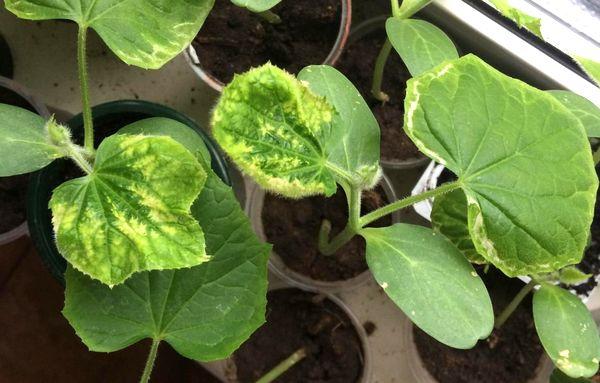
Beginner gardeners don't know what to do if their cucumber seedlings turn yellow. When the leaves start to turn yellow, it's time to use products that will help get rid of the problem.
These include:
- Kefir solution. To prepare this solution, mix 7-8 liters of water with two liters of kefir. Then add 100-150 grams of sugar to the mixture. The prepared solution is used for watering and spraying bushes.
- Soap mixture. This is an effective folk remedy for removing yellowing. To make a spray, add 20 drops of iodine and 25 grams of grated soap to a liter of water.
- Urea. When preparing the mixture, add 40 grams of urea to a ten-liter container of water. One and a half liters of liquid is used for each bush.
How to prevent the problem
To prevent the bushes from turning yellow after planting, they are regularly sprayed with preventative agents:
- Bread infusion. Place a loaf of bread in a container with water and soak for 12-14 hours. Then, knead the soaked bread, treat it with iodine, and add water. Seedlings are treated with this solution every 15 days.
- Onion peels. A kilogram of onion peels is poured into ten liters of water and brought to a boil. The liquid is then infused and used to spray cucumbers.
Conclusion
Yellowing leaves on cucumber seedlings is a common problem faced by many vegetable growers. Before addressing it, it's important to understand what causes the yellowing and how to get rid of it.
Related posts:
 Why cucumber leaves are drying out and what to do, how to treat them in a greenhouse and in the ground
 Why are cucumber leaves turning yellow on the windowsill? What to do and how to treat them?
 Why are my melon leaves turning yellow in open ground? How to treat and what to do.
 Why do cucumber leaves turn yellow in a greenhouse and what can I do about it?
 Why do grape leaves turn yellow and what to do about it?
 Reasons why cucumber leaves turn yellow and what to do, how to treat and feed them
 Reasons why beet leaves turn yellow, care mistakes, what to do, and how to treat them
 Why plum tree leaves turn yellow and fall off, and the best control measures