
The Friendly Family cucumbers are mid-early ripening varieties. This hybrid is the work of Russian agrobiologists at the SeDek agricultural firm and is included in the State Register of Breeding Achievements. The variety is distinguished by its long fruiting period and excellent taste.
Advantages of a hybrid
Parthenocarpic (does not require pollination by bees) cucumber Druzhnaya Semeyka is intended for cultivation in open and protected ground conditions.
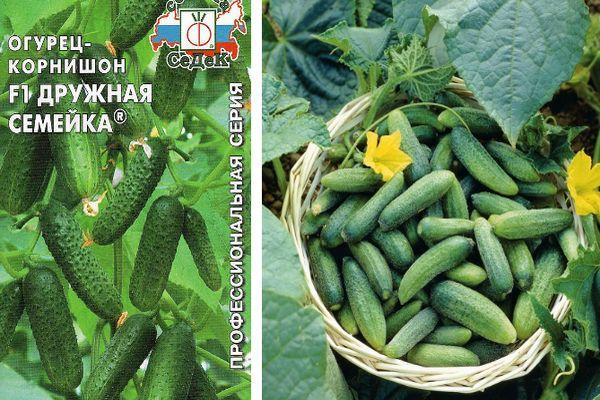
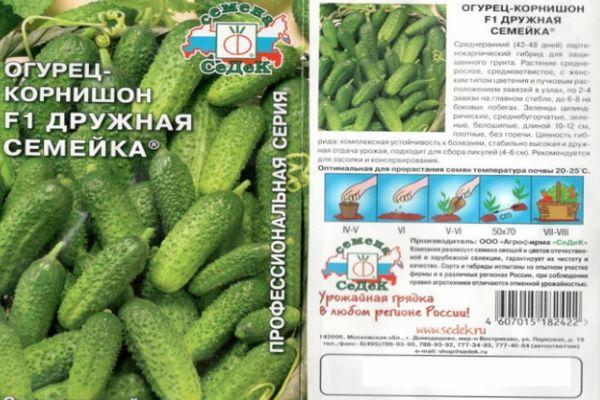
The variety is characterized by a medium-early ripening period, with 43-48 days from germination to the first harvest. The plant's description is based on the indeterminate bush.
A plant with unlimited growth, a medium number of branches, and green, medium-sized leaves. On the main stem, 2-4 ovaries form in one leaf axil, and 6-8 on the side shoots.
The cucumbers are cylindrical in shape, with a medium-sized surface with tubercles. The cucumbers are 10-12 cm long, 2.5-3 cm in diameter, and weigh 80-100 g. The cucumber skin is green, with blurred white stripes on the surface.
The flavor characteristics of gherkins are based on the description of their dense, bitter-free flesh. This variety is characterized by high and consistent yields and a long fruiting period. The fruits can be harvested from the plant at the pickle stage (3-5 cm long).

In cooking, this variety is used in salads, but the fruits are best for pickling and salting. The fruits are also used for cosmetic purposes in cucumber masks.
The cucumber "Veselaya Semeyka" (Veselaya Semeyka) is described as identical to the hybrid "Druzhnaya Semeyka," so it can be assumed that the similar names refer to the same seed type. The "Veselaya Semeyka" variety is easy to care for and is grown indoors. The plant is characterized by high yields and clustered ovary formation.
The value of the hybrid lies in its resistance to diseases and stable yield at the level of 17-20 kg per 1 m².

Growing methods
The hybrid can be grown using seedlings or by sowing seeds directly into the garden bed. Sowing is done after the soil has warmed to 15–18°C. Seeds are planted in pre-prepared holes spaced 50–60 cm apart.
When growing using a trellis, a distance of 20 cm is allowed between plants. 4-5 seeds are placed in each hole at a depth of 1-2 cm and covered with film to create a greenhouse effect.
Water the crops every 5 days with warm water. Further care involves a series of agronomic measures.
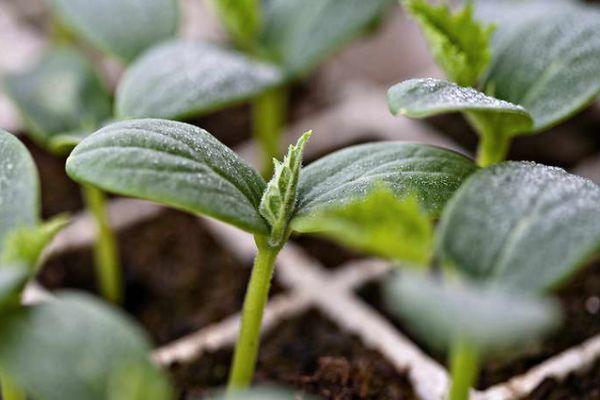
When growing from seedlings, seeds are placed in peat pots with a soil mixture. For germination, it is important to maintain an air temperature of 13 to 15°C; the optimal temperature for plant development is 25 to 30°C. After 3-5 leaves have formed, the seedlings are transplanted to their permanent location.
In open ground, cucumbers can be grown by evenly distributing the vines across the soil surface. The disadvantage of this method is that the fruits always need to be washed, and the leaves are damaged during harvesting.
Trellising simplifies plant care and fruit harvesting. This method involves installing stakes in the garden bed, to which a trellis is attached. The trellis can be 0.5-1 m high. When using low supports, the stems are draped over the trellis, and the vines are tied to the high supports with twine.
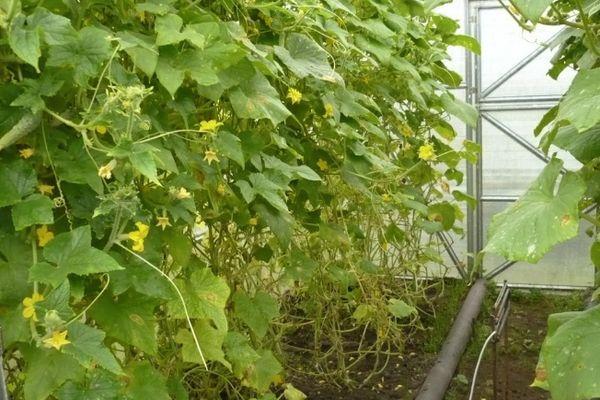
Growing in barrels involves using a container filled with rotted manure and grass. The container is then topped with a layer of soil and watered thoroughly with warm water.
Sow 5-6 dry seeds in a circle per container and cover with plastic wrap. The growing shoots will hang down like trailing plants. The main advantage of this method is early harvest and minimal maintenance.
Cultivation techniques
The hybrid thrives in warm conditions, preferring a sunny location sheltered from strong winds. Plants are best grown in light, humus-rich, fertile soil.

Caring for the crop involves timely watering with warm water after sunset, weeding, and loosening the soil. It is recommended to harvest the crop as it ripens.
When growing cucumbers, it's important to consider the plant's biological characteristics. Adding fresh organic fertilizers can lead to fruit spotting and a bitter taste. To address this, fertilize the bed in the fall.
Related posts:
 Description of the Emerald Family cucumbers, growing and caring for the hybrid
 The best eggplant varieties for growing in a polycarbonate greenhouse: planting and care
 Methods for planting and propagating cherries at home
 The best grape varieties for growing in the Urals, planting and care rules in summer
 Description of the best varieties of gherkin cucumbers for open ground and greenhouses
 When to plant cucumbers in open ground in Siberia, how to grow them, and the best varieties
 Description of the best, most productive and new varieties of cucumbers for 2025
 The best methods for growing grapes from seeds at home