
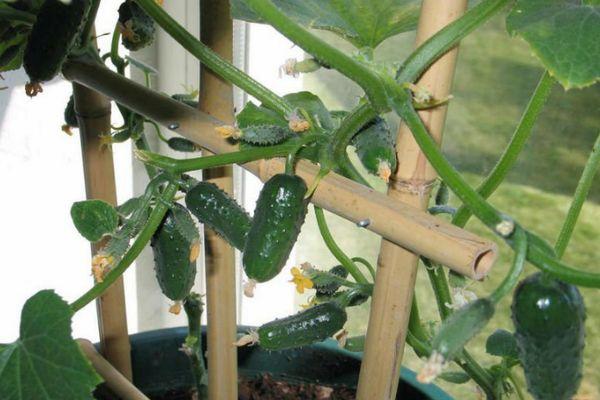
To ensure a good harvest on loggias and balconies, special cucumber varieties suitable for these purposes (Balcony Miracle cucumbers) are used. The main requirements in this case are self-pollination and compactness of the bush. Self-pollinating (parthenocarpic) varieties are labeled F1. Balcony cucumbers have one important advantage over garden cucumbers: they begin fruiting earlier and last longer.
Growing everyone's favorite cucumbers on a loggia or balcony is quite feasible even for a novice gardener. Caring for cucumbers doesn't require much knowledge or experience.
What are Balcony Miracle cucumbers?
One of the best cucumber varieties for a loggia, the Balcony Miracle F1 is a first-generation hybrid. It is particularly prized for its ease of care, tolerance to dry weather, and strong resistance to cucumber diseases.
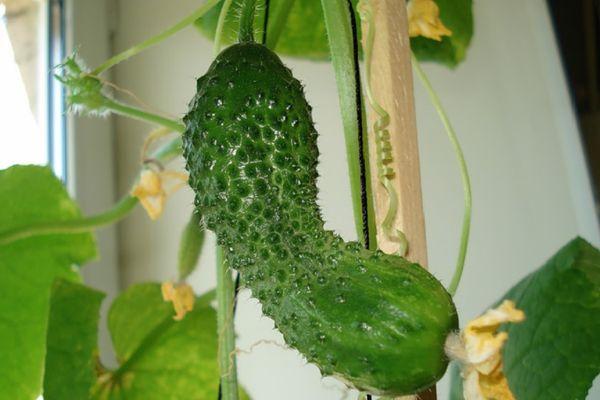
Main characteristics of the Balcony Miracle F1 variety:
- the fruits have a pleasant, sweet taste without bitterness;
- gherkins length 7-8 cm, weight 50-60 g;
- the pulp is dense and crispy;
- internodes are short and multiple;
- the root system is compact and does not require a lot of soil;
- forms predominantly female flowers;
- the variety has a high yield;
- average ripening period (from sowing to the beginning of harvesting it takes on average 50 days, but the first cucumber can be tasted after 40-42 days);
Sowing can begin as early as February. However, if planting early, supplemental lighting is necessary. The sowing time will depend on the temperature on the loggia or balcony. For an earlier harvest, you can use the seedling method.

Growing nuances
Balcony Miracle F1, like all cucumbers, loves warmth, light, and water. When temperatures drop below 20°C, cucumbers slow down their growth, and stop growing at 15°C. However, temperatures above 32°C also negatively affect growth and fruit set. This vegetable does not tolerate drafts. If the balcony is unheated, it is recommended to plant the seedlings towards the end of May.
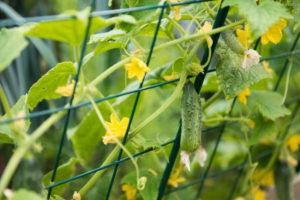
Good lighting is essential for cucumbers, as it promotes the formation of strong, sturdy ovaries. A sunny location, preferably a south- or southeast-facing window, is ideal for growing this crop. If necessary, provide supplemental lighting with fluorescent lamps.
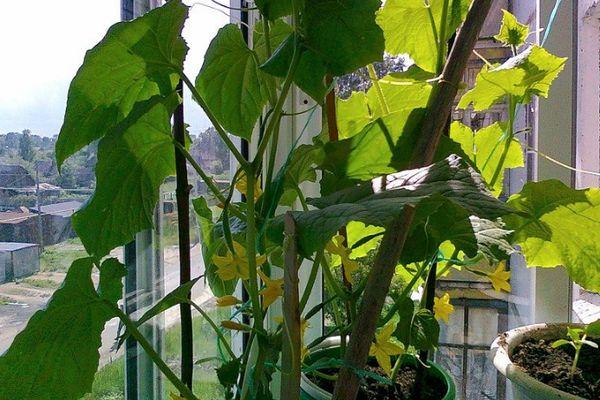
On an insulated balcony with good lighting, cucumbers can be grown year-round. In winter, it will take 10-12 more days for the harvest to form.
Before sowing, the seeds are warmed, disinfected, and germinated. Soaking the seeds in warm water accelerates the germination process. Seedlings emerge 3-6 days earlier. Germination accelerates vegetable growth and increases yield. Seeds that do not sprout within 3-4 days are removed.
Warming stimulates the formation of predominantly female flowers on the plant, which, accordingly, increases the yield in the future.
To create a greenhouse effect, cover the containers with plastic wrap or glass and leave them in a warm place until the first two leaves appear. Place the seedlings in a bright, warm room, where the temperature is maintained between 22 and 25°C. Water them daily.
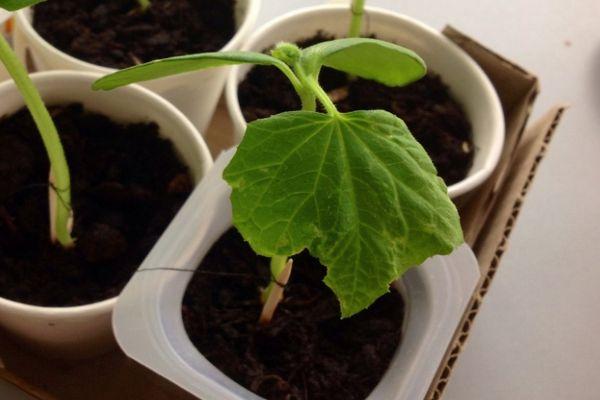
Once 2-3 leaves appear, you can begin planting the seedlings in their permanent location. Choose 5-8-liter containers with a hole in the bottom to drain excess water. Add drainage material (pebbles, expanded clay, or crushed stone) to the bottom. You can use store-bought soil for planting, or you can prepare the soil yourself.
If you're using soil from your own plot, it's best to mix it in equal parts with peat, sand, and humus. Add ash. A few days before planting, it's a good idea to treat the prepared soil with a weak solution of potassium permanganate.
To improve soil structure, it is recommended to use vermiculite. It provides good soil aeration and acts as a moisture sorbent, improving soil structure. Vermiculite absorbs excess moisture from the soil and then releases it back into the soil as needed.
Before planting, the soil must be thoroughly watered with plain water and fertilized with potassium, phosphorus and nitrogen.
Proper care
The vines grow up to 1.7 m. They need to be tied up as they grow. Self-pollinating varieties generally don't need pinching unless they have nowhere else to grow. In August, the nights become colder, and to ensure continued fruiting, it's best to insulate the containers with any suitable material.
Take a look Also

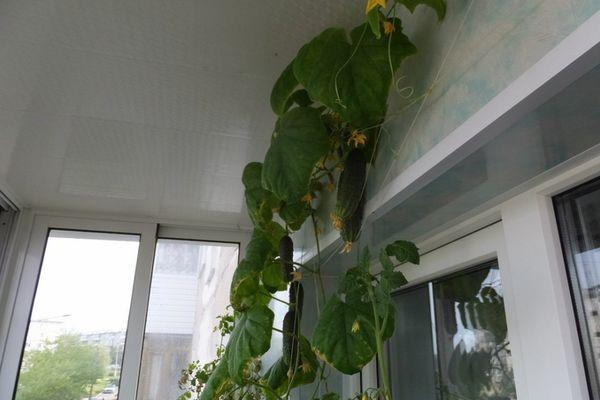
Cucumbers on the balcony are usually watered every other day. The soil should not be allowed to dry out, but water should not stagnate in the container either. Water with room-temperature water.
Fertilizing cucumbers is essential for a bountiful harvest. Fertilizer is applied on average every 10-14 days. Use special complex fertilizers or organic matter (the latter is preferable). This can include ash (a source of potassium, phosphorus, and micronutrients), fresh manure (but only in liquid form), yeast, etc. It's important not to overfeed the plant. Everything is good in moderation.
This cucumber variety has strong immunity and does not require additional treatment against diseases.
It's best to harvest daily. Timely harvesting prolongs the fruiting period and, consequently, increases overall yield.
Related posts:
 Description of the best potato varieties of domestic and foreign selection
 How to propagate and grow peas, cultivation technology, and care in open ground
 Description and characteristics of the best seeds of pea varieties and types
 What varieties of tomatoes are best to plant in a polycarbonate greenhouse?
 The best eggplant varieties for growing in a polycarbonate greenhouse: planting and care
 Description of the best, most productive and new varieties of cucumbers for 2025
 80 Best Eggplant Varieties for Different Regions with Descriptions and Characteristics
 How to properly plant peas in a greenhouse and open ground