
- The history of the Adam cucumber breeding
- Advantages and disadvantages of culture
- Description of the Adam F1 variety
- Bush and leaves
- All about flowering and fruiting
- Agrotechnical characteristics of the variety
- Soil composition requirements
- Climatic conditions for growing
- Resistance to diseases and insects
- Planting cucumbers
- Sowing and planting dates
- Preparing and sowing seeds
- Growing seedlings
- Selecting a location and preparing the site
- Technology and timing of planting in open ground and greenhouses
- How to properly care for Adam
- Regularity of irrigation and fertilization
- Shaping and tying bushes
- Protection from diseases
- Gardeners' reviews of growing the crop
When planting the Adam cucumber variety in the ground, a greenhouse, or a hothouse, gardeners expect to reap a handsome harvest of medium-sized fruits with excellent flavor. These cucumbers bear fruit early, which is considered another advantage of the variety. The plant is disease-resistant, allowing for a substantial harvest in a short time.
The history of the Adam cucumber breeding
This "creation" of Dutch breeders, who successfully sell the plant's seeds worldwide, has gained popularity not only in its homeland but also in other countries, including France, the USA, and the Netherlands.
Russian gardeners first became acquainted with this type of cucumber in 2002, after the State Register permitted the cultivation of the crop in all regions of our country.
Advantages and disadvantages of culture
The Adam F1 variety has many advantages, the list of cucumber benefits should include:
- Early maturity. The first fruits will be available within a month and a half.
- High yield. In a good year, up to 9 kilograms of cucumbers can be harvested per square meter.
- The excellent organoleptic characteristics of the fruits allow them to be used for making preserves and more.
- Pest and disease resistance. This variety has good immunity and easily tolerates temperature fluctuations.
- Suitable for planting in open ground, bears fruit well in greenhouse conditions.
- Cucumbers withstand transportation well and have excellent taste.
But culture also has its drawbacks, although there aren’t that many of them:
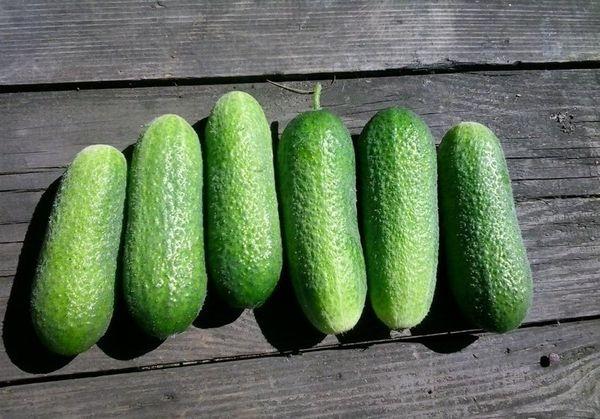
- the fruits have a rough surface, which does not suit all gardeners;
- despite good immunity, the bushes can be affected by downy mildew;
- If you don’t take care of the plant, its fruits will dry out and lose their flavor.
Cucumbers require ample watering and fertilizing. Otherwise, you'll get a harvest, but the results are unlikely to satisfy your gardener. The cucumbers will become dry and tasteless.
Some gardeners note that the yield is not high enough, but it's perfectly acceptable for those who don't plan to make large quantities of preserves. Those who enjoy pickling should choose a more productive variety.

Description of the Adam F1 variety
The crop description is standard, allowing you to evaluate the plant's key characteristics. Typically, the description includes the variety's yield, growth rate, and other characteristics that help you form an opinion about Adam F1 cucumbers. We'll try to provide as much useful information as possible.
Bush and leaves
The plant is considered medium-sized and is suitable for growing in barrels or compost heaps. It produces side shoots, primarily female shoots.
Side-sonning occurs from the sides; the bush continues to grow throughout its life, allowing the vine to be "wired." The leaves are large and contribute to the formation of thickets. The main shoots are located in the center.
This type of cucumber is classified as a Dutch hybrid that does not produce seeds.
All about flowering and fruiting
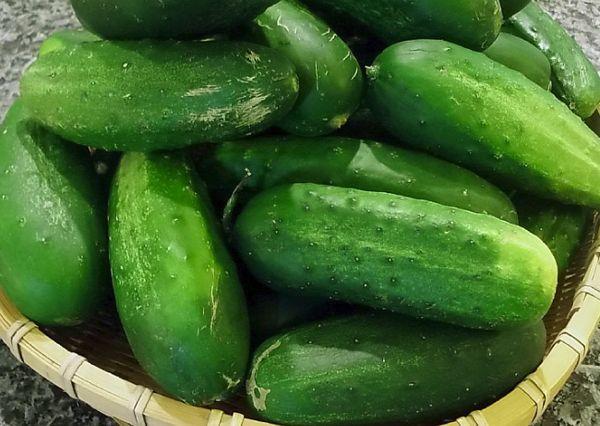
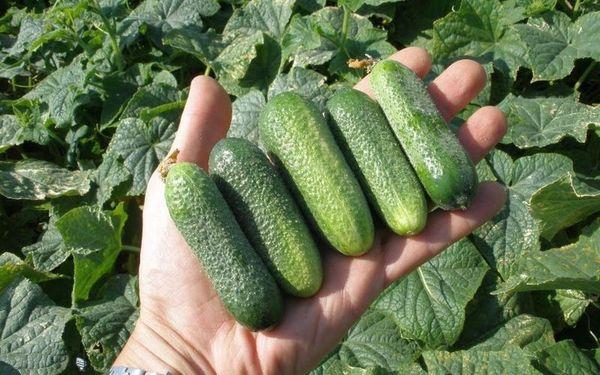
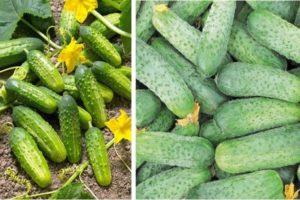
The first fruits can be seen within 1.5 months after planting in the ground or greenhouse. The cucumbers are covered in tiny pimples and feel prickly to the touch, but they are very tasty.
Fruit ovaries form quickly, but a significant drop in temperature can kill the plant. Temperatures below 5-8 degrees Celsius are considered critical.
Caution! If cucumbers begin to bloom, frost will kill them, interrupting the growing season, and if the plant survives, it is unlikely to produce fruit.
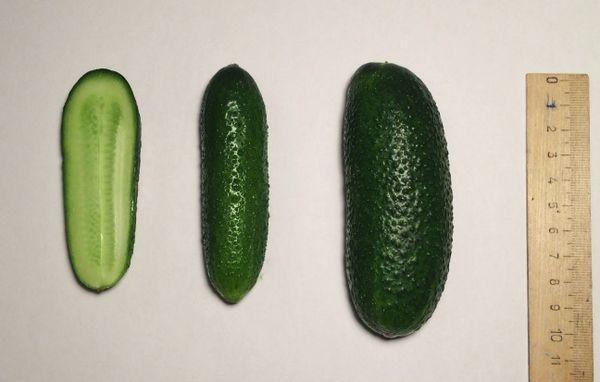
Fruit parameters, table:
| Length: | Diameter: | Weight: |
| The fruits reach 10 centimeters. | varies, ranging from 3 to 4 centimeters. | the maximum is considered to be 100 grams. |
The plant bears fruit actively during the growing season. If harvested late, the cucumbers stop growing in length but take on a barrel-shaped form. These changes have no effect on flavor.
A characteristic feature of the culture is also considered to be its high capacity for regenerative processes.
Agrotechnical characteristics of the variety
If you decide to plant such a crop in your plot, keep in mind that it's best to prepare in advance. Plant a "predecessor" crop, which can include various plants, such as tomatoes, soybeans, corn, and potatoes. This will increase your yield.
Soil composition requirements
Adam doesn't make any serious demands. To ensure the crop bears fruit, it's recommended to follow the following guidelines:
- The soil is dug up and weeds are removed.
- Then add fertilizer; you can use organic matter, manure, or diluted droppings.
- Before planting, you will need to loosen the soil; you can repeat the procedure a few days after planting.
- Planting is carried out when the soil has warmed up to the required temperature.
Climatic conditions for growing
Cucumbers of this variety prefer warmth and do not tolerate frost well. However, they can be planted in all regions of our country, including the central and southern regions.
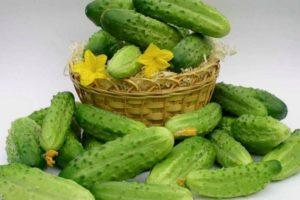
If the climate is cold, the seedlings are planted under film, in a greenhouse or hotbed.
Resistance to diseases and insects
Despite its good immunity, the plant most often suffers from the following diseases:
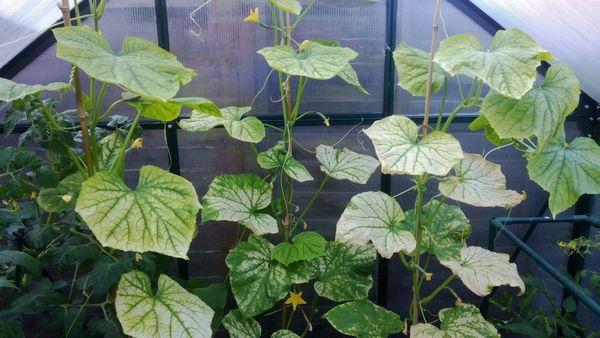
- Downy mildew - when infected, the leaves change color, become covered with brown spots, and then dry out;
- Anthracnose is a disease in which leaves become covered with brown spots and begin to dry out, which leads to the death of the bush;
- Gray mold – affects the plant stems; it begins with a white coating, which then rots. Affected plants are destroyed or burned, and the remaining cucumbers are treated;
- Sclerotinia - this disease affects both the roots and stems, resulting in the death of cucumbers, and the gardener, not having received any fruit, destroys the diseased bushes.
But, in addition to diseases, a summer resident may also encounter insects:
- Aphids most often make adjustments to the formation of fruits, the bush begins to lag in development, nematodes feed at the expense of the plant, “sucking” all the juices out of it.
- The mole cricket, by destroying the roots and shoots of cucumbers, can affect crop yields; control of the pest is difficult because it lives underground.
Planting cucumbers
It is recommended to carry out all manipulations in accordance with the rules, which will increase the crop yield.
Sowing and planting dates
There are no specific timeframes; much depends on the region and its climate. If the soil hasn't warmed up, the seedlings will die.
It is recommended to plant cucumbers in the ground or greenhouse at the following temperature levels:
| Air: | not less than 18 degrees. |
| Soil: | not lower than 15 degrees. |
Preparing and sowing seeds
Seedlings are sown at the end of April, planted in individual cups. It's not recommended to plant seeds in a common container.
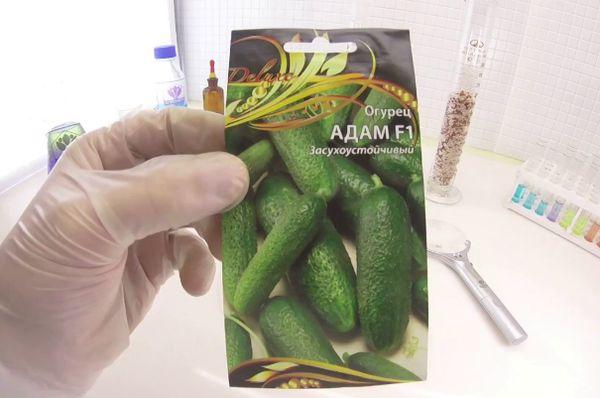
You will have to buy planting material every year, since we are talking about a hybrid.
Growing seedlings
If, after opening the packet, you find that the seeds have different shades, this is good; they have been calibrated by the manufacturer.
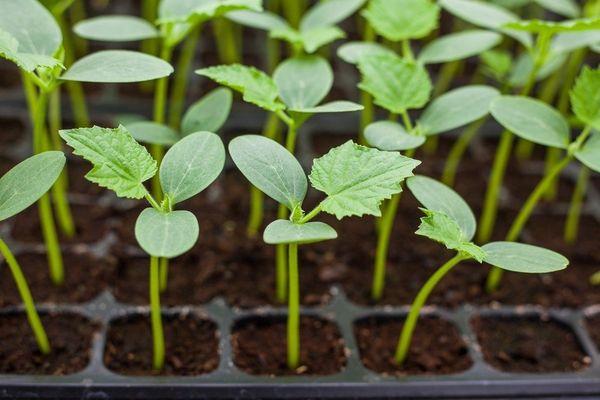
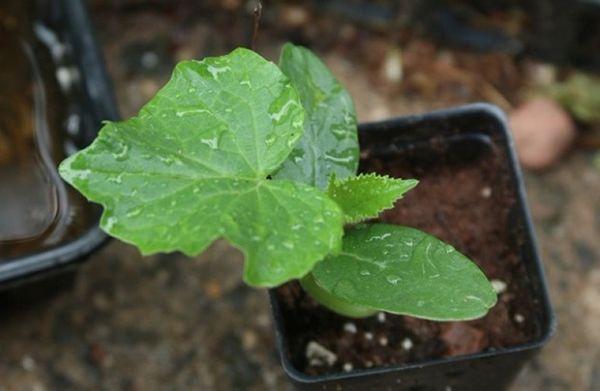
They are disinfected with a potassium permanganate solution and germinated using the standard method. Once the seedlings sprout, they are planted in a cup. When 3-4 leaves appear on the seedlings, they are ready for planting.
Selecting a location and preparing the site
Cucumbers love sun and moisture, so the planting location should meet these requirements. Avoid dry areas exposed to direct sunlight.
Before planting, dig up the soil, don’t forget to fertilize and loosen it.
Technology and timing of planting in open ground and greenhouses
Let's look at the basic rules for planting cucumbers:
| In greenhouse conditions: | In open ground: |
| Add compost to each hole, maintaining a temperature of 22 degrees Celsius. Follow the planting pattern: 30 x 70 cm. As the plants grow, tie them up and choose a suitable anchor. | Since cucumbers thrive in warm conditions, they should be planted when the soil temperature stabilizes and reaches 15 degrees Celsius (59 degrees Fahrenheit). Plant at a depth of at least 12 degrees Celsius (49 degrees Fahrenheit). Plant in furrows measuring 10 x 70 cm (39 x 28 inches), no deeper than 4 centimeters (1.5 inches). |
How to properly care for Adam
It's not that the crop requires careful care, but if you follow the recommendations, you can significantly increase the quality of the harvest.
Regularity of irrigation and fertilization
If you decide to sow or plant seedlings, don’t forget about watering and fertilizing:
- It is better to water the bushes in the middle of the day;
- watering is moderate, you don’t need to worry about air humidity if you grow cucumbers in greenhouse conditions;
- For irrigation, it is better to use warm rainwater, heated to 20 degrees;
- Before flowering, add a solution of mullein, and repeat the procedure after 10 days;
- Potassium nitrate is used during the fruiting period.
Shaping and tying bushes
When the stem has five leaves, tie the bush to a support for easier harvesting. Using a vertical trellis is recommended, especially for greenhouses. When planting in the ground, use stakes.
When the plant reaches a height of 40-50 centimeters, the lateral shoots and stepsons should be removed.
Protection from diseases
If watering guidelines are followed and fertilizing is administered on time, no specific protection is required. If signs of disease appear, shoots should be removed and diseased plants burned.
Gardeners' reviews of growing the crop
Let's explore gardeners' opinions about the Adam cucumber variety:
- Artem Fomin: "The candies turn out perfect because the fruits are all uniform in size. I planted this variety on a neighbor's recommendation and am pleased with the harvest."
- Valeria Ignatyuk: "I planted the seedlings in a greenhouse and didn't overly care for them, just followed the standard procedures: watering, tying, and enjoying the fruit. I read reviews on the farmers' website and decided to give it a try, and I'm very pleased with everything."
Related posts:
 Description of the best varieties of Chinese cucumbers, planting, growing and care
 Description of unusual methods for planting and growing cucumbers
 TOP 30 best determinate cucumber varieties with descriptions
 Why cucumber leaves are drying out and what to do, how to treat them in a greenhouse and in the ground
 TOP 30 best varieties of cold-resistant cucumbers with descriptions and characteristics
 How to plant cucumbers in open ground under film: timing and cultivation technology
 How to properly plant cucumbers in open ground with seeds, and at what depth
 How to care for cucumbers in open ground from planting to harvesting