
- Tips for pickling champignons for the winter
- What mushrooms are suitable for pickling?
- Preparing mushrooms
- Recipes for pickling champignons at home
- Cold method
- Hot method
- Quick-pickled champignons
- With soy sauce
- Without vinegar
- With juniper
- With sugar and bay leaf
- With chili pepper
- With citric acid
- Shelf life of canned food
- Rules for storing salted mushrooms
Pickled champignons are not only a piquant addition to any holiday meal, but also a delicious, vitamin-rich snack for every day, especially in winter. Therefore, knowing how to properly pickle champignons will be useful for many home cooks looking to surprise their family with a variety of recipes for these delicious and aromatic mushrooms.
Tips for pickling champignons for the winter
The main advantage of pickling champignons is their ease of preparation, without the use of vinegar or citric acid. Glass jars, plastic containers, or small buckets are used for pickling for the winter. To ensure the mushrooms are delicious and aromatic, a variety of herbs and spices are added to the pickling process, including dill (in clusters), horseradish, cherry and currant leaves, tarragon, garlic cloves, cloves, bay leaves, and allspice.
For those who like spicy appetizers, we recommend experimenting by adding garlic and red pepper to the mushrooms during cooking.
What mushrooms are suitable for pickling?
For pickling, small and medium-sized specimens of these mushrooms are selected, which have the densest structure.
To ensure high-quality salting, each jar is filled with mushrooms of uniform size. Large mushrooms are cut into small, uniform pieces before being placed in the jars.
Preparing mushrooms
Preparation for salting is carried out:
- by cleaning the mushrooms from any dirt, cutting off the stems and caps from damaged and wrinkled parts;
- by washing the mushrooms using clean water;
- by soaking the fruiting bodies in water with the addition of salt (1 teaspoon) and citric acid (2 grams) per liter of liquid.
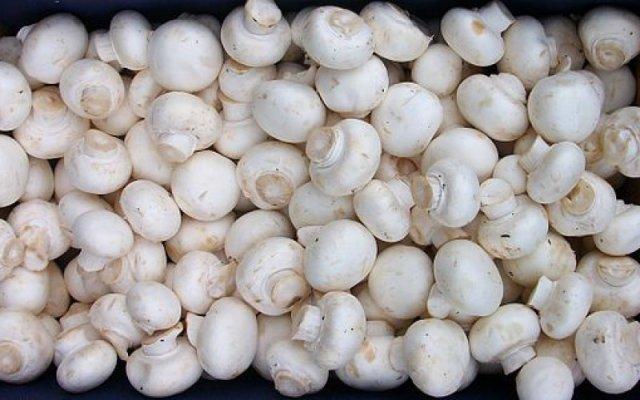
This type of soaking helps preserve the natural color, appetizing appearance, and prevent the mushrooms from turning black.
Recipes for pickling champignons at home
A variety of recipes are used for preserving salted champignons at home. However, these savory mushrooms are generally prepared using only two methods—cold or hot—depending on your preference.
Cold method
Cleaned and washed mushrooms of equal size are placed in layers with herbs and spices, adding salt. The prepared mushrooms are lightly pressed down, covered with a plate, and weighted down. The container with the mushrooms is set aside for 2-3 hours to allow the salt to mature. The salting process is done at room temperature.
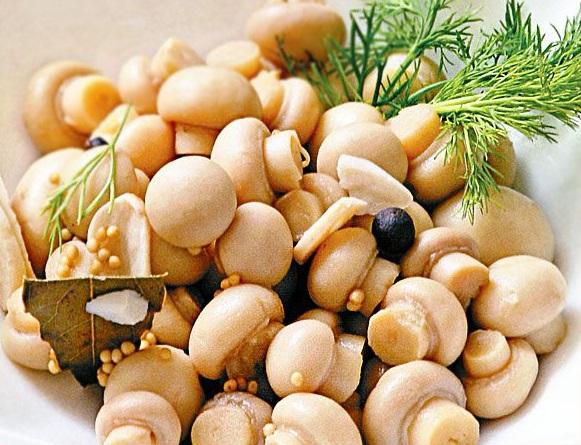
You can pickle champignons in any container with high sides, using the following ratio: 3 tablespoons of salt per kilogram of mushrooms. Afterward, remove the pressure, drain the mushrooms, season with oil, shake, and refrigerate. The mushrooms are ready to taste after a day.
Hot method
Fill a saucepan with water and salt (100 milliliters of water per 1 tablespoon of salt) and add fresh mushrooms. Cook for about 10 minutes, skimming off the foam occasionally. Once the mushrooms have settled to the bottom, add the spices. Then rinse the mushrooms with cold water and drain in a colander. Arrange the prepared mushrooms in jars with salt (50 grams of salt per 1 kilogram of mushrooms).
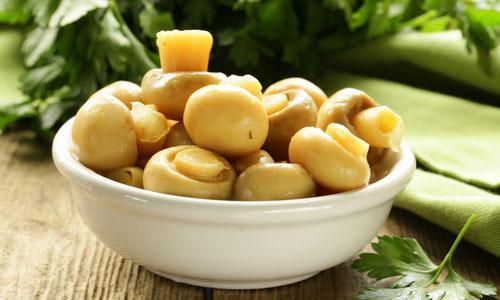
Place a weight on top of the container until brine forms. Then place the mushrooms in the refrigerator, and after a week, they are ready.
Quick-pickled champignons
Ingredients:
- mushrooms – 0.5 kilograms;
- granulated sugar – 15 milligrams;
- vinegar – 60 milliliters;
- butter (vegetable origin) – 2 tablespoons;
- garlic – 3 cloves;
- peppercorns (peas) – 8 pieces;
- bay leaf – 2 pieces;
- water – 2 tablespoons;
- salt – 15 milligrams.
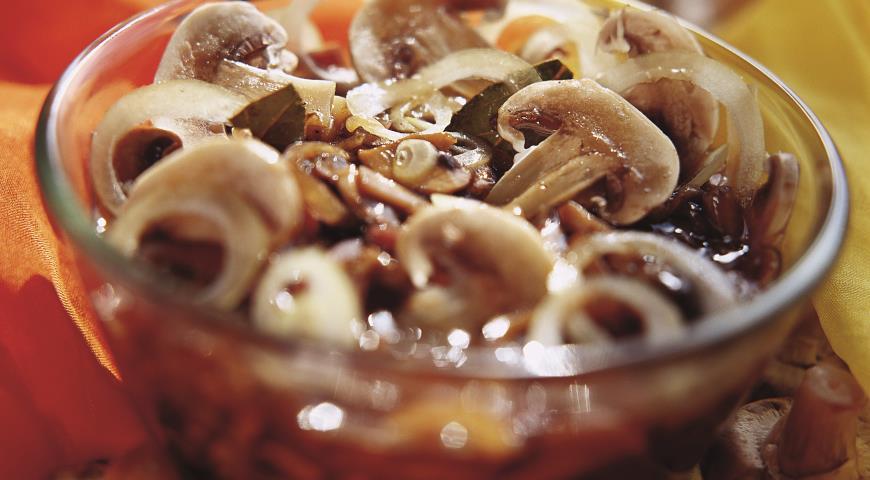
Preparation: Pour water into a saucepan, add spices, and mushrooms. Boil all ingredients for about 5 minutes. Then let the mushrooms cool. Ladle the finished product into sterilized jars and seal with lids.
With soy sauce
Ingredients:
- onions (bulb) – 6 pieces;
- mushrooms – 3 kilograms;
- sauce (soy-based) – 1.5 cups;
- butter – 360 milliliters;
- pepper (ground allspice) – 15 milligrams;
- black pepper (peas) – 1 teaspoon;
- laurel – 3 leaves;
- garlic – 1;
- cloves – 10 pieces.
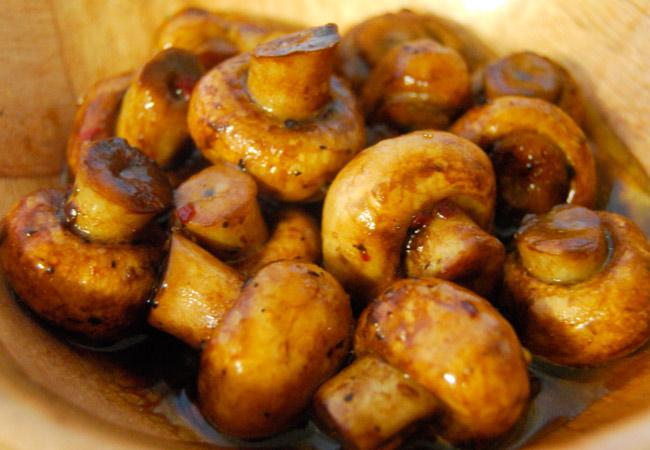
Preparation: Place peeled and washed mushrooms in a saucepan and pour soy sauce over them. Place the sliced onion rings on top of the mushrooms. Place the pressed garlic on top of the onions. Crushed peppercorns, cloves, and bay leaves are sprinkled on top of the garlic. Bring the oil to a boil and pour it over all the ingredients in the saucepan. Stir the ingredients together and store in a cool place.
Without vinegar
Ingredients:
- champignons – 0.5 kilograms;
- salt and sugar – 15 milligrams each;
- lemon juice – 2 tablespoons;
- water – 1 glass;
- garlic – 3 cloves;
- bay leaf – 2 leaves;
- pepper (peas) – 1 teaspoon.
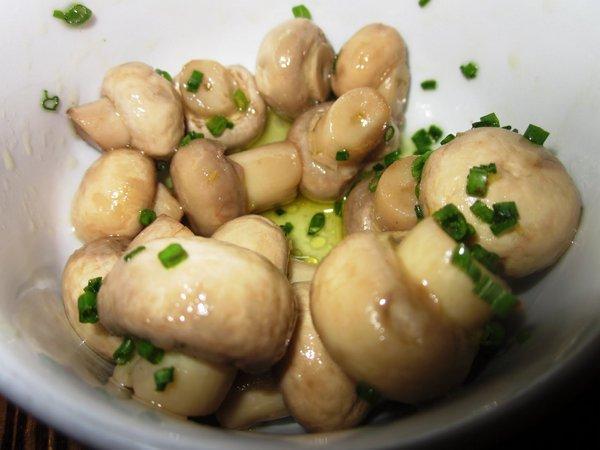
Method: Place the mushrooms, finely chopped garlic, and other ingredients, not including the lemon juice, in a saucepan filled with water. Once boiling, cook the mushrooms for about 5 minutes. Add the lemon juice to the cooked mushrooms. Then cover the pan and place in a cool place for 4 hours. The mushrooms are ready!
With juniper
Ingredients:
- mushrooms – 0.5 kilograms;
- salt – 1 kilogram;
- juniper – 6-7 branches;
- horseradish leaves – 3 pieces;
- oak leaf – 3 pieces;
- currant (leaf) – 15 pieces;
- cherry (leaf) – 15 pieces.
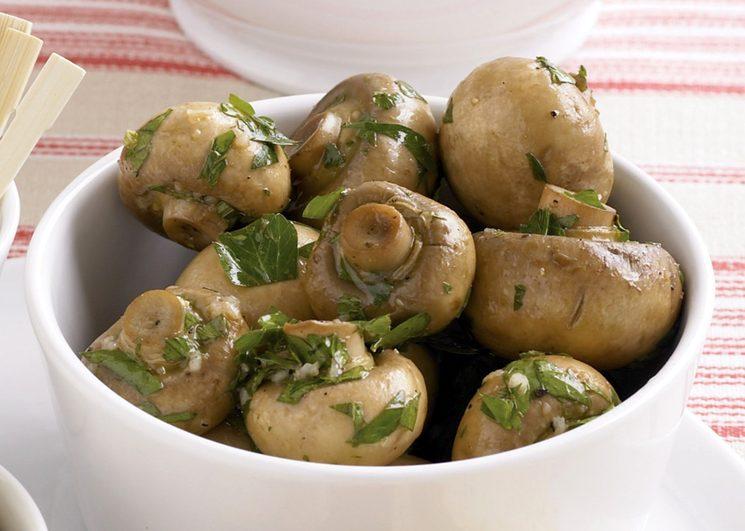
Preparation: Place the juniper berries in a wooden container, add hot water, and cover with a towel for half an hour. Then drain the water and replace the juniper with horseradish, currants, and cherries. Layer the mushrooms, interspersed with the herbs.
After filling the container, cover the tub with several layers of cheesecloth, then sprinkle salt on top. Press the mushrooms down with a heavy lid. Store the wooden container in a cool place for 60 days. Then, pack the mushrooms into jars and seal with lids.
With sugar and bay leaf
Ingredients:
- mushrooms – 1 kilogram;
- bay leaf – 1 leaf;
- acetic acid (9%) – 0.5 cups;
- pepper (peas) – 1 teaspoon;
- water – 2 liters;
- sugar and salt – 30 grams each.
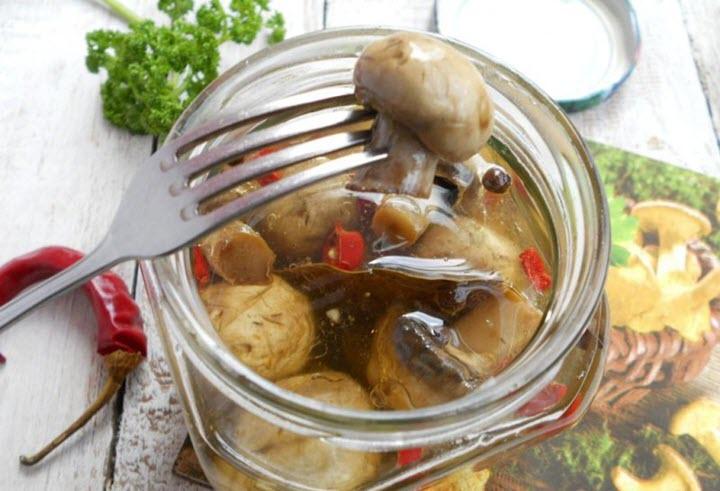
Preparation: Place the cleaned and washed mushrooms in a saucepan and simmer for about half an hour, skimming off any foam. Then drain and rinse. Dissolve the sugar and salt in a separate container of water, then add the spices. Bring the brine to a boil, add the mushrooms, and simmer for about 15 minutes. Add the vinegar, and the mushrooms are ready.
With chili pepper
Ingredients:
- champignons – 0.5 kilograms;
- onion;
- salt – 40 grams;
- garlic – 3 cloves;
- pepper (chili) – 1 piece;
- oil – 60 milliliters;
- pepper (peas) – 8 pieces.
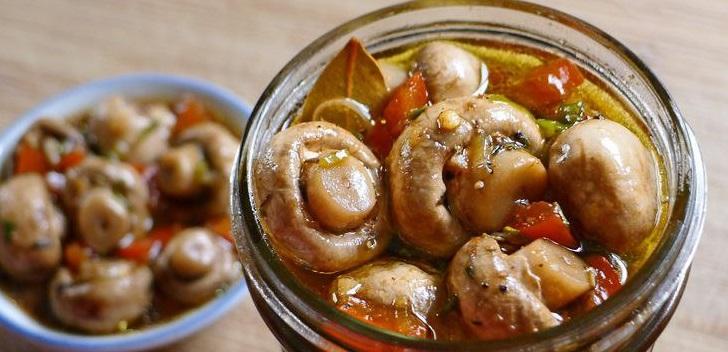
Preparation: Slice the onion, pepper, and garlic into rings. Place the mushrooms, the thinly sliced ingredients, and the hot pepper in a prepared container. Seal the container tightly with a lid and set aside for about half an hour. Drain the mushrooms and refrigerate for 24 hours. Then, place the mushrooms in jars and seal with lids.
With citric acid
Ingredients:
- water – 1.5 cups;
- mushrooms – 800 grams;
- salt – 0.5 teaspoon;
- citric acid – 1 gram;
- cherry, currant (leaves);
- spices;
- dill.
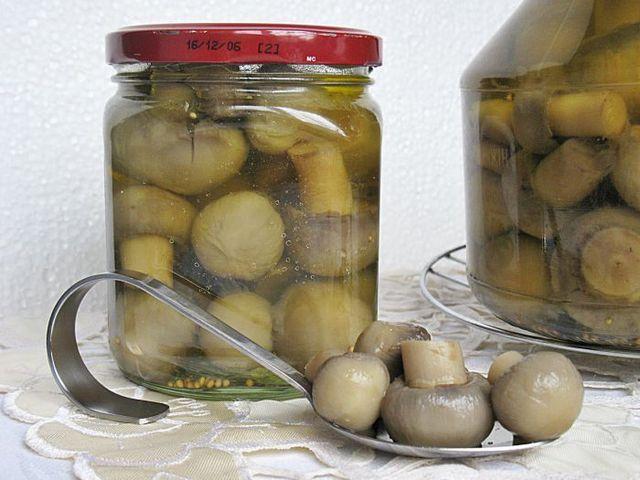
Preparation: Add lemon juice, salt, and spices to the water and boil. The resulting brine is drained, strained, and cooled to approximately 70 degrees Celsius (168 degrees Fahrenheit). The boiled mushrooms are placed in jars up to the very top and covered with the so-called marinade. Sterilize and seal with lids.
Shelf life of canned food
Hold salted mushrooms It is recommended to store it in the refrigerator, the temperature of which helps preserve the food in a closed container for about a year.
An opened jar of mushrooms can be kept in the refrigerator for up to two months. Champignons prepared using the hot method have a similar shelf life.
Rules for storing salted mushrooms
Mushrooms must be stored in compliance with the following rules:
- Containers with champignons should be kept in places with low temperatures - in basements, cellars, on glazed balconies;
- The optimal air temperature will be considered to be parameters varying within the range from +1 to +6.
If you follow the cooking technology, champignons will turn out delicious and retain their beneficial elements even when canned.
Related posts:
 How to freeze fresh champignons at home in the refrigerator for the winter and is it possible?
 The top 10 most delicious recipes for quickly preparing marinated mushrooms for the winter at home
 TOP 15 recipes for canned mushrooms at home for the winter
 TOP 40 New Year's 2020 Meat Recipes Using Pork, Beef, Chicken, and Lamb
 Quick recipes for pickled cabbage and beets for the winter, with and without vinegar
 Step-by-step recipes for preparing canned tursha for the winter
 TOP 40 Hot Dish Recipes for New Year 2020: What to Cook
 Quick and delicious recipes for Georgian-style pickled tomatoes for the winter