
Organic farming is gaining more and more supporters and followers. A popular method for controlling weeds and harmful insects is planting specific crops. An unconventional solution is using flax as a green manure. While the sprouts don't produce the typical amount of greens, the crop does an excellent job of fulfilling the key functions of a green manure: structuring the soil and protecting beds from weeds and harmful insects.
Advantages of flax as a green manure
The demand for flax as a green manure crop has only recently emerged. The main advantages of flax crops are:
- the root system perfectly structures the soil;
- Due to its dense structure, green flaxseed mass prevents weeds from growing;
- During the process of growth and development, roots saturate the soil with organic matter;
- The plant culture protects green plantings from harmful insects (effectively repels the Colorado potato beetle).
Another advantage of this crop is its ability to thrive in a variety of soil types. Flax crops also exhibit resistance to low temperatures and recurrent frosts.
What are the disadvantages of using it?
Like any plant, flax has a number of disadvantages. When growing it, pay attention to the following:
- flax grows more actively on sandy soils and medium loams;
- in terms of pH level, the crop grows well on alkaline soils;
- When sowing, it is necessary to take into account that flax plantings do not stand out in the area in terms of the volume of green mass (compared to other green manure crops - mustard, radish);
- To ensure lush flowering and volume formation, phosphorus and nitrogen fertilizers are essential. It's important to strictly adhere to the dosage of mineral supplements.
- high cost of seed material.
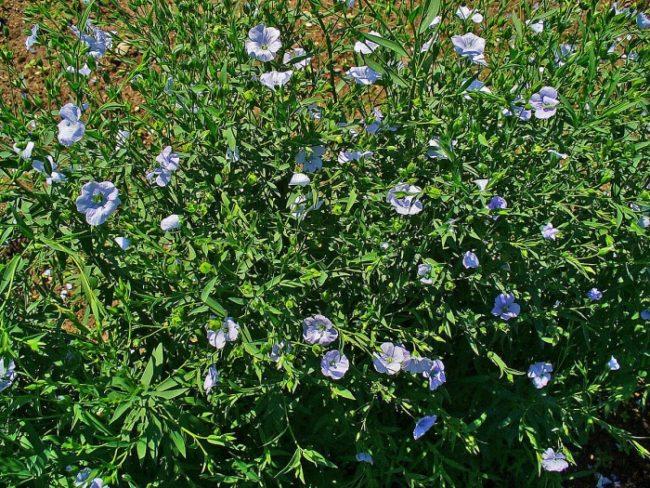
The disadvantages of this crop include the need to grow plants exclusively in sunny areas. In shady areas, the crop's development slows significantly, and the seedlings don't form a dense green mass that prevents weed growth.

What is it planted for?
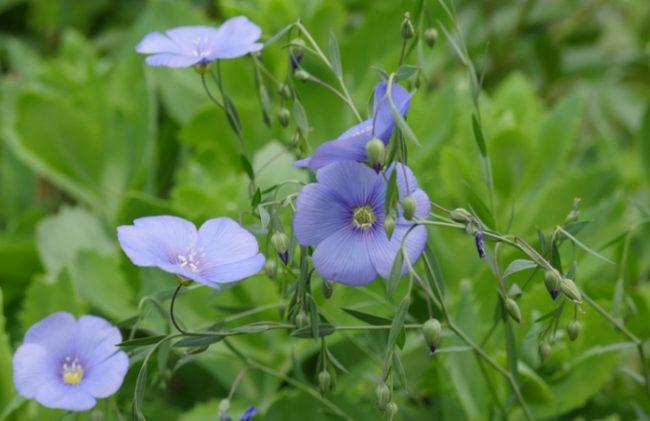
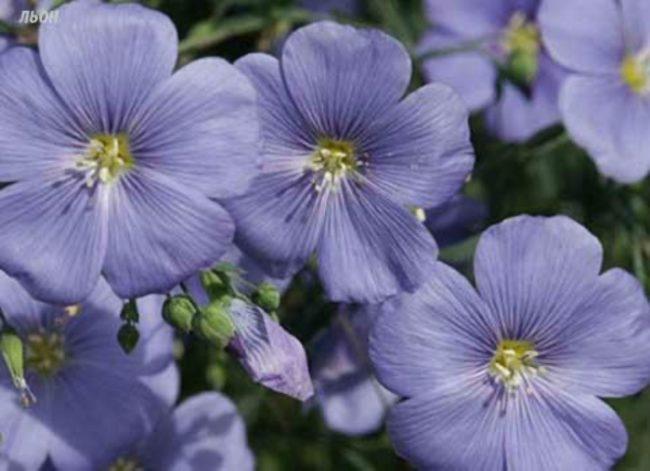
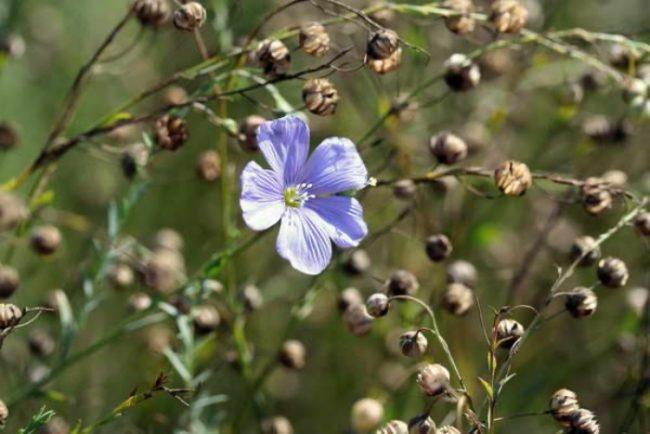
Some plants are planted as green manure to improve soil structure, control weeds, and enrich the soil with nutrients. Flax is an annual herbaceous crop, valued primarily as a fiber and oilseed crop, but it is also planted as a green manure. Crop rotation is important.
Mown flaxseed is effective as a natural fertilizer for winter grains and potatoes. In gardens and vegetable patches, flaxseed is often sown to mulch the soil and clear weeds, as the crop forms a dense green cover.
Experienced gardeners recommend planting flax in beds with nightshades (peppers, tomatoes, eggplants).
The crop's value lies in its phytosanitary properties. This is explained by the fact that flax leaves secrete a special substance, tinin, which repels pests (in particular, the Colorado potato beetle).
Calculation of seed consumption for planting
The seed consists of small grains, so it's important to adhere to application rates when sowing. The planting site should be prepared in advance: the soil should be loosened, fertilized, and cleared of weeds. The crop's seedlings are resistant to spring frosts (down to -3°C). Therefore, sowing can begin in late April, when the soil still retains moisture for proper seed germination.
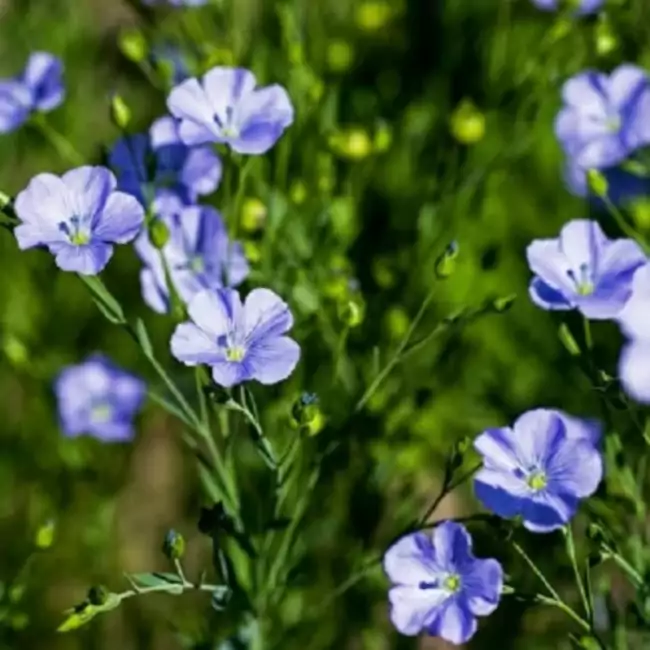
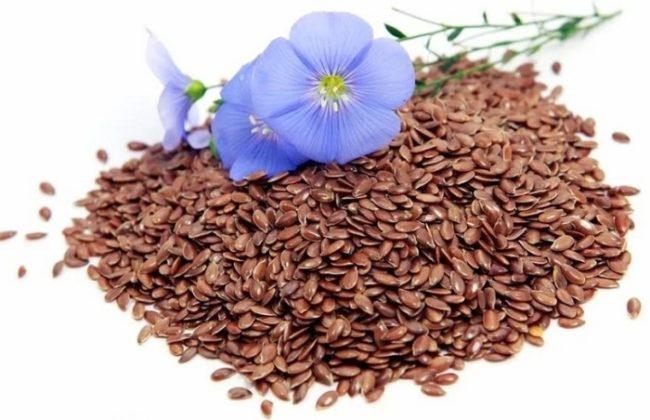
Sow seeds broadcast, at a rate of 300 grams per 100 square meters (when grown as green manure). When sowing, plant the seeds to a depth of 1.5-2 cm. Since the seeds germinate slowly in the light, harrow the soil after planting. If flaxseed is sown in beds, leave 15-20 cm between rows.
Mowing times
The classic way to use green manure as a natural fertilizer is to mow the green mass and then incorporate it into the ground for composting purposes.

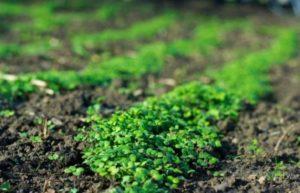
Flax seedlings germinate 7-11 days after sowing. The above-ground portion is mown for composting, with this procedure performed before budding or flowering begins. Typically, the mown flax greens are incorporated into the fertile soil layers using a subsoiler or cultivator. This process is carried out approximately two weeks before sowing garden seeds.
Growing flax as a green manure has several advantages. However, it's important to provide proper care for your flax crops, including timely application of mineral supplements and regular watering.