
- Description of nitrogen fertilizers
- Their purpose
- Existing types of nitrogen fertilizers
- How much nitrogen is there in different species?
- Minerals
- Phosphorus
- Urea
- Application period and required dosage
- Instructions for use
- How to properly apply liquid fertilizers
- Safety precautions
- What happens when there is a lack of an element?
The full development and productivity of all types of crops depend on the presence of micronutrients in the soil, primarily nitrogen. The source of these essential micronutrients is chemical compounds produced as nitrogen fertilizers. Ammonia or natural minerals (such as Chilean saltpeter) are used to produce nitrate, urea, and ammonium.
Description of nitrogen fertilizers
Nitrogen is found in the leaves, stems, roots, and fruits of plants. Its presence in chlorophyll gives plant leaves their green color. Nitrogen fertilizers include organic and inorganic substances that contain nitrogen. They are produced primarily from atmospheric nitrogen through synthesis with hydrogen, carbon, and oxygen.
Mineral fertilizers are produced in three forms:
- solid, granular;
- liquid;
- water soluble.
Manure, bird droppings, and green manure are sources of nitrogen compounds that can be used at home without resorting to mineral fertilizers.
Nitrogen content in the soil fluctuates due to microbial uptake, leaching, and evaporation. Ultimately, the utilization rate of nitrogen from fertilizers by plants does not exceed 50%.
Their purpose
Nitrogen fertilizers stimulate the growth of vegetative parts of plants and increase crop resistance to disease. Nitrogen compounds are essential for increasing yields, particularly for valuable industrial crops such as cotton. Excessive nitrogen-containing fertilizers delay ripening, thereby reducing crop productivity.

Existing types of nitrogen fertilizers
Mineral fertilizers are divided into:
- ammonia (ammonium);
- nitrate;
- nitrate-ammonia;
- amide.
Ammonia derivatives include derivatives of ammonia and sulfur/chlorine/carbon/phosphorus:
- ammonium sulfate;
- ammonium chloride;
- ammonium carbonate;
- ammonium sulfide;
- ammophos and diammophos.
Nitrate fertilizers are saltpeters, salts of nitric acid (sodium, potassium, calcium, ammonium). Compounds of saltpeter and ammonium (NH4) are called nitrate-ammonia. Urea (carbamide) and calcium cyanamide belong to the amide group.

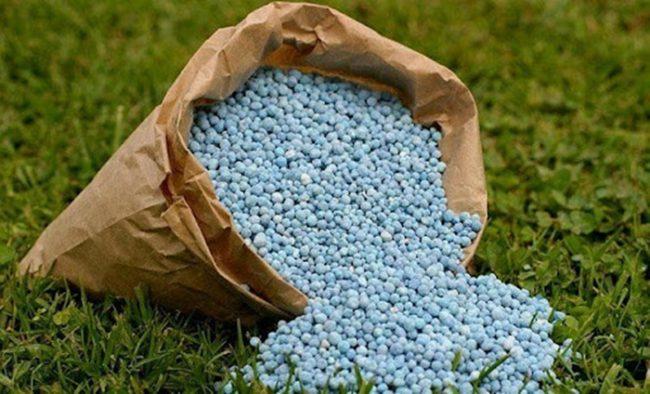
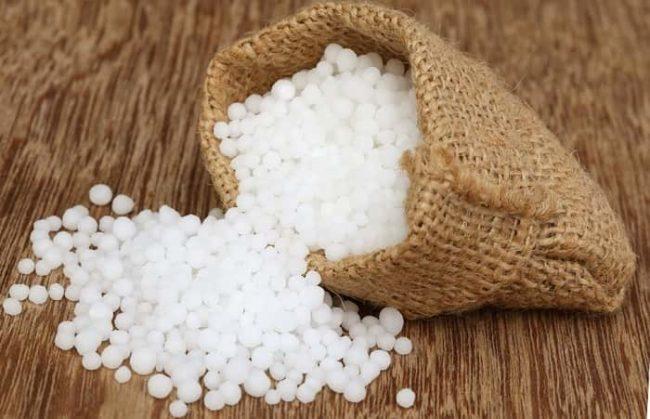
Saltpeter, urea, and ammonium compounds are available in granular form. Of these, nitrate and ammonia compounds are highly water-soluble.
Liquid nitrogen fertilizers include ammonia water, liquid complex fertilizers, and urea-ammonia mixture (UAM). UAM aqueous solution contains all three forms of nitrogen: NH2 (amide), NH4(ammonium), NO3 (nitrate), since it contains 35.4% urea and 44.3% saltpeter.
How much nitrogen is there in different species?
The amount of nitrogen in a fertilizer depends on its chemical composition.
Minerals
Nitrate and ammonium compounds contain 8% each, and amide compounds contain 16%.
Phosphorus
In nitrogen-phosphorus fertilizers, phosphorus predominates (52%), the amount of nitrogen ranges from 10 to 12%.
Urea
Urea contains the highest amount of nitrogen – 46%.
Application period and required dosage
Nitrogen fertilizers can be applied to the soil at different times:
- 7-10 days before sowing;
- during sowing;
- as a top dressing, after emergence or swelling of buds;
- Foliar applications are made throughout the growing season.
Nitrogen fertilizer application rates are calculated based on the soil's nitrogen content. Mineral fertilizer application rates depend on several factors:
- climatic conditions;
- type of culture;
- methods of application.
On average, most crops require 45 to 60 kilograms of nitrogen per hectare. When fruit drop occurs, foliar application of a urea solution is recommended at a rate of 10 grams per liter of water. For spraying vegetable crops, the solution concentration is 5-6 grams of urea per liter of water. This amount is sufficient for 30 square meters of garden beds. For nitrogen deficiency in fruit trees and shrubs, spray with a solution of 20-30 grams per 10 liters.
Instructions for use
Nitrate/nitrogen form (NO3) is the most readily absorbed by the root system and is especially effective in well-warmed, acidic soil. Nitrate compounds facilitate the absorption of potassium, calcium, and magnesium. This type of nitrogen fertilizer is recommended for use on all crops. The most favorable period is early in the growing season, but it can also be used during the summer.
Ammonium nitrates are the names of potassium/calcium/sodium/ammonium salts of nitric acid: KNO3, CaNO3, NaNO3, NH4NO3They dissolve well in water, are easily absorbed by plants, and are non-toxic to animals and humans. Ammonium nitrate (NH4NO3) when decomposed forms two forms: rapidly absorbed nitrate and slowly absorbed ammonium.

Urea (CH4N2Urea is a concentrated nitrogen fertilizer, available in white, odorless granules that are highly soluble in water. When applied to the soil, the compound transforms into ammonium carbonate within the first two days, which then turns into ammonia when exposed to air. To reduce nitrogen loss, urea should be applied to a depth of 7-8 centimeters and covered with soil.
The optimal time for soil application is early spring for trees and shrubs, and 7-10 days before sowing for crops. During sowing, urea is applied into furrows or pits away from the seed. To avoid harmful effects from the chemical reaction products, the granules should not come into contact with the seed or plant roots. Excessive urea levels in the soil reduce seed germination. Gaseous ammonia can damage seedlings.
Urea is especially effective in acidic soils. Alkaline and neutral soils should be acidified to prevent micronutrient loss.
A disadvantage of urea is that it requires special storage conditions to prevent it from compacting. When applied during planting, urea should not be mixed with other fertilizers.
Spraying during bud formation reduces yield the following year. In autumn, urea is applied to sandy and sandy loam soils. Perennial and winter crops are not fertilized with urea in autumn. Spraying plants with a urea solution before flowering delays budding and thus protects against spring frosts.
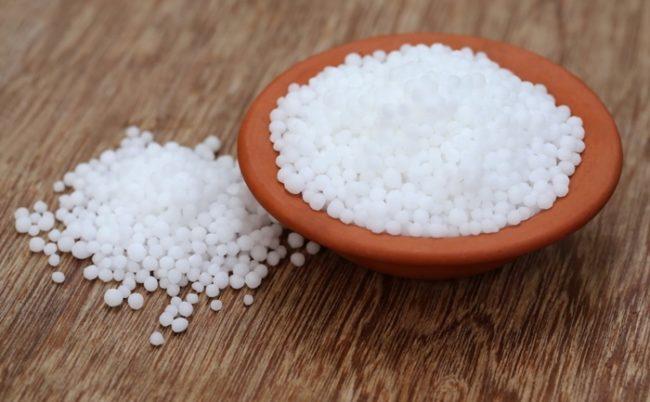
In ammonium compounds, the nitrogen release reaction begins when soil temperatures rise above 0 degrees Celsius. The soil layer is gradually saturated with the micronutrient, with ammonia fertilizers partially converting to nitrate. Pre-sowing application of ammonia compounds promotes root development and stem and leaf growth.
Ammophos NP 12:52 is a granular fertilizer containing phosphorus and nitrogen and belongs to the ammonium group of fertilizers. It is most effective when used on alkaline and neutral soils.
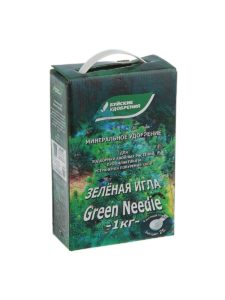
Recommended for fertilizing annual and perennial field crops, vegetables, and fruit and berry crops. Application periods include before sowing or planting, during sowing or planting, and in both spring and fall.
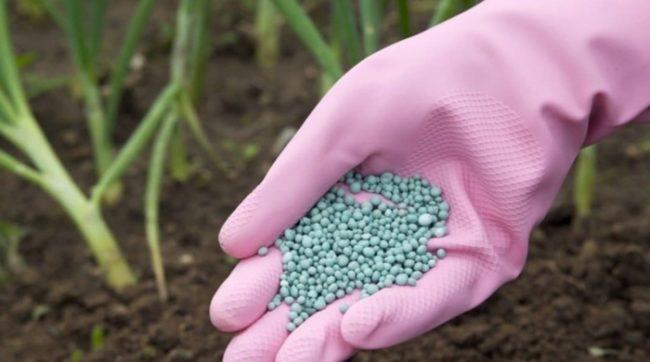
How to properly apply liquid fertilizers
Liquid fertilizers are used primarily for foliar feeding. Avoid spraying plants with aqueous nitrogen-containing solutions at temperatures above 20°C and humidity below 56%, as well as immediately after rain or heavy dew. These conditions can leave necrotic burn marks on the leaves.
The best time for irrigation is morning or evening, without bright sun, on a cloudy day—or any time. The nitrogen concentration depends on the plant's development phase: the longer the development phase, the more diluted the solution should be.

Safety precautions
When working with nitrogen fertilizers, protect your skin and respiratory tract from contact with the chemicals, especially during spraying. Wear a respirator, goggles, thick long-sleeved clothing, trousers, and closed-toe shoes.
When storing fertilizers, follow manufacturer recommendations, especially liquid fertilizers due to their aggressive nature. Storage containers must be airtight and corrosion-resistant. All types of nitrogen compounds must be protected from heat, including direct sunlight.
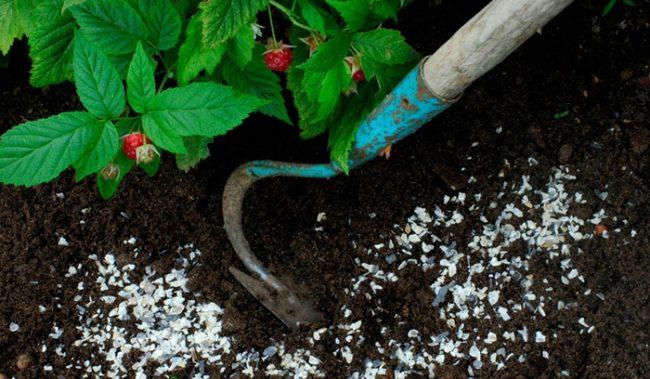
What happens when there is a lack of an element?
A lack of nitrogen in the soil can be judged by the appearance of the plant, its development and yield:
- the tops of the leaves turn yellow;
- weak shoots discolor to light green;
- the fruits become smaller;
- the stems become dark red;
- The plant sheds its leaves and blooms prematurely.
Perennial plants are less able to withstand low winter temperatures. Nitrogen enhances the immune response to bacterial and fungal infections, making crops more resistant to these diseases.
Nitrogen fertilization is especially important for winter crops, which experience soil deficiencies after overwintering. Without timely mineral support, winter crops will lag in development and experience reduced yields.