
Hydrogel for plants is a polymer with unique properties that absorb and retain moisture and fertilizer solutions. It retains these substances and releases them over a long period of time. This substance can be used for a variety of purposes. It helps improve crop survival and accelerate root development, stabilizes water balance, and facilitates seed germination.
Description of hydrogel and its purpose
Hydrogel is an artificial polymer-based material produced in powder, beads, and granule forms. This substance has found application in gardening and indoor floriculture.
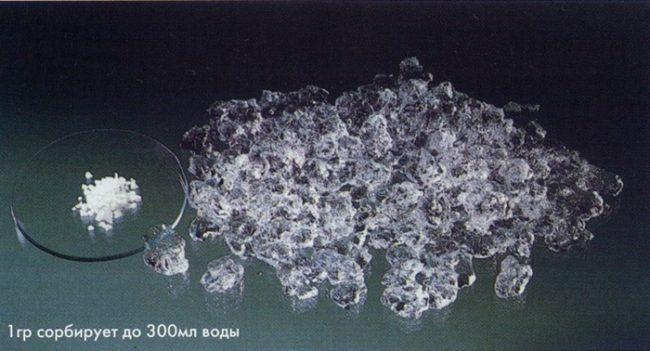
The main advantage of hydrosoil is its ability to absorb large amounts of moisture. As a result, the balls expand in size. When filled with moisture, the hydrogel resembles jelly. It is a substance that retains not only water but also nutrients.
Typically, 1 gram of the substance can absorb 150-200 milliliters of water. Therefore, using 1 tablespoon of hydrogel can remove up to 1-1.5 liters of liquid from the soil. There's no need to worry about the soil drying out. The hydrogel gradually releases moisture to the plants, making it a suitable substitute for water. Using aqua-soil can significantly reduce the number of waterings.
The gel-like substrate is completely safe for plants. It has a neutral reaction. It is free of fungi and bacteria, as it is not organic. Furthermore, it can be dried and rehydrated repeatedly. The aqua-soil retains its properties for a long time and does not disintegrate.
Varieties
Depending on the structure, appearance and purpose, there are several types of aqua gel:
- Soft – a soft, transparent hydrogel. It's rarely used in its pure form and is most often mixed with soil. It can be used for growing houseplants, germinating seeds, and rooting cuttings. It's also used for planting garden and vegetable crops. The plant's root system penetrates the soft, water-soluble granules and becomes saturated with moisture.
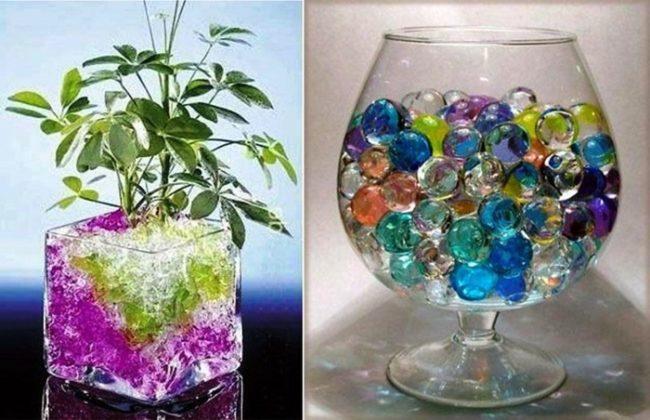
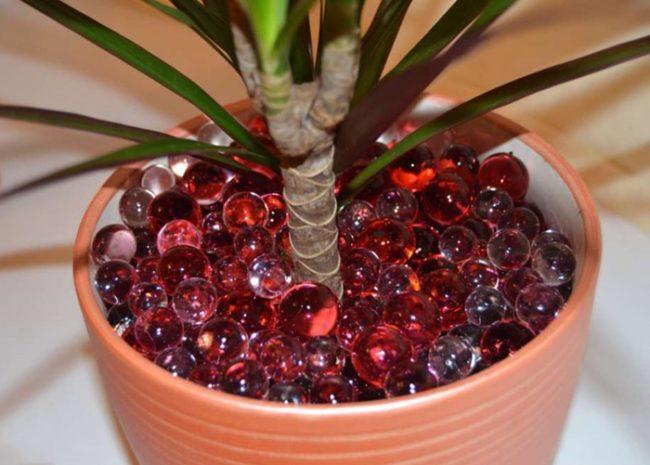
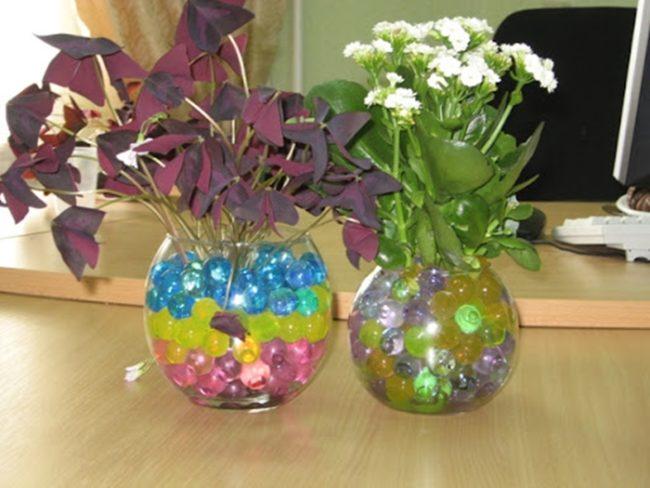
- Dense – called aquagrunt. It is a decorative hydrogel. This substance comes in a variety of colors and shapes. It often contains rhinestones and glitter. The substance is used as a filler for vases containing fresh flowers, replacing water. It is also used to create colorful arrangements with indoor plants.
- Liquid – resembles soft, gel-like flower beads. Upon contact with water, the mass dissolves rather than swells. This substance is used very rarely. It is most often used for soaking seeds. The polymer ensures rapid germination and improves viability. Liquid hydrogel should not be used for seed germination, as it coats the seeds and prevents oxygen from reaching them.
Pros and cons
The advantages of hydrogel include the following:
- high water-retaining properties;
- the ability to maintain soil moisture for a long time;
- acceleration of seed growth;
- prevention of leaching of nutrients from the soil;
- supplying roots and seeds with oxygen - this effect is achieved by loosening the soil;
- safety for people and plants;
- the ability to store unused substance in the refrigerator;
- prevention of water stagnation and root rot;
- reduction of crop irrigation;
- attractive appearance;
- ease of use.
However, hydrogel balls also have certain disadvantages:
- risk of mold formation on the balls - this effect occurs with prolonged exposure to sunlight;
- cannot be used for seed material covered with a leathery shell and plants with large roots;
- non-reusability;
- lack of nutrients in the structure.
Rules of application
Using hydrogel for plants can achieve various effects. However, it's important to follow the instructions carefully.
When landing
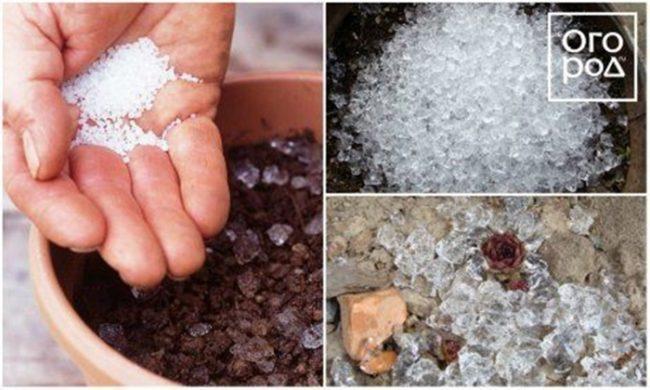
When planting flowers, trees, and shrubs, add hydrogel to the hole. Use 200-400 g of the swollen substance per liter of soil. It is not recommended to place all the hydrogel at the bottom of the hole. One application will last for 4-5 years.
The water absorption and consumption cycles are repeated many times. For the first 1-2 weeks, plants should be watered as usual. Subsequently, this can be reduced to 3-6 times less frequently. This will protect the plants during hot weather and long intervals between waterings.
As a fertilizer
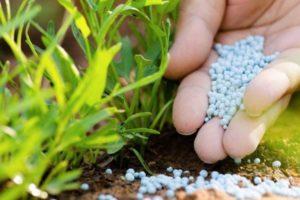
Hydrogel granules can absorb not only clean water but also fertilizer solutions. This will prevent flowers from wilting and will also continue to absorb nutrients.
Germination of seeds
To germinate seeds, moisten the hydrogel granules, grind them until smooth, and spread them in a 3-centimeter-thick layer on the bottom of a transparent container. Gently press the seeds into the gel-like mass and cover the container with plastic wrap. Lift the wrap daily to remove any condensation.
Take a look Also
When applying the hydrogel, it's important to ensure that the granules don't fall onto the floor or garden paths. Otherwise, the swollen gel could cause slipping.
For seedlings
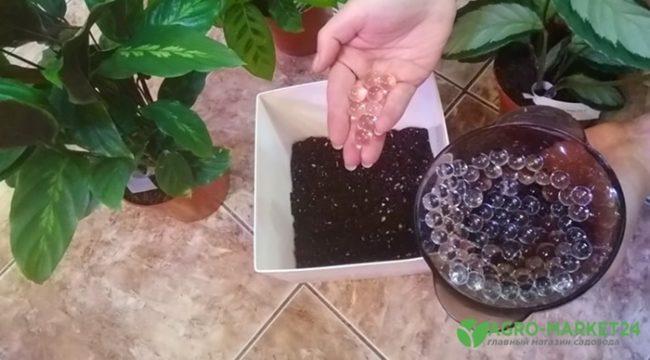
To effectively use hydrogel for seedlings, use one part dry granules to four parts soil and place the mixture in seedling containers, leaving a 0.5-1 cm gap from the top. Then, sow the seeds as usual and water the seedlings.
If desired, it is possible to plant seeds directly into the prepared hydrogel. However, in this case, at the cotyledon stage, the seedlings will need to be transferred to a potting mix. This must be done carefully, without removing the granules from the root system.
Safety precautions
The substance is non-toxic and poses no danger to humans. Store at room temperature, avoiding direct sunlight. Dispose of with household waste. Care must be taken to ensure it does not end up in the sewer system. Keep out of the reach of children.
Similar means
Other substances can also be used to retain moisture within the soil structure. The most effective hydrogel substitutes include perlite, coconut coir, and vermiculite. These products have similar properties but have additional characteristics. Therefore, before using a specific composition, it's important to analyze its effect on plants.
Hydrogel is an effective product that helps retain moisture and nutrients in the soil. To ensure the desired effect, it's important to strictly follow the instructions for use.