
- What is it
- How does it affect grapes?
- Beneficial properties
- How to apply
- Whitewash
- Prevention of chlorosis
- Processing
- Top dressing
- How to prepare the solution correctly
- Top dressing
- From diseases and pests
- Disinfection of wounds and cracks
- Rules of application
- Deadlines
- How to use correctly
- Precautionary measures
- Common mistakes
- Incorrect container
- Dosage violation
- Compatibility with lime
- Tips and advice from experienced gardeners
- Result
To ensure a bountiful harvest, ferrous sulfate is used to protect grapes from disease. Iron deficiency causes the plant to lose its strength and immunity, often resulting in disease. Proper use of ferrous sulfate helps strengthen grapevines, especially after winter.
What is it
Ferrous sulfate solution is called ferrous sulfate. It appears as small, light blue granules of varying sizes, with some greenish impurities sometimes visible within the granules. It dissolves quickly upon contact with water and is non-toxic. It is used to treat garden and vegetable crops.
How does it affect grapes?
Iron sulfate crystals form when sulfuric acid reacts with metal. The substance has the following effects on grapes:
- Replenishes natural iron reserves in plant tissues. Iron deficiency often negatively impacts fruit quality and reduces yield.
- Accelerates the growth of shoots.
- Ferrous sulfate can be used as a soil fertilizer. When applied to the soil, the substance dissolves, allowing the roots to absorb the necessary amount of iron.
- Disinfects the soil.
- Reduces diseases.
The use of copper sulfate helps strengthen the crop's immunity, which reduces the risk of pests and vine death.
Beneficial properties
Iron sulfate has the following effects on garden crops, including grapes:
- increases oxygen penetration into the leaves, as well as the production of chlorophyll, which is responsible for the green color of vegetation;
- eliminates fungal diseases;
- can be used to disinfect the soil in the root growth area;
- saturates crops with iron;
- promotes the appearance of lateral shoots necessary for the formation of a bush;
- The vine becomes stronger and more elastic, which reduces the risk of damage to the bushes; this is necessary to reduce the risk of damage to the vine during the winter.
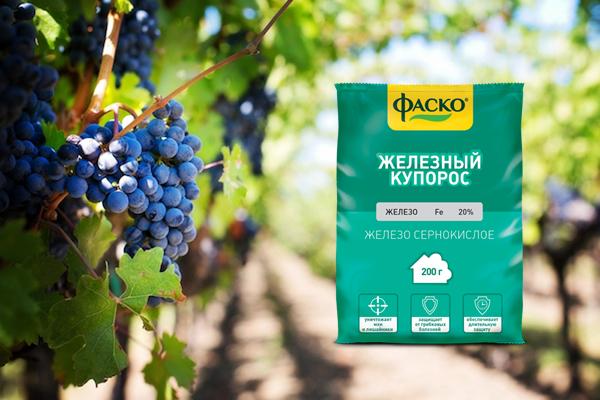
Using ferrous sulfate has a beneficial effect on the taste of the fruit. Grapes are enriched with iron and become juicier. It also reduces the risk of rot and unripe berries falling off.
How to apply
Ferrous sulfate is often useful in gardening. Additional components can be added to enhance its effectiveness.
Whitewash
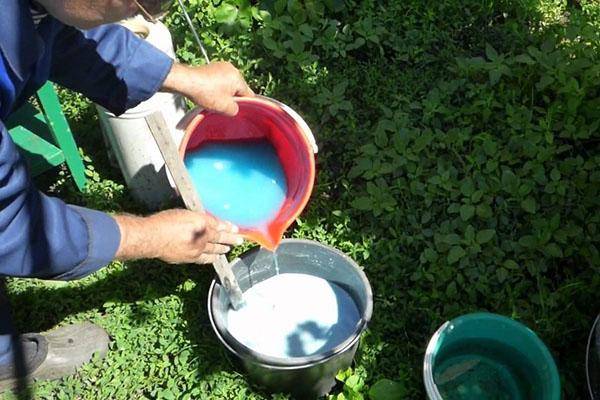
To whitewash, mix 200 grams of granules per 10 liters of whitewash. This method of treatment helps saturate the plant with iron and combat fungi that may be hiding in the bark. This use of ferrous sulfate also helps reduce ant attacks. Whitewashing should be done in the fall or early spring. Whitewash the lower part of the bush, closest to the ground.
Take a look Also

Prevention of chlorosis
Almost every gardener is familiar with this type of problem. Chlorosis in vineyards manifests itself with the following symptoms:
- leaf fall;
- the appearance of yellow stains on the leaves;
- the bush becomes weak, the yield decreases.
To protect vineyards from chlorosis, ferrous sulfate is used. This should be done by spraying the vines in early spring before the buds begin to open.

Processing
Using iron sulfate, you can treat grapes against the following diseases:
- bacterial cancer;
- powdery mildew;
- deformation of buds;
- spotty necrosis;
- anthracnose;
- mosses and lichens.
The first treatment of the vines is carried out in early spring, using a weak solution of copper sulfate. The second treatment is carried out in the fall, shortly before the onset of frost.
Top dressing
Fertilizing grapes helps prevent diseases and strengthen the vine. Fertilizing is most often done in the spring to promote healthy vines and stimulate new shoot growth.
How to prepare the solution correctly
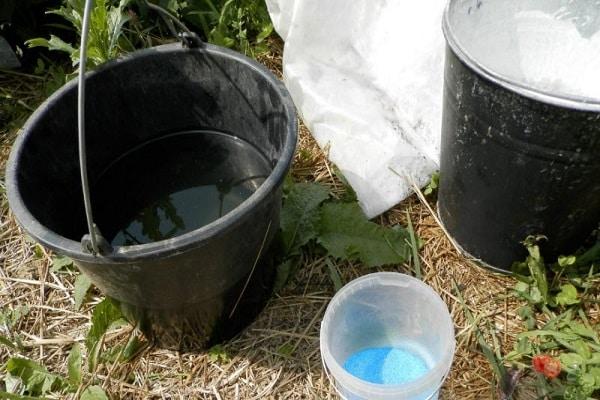
A fresh solution must be used. The working solution will not be stored until next use. Use warm water, into which the crystals are poured. Stir the solution until the copper sulfate is completely dissolved.
If necessary, the working solution can be filtered using a piece of gauze.
Top dressing
Using iron sulfate is carried out root feeding of grapesFor this, use the following solution. Mix two teaspoons of iron sulfate and one tablespoon of citric acid in three liters of water. Stir the resulting mixture and water the root zone. Fertilizing can be done once every 10 days. This method can be used for both mature plants and young seedlings. For seedlings, reduce the proportions, using one teaspoon of copper sulfate and half a teaspoon of citric acid per three liters of water.
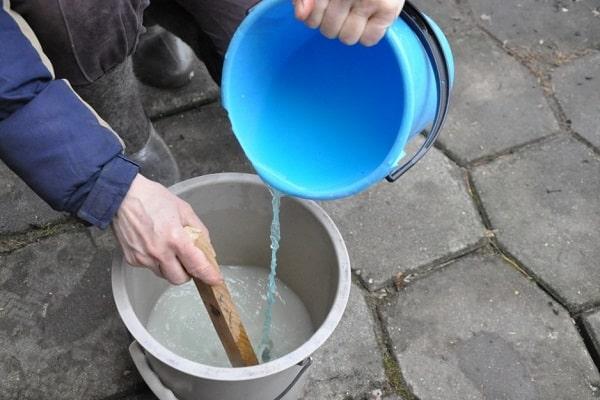
Before applying fertilizer, it is necessary to thoroughly loosen the soil so that the active substance penetrates to the roots.
Important: An indicator that the plant does not require fertilizing is the green color of the leaves, which remain on the vine for a long time without losing their color.
From diseases and pests
To eliminate pests and fungi that cause diseases, you need to use the following proportions:
- To control pests, use 150 grams of granules mixed in 10 liters of water. The resulting mixture is dissolved and sprayed on the plant in early spring before the leaves emerge.
- To combat diseases, use 100 grams of the substance per 10 liters of water. The resulting solution is poured into a spray bottle and sprayed onto the vines.
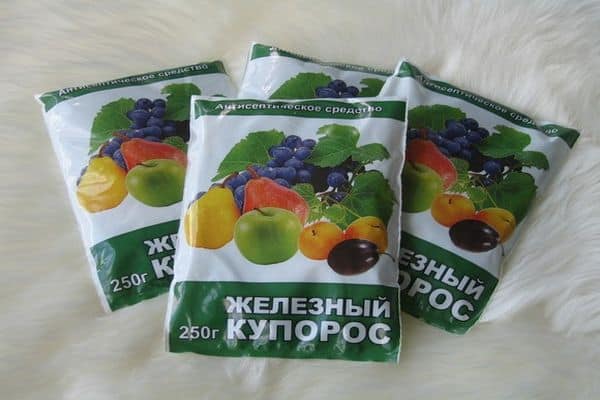
To prevent diseases, a working solution containing 3% ferrous sulfate can be used. Also, to disinfect the soil around the grapes, prepare a 1% solution and water it. This will reduce the growth of fungal spores and prevent root rot.
Take a look Also
Disinfection of wounds and cracks
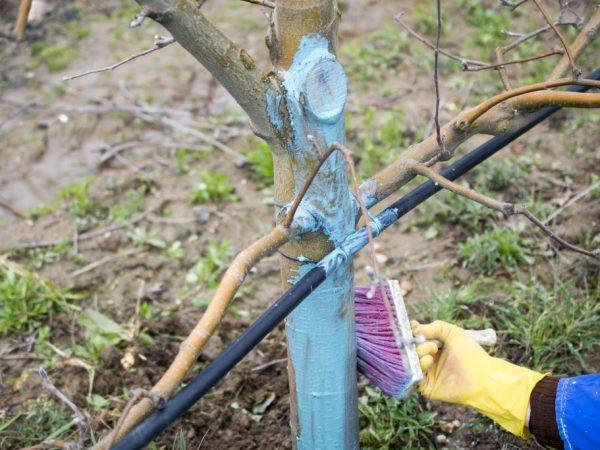
Ferrous sulfate is often used to disinfect damaged bark areas. A 15% iron solution is prepared and applied to the vine cuts and cracked areas. After application, the solution forms a thin film on the bark, preventing the penetration of viruses and harmful bacteria. Ferrous sulfate should be diluted in warm water immediately before use.
For application, use a soft brush, with which the resulting solution is carefully applied in several layers and left until completely dry.
Rules of application
To achieve visible results, it's crucial to follow the application instructions. The solution should be used strictly in the evening or early morning.
Deadlines
In summer, copper sulfate should be applied in the evening. This substance is most often used as a fertilizer and to combat chlorosis.
In the fall, treatment should be carried out after harvesting, before the onset of frost. This treatment helps to saturate the bush with iron and eliminate pests that may be hiding in the bark. In the fall, treatment should be carried out after all leaves and damaged shoots have been removed; otherwise, the effect will be ineffective.
In spring, treatment is carried out in April before bud swelling. This helps prevent disease and strengthen the crop for harvest. In spring, treatment is carried out after winter cover has been removed.
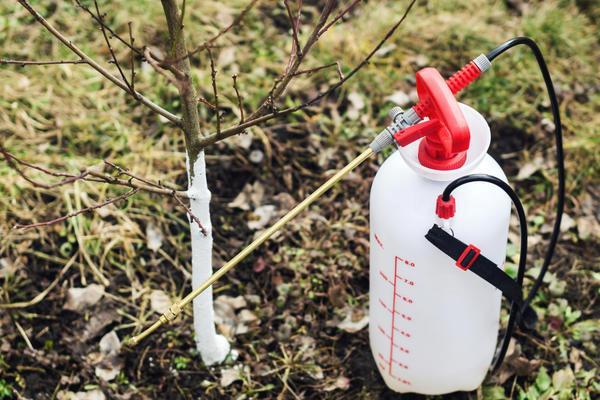 Important: Using ferrous sulfate can inhibit bud formation. This is important to consider, as after the procedure, a protective film forms on the culture, which slows bud development for up to two weeks.
How to use correctly
To ensure the crop is beneficial, it is important to follow the rules for using iron sulfate:
- spraying is carried out with a 1% solution, this allows you to eliminate pests without harming the crop;
- To obtain results, the instructions must be followed, as burns may occur;
- Fertilizing is carried out strictly under the roots; no more than 3-5 liters can be applied in one procedure, so as not to burn young shoots.

Excessive use of ferrous sulfate often leads to excess application, so it should be applied no more than three times per season. Apply only when necessary, when the bush is weak and the vines are prone to brittleness.
Precautionary measures
Although the substance is not considered toxic, certain precautions must be observed. These include:
- Avoid getting granules into the respiratory tract;
- the solution should not come into contact with mucous membranes, as this may cause burns;
- When using the solution, it is necessary to use hand and face protection;
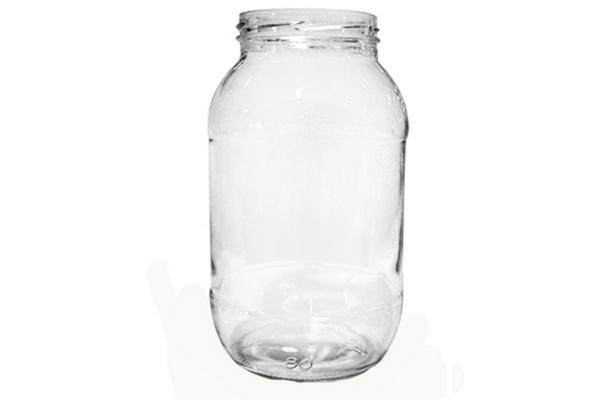
- The working solution must be prepared in a glass container;
- There must be intervals of at least 10 days between treatments, otherwise the leaves will be damaged.
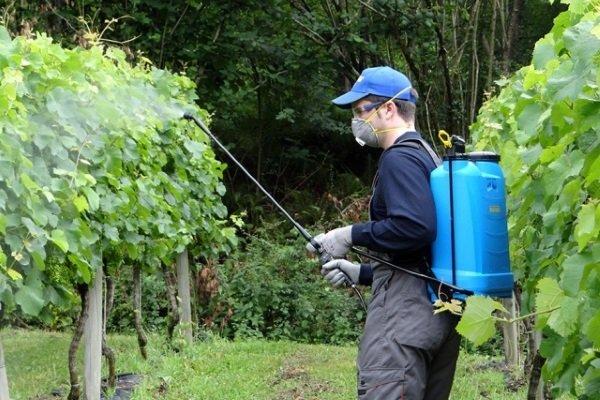
Following safety precautions can reduce the negative impact of the substance on the human body. Keep the substance out of the reach of children.
Common mistakes
Gardeners very often make mistakes that lead to the death of the crop or lack of productivity.
Incorrect container
A glass container is essential. Gardeners make mistakes when using metal. Ferrous sulfate tends to oxidize in metal containers, causing the solution to be harmful to grapevines.
Dosage violation
Each type of product must be used at the correct dosage. Excessive iron sulfate doses can cause burns and excess iron. Excessive iron exposure can cause grape vines and foliage to fall off.
Spray the vines strictly according to the instructions. Insufficient amounts of the active ingredient will result in ineffective treatment.
Compatibility with lime
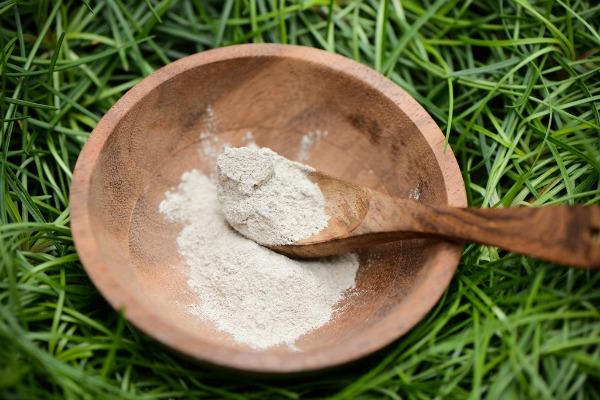
White clay or chalk is used for whitewashing. Using lime can cause a reaction and harm the grapes.
Important: The substance decomposes under high temperatures, so treatment should be carried out in cloudy weather.
Tips and advice from experienced gardeners
Gardeners recommend following these guidelines when growing grapes, which allow the use of iron sulfate without harming the crop:
- They use excessive dosages in an attempt to quickly eliminate all types of diseases. This leads to plant damage and crop failure.
- Spring treatment is done too late. If the solution gets on the buds, it can cause them to die. Therefore, treatment should be done before the buds swell.
- Using ferrous sulfate in combination with copper sulfate. This interaction results in a reaction that can be detrimental to the crop. At least 14 days should elapse between the use of these substances.
- To spray the vines, use a fine-mist sprayer. This will allow you to cover all areas and reach crevices and minor damage to the bark.
Following the recommendations will reduce the risk of problems and increase the effectiveness of crop spraying.
Result
Ferrous sulfate is an affordable product often used for the care and feeding of grapes and other garden crops. It must be used according to the instructions and guidelines. Using ferrous sulfate will prevent diseases and boost the plant's immunity, resulting in increased yields.
Related posts:
 How to propagate and grow peas, cultivation technology, and care in open ground
 How to plant grapes step by step, with a description of the process and care
 How to control onion flies using natural and chemical methods
 How to properly plant peas in a greenhouse and open ground
 Description of varieties of sowing peas and cultivation, to which family they belong
 Rules for using copper sulfate for cucumbers, how to dilute the product for treatment
 How to combat powdery mildew on onions using folk and chemical remedies
 Ferrous sulfate formula and instructions for use of iron sulfate