
- What is the difference between iron and copper sulfate?
- Composition and characteristics of the drugs
- Instructions for use
- Scope of application
- Pest control
- Fighting diseases
- Use as a fertilizer
- How to prepare solutions
- Technology for treating cucumbers from insects and diseases
- Application for disinfection of greenhouses
- How to apply the product as a fertilizer
- What are the dangers of fungicide? Precautionary measures
- Analogues and substitutes
- Reviews of the product from experienced gardeners
Cucumbers are quite demanding plants, as unfavorable natural conditions often make them susceptible to diseases that, if not addressed promptly, can lead to yield loss. What is copper sulfate used for cucumbers, and is its use justified?
What is the difference between iron and copper sulfate?
These preparations have long been used by gardeners and horticulturists in their gardens to preserve and improve crop quality. Iron and copper sulfate have beneficial effects on garden crops, but they differ.
Composition and characteristics of the drugs
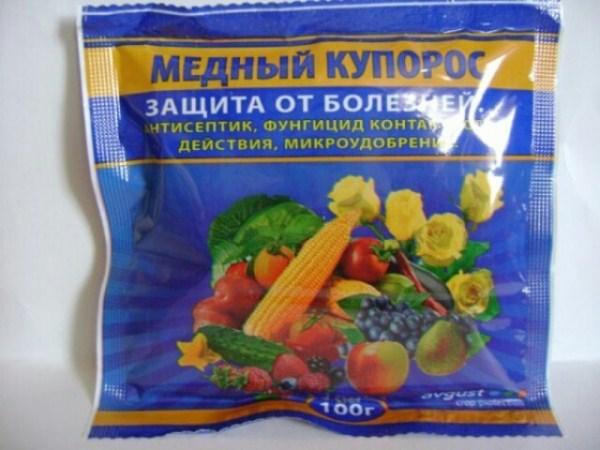
These preparations differ in their microelement composition, and therefore, their spectrum of action varies. Copper sulfate is a powder with a blue or pale blue tint. The chemical formula for copper sulfate is CuSO4*H2O. This substance is considered caustic and, if safety precautions are not followed, can cause severe poisoning. Its main characteristic is that the sulfate can penetrate the body.
It should also be taken into account that it is prohibited to make solutions with copper sulfate in which other pesticides will be used.
Ferrous sulfate is a crystalline salt formed directly by the reaction of sulfuric acid with divalent iron. This chemical is turquoise in color and resembles fine salt crystals. Its chemical formula is FeSO4. The active ingredients in the crystalline form of the salt account for 53%. It is also less toxic than copper sulfate.
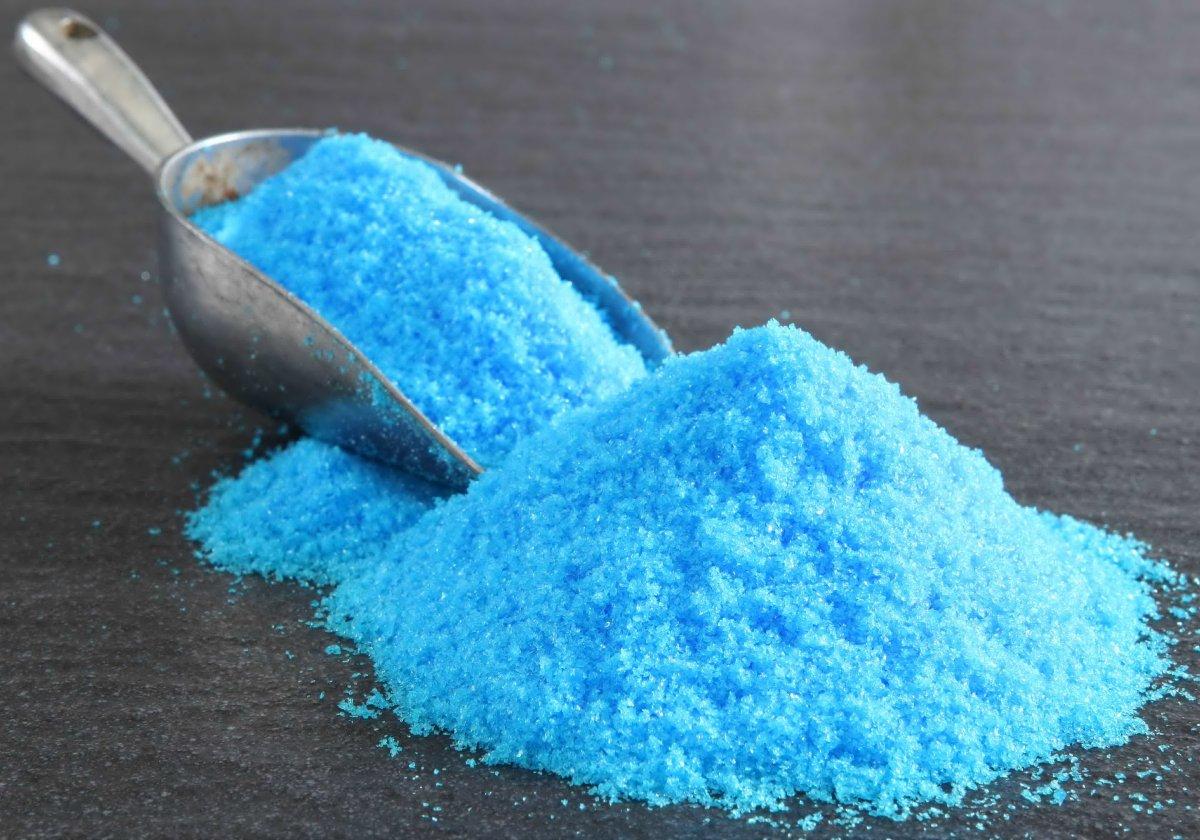
Both chemicals have an unlimited shelf life in dry form, but the solution used loses its properties over time. Therefore, it is recommended to prepare only the amount of solution needed for a single treatment.
Important to know! Copper and iron sulfate should never be diluted in any metal container. For example, in metal containers, the solution will lose its original properties and will corrode the enamel. Glass or plastic containers are best.
Instructions for use
Copper sulfate is often combined with lime to form Bordeaux mixture. It is less toxic because it reduces the concentration of the compound. The dose of copper sulfate can be reduced by adding wood ash or laundry soap to the solution. Furthermore, fruits from treated plants should not be eaten for two weeks.
It is strictly forbidden to mix ferrous sulfate with organophosphorus insecticides and products that dissolve readily in an alkaline environment. Combining ferrous sulfate with various alkaline substances, including lime, is also prohibited.
Scope of application
Copper sulfate has a wide range of uses in gardening and vegetable growing. It's worth noting that this chemical has long been used as a preventative measure against diseases caused by various fungal spores.
Pest control
The most common cucumber pests are spider mites, whiteflies, and aphids. These can appear due to improper plant care or unfavorable climatic conditions. Any of these insects, if not treated promptly, can destroy the seedlings.
Experienced gardeners recommend using a fungicide to control these pests. In this case, spray all the leaves and stems of the plant, but this procedure should be performed no later than a month before the expected harvest.
For example, to eliminate spider mites, as well as for prevention, you can use a solution of copper sulfate (100 grams of powder per 10 liters of water).
Plants should be treated by spraying at temperatures no higher than 30 degrees Celsius. It's important to remember that cucumbers should be treated early in the morning or evening, when the leaves are not exposed to direct sunlight.
Fighting diseases
Quite often, due to improper care, cucumber plants are susceptible to various fungal diseases, which not only affect the quality of the harvest but can also completely destroy the entire plant. Therefore, copper sulfate is used as an effective remedy for existing diseases.
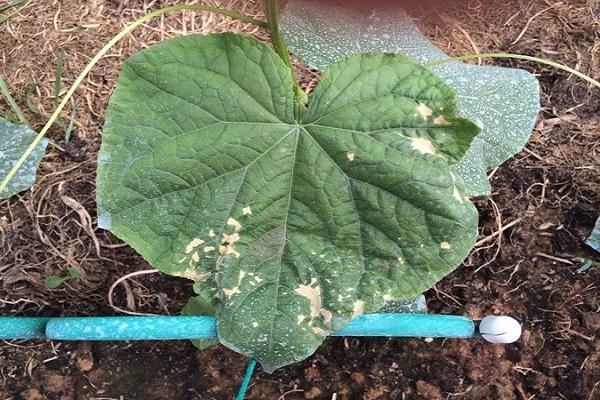
To do this, dilute the appropriate dose of the substance and spray it on the vegetable crop. This helps prevent root diseases. This product can be used not only in outdoor garden beds but also in greenhouse cucumber planting containers.
According to gardeners, the indicated solution can eliminate the following diseases:
- scab;
- drying out;
- moniliosis;
- spotting;
- rot (gray, white, root);
- powdery and downy mildew;
- anthracnose.
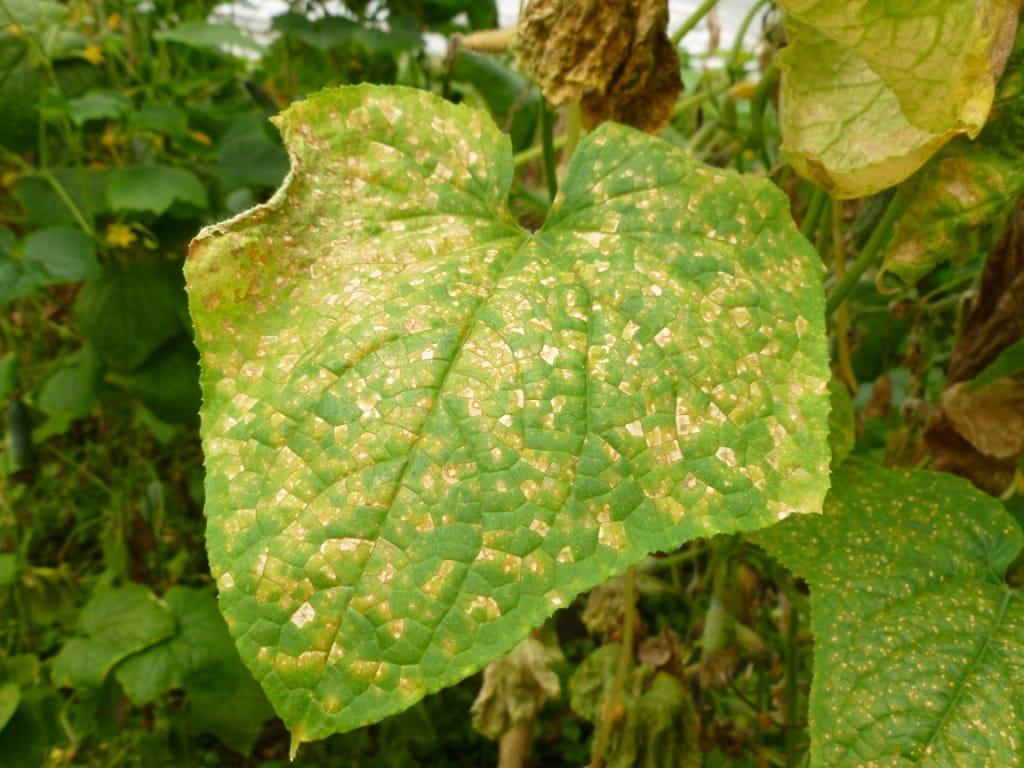
To avoid negative consequences, namely crop loss, you can prepare a solution based on components such as:
- Serum (3 liters) and copper sulfate (10 grams) diluted in 7 liters of water. This solution can be used to eliminate powdery mildew on cucumber leaves. If copper sulfate is unavailable, other copper-containing products can be used instead. The instructions for preparing the solution are provided directly on the packaging.
- To treat root rot, for example, make a solution of 2 teaspoons of copper sulfate and 6 tablespoons of wood ash, combining these ingredients in 1 liter of water. Stir well and let the solution steep for 1 hour. After the specified time, apply the solution to the plant stems with a brush, especially in the root zone.
Use as a fertilizer
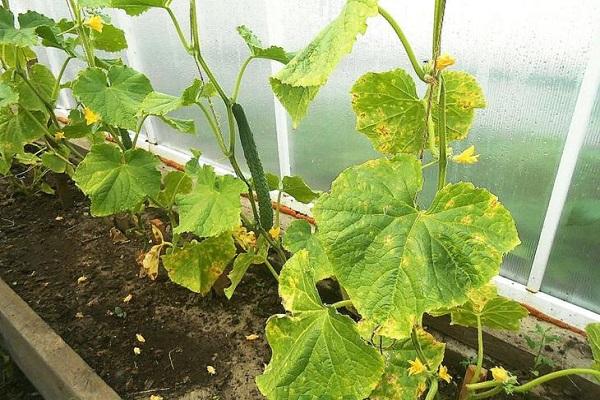
Iron is one of the essential microelements required for the normal development of any plant, as a lack of iron leads to yellowing of cucumber leaves, and subsequently to their drying out.
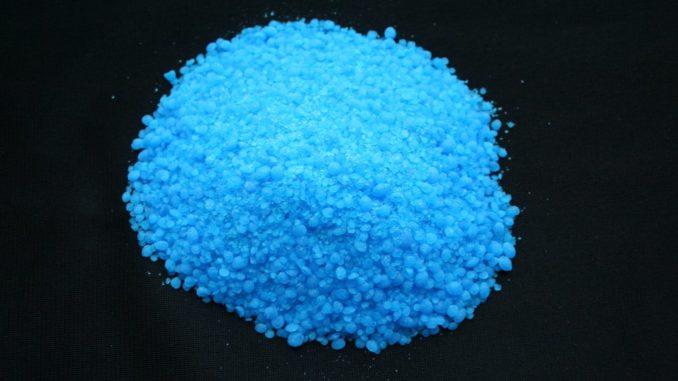
To replenish this micronutrient, it is recommended to fertilize garden crops with ferrous sulfate. In this case, a solution of 10 grams of powder diluted in 10 liters of running water is used. Spray the plant leaves.
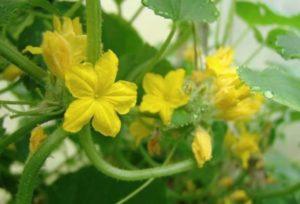
Copper sulfate is also recommended for fertilizing garden crops, but since this substance is toxic, only a small amount will be needed.
To fertilize the root system of cucumber plants, use a 0.02-0.03% solution. To do this, dilute 2-3 grams of powder in 10 liters of water.
How to prepare solutions
First of all, it is important to remember that it is recommended to use a solution of iron and copper sulfate in small doses and immediately after preparation, since after standing for some time, it loses its properties.
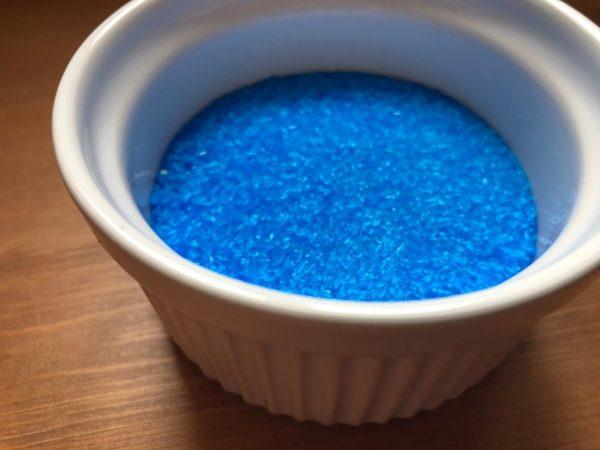
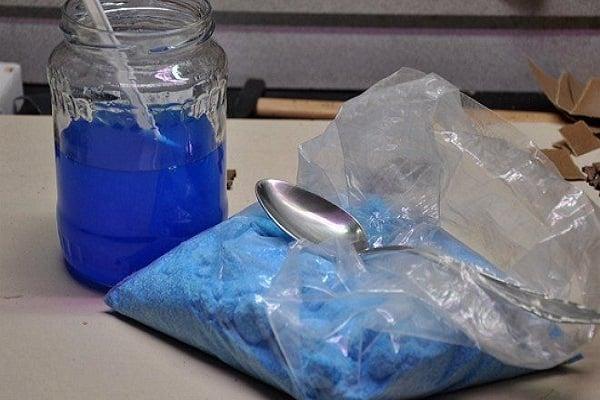
Since both powders dissolve well in water, copper sulfate should be diluted in warm water (40-500°C), stirring until the crystals are completely dissolved, then adding cold liquid to the required volume. For example, you can use a liter jar to dissolve the powder, then pour the contents into a bucket, adding the required amount of water.
Technology for treating cucumbers from insects and diseases
Copper sulfate is used with a calculated dosage, both as a solution and in dry form. Application methods vary depending on the specific disease. For example:
- When the first signs of gray mold appear, sprinkle the affected areas with a dry mixture of 1 tablespoon of wood ash and 1 teaspoon of copper sulfate.
- To combat root rot, we recommend making a solution of 2 tablespoons of copper sulfate and 6 tablespoons of wood ash mixed in 1 liter of water. Apply this mixture to the stems, especially around the roots.
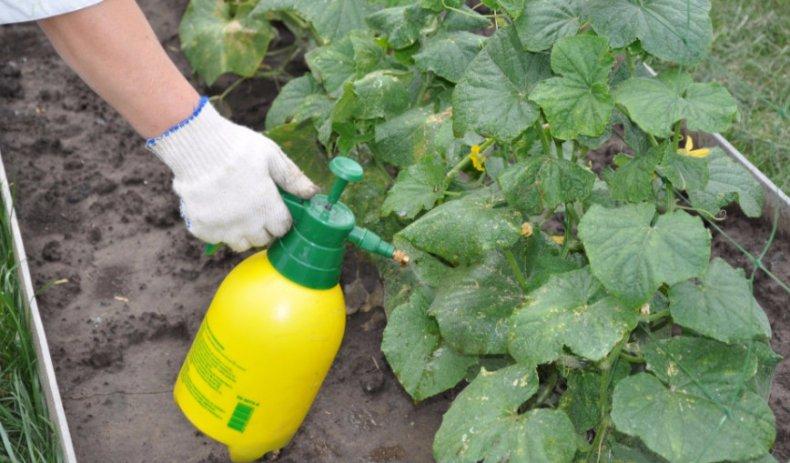
However, ferrous sulfate must be used exclusively in dissolved form, taking into account the required dosage for each type of cucumber disease.
Application for disinfection of greenhouses
Copper sulfate is considered an excellent disinfectant. It also helps combat diseases and all kinds of garden pests. It is often used as a preventative measure.
This prevents the formation of fungi and mold in greenhouses.
For this purpose, a more concentrated solution is used to treat all wooden structures of the greenhouse. If the structure has metal beams, it is recommended to paint them with oil-based paint. In addition, all equipment used in the greenhouse should be disinfected.
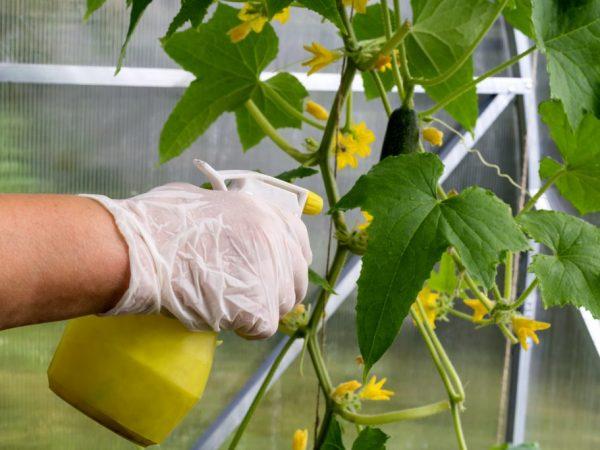
Plants should be sprayed as needed. To disinfect the soil in a greenhouse, prepare a solution of 20 grams of copper sulfate and 10 grams of urea. These components are diluted in 10 liters of water. Apply the prepared solution to the soil, using 1 liter per 10 square meters.
How to apply the product as a fertilizer
Copper sulfate is often recommended for soils such as sandstone or peat, as well as those with a poor copper composition. To correct copper deficiency, apply the specified chemical at a rate of 1 gram per square meter. However, this application should be performed no more than once a year. For soils with a different composition, it is recommended to apply this fertilizer approximately once every 5 years.
Take a look Also

Iron sulfate is not recommended for direct application to growing plants, as it can burn the root system. A better option is to apply ferrous sulfate along with compost when tilling the soil in the fall. This way, the soil will be saturated with this micronutrient over the winter and will be able to provide the plants with the necessary nutrients in the spring.
What are the dangers of fungicide? Precautionary measures
Copper sulfate is a fairly toxic substance, so it's essential to follow the safety precautions when handling it. To avoid harm to the body, minimize contact with crystalline copper.
To do this, you must wear gloves, tight-fitting glasses, and clothing that covers your skin as much as possible, as well as use a respirator when working.
It's important to treat plants when there's no wind outside to ensure safety. If precautions are ignored, poisoning can occur if this product enters the body. The main symptoms may include:
- vomiting, nausea;
- tachycardia;
- weakness;
- epigastric pain;
- toxic shock;
- itching and allergic rashes on the skin.
Important to know! Copper sulfate is a toxic substance, so in addition to safety precautions, it's essential to calculate the correct amount of solution, as it should not be poured onto the ground to avoid contamination of groundwater.
Analogues and substitutes
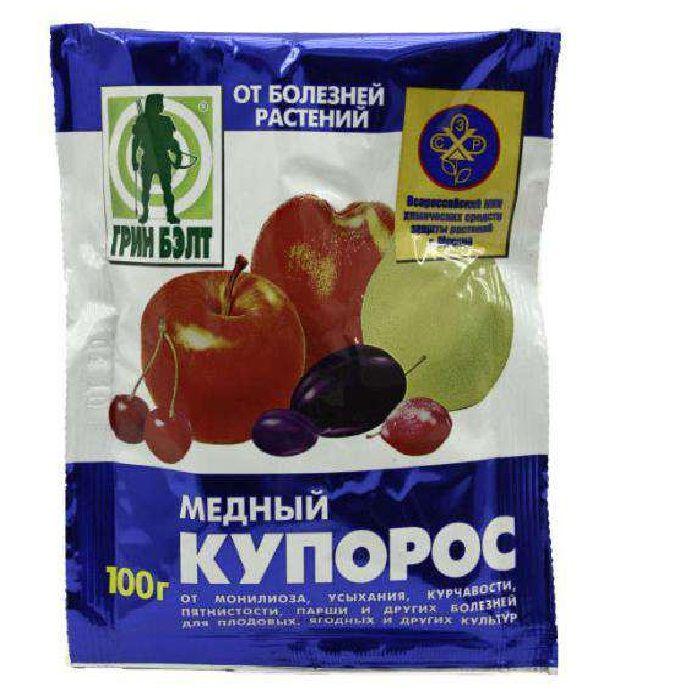
Today, gardening stores offer a wide range of products for eliminating all kinds of pathogenic fungi. Copper-containing products are also available, such as Bordeaux mixture, Hom, and Oxyhom—all of which have a similar spectrum of action. However, they are less toxic and don't burn foliage, as copper sulfate does when used in high concentrations.
Reviews of the product from experienced gardeners
Copper sulfate is considered a toxic substance, which has led to much debate among gardeners about its use as a fertilizer. This is because copper accumulates, meaning that at high concentrations it can not only harm plants but also be absorbed by fruits that are subsequently eaten.
However, spraying disease-damaged garden crops is less dangerous, but only if such treatment is carried out with a solution containing a minimum amount of the preparation and not very frequently.
It should also be noted that gardeners who try to grow fruits and vegetables without the use of chemicals believe that such a preparation can be replaced with less toxic means for combating plant diseases and pests.
Related posts:
 Instructions for using copper sulfate in gardening, how to dilute it
 How to prepare a solution for treating grapes with copper sulfate in the summer: instructions for use
 Instructions for using ferrous sulfate for treating grapes
 Ferrous sulfate formula and instructions for use of iron sulfate
 Description of the best varieties of Chinese cucumbers, planting, growing and care
 Description of unusual methods for planting and growing cucumbers
 Is it possible to soak treated cucumber seeds before planting and how to do it correctly?
 How to care for cucumbers in open ground from planting to harvesting