
- Description of humic substances and their effect on plants
- What is included in the composition and how effective is it?
- Types of humic fertilizers
- Peat-humic
- Liquid
- Terms of Use
- For seed treatment
- For root feeding
- For foliar treatment (spraying)
- Precautionary measures
- Are there any contraindications for their use?
- How and how long to store
The use of humic fertilizers can achieve a number of positive effects. These products have a positive impact on crop development and contribute to improved fruit flavor. To ensure the desired effect, it is important to strictly follow the instructions for use. Adherence to safety precautions when working with these products is also crucial.
Description of humic substances and their effect on plants
Humic acids, or humates, are made from brown coal, sapropel, or peat. To achieve this, the base substance is treated with a weak alkaline solution. Essentially, humic acids are a concentrate of soil humus—a compound that activates the functions of soil microorganisms. This also promotes plant growth.
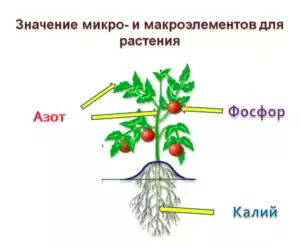
Although humates are commonly referred to as fertilizers, they are essentially natural growth stimulants. These acids themselves do not provide crops with nutrients. However, when applied to the soil, they increase its permeability to water and air. When humates are absorbed by the root system, metabolic processes are improved and protein production is increased.
Humic fertilizers are used to solve the following problems:
- treatment of the roots of ornamental plants, soaking of seeds before planting;
- fertilizing crops after transplantation – this helps reduce the stress that occurs during such a procedure;
- fertilizing crops during active development and flowering;
- soil saturation after harvest;
- stimulating compost maturation;
- increasing frost resistance of perennials, fruit trees and shrubs.
What is included in the composition and how effective is it?
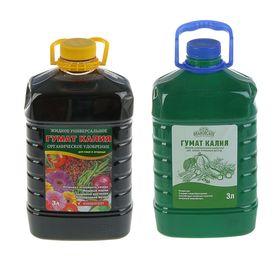
Humates are most often produced in liquid form. They are dark brown liquids with a distinct odor. These products are based on composts made from bird droppings, manure, and plant residues. They may also contain brown coal or sapropel.
Types of humic fertilizers
Humic fertilizers come in various forms. Growth stimulants are also available. These products can also be used to stimulate compost maturation and enrich the soil with nutrients.
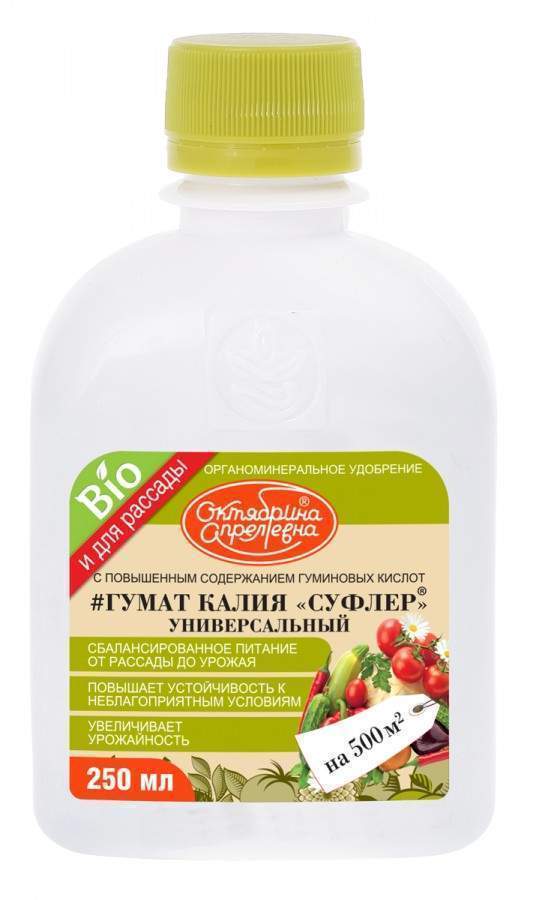
Liquid substances are considered the most popular, as they can easily be supplemented with beneficial elements. Furthermore, such products are virtually non-irritating to the root system.
Peat-humic
These preparations are made from peat. Peat-humic substances can be used to treat root systems, seeds, bulbs, and root vegetables. They are ideal for indoor plants and ornamental crops. These substances have a rejuvenating effect and promote lush, long-lasting flowering.
Dry peat-humic substances effectively combat pathogens. Therefore, they are often used to treat harvested vegetables and grains.
Liquid
This group of products includes natural immunomodulators that stimulate crop development, protect them from stress, and provide nutrients. These products can be used at various stages – from seed treatment before planting to soil application after harvest. These substances are often used in organic farming.
Terms of Use
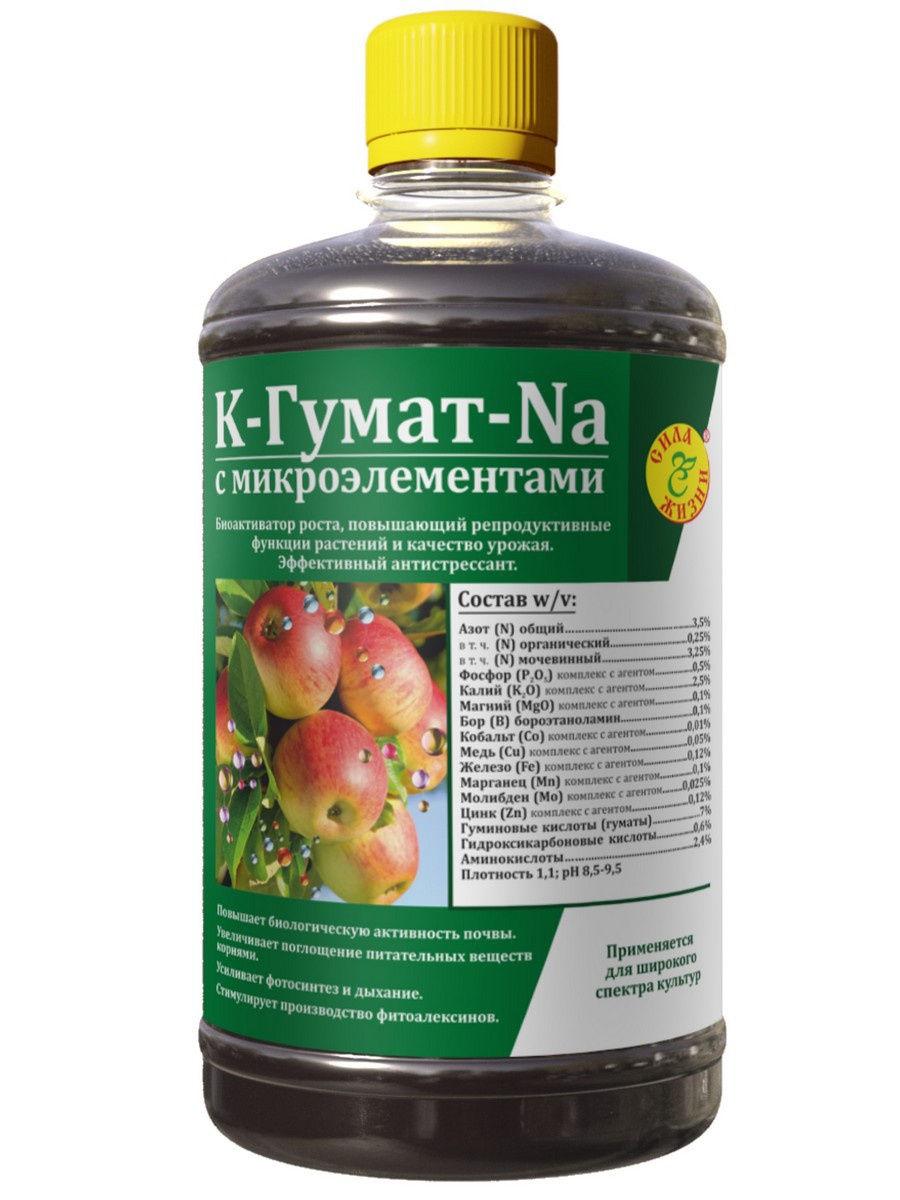
To achieve the desired result, humic acid concentrate should be diluted with water. Follow the instructions on the packaging.
For seed treatment
Seeds, bulbs, and tubers can be soaked in a humate solution. A working solution with a concentration of 0.1% is recommended. The seeds should be soaked in the solution for 18 hours. This procedure can improve the germination rate of the shoots.
For root feeding
Humic root dressings should be applied several times per season. The first application is after planting. Seedlings should be watered two weeks after planting. The second application is at the beginning of flowering, and the third is during fruit formation. The final application is before harvest.
For foliar treatment (spraying)
Leaves should be treated with humic substances twice during the season. The concentrate should be mixed with water. To prepare a working solution, it is recommended to use 1 tablespoon of the product per 10 liters of liquid. Spraying should be done on cloudy days or in the evenings. Failure to do so can result in leaf burn. Experts recommend using the solution during the crown formation stage and after flowering.
Precautionary measures
Humates are organic substances, so they are considered quite safe for humans. However, personal protective equipment is required when working with these substances. If the substances come into contact with skin or eyes, rinse the affected area with copious amounts of water. If accidentally swallowed, drink 200-400 milliliters of clean water and induce vomiting.
Are there any contraindications for their use?
Humic fertilizers are not always suitable. They are prohibited for use on conifers. These plants obtain nitrogen from the atmosphere. Adding additional minerals can lead to an overdose.
Humic acids should also not be used on legumes, corn, or sunflowers. They do not improve their yields and will have no effect.
How and how long to store
A prepared humic fertilizer solution can be stored for a maximum of 1 week. Complexes sold in gardening stores can be stored in an unopened container for 2-3 years. The exact shelf life depends on the composition and packaging. Such substances should be stored in closed, dry areas.
Humic fertilizers are fairly common products that have a beneficial effect on crop growth and development. However, it's important to use these products strictly according to the instructions.