Complex fertilizers are especially popular among gardeners and horticulturists, significantly simplifying crop care. Monopotassium phosphate enhances plant defenses (fighting fungal and bacterial diseases) and improves crop quality. It combines well with various water-soluble fertilizers.
Description and composition of the product, operating principle
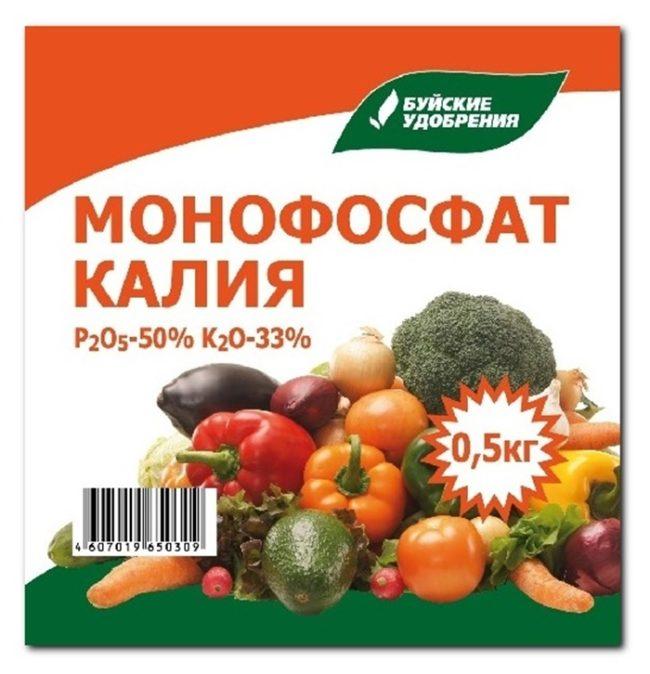
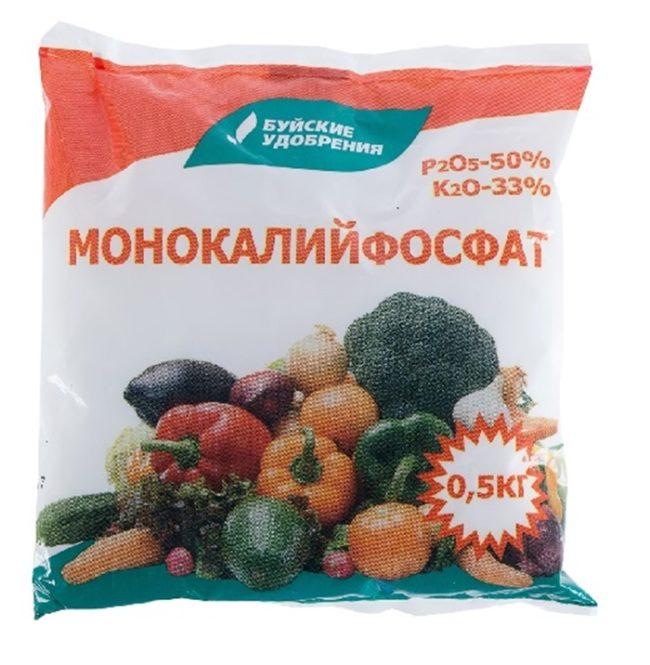
Phosphorus-potassium complex fertilizer is produced as colorless crystals. Monosulfate is considered a complex product, consisting of the following elements:
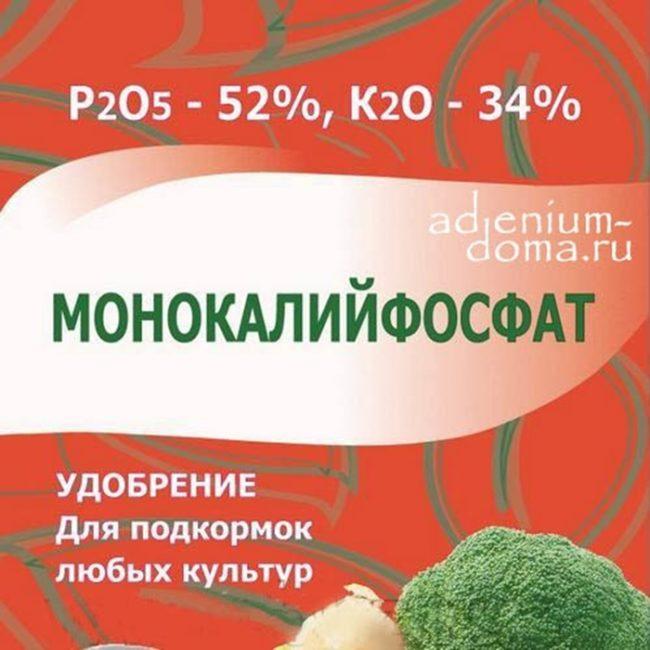
- phosphorus (P₂O₅ – 52%) accelerates metabolic processes in cells, increases resistance to diseases, promotes better ripening of seeds and fruits;
- Potassium (K2O – 34%) is involved in the formation of carbohydrates and proteins in plant cells, controls and maintains water content in plant tissues, promotes resistance to cold and disease, and improves fruit flavor.
The product boasts an optimal potassium-phosphorus ratio. It is effective in all soil types and is suitable for fertilizing plants grown both outdoors and indoors. Granules are available in polyethylene bags weighing 0.1-25 kg or in small plastic canisters.
Purpose
This fertilizer is essential for growing ornamental plants. Proper use promotes abundant and prolonged flowering in hanging and potted plants. Emergency foliar feeding is recommended when signs of acute potassium deficiency appear (brown spots appear on leaf blades, foliage begins to curl).
Monocalcium reduces ovary drop, improves fruiting and shelf life of all garden crops, and promotes the active accumulation of vitamins and sugars.
Timely spraying of plants prevents the occurrence and spread of powdery mildew (effective on grapes, apple trees, cucumbers, and roses). It is recommended to treat grapes to promote strong shoots.
Terms of Use
It's important to apply fertilizer according to the manufacturer's recommendations. It's also important to adhere to the application rates:
| Processing object | Consumption rates g/l | Features of application |
| Seedlings of flowers and vegetables | 7-10 | The treatment is carried out one and a half to two weeks after picking or transplanting into the ground |
| Vegetables | 7.5-15.0 | The first time fertilizer is applied at the beginning of fruiting. Fertilizer is applied again 2-3 weeks after the first application. |
| Ornamental shrubs, fruit and berry bushes | 10-15 | The first feeding is applied immediately after flowering, and the procedure is repeated after 2-3 weeks. The final fertilization is done in mid-September. |
| Raspberry | 40 g per bush | They are used before fruiting and in the fall. Before watering, the crystals are applied closer to the roots, sprinkled with a thin layer of soil. |
| Grape | 10-15 | The first time is in late spring to stimulate shoot growth. The second time is during the ripening stage of the crop. |
| Trees | 12-15 | Initially, fertilize crops after flowering, and again after 2-3 weeks. To improve the shelf life of the fruit, it is recommended to apply fertilizers containing calcium. |
The product is most effective during the warmer months (not too hot, moderate humidity). In greenhouses, it is recommended to fertilize beds with regular ventilation and adequate lighting. Only an aqueous solution of the product should be used as fertilizer. The prepared solution should be used immediately and should not be stored.
It is not advisable to fertilize cacti, azaleas, and orchids with monopotassium phosphate.

Precautionary measures
When using any fertilizer, follow standard safety precautions. Single-potassium fertilizers are non-toxic, but when spraying plants, wear personal protective equipment: a respirator, safety glasses, rubber gloves, and boots. Drinking, smoking, eating, and removing personal protective equipment are prohibited while working.
After finishing the work, it is recommended to wash your hands with soap and runny water. If monopotassium phosphate is accidentally swallowed, drink 2-3 glasses of water and induce vomiting.
Is compatibility possible?
The product can be used as a stand-alone fertilizer or in mixtures with other fertilizers. Monopotassium phosphate can be combined with nitrate compounds (except calcium nitrate) and sulfate compounds. Typically, tank mixes of soluble sulfate fertilizers do not produce sediment or turbidity.
Expiration date and storage conditions
When using fertilizer, keep in mind that the crystals absorb water readily, and if wet, the product quickly loses its effectiveness. Therefore, store the product in a dry, well-ventilated area, separate from food, animal feed, and drinking water.
Unused granules should be stored in tightly sealed, labeled containers. Shelf life is 3 years from the date of manufacture.

Analogues
Various fertilizers can be used to enhance plant defenses and increase yields. Several monopotassium phosphate analogs are popular.
Potassium nitrate contains one part nitrogen and two parts potassium nitrate. The fertilizer is produced as a colorless, odorless powder. Nitrogen promotes foliar growth, while potassium promotes flowering and fruiting. The product is effective in a variety of soils (sandy, clay, and loam). It is used to feed root crops, berries, fruit trees, and berry and ornamental shrubs. It is not recommended for use on cabbage, potatoes, greens, and radishes.
The multi-component fertilizer "Superphosphate" is available as gray granules or powder. It is effective on all soil types and is used as a primary pre-sowing or at-sowing fertilizer. The granules' effectiveness is enhanced when combined with limestone, chalk, and humus. It stimulates tuber and root development, improves the flavor of berries and fruits, and slows plant aging.
Organic farmers can use wood ash. Ash from young trees and dry grass contains increased amounts of potassium. This substance improves soil structure and promotes air and water permeability. Its use helps protect the root system from rot. Ash is beneficial for the development of tomatoes, eggplants, potatoes, and bell peppers. The powder is added to the soil during early spring tilling of the beds.
Monopotassium phosphate fertilizer, thanks to its multi-component composition, strengthens plant immunity and root systems and stimulates crop growth. Applying it to shrubs, trees, and vegetable crops according to the manufacturer's recommendations increases yields.
Take a look Also