
Potassium and nitrogen are considered essential nutrients. Fertilizers containing them are used in agriculture and home gardens. Let's look at the composition, physical and chemical properties, and purpose of potassium nitrate. We'll also discuss dosage and application instructions. We'll also discuss the fertilizer's advantages and disadvantages. Compatibility and similar products for possible alternatives are also discussed.
Description, composition and mechanism of operation
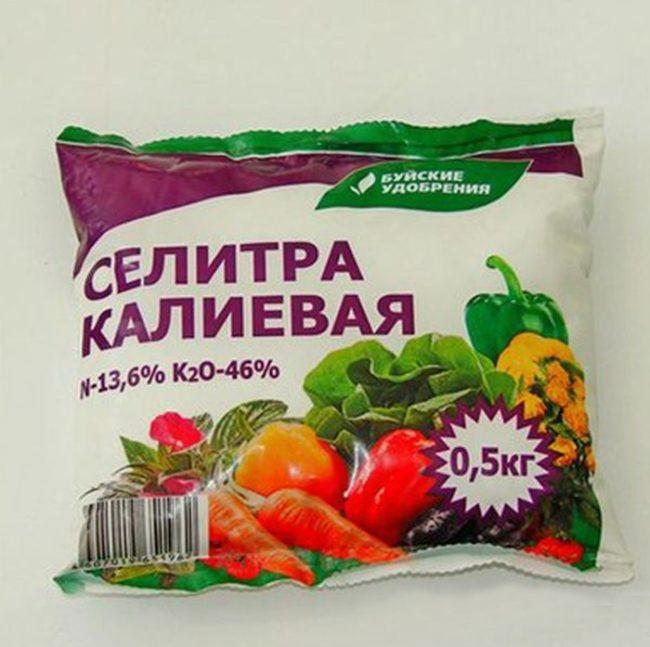
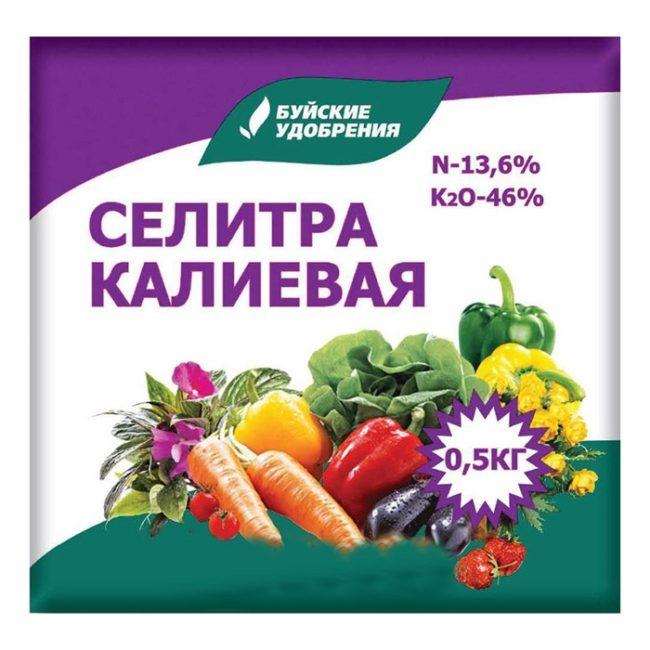
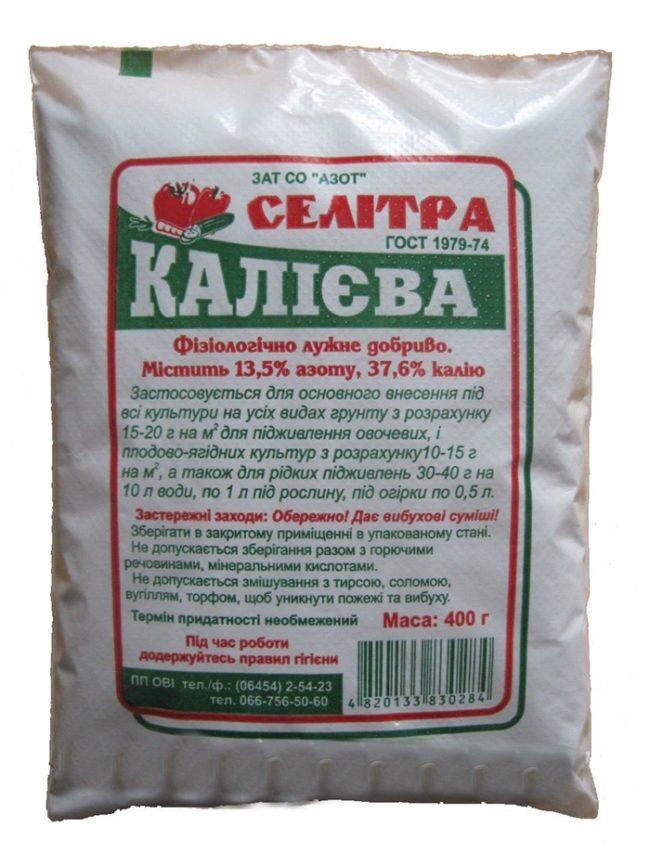
Potassium nitrate is a complex, concentrated fertilizer that is perfectly soluble in water. Formula KNO3, it contains primarily potassium (36-38.2%), nitrogen (13-13.5%), and phosphorus (0.9-1.3%).
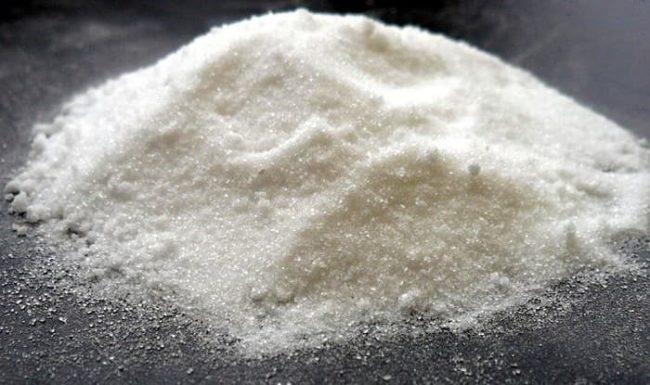
This alkaline fertilizer is suitable for use in acidic soils. It increases acidity, making nutrients more available to plants. Potassium nitrate is a white or slightly yellowish crystalline salt.
Potassium nitrate has a density of 2.11 g/cm³, and its crystals melt at 334°C. It dissolves 31.5 g in 100 g of water at 20°C, 63.9 g at 40°C, and 109.9 g at 60°C, meaning the fertilizer should be dissolved in warm water. The molar mass of the substance is 101.1032 g/mol.
Potassium nitrate is a natural mineral, one of the largest deposits of which is located in the East Indies, which is why it has another name – Indian nitrate.
Purpose
Nitrate is used as a complex fertilizer in agriculture and private farms. It is used as a top dressing for all crops. It is used as a base dressing, as a supplement to vegetable crops, and in gardening for trees and shrubs.
In industry, potassium nitrate is used for optical glassmaking, for brightening crystal and glass, and for strengthening glassware. It is also employed in the vacuum industry, in the production of enamels, thermal salts, and heat transfer fluids. It is also used as a raw material for the manufacture of black powder. Potassium nitrate is also used as a preservative in the food industry.
Nitrate's behavior in soil is determined by its interaction with the soil complex and solution. Once in the soil, it quickly dissolves and becomes available for uptake by plants at any stage of development.
Instructions for use
Fertilizer dosage is calculated based on the amount of nitrogen and potassium already present in the soil and the region's climatic conditions. Potassium nitrate is suitable for application to any soil type. Wet soil can cause nitrogen loss.
The substance does not contain chlorine, so it is suitable for use on crops that cannot tolerate this element.
Suitable for flowers. Can be applied throughout the growing season. Late fall fertilization with potassium nitrate increases tree frost resistance.
The use of potassium nitrate optimizes root absorption, normalizes respiration and photosynthesis, and improves plant tissue structure. It increases plant resistance to harmful environmental conditions. Optimal nutrition promotes high-quality fruits and root vegetables, reduces cracking, and increases plant yield.
Potassium nitrate is used for root and foliar feeding of plants, applied in the form of a solution (it dissolves well when heated in water):
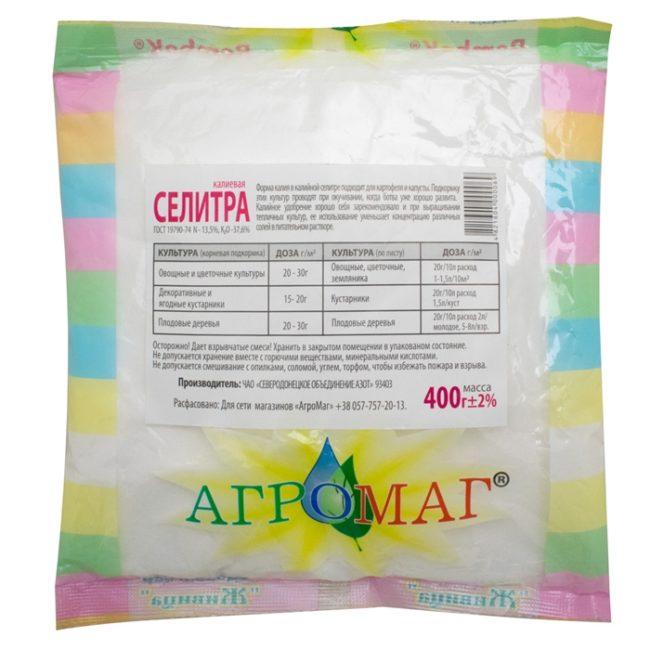
- for vegetables and flowers, dissolve 1-1.5 kg per 100 liters;
- for bushes and berries – 1-2 kg;
- for fruit crops – 2.5 kg.
This solution is used to fertilize crops every 1.5-2 weeks. For foliar application, use a weak 1.5-2% solution and spray the plants.
Recommended application rate of fertilizer solution: for vegetables, strawberries, and flowers – 1-1.5 liters per 10 square meters; for shrubs – 1.5 liters per plant; for each tree – 2 liters per young tree; for mature trees – 5-8 liters. The number of foliar applications is 2-4 per season.
Safety precautions
Potassium nitrate is not a toxic substance, so there is no need to wear protective clothing, goggles, or a mask. However, the substance is irritating to the skin, so wear rubber gloves when handling it. After handling, wash your hands with soap and rinse any skin that may have come into contact with the solution.

Storage rules and periods
Decomposition may occur in high humidity. To prevent deterioration, store the substance in its original, unopened packaging.
Potassium nitrate can react with flammable substances, so it should be stored away from potential fire sources and radiators. Keep the fertilizer out of reach of children and animals, as it can cause poisoning if ingested.
Advantages and disadvantages
Potassium nitrate has both positive and negative aspects. The positive aspects include:
- universality, suitable for all plants;
- regulation of plant nutrition;
- long shelf life;
- can be used throughout the season;
- suitability for basic and additional feeding.
Disadvantages: It contains no trace elements, so other fertilizers must be used for optimal plant nutrition. It is flammable, so proper storage conditions must be observed, keeping away from heat.
Is compatibility possible?
Whether or not saltpeter can be mixed with other fertilizers depends on the fertilizer. It can be combined with ash, urea, potassium chloride, rock phosphate, and ammonium nitrate. The mixtures can be stored for some time without losing their effectiveness.
Mixing with superphosphate is also permitted, but only immediately before use; it should not be stored for long periods. Mixing with ammonium sulfate and manure is strictly prohibited.
What to replace it with
Potassium nitrate is a component of fertilizers such as potassium nitrate and potassium nitrite, along with various microelements. They are similar in action and purpose, so they can be used interchangeably. Fertilizers containing these elements can be used to supply potassium and nitrogen to crops. Dosages will vary.
Potassium nitrate has long proven its effectiveness in fields and gardens. It is one of the most frequently used and highly effective fertilizers for agricultural crops. It supplies plants with nitrogen and potassium, elements responsible for the growth and development of plant tissue and roots.
It dissolves quickly and starts working immediately. It also has a long-lasting effect, so it can be used for both basic application and for ongoing root and foliar feeding. It can be mixed with other fertilizers, but can also be used on its own. It has a long shelf life under standard fertilizer storage conditions, is inexpensive, and is readily available at gardening stores.