
- What is mulching?
- Advantages and disadvantages
- Types of mulch and how to choose the best one
- Rules and timing for mulching garden beds
- Rules for conducting the procedure
- Peat
- moss
- Geotextile and gravel
- Humus and compost
- Paper and cardboard
- Geotextile and bark
- Wood chips from a shredder
- Pine nut shells
- Mulching with grass
- Geotextile and flagstone
- With straw
- With cones
- Sawdust
- Is it worth mulching the soil in a greenhouse?
- Common mistakes
Mulching is considered a fairly simple yet highly effective technique for successful gardening. However, beginning gardeners are often interested in the pressing question: what exactly is mulch? It can be made from organic and inorganic materials. They are spread on the surface of the soil where vegetables, berries, flowers, and other plants are grown.
What is mulching?
Mulching means covering the soil to protect it from harmful insects, low and high temperatures, and pathogenic microorganisms. Natural or artificial materials can be used for insulation.
The main purpose of mulching is to retain moisture in the soil structure, improve air exchange around the root system and soil structure.
By using a mulching layer, the following results can be achieved:
- Prevent moisture evaporation from the soil around the plant root system.
- Protect the root system of crops from extreme temperatures – high and low.
- Achieve optimal acidity parameters for each plant.
- Enrich the soil with useful substances and improve its structure.
- Prevent leaching and weathering of useful elements.
- Improve the functioning of beneficial microorganisms in the soil structure.
- Protect plants from pests.
- Make your garden beds look neater and more natural. Mulching can significantly improve the appearance of your garden.
- Prevent soil from getting on plant foliage when watering.
- Protect your crops from rotting. This is especially important when growing cucumbers, pumpkins, and strawberries.

To ensure mulching achieves the desired effect, it's important to follow a specific schedule. To do this, we recommend the following:
- Remove weeds with roots.
- Loosen the substrate.
- Water the beds. It's important to prevent them from drying out, but avoid overwatering.
- Choose mulch. It can be organic or inorganic.
- Sprinkle the soil with a layer of mulch. Its thickness should be up to 5 centimeters.
- Treat the cover with Fitosporin-M or Aktara. This will help prevent fungal infections or pest attacks.

Advantages and disadvantages
Mulching plantings has the following beneficial properties and advantages:
- improving soil composition without adding nutrients;
- activation of beneficial microorganisms, earthworms and bacteria;
- protection of soil from frost and overheating;
- protection of plantings from weeds;
- reducing the number of waterings;
- eliminating the need for frequent soil loosening.
However, this agricultural technique also has a number of disadvantages:
- Problems with weed removal - these difficulties arise if the gardener has not removed the weeds in advance;
- the risk of rotting and bacterial development occurs when using a mulch layer that is too thick;
- the possibility of slugs appearing is possible when using mown grass as mulch;
- problems with drying out overly moistened beds;
- impact on soil fertility – under the influence of organic mulch it becomes poor in nitrogen;
- Slow warming of the beds in the spring is important when using a mulch layer for the winter.

Types of mulch and how to choose the best one
Mulch is divided into two main categories:
- Organic mulch includes natural materials that decompose. They are considered quite affordable and can be used as fertilizer. This group includes sawdust, straw, fallen leaves, and grass clippings. Moss, nettles, and pine needles are also considered organic mulch.
- Inorganic mulch includes artificial materials. This allows you to choose the most preferred option. The most popular types of inorganic mulch include polyethylene film, agrofibre, expanded clay, stones, gravel, and pebbles.
Take a look Also
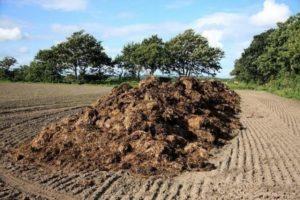
The choice of variety depends largely on the preferences of the gardener, as well as the characteristics of the material.

Rules and timing for mulching garden beds
Mulch usually needs to be applied in the spring. This is done after the snow has melted and the soil has warmed. First, remove the roots of perennial weeds from the garden and apply fertilizer. Then, lay down the chosen mulch. It will protect the plants from overheating in hot weather and prevent moisture loss. When it's time to plant seeds or seedlings, carefully peel back the mulch.
Another method is also acceptable. It's recommended to first plant the beds with cultivated plants, then apply mulch between the rows.
The second time to apply mulch is in October. By this time, the harvest has already been gathered, and the soil is saturated with moisture from the autumn rains. Just like in spring, you first need to prepare the soil by removing weeds and applying fertilizer. If you plan to plant individual plants in the fall, the material can be applied to the crops.
The advantage of autumn mulching is that it protects plants from freezing. The layer also helps retain snow, which is essential for soil moisture. With the arrival of spring, the material should be completely replaced or simply freshly added. This will help compensate for the losses that occurred during the winter.

Rules for conducting the procedure
To ensure that mulching your garden beds produces the desired results, it is important to select the right material for the procedure.
Peat
When mulching garden beds with peat, it's recommended to use a slightly acidic, decomposed material. Low-lying peat has these properties, so it's primarily used. High-lying peat is too loose, so even a slight breeze can blow it away.
It's recommended to apply mulch in a 1-7 cm layer. Experienced gardeners advise applying this material only to crop rows. If the soil is very poor, it's worth adding minerals to the peat moss. This allows you to combine two procedures.

moss
This substance is perfectly acceptable for use as mulch. However, it's important to note that it slightly increases soil acidity, which may not be suitable for all crops. Moss is recommended for forming a protective layer under shrubs and trees. It can also be used for ornamental plants. The layer thickness should be approximately 15 centimeters.
Geotextile and gravel
This option is perfect for coniferous crops.
First, you need to lay geotextile, and then pour in fine gravel.

Humus and compost
Compost is considered one of the best mulch options. However, its main drawback is that it must be prepared in advance. During the season, plant debris must be placed in a compost pile and watered with urea. After a year, the material can be used as mulch.
For poor soil, compost is an excellent covering material. It enriches the soil with nitrogen, which is essential for spring crop growth. This is an excellent solution for fruit trees and shrubs. It is also suitable for grape plantations.
Paper and cardboard
In gardening, mulch is often made from paper or cardboard. However, these materials provide virtually no benefit to plants. There are various methods for using them. For example, you can cut the paper into 1-centimeter strips and lay them on the beds. The layer thickness should be 15 centimeters.
You can also place whole sheets of cardboard under the plants. It's recommended to do this in several layers to avoid gaps.

Geotextile and bark
This is a fairly common option that can also be used for decorative purposes. The materials should be laid out in garden plots or used to landscape surrounding areas. Geotextile is first laid on the ground, followed by bark—pine bark is best.
Wood chips from a shredder
If you have a shredder, you can use it to shred dry branches and other plant materials. They can also be used as mulch.

Pine nut shells
This material not only benefits the soil but is also durable. Therefore, there's no need to constantly replace the protective layer. The shells are ideal for use in flowerbeds. They can also be placed under conifers.
Mulching with grass
Using grass as mulch in your garden doesn't completely solve the weeding problem, but it does provide a good temporary effect. The effect lasts for 1-2 months. It's also recommended to place grass under vegetable or fruit and berry plants. This mulch can also be used as a fertilizer.
Geotextile and flagstone
Flagstone is durable, but quite expensive. Therefore, it is recommended to use it in combination with crushed bark and lay it on a geotextile base.
With straw
Straw is an excellent mulch material suitable for vegetables and ornamental plants. It's best to use straw from your garden's green manure crops. It's recommended to chop it into pieces before use. The pieces should be no more than 5 centimeters long.
For young plants in the spring, rotted straw is better. Fresh straw can damage delicate plants. To ensure the material rots, it should be placed in a compost pile in the fall. This way, the material can be spread on the beds early in the season.

With cones
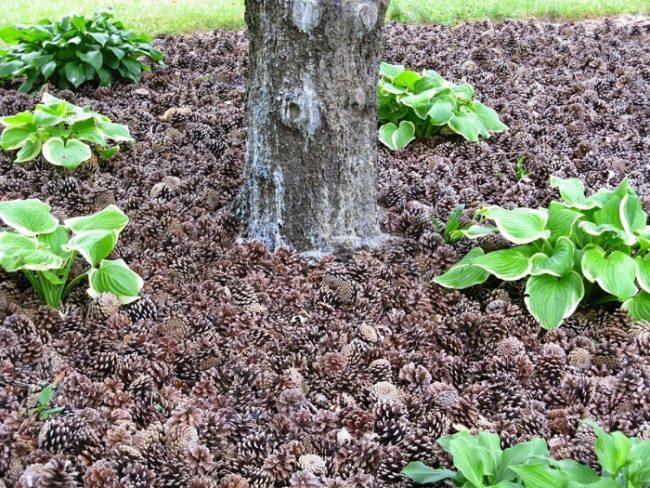
Mulching garden beds with pine cones is considered quite beneficial. It helps retain moisture in the soil and create a beautiful design. This material is often used to create decorative flower beds. Pine cones are most often combined with a small amount of bark and moss.
Sawdust
Fresh sawdust should not be used for plants. It is recommended to first prepare it by turning it into humus. Sawdust takes a very long time to rot naturally, so this process should be accelerated. To do this, layer sawdust, manure, ash, and food scraps. Urea should be added to the mixture. Use one kilogram of urea per 100 kilograms of wood waste.
Gardeners also use this material in raspberry patches. The shrub tolerates acidic soil well and produces fruit well when grown in it.

Is it worth mulching the soil in a greenhouse?
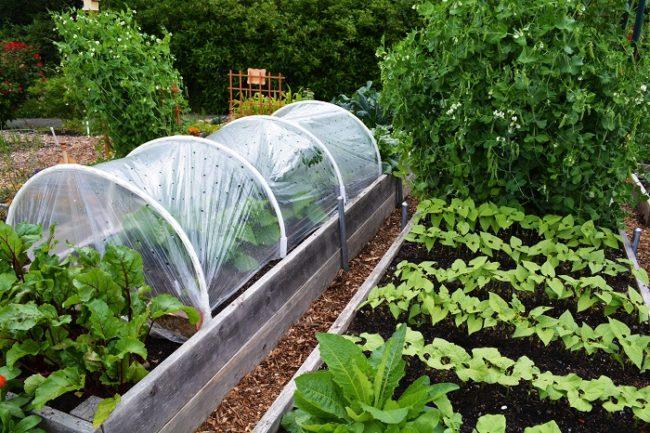
Mulching beds is recommended not only in open ground but also in greenhouses. This significantly extends the fruiting period of crops—by approximately one month.

Both organic and inorganic materials can be used in greenhouses. Each has its own advantages and disadvantages.
When mulching beds in a greenhouse, it is recommended to adhere to the following recommendations:
- At the beginning of the season, the soil should be dug up and all weeds removed. In the fall, dig over the soil and any remaining mulch. This will make an excellent fertilizer.
- For vegetables and flower crops, mulching should be applied to the entire area, with a layer of at least 10 centimeters around the plants.
- It is recommended to mulch trees and shrubs around the crown. The layer thickness should be 10 centimeters. The trunk and graft area should be left untouched.
- Watering after mulching requires a different approach. The soil should be moistened more thoroughly, but still sparingly.
- To protect crops from root dehydration, they should be planted after the mulch has been applied. Careful holes should be made in the mulch.

Common mistakes
When mulching beds, inexperienced gardeners make a number of mistakes:
- Don't loosen the soil before applying the mulch. After rainfall or watering, a dense crust forms on the soil surface. This prevents adequate air access to the root system. All plants require adequate air exchange. Therefore, the soil surface must be loosened regularly. If you neglect this procedure before applying the mulch layer, it will be impossible to do so later, which will negatively impact crop growth.
- Don't wait for the soil to warm up completely. Even after frost has passed and daytime temperatures are high, don't assume the soil has warmed up. If you don't wait for the soil temperature to rise, plants will stunt growth. Furthermore, there's a high risk of rotting. Mulched soil can't dry out and warm up quickly.
- Last year's material is left in the beds. Sometimes, not all organic matter has decomposed by spring. In this case, it can harbor pests and pathogens. All residues must be removed and burned. This will help reduce the number of pathogens. Furthermore, the remains of old materials slow down the warming of the soil.

- The mulch layer is either too thin or too thick. The optimal thickness is 3-7 centimeters. For heavy soils, it should be 3 centimeters, and for light soils, 6-7 centimeters. Applying 1 centimeter of mulch will not produce the desired effect. If the thickness exceeds 10 centimeters, there is a risk of rotting. It is important to allow the mulch to rot gradually, but not directly on the bed.
- They use unsuitable materials. For example, pine needles are not suitable for acidic soil, as they further increase its acidity. Furthermore, many plants simply cannot thrive in highly acidic areas.
- Wrap the plants during the process. Placing the material near trunks and stems can cause root rot. It's important to apply the mulch layer so it doesn't touch the plants.
Mulching garden beds is a crucial procedure that helps retain soil moisture. It also protects plants from weeds and the effects of high or low temperatures. It's important to do all the work correctly.