
The fruiting and flowering of garden and vegetable crops directly depend on proper care, timely fertilization, and feeding. To ensure an environmentally friendly harvest, experienced gardeners strive to use natural organic and mineral substances. Perlite is not rich in micronutrients, but its use in garden and indoor plants accelerates their growth and development, improves yield, marketability, and the taste of the fruit.
Description of perlite
Let's take a closer look at what perlite is, where it comes from, and what it's used for. The word "perlite" is of French origin and translates as "little pearl."
Essentially, this substance is hardened volcanic lava. During a volcanic eruption, the lava is released from the vent and, upon reaching the earth's surface, gradually cools and transforms into volcanic glass, or obsidian. The glass is then exposed to air and precipitation, and after centuries of chemical reactions, it transforms into perlite.
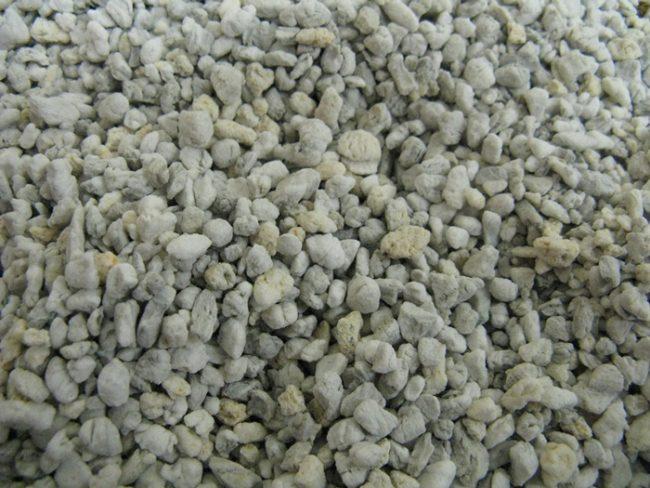
A natural mineral extracted from rocks, perlite occurs naturally in various shades, depending on the impurities it contains.
In this form, the mineral is used in various industries:
- Due to its ability to absorb various substances, perlite is used as an adsorbent in the oil and gas industry;
- in the construction industry, the mineral is used to produce various mixtures and materials, as a replacement for sand, crushed stone and other bulk materials;
- When constructing open sports grounds, to prevent erosion of lawns and fields, perlite is added to the soil;
- in public utilities, the mineral is used to purify water and pipelines from harmful compounds;
- In the food sector, perhalite is used as a filter for purifying various liquid products, such as vegetable oils, juices, nectars and wines;
- In the environmental sphere, the mineral substance is used to cleanse water bodies and soil from toxic and other chemical pollutants.
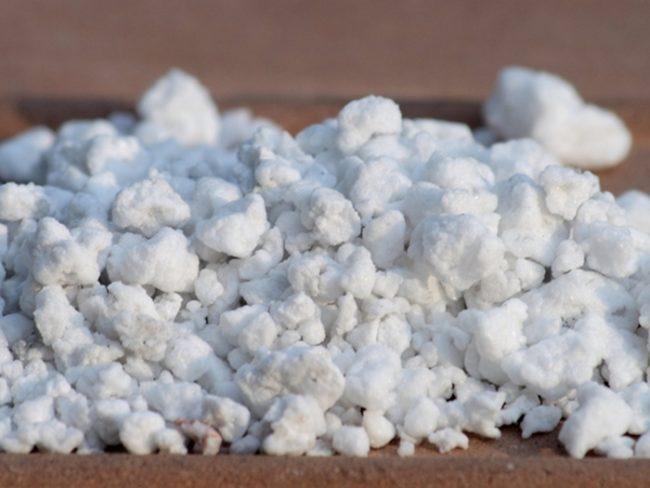
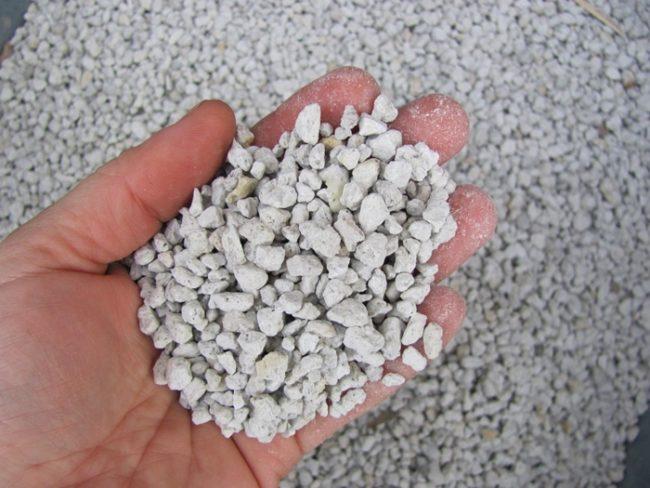
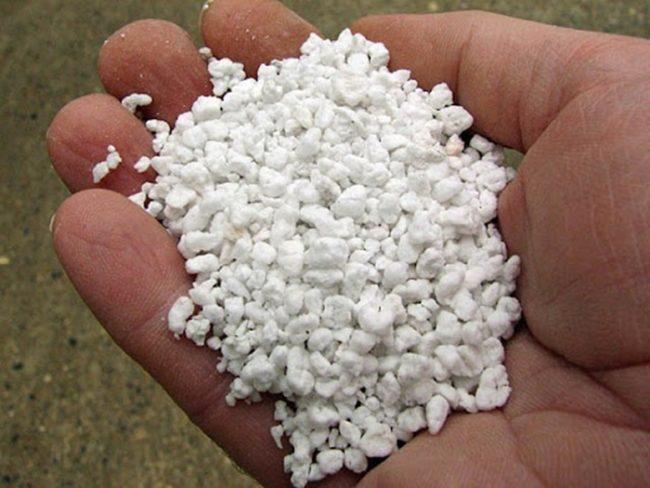
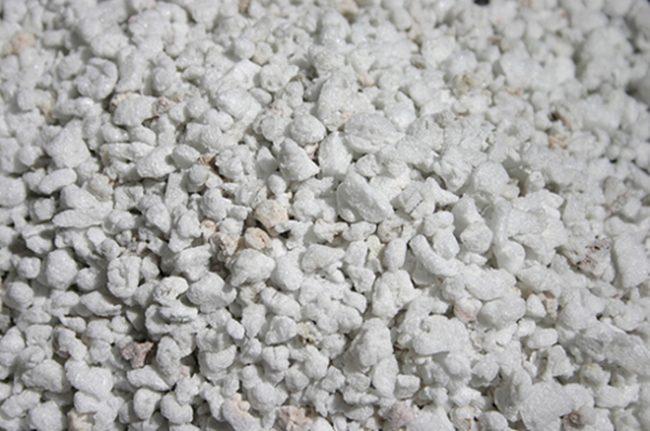
A special type of agroperlite is used in agriculture, horticulture, and floriculture. This substance consists of small white granules obtained by heating natural perlite to temperatures exceeding 900 degrees Celsius. Once applied to the soil, perlite remains in the soil for up to four seasons, after which the mineral naturally decomposes.
Important! Agroperlite is completely non-toxic, safe for humans and animals, and can be used for all types of plants and soil.
What is the composition of the mineral?
Due to its unique composition, perlite is characterized by the following properties:
- resistance to high temperatures;
- hygroscopic, perfectly absorbs and releases moisture;
- under certain conditions, has no shelf life;
- the mineral is not subject to decay processes;
- has high resistance to alkaline and acid reactions.
Agroperlite granules consist of natural compounds of iron, calcium, magnesium, aluminum and silicon.
Important! In addition to moisture, perlite granules absorb nutrients and beneficial substances from the soil, which they then release evenly to plants.
Prescription and dosage
In gardening and floriculture, perlite is used as a beneficial additive to soil mixtures.
- The granules give the soil a crumbly and breathable consistency. Soil with added perlite doesn't form a hard crust and allows moisture and air to pass through perfectly.
- Due to its hygroscopic properties, perlite easily absorbs excess moisture in the soil and releases it when necessary, which reduces the risk of soil drying out and plant death.
- Granules scattered on the surface of the soil reflect sunlight, thereby protecting the rhizomes of various crops from severe overheating.
When used together with fertilizers and top dressings, agroperlite enhances their effect.
In each case, it is necessary to choose the correct dosage of the beneficial mineral:
- To improve the quality of soil for indoor and garden plants, perlite is mixed with fertile substrate in equal proportions;
- the beds are mulched with a 2 cm layer of mineral substance;
- To loosen the soil, add up to 30% perlite to heavy, clayey soil.
Take a look Also
Instructions for use
Agroperlite is widely used in growing indoor, garden and vegetable crops.
- Due to its ability to absorb moisture and create a unique microclimate, perlite granules are used for seed germination. To do this, perlite is thoroughly moistened, mixed with the planting material, and placed in a warm, bright room.
- When growing cuttings and seedlings, rhizomes often rot, and the plants die. To avoid this, use granules of a natural substance instead of soil. This mineral normalizes humidity, inhibits the development of putrefactive and fungal microorganisms, and promotes rapid rooting.
- When growing vegetable seedlings, granules protect the plants from damage by maintaining moderate soil moisture and acidity. To create a fertile substrate, perlite and fertile soil are mixed in equal proportions.
- To improve soil quality when planting seedlings and transplants outdoors, add a mineral supplement to the planting holes and mix it with fertile soil. In this case, use up to 30% of the granules by volume of the substrate.
- The substance's unique hygroscopic properties make it suitable for use as mulch. To achieve this, a 2-3 cm layer of fine granules is spread under plants.
- Perlite is an excellent moisture indicator for indoor plants and flowers. In greenhouses, plant rhizomes often rot and become infected with fungi caused by high humidity. To prevent loss of indoor plants, place a drainage layer of agroperlite at the bottom of flowerpots, pots, or planters, and sprinkle granules on top of the soil.
Tip! You can also use this natural mineral when storing fruit and vegetable crops. To do this, place the fruit in containers and sprinkle each layer with granules.
Precautionary measures
When working with the mineral, small particles, such as dust, separate from the granules, which can be harmful to the respiratory system and eyes. To avoid any unpleasant consequences, wear a mask or respirator before handling the mineral, protect your eyes with goggles, and thoroughly moisten the material.
Where to buy and how much does it cost?
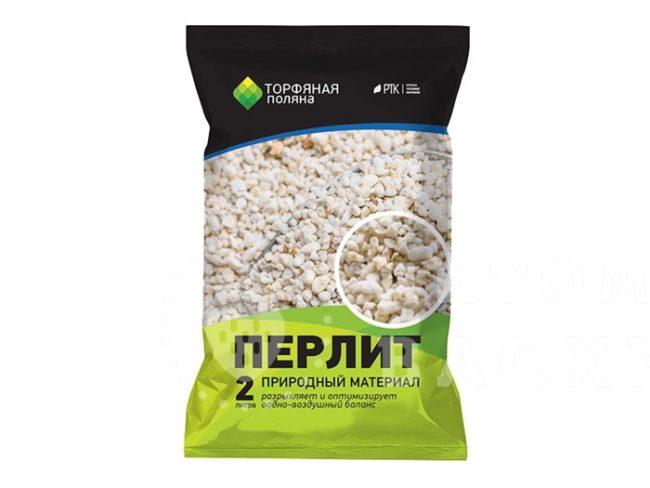
Agroperlite is sold in flower shops and specialized shopping centers in polyethylene packages ranging from 5 to 45 liters. The price of the product depends directly on the package weight. On average, the price per kilogram of the mineral fluctuates between 25 and 50 rubles.
How and how long can it be stored?
Natural volcanic glass has no expiration date. Store the granules in a cool, dark place with moderate humidity.
Analogues
If you can't find agroperlite, it can be easily replaced with similar materials. Expanded clay, which has similar properties, is most often used instead of perlite. However, it's important to keep in mind that expanded clay can become very hot in sunlight, which can negatively impact plant growth.
To increase the effectiveness of the supplement, people purchase vermiculite from garden centers. This mineral is also used in growing garden and indoor plants, but it has additional properties.
- Unlike agroperlite, vermiculite contains macro- and microelements necessary for the full growth and development of plants.
- Natural vermiculite granules are also capable of extracting nutrients and beneficial substances from the soil, which they then release to the root systems of various crops.
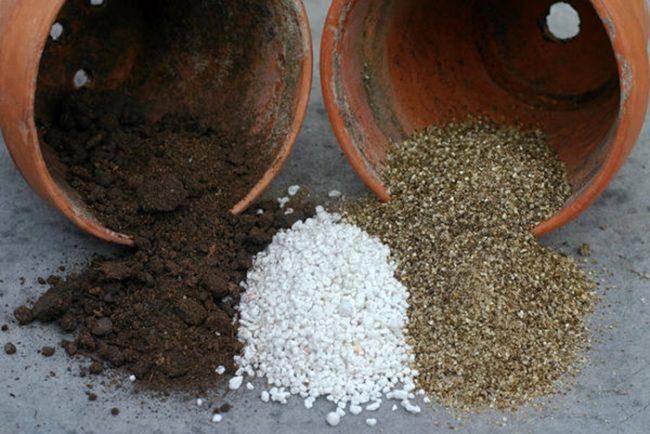
- The substances also differ in appearance. Perlite, thanks to its white granules, has a more aesthetically pleasing appearance than the grayish-brown, loose consistency of vermiculite.
Natural supplements not only increase the productivity of vegetable, berry, and fruit crops, but also produce a healthy, abundant, and environmentally friendly harvest that will not harm human health.