
- What is garden var?
- Advantages and disadvantages
- What is it made of?
- Instructions for use
- For covering trees
- How to vaccinate with it
- Application rules
- How to make the substance yourself
- Using paraffin
- Using beeswax
- How to make cold-resistant putty
- Substitute products
- How to make it softer
- How to wash the substance off plants and hands
Garden pitch is a special substance containing natural ingredients and used to treat damaged trees and shrubs. It can be solid or liquid. You can buy it ready-made or make it yourself. In any case, it's crucial to strictly follow the instructions for use. This will help achieve the desired results without harming the plants.
What is garden var?
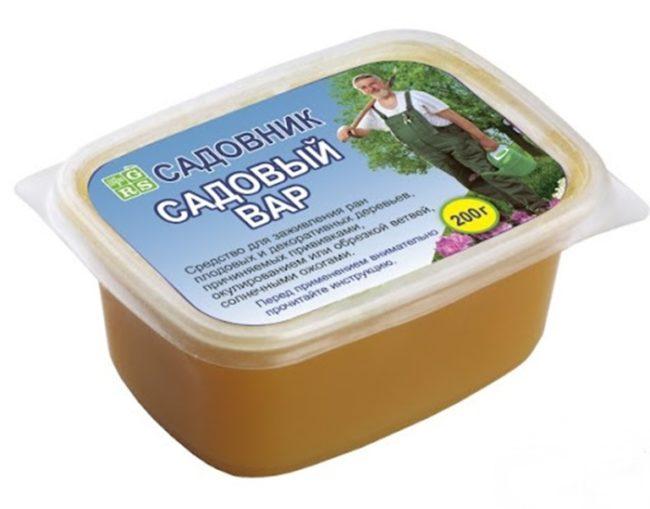
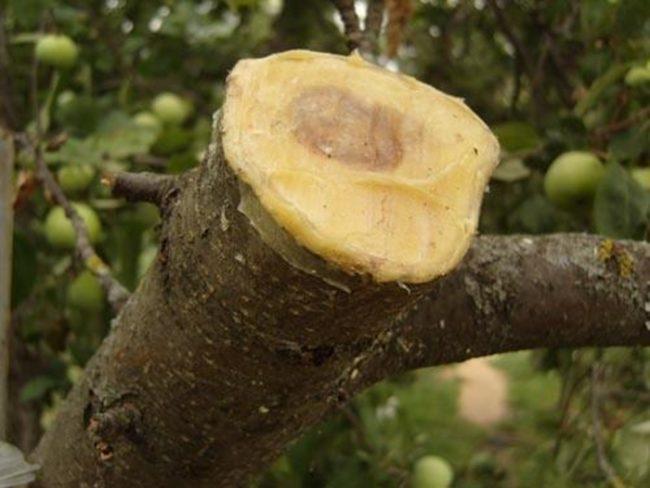
Garden pitch is a mixture used to treat wounds, scratches, and tree cuts. Essentially, it's a natural antiseptic that protects plants from infection. It also promotes wound healing. Another beneficial property of the product is that it inhibits sap flow, preventing fluid from leaking out of plant tissue.
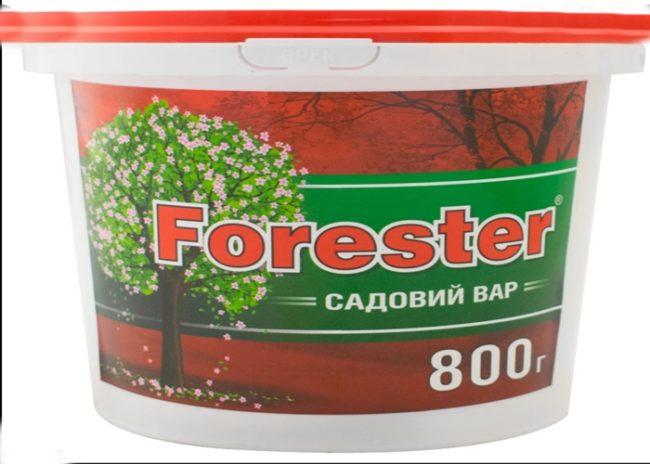
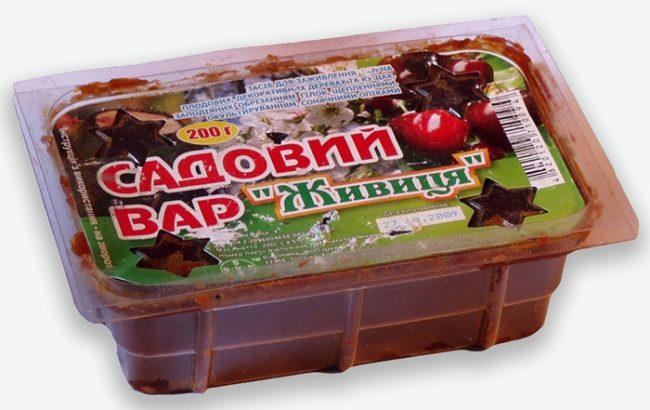
This product can be purchased ready-made. Fasco, for example, offers a high-quality product. It's also perfectly acceptable to make it yourself. You can use paraffin, beeswax, mutton fat, and other ingredients.
Advantages and disadvantages
Garden pitch is an effective and safe remedy that promotes the healing of damaged trees and shrubs. Before using it, it's important to familiarize yourself with its main advantages and disadvantages.
The benefits of the substance include the following:
- ease of use;
- preventing infection from entering the damaged area;
- no dirty marks on hands and clothes after hardening.
However, the composition also has a number of disadvantages:
- a long drying period with large-scale damage - this provokes rotting of this area;
- can only be used in warm weather – at low temperatures the varnish dries out quickly and freezes;
- risk of chemical burns on trunks when using low-quality products.
What is it made of?
Garden pitch usually contains the following components:
- rosin, resin;
- medical alcohol;
- solid oil, drying oil;
- beeswax or propolis;
- edible fats – vegetable or animal compositions can be used;
- agrotechnical mixture – for example, “Heteroauxin”.

Instructions for use
To ensure the product achieves the desired effect, it is important to strictly follow the instructions for its use.
For covering trees
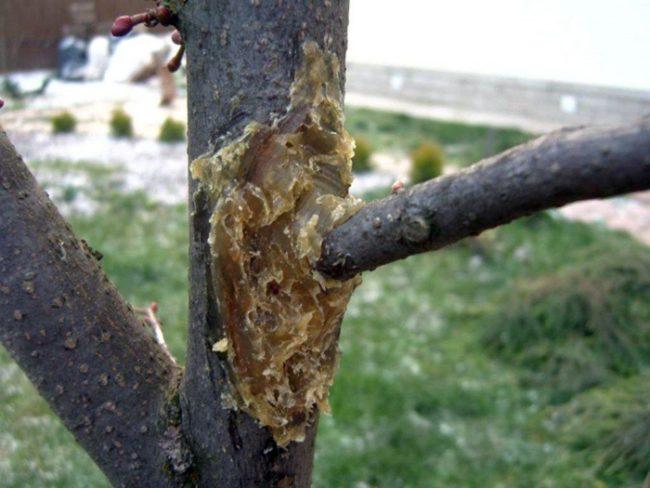
Cracks in tree trunks typically have a small surface area. Therefore, the tar can be applied with a narrow brush. It's also possible to wrap a rag around a stick and thoroughly soak the surface with the mixture.
How to vaccinate with it
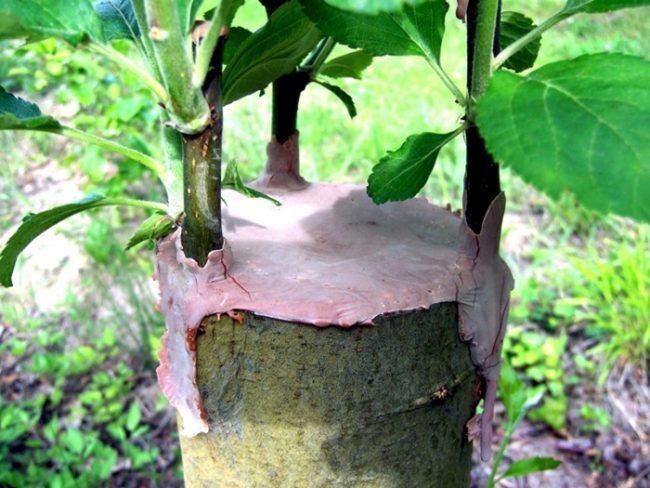
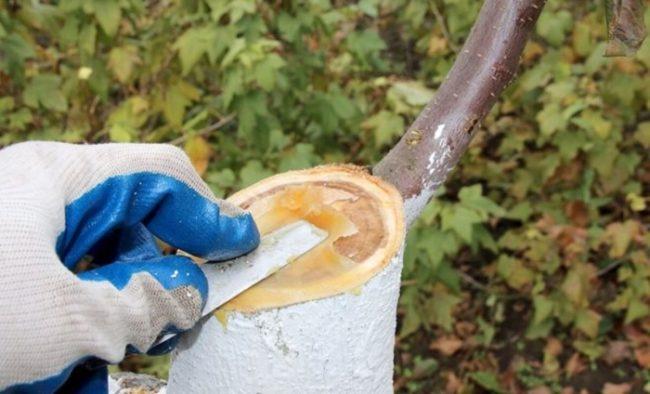
Garden pitch can be used when grafting. To treat the damaged area, make a smooth cut. This will make application much easier. It is recommended to first clean out the old wound with a sharp knife.
Grafting wax can be used for the following grafting methods:
- ablaction;
- budding;
- for the bark.
Application rules
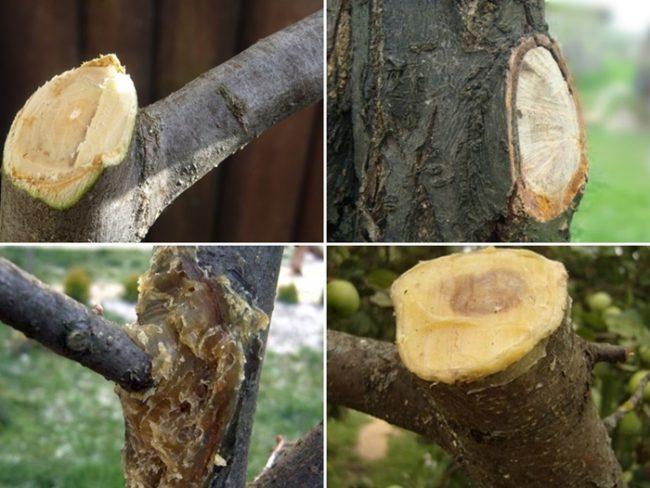
The composition is quite easy to use. If necessary, liquefy the mixture and apply it to the cut. Old wounds should be cleaned first.
When using garden var, it is recommended to adhere to the following rules:
- The composition must be applied as quickly as possible, since it hardens instantly.
- A fresh wound should not be treated immediately, but rather after a few hours or the following day. This will allow it time to dry.
- It is better to carry out work in dry weather.
- If the damage is significant, first rinse it with a weak solution of copper sulfate. Then cover the area with old rags, securing them with rope.
- The mixture should be applied in a thin, even layer. This can be done with a spatula or brush. A roller will also work.
- After a few days or weeks, the putty may crack slightly. If this occurs, it should be removed and a new layer applied. This procedure is recommended until the wound is completely healed.
Work must be done very carefully to avoid further damaging the tree. All equipment must be disinfected in a 1% potassium permanganate solution or another suitable disinfectant.
How to make the substance yourself
If you can't buy a ready-made product, you can make your own. Various materials can be used as a base.
Using paraffin
The easiest way to make garden varnish is with paraffin. To do this, you'll need paraffin, vegetable oil, and rosin in a 3:2:1 ratio.
To prepare the substance, you need to do the following:
- Melt the paraffin over medium heat.
- Grind the rosin into dust and add to the melted paraffin.
- Bring the mixture to a boil and pour in the oil in a thin stream.
- Cook the mixture over medium heat for 10-30 minutes.
- Remove the container from the stove, cool at room temperature and mash until smooth.

Using beeswax
To make garden pitch at home, you can use beeswax and rosin in a 1:2 ratio. You'll also need suet, which you'll need in half the amount of wax. To prepare the mixture, follow these steps:
- Melt the beeswax and bring it to a boil.
- Add the remaining ingredients.
- Simmer for half an hour on low heat.
- Cool and mash.
To prevent the treated area from attracting wasps and bees, it is recommended to cover it with cloth.
How to make cold-resistant putty
This type of varnish is considered a universal remedy. It can be used even in late fall and winter. To make a cold-resistant product, we recommend using the following recipes:
- Reshetnikov's Ointment. To prepare it, you'll need fir resin, wax, and alcohol. Mix these ingredients in a 10:1:1 ratio. Melt the ingredients over low heat, but don't bring them to a boil. Then, let the mixture cool, and add the alcohol.
- Raevsky's composition. To prepare the mixture, take 60 milliliters of rubbing alcohol, 500 grams of wood resin, and 2 tablespoons of linseed oil.
- The composition of Goug. It is made from 10 grams of baking soda, 60 milliliters of rubbing alcohol, 400 grams of pine resin, and 4 grams of gum. First, melt the resin, then add the remaining ingredients, except for the alcohol. The alcohol is added at the very end, once the solution has cooled slightly.
Substitute products
Garden pitch can be replaced with the following products:
- Soil lump sealant. This remedy is recommended for use after unsuccessful pruning or sawing. To apply the lump of soil, take it and apply it to the damaged area. It's best to secure it with plastic wrap or a piece of cloth. However, it's still advisable to use garden pitch in the near future.
- Plastic film. To protect a fresh wound from drying out and the penetration of pathogens, you can use a regular plastic bag. To do this, tear it and secure it tightly to the trunk. Sometimes this is enough to fully restore the bark and cambium.
- Mullein. To make a healing mixture, take mullein and clay or hay. Mix them in a 1:2 ratio. Mix the ingredients thoroughly until they reach the consistency of thick sour cream. Apply the mixture to the affected areas.
- Clay mash. It helps preserve seedlings and repair damage. To make this beneficial mixture, we recommend taking 200 grams of clay, 100 grams of cow manure, a few tablespoons of copper sulfate, and a small amount of straw. Mix all ingredients thoroughly until the mixture reaches the consistency of thick sour cream. Then, spread the mixture evenly over the damaged bark.
How to make it softer
Garden varnish is often produced in a fairly solid form. To soften it, it must be heated until completely melted. However, do not bring the mixture to a boil. It is recommended to apply only cooled or slightly warm varnish to trees or shrubs. This should be done with a brush or spatula. It is recommended to wear gloves during all work.
Experts recommend heating the mixture in a double boiler rather than in a saucepan. Sometimes, holding the hardened tar in the sun and kneading it with your hands is enough.
How to wash the substance off plants and hands
Since the product is made from wax and oil, it washes off relatively slowly. At low temperatures, the substance cracks. To remove the wax from the damaged area, it must be scraped off. Removing a small amount of wood is also acceptable.
Experienced gardeners use rubber gloves when handling the tar. If the mixture does come into contact with skin, it will need to be washed off. Non-polar solvents, such as white spirit, can be used for this purpose. Some people use gasoline to remove the mixture.
However, experts advise against using highly concentrated products. Rubbing the skin in different directions is also not recommended, as this will only increase the surface area of contamination. It's best to clean your hands from the edges toward the center. Use cool water for rinsing, as hot water causes fats to polymerize.
Garden pitch is an effective remedy that promotes the healing of damaged areas on trees and shrubs. To ensure the desired results, it is recommended to strictly follow the instructions for use.