
Succinic acid is considered a universal remedy, as it is used not only for plant care but also in folk medicine. Using succinic acid on plants accelerates their growth and flowering, increasing yields. The product is non-toxic, and its effectiveness lasts throughout the growing season.
What is succinic acid?
The substance appears as colorless crystals, soluble in alcohol and water, and is found in plants and amber. In gardening and horticulture, it is used to stimulate growth and increase yields, accelerating the development of seedlings and saplings.
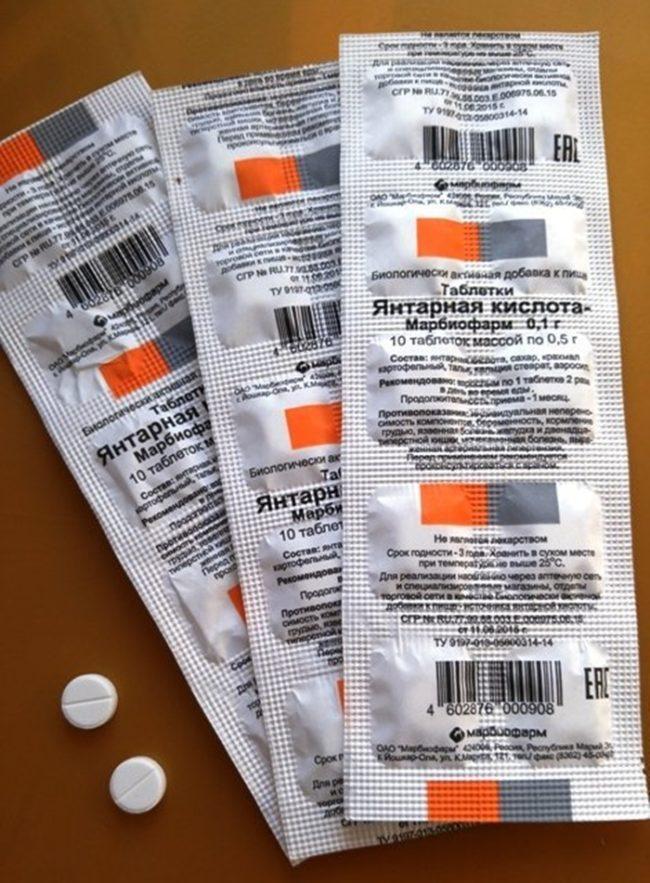
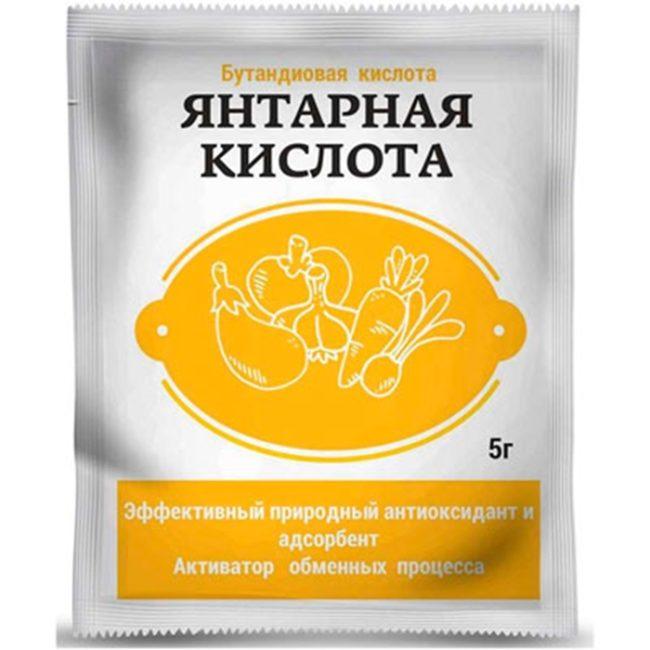
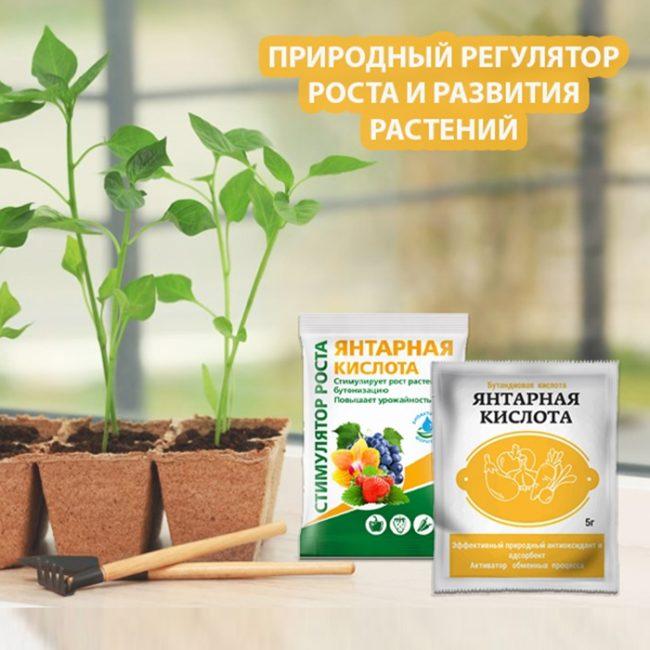
In pharmaceutical production, succinic acid is produced in 0.25 g tablets. When growing plants, it is recommended to use special additives containing the acid.
These products fertilize the soil, thereby enhancing nutrient absorption. Regular use of these products offers several benefits: increased crop resistance to adverse weather conditions and improved soil microbial activity.
Mechanism of action and purpose
The acid promotes chlorophyll formation in plant cells and prevents the accumulation of nitrates and toxins in tissues. There are several indications for the acid's use. The preparation is used at various stages of plant development:
- processing of planting material;
- spraying seedlings to improve survival;
- disease prevention;
- adverse weather conditions;
- combination with top dressing.
By watering the soil with the working solution, the substrate becomes looser and softer.
When using the liquid to care for indoor and outdoor plants, it's important to follow the recommended application rates. Overdosing can negatively impact their growth and development.

Dosage and how to make a working mixture
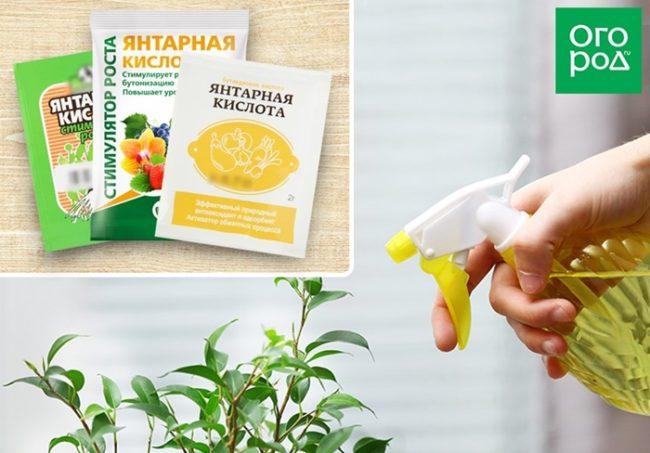
Spray the green foliage of plants with an aqueous solution of the product, and soak the seeds in the liquid. The product can be used for feeding any plant. When diluting the acid, it's important to follow the dosage:
- 0.004% solution – for soaking seeds, treating tubers and rhizomes;
- 0.01% solution – for pre-flowering treatment of fruit trees (apple, pear, plum, cherry);
- 0.02% solution – for treating vegetable crops to improve the shelf life of the harvest.
To simplify the preparation of a working solution of the required concentration, a 1% solution is initially prepared (1 g of the substance is diluted in a liter of water). To obtain a 0.01% solution, 100 ml of the 1% solution is diluted with water to obtain a volume of 1 liter. A 0.02% solution is prepared using the same principle.
If it becomes necessary to prepare a solution of a different concentration, follow the recommendations of the specific manufacturer or the standard dilution scheme of the product.
Terms of Use
The solution can be considered a universal remedy for growing plants, as the liquid can be sprayed on foliage and watered on the soil. It is recommended to use the solution immediately; do not store the solution for more than 3-5 days.
Watering the root system
Soil irrigation stimulates the development and growth of plant roots. To ensure the effectiveness of the solution, the soil is watered with a 0.2% solution. It is recommended to saturate the soil to a depth of 15-30 cm. This is done taking into account the age of the plant and the structure and development of the root system. The procedure is performed 2-3 times at the beginning of the season, at intervals of 10-14 days.
Soaking the root system of seedlings in a solution is also practiced. This involves immersing the roots in the solution for 30-60 minutes before planting, then leaving them to dry for a few minutes.

Spraying
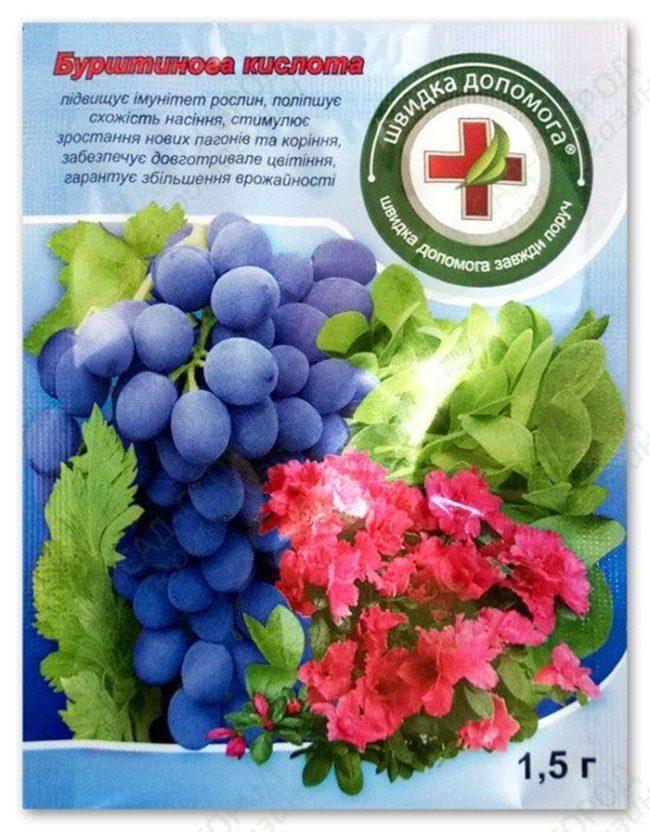
In gardens and vegetable gardens, spraying the above-ground parts of plants with acid is often done when caring for crops. This procedure stimulates flowering and shoot growth. A 0.1% concentration of the solution is used for this treatment.
To enhance the growth of new shoots during the growing season, the stems and leaves of a non-flowering plant are sprayed with liquid once every 2-3 weeks.
The flowering crop is treated with the working solution, prepared in the same proportions. To stimulate flowering, the first spraying is done before the onset of flowering (this procedure is performed twice daily). The treatment is then repeated several times.
Soil nutrition
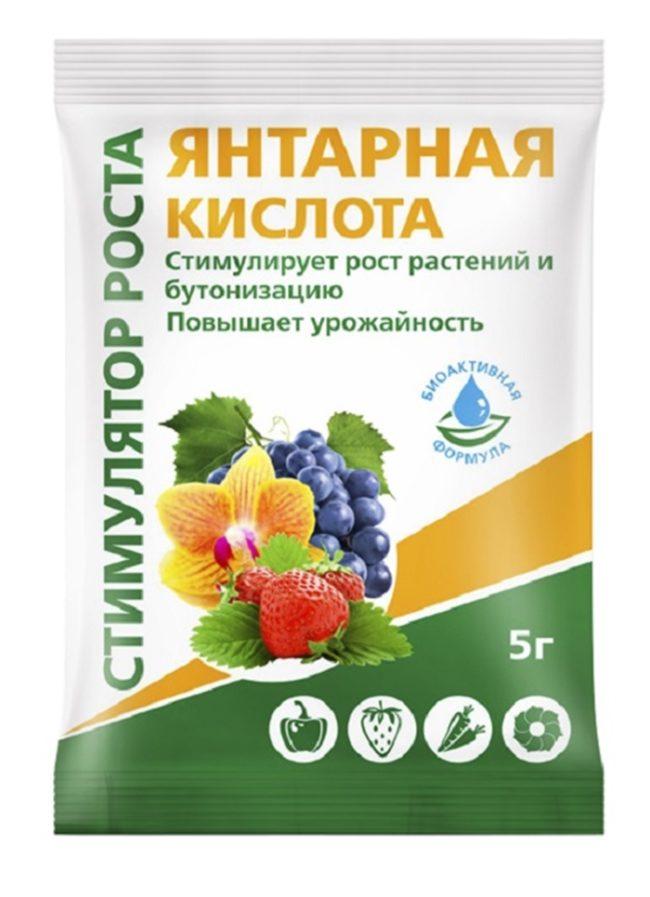
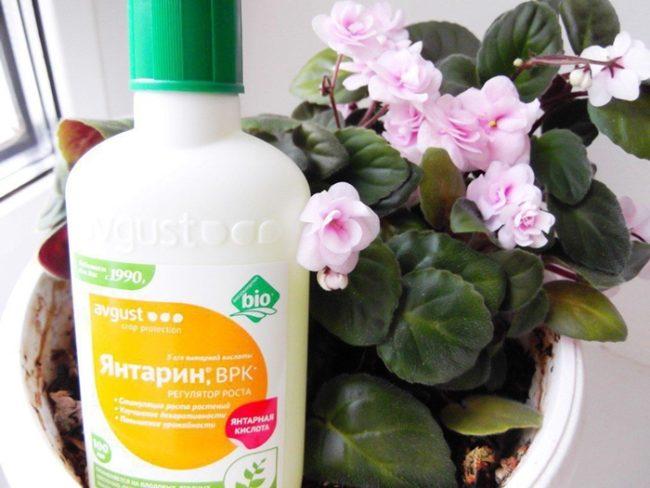
To fertilize the soil, you can use a universal product containing succinic acid and elements necessary for plant nutrition and soil structuring. Manufacturers produce products designed for feeding various plant crops (deciduous trees, conifers, orchids, and flowering plants).
Liquid fertilizer is applied according to the standard formula: dilute 10 ml of the product in 1.5 liters of water. Transplanted plants are watered one to two weeks after transplanting. The frequency of fertilizing should be taken into account depending on the plant type.
Processing of planting material
It is recommended to use the solution when preparing potato tubers for planting. The seedlings are laid out in a single layer and sprayed with a 0.004% solution. Cover the tubers with plastic wrap for 1.5-2 hours. The potatoes can then be planted directly or left to germinate.
There are several ways to prepare seedlings. To improve survival, the seedlings are watered with an acid solution (0.025% concentration) before transplanting. Transplant after 0.5-1 hour. Alternatively, the seedlings are sprayed with the solution 1-2 days before transplanting (1-2 times per day).
Safety precautions
When working with the product, adhere to standard rules: use personal protective equipment (respirator, safety glasses, rubber gloves, special clothing), do not drink, eat, or remove protective equipment during spraying.
Succinic acid is not considered a toxic substance, but safety precautions must be observed. If the liquid comes into contact with the skin, remove the solution with a tissue and rinse the area with clean water. In case of accidental ingestion, gastric lavage is recommended.
In what cases is succinic acid not used for fertilizing?
Inadvertent use of the product may lead to negative results. It is not recommended to use the solution in the following cases:
- on soils with high acidity;
- for medicinal purposes and for pest control;
- in the autumn-winter period, when most plants are in a dormant state.
Frequent acidic watering of soil can disrupt its microflora. This is especially true for indoor plant care, as soil volume is limited and not changed frequently.
Proper and timely use of succinic acid increases crop yields, promotes abundant flowering, and stimulates shoot growth. The combined use of fertilizers and acid normalizes soil structure and enhances the root system's ability to absorb nutrients.