
Copper-based compounds have been used to protect plants for a long time—since the late nineteenth century. These substances help improve crop growth and prevent the development of dangerous diseases. Over time, the number of copper-containing plant sprays has increased. Today, a wide variety of products with different mechanisms of action are available in stores.
Characteristics and mechanism of operation
Copper-containing products help prevent the development of diseases and have protective properties. The fungicidal effect of such substances helps effectively combat pathogenic microorganism spores. Copper-based substances are characterized by the active ingredient absorbing the cytoplasm of fungal cells.
The biological activity of these products directly depends on the established application period and the uniformity of crop coverage with the working solutions. Copper-based products effectively kill scab and powdery mildew pathogens. They also help eliminate various forms of spotting.
Copper-based products primarily protect crops. Therefore, their use should be based on pathogen predictions.
Working solutions of these substances are recommended for treating crops from early summer until the most likely time of tissue infection. If pathogens enter plant cells, these products will not be able to kill them.
The protective effect of copper-containing products lasts 10-20 days. Therefore, when using such products, it is necessary to consider the climate, the rate of development and severity of the disease, and the duration of protection.
When to use
Copper-containing fungicides are used for spraying crops during the growing season. They are characterized by a universal action and help destroy various pathogens that affect vegetable crops, shrubs, trees, and berries. Similar substances can also be used to treat ornamental crops.
In warm weather, the active substance is well accepted by plants, without causing any negative reactions.
However, in conditions of low temperature and high humidity, it is recommended to use such products with extreme caution to prevent burns.


Advantages and disadvantages
The advantages of copper-based products include the following:
- broad spectrum of action;
- high efficiency in destroying fungal infections;
- safe composition – the preparations do not harm people and animals.
However, copper-containing substances also have certain disadvantages. The following are among the downsides of these products:
- phytotoxicity – manifests itself at high humidity;
- risk of accumulation of active substances in plants, soil and water bodies;
- probability of being washed away by precipitation.

The best plant treatment products
There are currently many effective copper-based products available, each with its own unique benefits. These include the following:
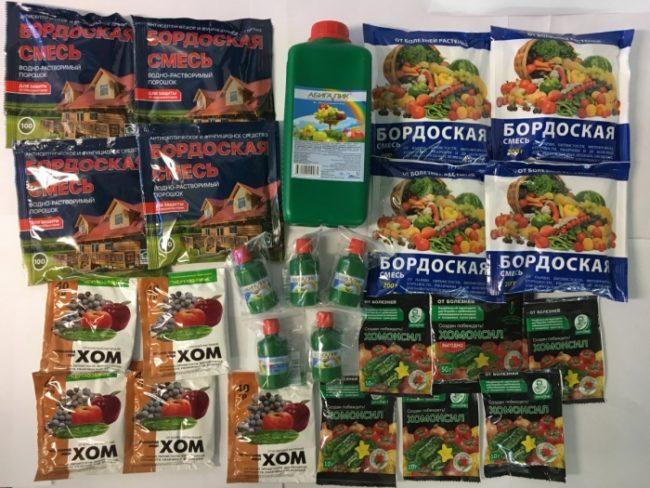
- Bordeaux mixtureThis product helps prevent various diseases, including rot, scab, leaf curl, late blight, and spotting. It contains a mixture of lime and copper sulfate. It has many advantages, including an affordable price, high effectiveness, and a long period of protection. An additional benefit is the presence of calcium. This makes it a reliable preventative for calcium deficiency in plants.
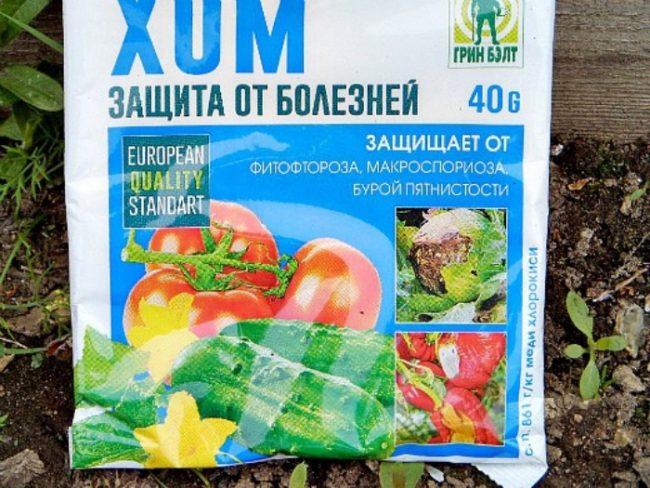
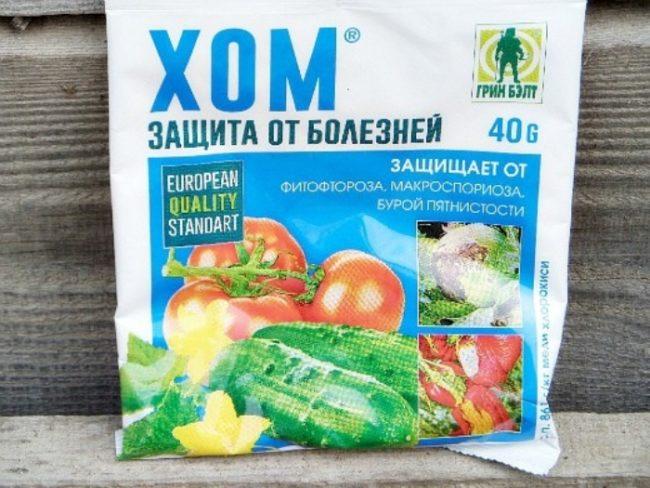
- "HOM." This product is also very popular among gardeners. It contains copper oxychloride and is recommended for use in shelters and greenhouses. The powder formulation is used as a preventative measure. It strengthens the plant's immune system and reduces the risk of infection. The fungicide is used in powder form or added to other products, such as "Homoxil" and "Oxyhom."
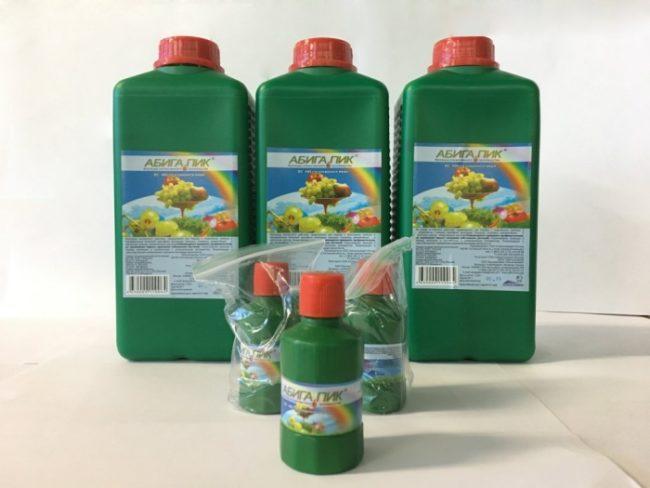
- «Abiga Peak"The product is available as a solution and is ideal for outdoor planting. Its advantages include ease of preparation, a long shelf life, and compatibility with other products. The substance poses no threat to nature and has no negative impact on the soil. A key advantage of the product is its composition. Abiga-Peak's components do not penetrate the plants themselves, but they prevent the development of pests on crops.
Instructions for use
Copper-based fungicides are often used in gardens and vegetable patches. However, the rules for their use can vary significantly depending on the formulation and the additional ingredients they contain.
Copper-containing substances are most often produced ready-made. However, some products require dissolution in water. On average, copper-containing substances are applied to greenery at intervals of 10-14 days. This should be done in the summer. The last application is 20 days before harvest. Ornamental plants can be treated before and after flowering.
Precautionary measures
Copper-containing products are not particularly hazardous to humans. However, standard safety precautions must be followed when using them. For this purpose, it is recommended to wear protective equipment during work, such as a respirator, gloves, and goggles.
Such products generally do not have a pronounced phytotoxic effect. However, it is important to note that in high humidity conditions, these substances can cause leaf burn, causing leaf drop. There is also a risk of disruption to shoot development. Therefore, spraying plants with such solutions should only be done in warm, dry weather.
Copper-containing products are highly effective and effectively kill infectious agents. To ensure successful use, follow the instructions carefully. Adherence to safety precautions is also crucial.