
Almost all Russian gardeners sow parsley before winter. This guarantees early greens and vitamins as early as March. But not everyone knows that to avoid any problems, they need to follow fairly simple yet effective agricultural practices. These rules govern both planting time and the amount of fertilizing. These practices are the key to a bountiful parsley harvest each spring.
Features of planting in the cold season
Parsley is planted in the fall because these plants produce an early harvest and are more resistant to various diseases. The roots of this type of parsley are usually larger than those planted in the spring. The greens often begin to be harvested in March or early April.
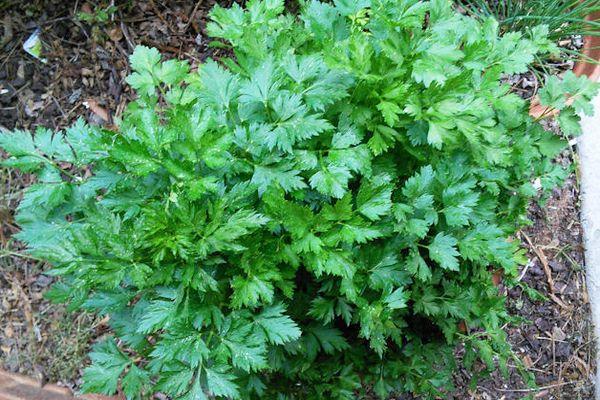
Those wondering which particular variety of this crop is best for winter planting in the Moscow region should consider:
- Common leaf;
- Festival early;
- Delicate aroma.
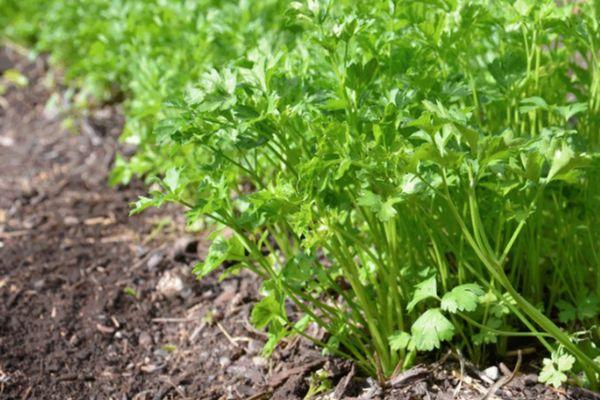
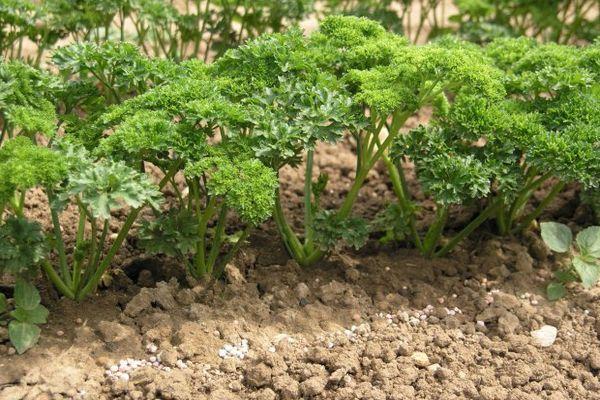
The first variety is characterized by exceptionally high yields, while the second is characterized by early germination. Those who enjoy fragrant greens should consider the latter variety.
But almost all varieties and types of parsley easily survive the winter in the climatic conditions of the Central Belt.
The best time to plant parsley is in the winter.
The best time to sow parsley before winter, like other winter vegetables, depends entirely on the region where the gardener lives. After all, the primary factors are the air temperature and the onset of winter. Winter arrives at different times: in the Far North, it occurs as early as late September or October, while in Kuban, it may be as late as December or January.
Parsley should be sown as late as possible, when frosts are stable but not yet severe. This means the soil should have the first layer of ice on top, but still be workable. In the Central Russian region, such weather conditions often occur in mid-November.
During planting, subzero temperatures are observed only at night, but they are stable. Seeds are planted when the daily minimum is -2 to -3 degrees Celsius. This allows them time to swell before the truly severe frost sets in, but they will not germinate. If sown too early, the greens will sprout, and frost will simply destroy them.
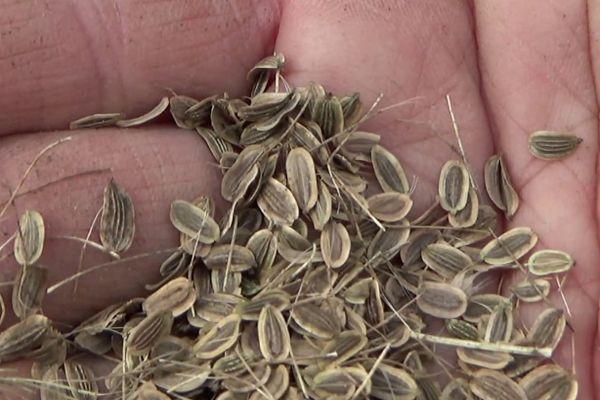
In regions where temperatures don't consistently drop above freezing, parsley can be planted in slightly above-zero temperatures. However, the sprouted plant will then require covering in case of frost. However, the family will be provided with fresh herbs practically year-round.
Preparing seeds for planting in open ground
Proper seed preparation is an essential factor in obtaining a decent harvest of early spring greens. Many gardeners fail simply by throwing seedlings into the soil without any preliminary preparation. Experienced gardeners also remember that pre-winter sowing requires a fairly large quantity of seeds, as the risk of seed loss is greater.
The main stages of preparatory work:
- sorting;
- soaking and disinfection;
- vernalization or pelleting.
Each stage is equally important for success.
During the sorting stage, seeds are sorted based on their size, overall appearance, and the presence of damage. Planting material that is too small may be too weak. Damaged seeds, however, will rot and fail to germinate. Fall sowing requires special attention to the health of the seed.
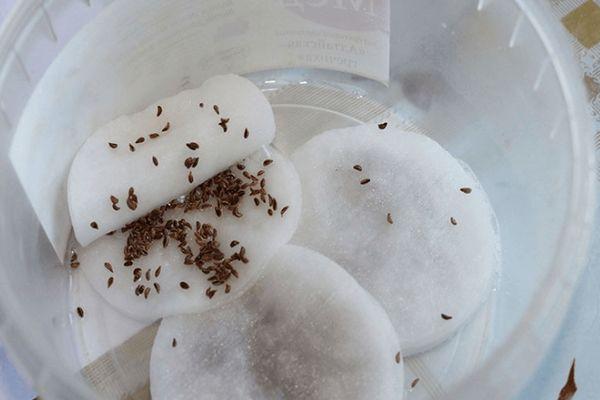
Soaking, combined with disinfection, is used both to activate the swelling process and to boost the plant's immunity. To prevent parsley from becoming diseased immediately after emergence, it is soaked in a solution of potassium permanganate or boric acid. Copper sulfate is also used.
A modern method for achieving the same goal is bubbling. This is the name given to a process in which seeds are placed in warm water (at 20 degrees Celsius) and oxygen is pumped in using a compressor.
Vernalization and pelleting are used to ensure uniform sowing and increase plant vigor. With the first method, the seeds are kept on ice in a wooden box until it evaporates, while with the second, they are covered with a mixture of fertilizer, humus, and peat. It's important that each seed be individually coated in this mixture.
How to choose the right location for autumn parsley planting
When choosing a location in your garden for winter parsley planting, it's important to be careful. Otherwise, the plant won't survive the winter, and you'll lose your harvest, even if you follow all other gardening procedures correctly.
The location for planting parsley in the fall should be chosen so that it's not too exposed to winds or winds. This plant should be sown where snow accumulates in winter, which will cover it and protect it from frost.
In addition to wind resistance, factors such as adequate lighting and location relative to groundwater are also important. Parsley is a crop that dislikes stagnant water, so choose beds that are not prone to waterlogging and where groundwater is not too close. Parsley thrives in well-lit areas.
Gardeners also consider the previous crops when sowing parsley. The best precursor crops are those that ripen early, particularly potatoes, cucumbers, and cabbage. Growing greens in beds where these vegetables were grown is also beneficial for soil health.
Take a look Also

Preparing the soil for planting
The soil is thoroughly prepared before planting parsley. Preparing the beds for sowing is a mandatory agricultural practice, without which a harvest is impossible. The specific vegetables that grew before the greens are also taken into account. After each crop, the soil requires enrichment with those nutrients that were particularly consumed by the preceding crops.
The main agricultural techniques used are:
- loosening;
- soil fertilization;
- soil lightening;
- covered.
Loosening the soil is done immediately after harvesting the previous crops. Standard hand gardening tools are used for this, as the area for sowing greens is rarely very large.
Immediately after loosening, the soil is fertilized nitrogen and potassium fertilizers, superphosphates. Nitrogen fertilizers at a rate of 20 grams per square meter will be sufficient, and potassium salts and superphosphate at a rate of 15 grams per square meter.
After adding nutrients that replenish potassium, phosphorus, and nitrogen in the soil, begin lightening it. To make the soil lighter, mix it with sand and peat. It's important not to overdo it and avoid compacting the soil.
Immediately before planting parsley, add compost to the beds. Manure is not recommended for fertilizing parsley, as it warms the soil too much.
Sowing parsley seeds
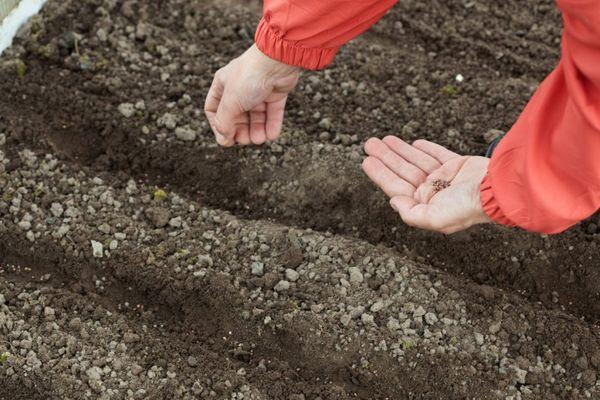
Sowing parsley correctly is quite simple. All you need to do is choose the right plot size and arrange the beds appropriately. Gardeners know well that this plant doesn't like deep planting, so they use soil loosening tools or even sticks to create the beds.
The average plot width is 1 meter. It's often rectangular, measuring 1 meter by 2.5-3 meters. Digging the soil to a depth of 10 centimeters is sufficient. Any deeper is simply pointless.
In the loosened area, make furrows no more than five centimeters deep. The bottom can be covered with a thin layer of sand and a small amount of compost or vermicompost. Pre-prepared seeds are placed 10 centimeters apart. After covering them with a layer of soil, they are further mulched with peat or more compost.
When making furrows, maintain a distance of 10 centimeters between them. This distance is considered the most favorable for the development of this crop.
Proper care of plants
Once the parsley has been sown, it's time to care for it. The plants should be protected from adverse weather conditions. They need regular feeding and watering when the green stems begin to emerge.
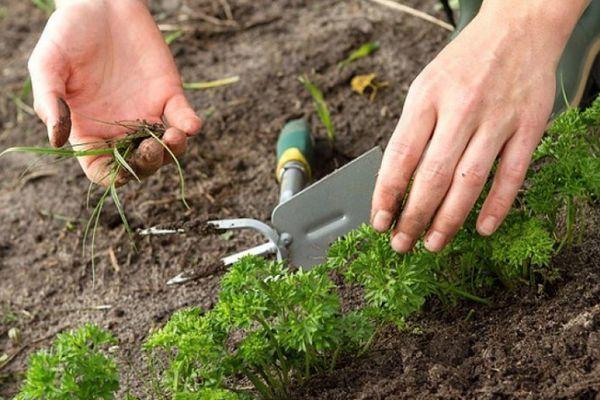
Parsley may be covered immediately after sowing. However, this should only be done during both cold and snowless weather. Or when the plant has emerged from the ground in midwinter due to a prolonged thaw, which has recently become quite common in the Central Russian region. If there is snow in winter, the crop is covered with it. This is done immediately after the white cover has become more or less permanent.
Parsley doesn't require watering or fertilizing during the winter. Fertilizing begins when warm weather sets in and the first shoots appear. Compost is considered the best fertilizer, applied at a rate of 5 kilograms per square meter. It's important to remove any weeds immediately and loosen the soil regularly. This plant prefers light soil.
In addition to compost, a complex mixture of potassium fertilizer, superphosphate, and saltpeter is added to the beds. This fertilizer strengthens the plant's immune system and stimulates the development of its above-ground parts.
Parsley is watered several times a week. It's important to remember that this plant can withstand even drought, but it becomes stiff when dehydrated. Along with the stiffness of its leaves, it accumulates aromatic compounds. If you want tender greens, you should avoid water shortages, but if you value aroma, you should significantly reduce watering a week or two before harvesting.
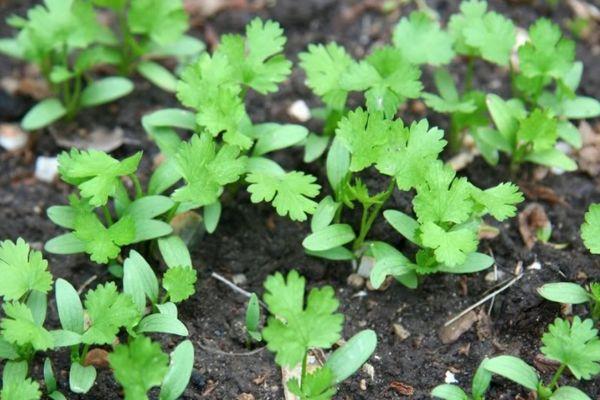
Root parsley requires regular thinning. However, parsley grown as a herb can grow quite densely.
Harvesting
Harvesting parsley is very simple and occurs as needed. Simply wait until the stems reach the desired size and then cut them. The greens are also used for the roots. As noted earlier, to obtain tender leaves, water the plant generously, while for flavor, reduce watering.
The root vegetables are harvested before winter. However, if left in the ground, they will produce new greens the following spring, as parsley is a perennial.
Harvested herbs can be stored by freezing, drying, or pickling them in jars. Storing parsley root is similar to storing carrots—place it in a cool place in wooden boxes and sprinkle with dry sand.
Conclusion
Growing parsley in the fall has become so popular for good reason. It's relatively simple and guarantees an early harvest of vitamin-rich greens. To enjoy vitamin-rich salads as early as March, Russian gardeners prepare their beds just before the first frost and plant when the weather is steady, but not severe. After germination, the crop is fertilized and watered in a timely manner.