
- What are the benefits of parsley?
- Prepare the necessary ingredients
- Methods for harvesting parsley for the winter
- Dried parsley
- Outdoors
- In the oven
- Pickling parsley
- With twigs
- The classic way in a bank
- With the addition of dill
- With celery
- Freezing parsley
- Harvesting fresh parsley with vegetable oil
- Parsley in marinade
- Canning
- Storage rules
With the end of summer, we have to say goodbye to fresh produce from the garden. While many housewives preserve vegetables for the winter, they rarely devote time to herbs. Although many of them stay fresh for a long time, they resist frost. But there comes a time when herbs don't appear on our tables. To ensure that greens infuse dishes with their distinctive winter flavors, we need to learn how to preserve them. Parsley is preserved for the winter in a variety of ways.
What are the benefits of parsley?
This aromatic plant with rosettes of leaves and a thickened root is grown everywhere. This spicy herb is used in all types of dishes, except sweet ones. Traditional healers recommend parsley and its remedies for those suffering from:
- edema of cardiac origin;
- kidney stone disease;
- inflammation of the bladder and prostate;
- dysfunctions of the digestive tract;
- colic in the intestines.
A decoction of the leaves of this spicy plant helps stimulate the appetite. Infusions of the herb are used for dermatitis, psoriasis, vitiligo, and hair loss. The leaves are applied to insect bites.
You can preserve the beneficial properties of the plant by preparing the herb for the winter.
Prepare the necessary ingredients
Before you begin cooking herbs, you need to prepare them. To do this:
- clean the stems and roots from dirt;
- remove dry and rotten branches;
- wash the stems and dry them.
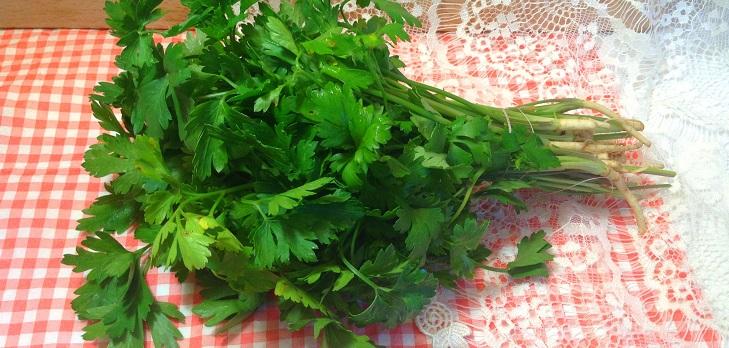
You'll need a knife and a cutting board. For the preserves, you'll need small glass jars, about 0.5 liters each. These should be washed and parboiled beforehand.
Methods for harvesting parsley for the winter
There are several ways to preserve parsley for the winter. Canning recipes have been tried and tested and recommended by home cooks. Dried parsley is easy to prepare. It can be pickled in various ways. Pickled parsley can be made at home. Preserving the plant for the winter depends on the type of parsley. Leaf parsley is renowned for its abundant greenery, which can be pickled, frozen, or dried. Sprigs of this herb are added to any vegetable marinades and pickles.
The plant's root is suitable for pickling. It is preserved for later use in various winter dishes.
Vitamins are best preserved in plants when frozen. A third of them are lost when pickled. benefits of parsley. The dried product contains more aroma than preserved vitamins and microelements.
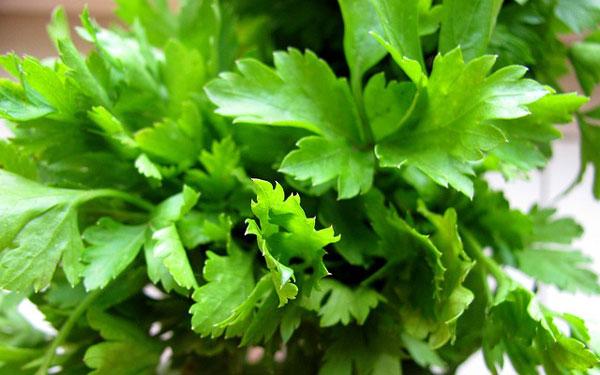
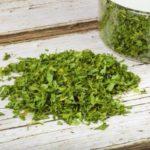
Dried parsley
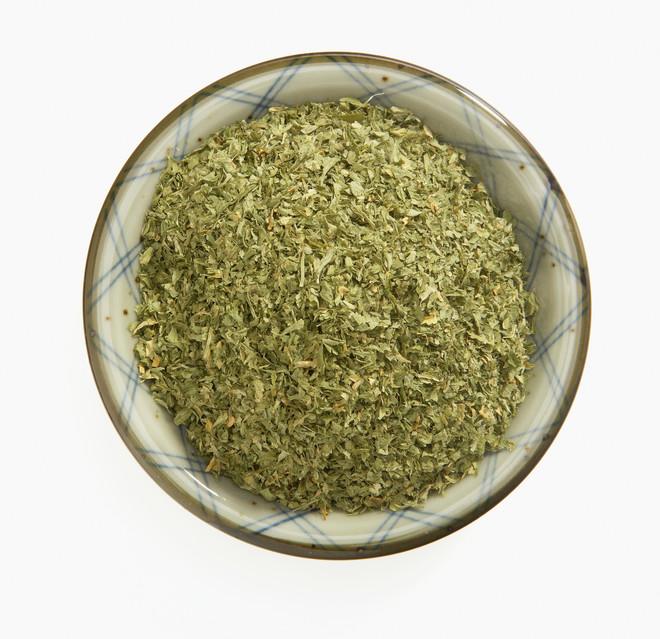
One of the best ways to preserve the spice's distinctive aroma and beneficial properties is drying. Parsley will lose only some of its properties if dried. However, proper drying techniques are essential. Proper preparation is crucial. Chopped parts of the plant dry faster.
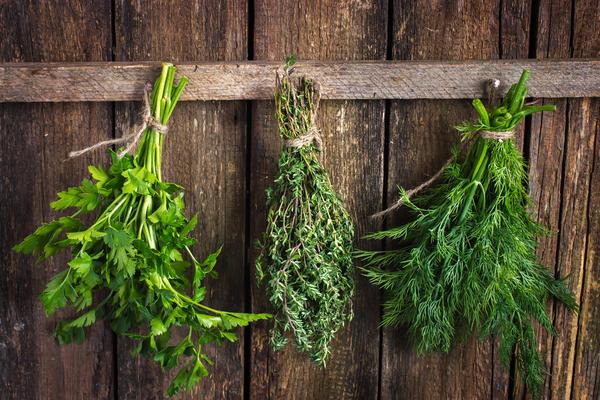
The thinner the slices, the faster the root pieces can be dried. For leafy herbs, storing them in sprigs is also suitable.
Dried stems and leaves shrink in size, so you can dry large quantities of herbs. It's easier to spread the produce out to dry in favorable weather. If the humidity is high, it's better to use an oven or vegetable dehydrator.
Outdoors
When harvesting herbs during the summer, you can dry some of them outdoors. If the weather is good, place the chopped stems under a tent. It's important to keep the plants out of direct sunlight, and a breeze will help them dry faster. You can also dry the roots or leaves in a well-ventilated area. Before drying, sort the herbs, discarding any damaged or rotten stems. Finely chop them and spread them in a layer on a baking sheet or foil-lined paper.
The roots are also thoroughly cleaned of dirt, rinsed under running water, and cut into 2-millimeter-thick slices. Place them in a single layer on a baking sheet and expose them to the open air. To prevent spoilage, stir them frequently. It's best to cover the tray with cheesecloth to prevent insects from getting inside.
In the oven
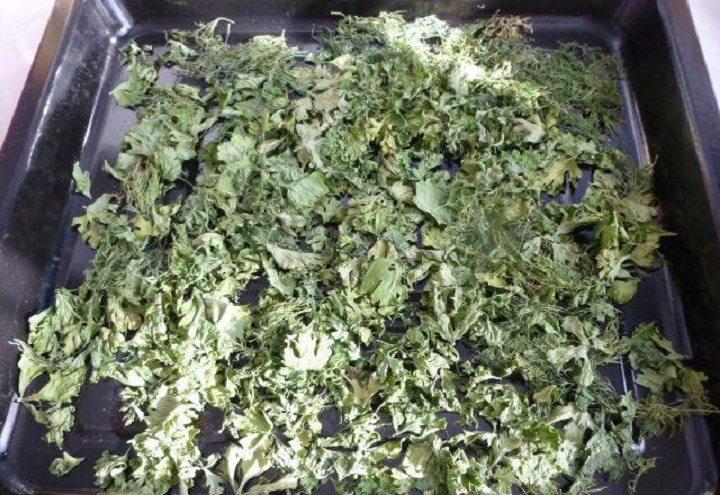
Prepared parsley sprigs and roots can be dried for the winter in the oven. Place the chopped pieces on a baking sheet in the oven. The oven temperature should not exceed 50-60 degrees Celsius (122-140 degrees Fahrenheit). It's best to slightly open the oven door at the beginning to allow air to enter. Stir the parsley regularly to ensure even drying.
You can tell when the herb is ready by how brittle the sprigs are. If they easily crumble between your palms, it's time to take the baking sheet out of the cupboard. Once the herb has cooled, transfer it to glass jars, covering the tops with cloth or paper.
Pickling parsley
You can preserve this spice for the winter by pickling it. This method helps preserve more of the parsley's vitamins. Salted parsley also keeps longer. It's used in winter for soups, sauces, and main courses. Its sprigs make a garnish for any salad. You don't even need to add any extra salt.
With twigs
To pickle the herb stems, sort them, removing any damaged or dry leaves. Place the sprigs in a container, sprinkling them with salt. 200 grams of table salt per kilogram of herbs is sufficient. It should not contain additives, especially iodized salt. You can pickle the herb stems in a plastic bag.
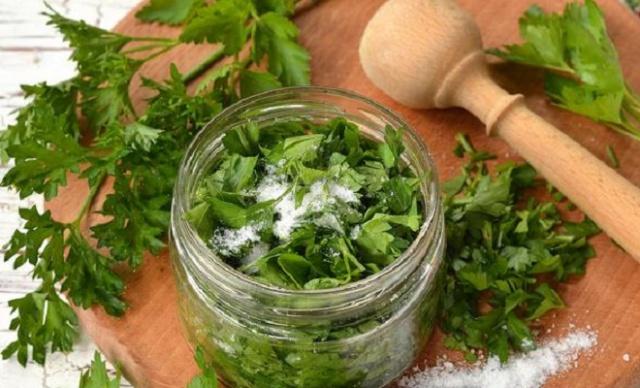
When sprinkling the sprigs with salt, ensure they are salted evenly. Store them in jars or tightly sealed containers. It's best to prepare the product in batches to avoid opening the batch multiple times.
The classic way in a bank
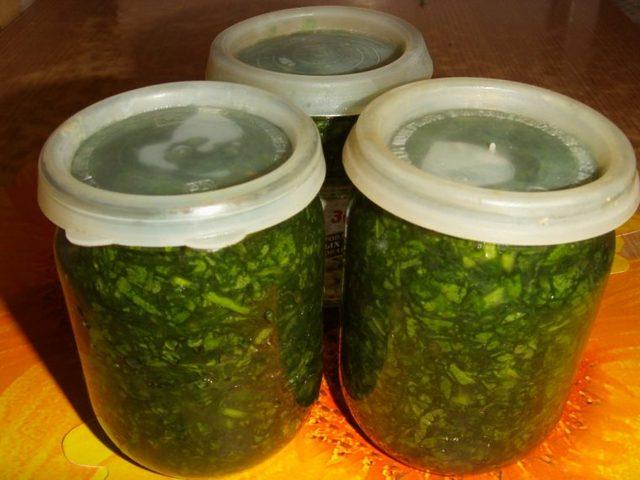
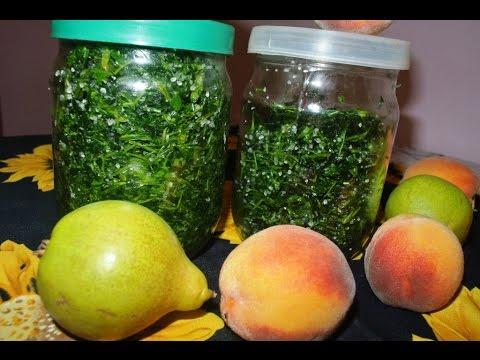
Salted parsley usually tastes best when finely chopped. After washing and drying the herb on a towel, chop it finely with a sharp knife. Place the green mass in a bowl and sprinkle with salt in a 1:5 ratio. Rub the salt thoroughly with the salt and then store in glass jars. Choose glass jars that have been thoroughly washed and sterilized. Pack the jars with parsley up to the shoulders and seal with plastic lids.
Don't use large containers. Jars of 0.5 liters or smaller will do.
There are also unusual recipes for pickling this herb. You can pickle the sliced or diced roots along with the leaves. The product is prepared within 1-2 weeks.
With the addition of dill
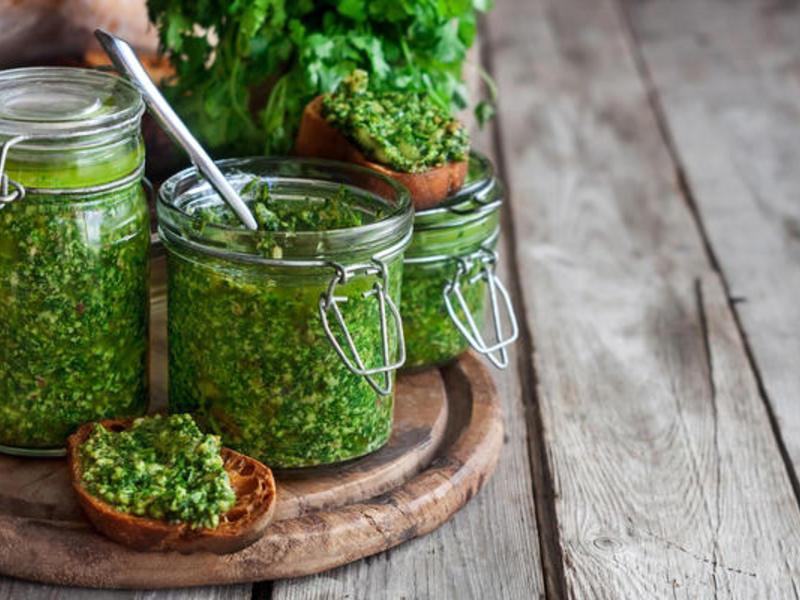
Dill and parsley are often used in cooking. The combination of herbs is aromatic and healthy, adding a unique flavor to any dish. You can pickle parsley for the winter Along with dill. You can use equal amounts of all the herbs, or prioritize one over the other. It all depends on your personal taste. Don't overdo it with salt. 200 grams of salt per kilogram of grass mass is enough.
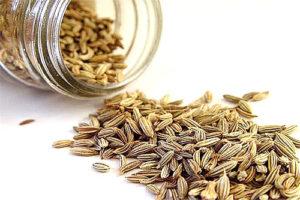
The plant stems are sorted, washed, and dried on a towel. Be sure not to leave any water on the leaves or stems, otherwise the flavor of the salted product will be ruined. The dried vegetables are chopped and sprinkled with salt. Knead the herbs thoroughly with your hands and place them in prepared jars. Store with lids on.
With celery
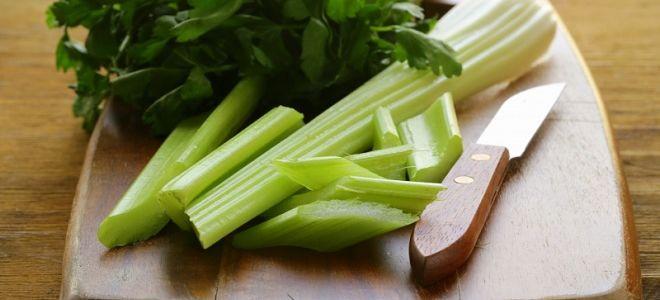
It's helpful to add parsley and celery. You can combine these herbs alone, or don't forget to add dill. You'll need 350 grams of each for the preparation. Wash and dry the sprigs, chop them, and sprinkle with salt. Place all ingredients in jars, seal with lids, and store in a cool place.
You can add parsley and celery root to the mixture. Wash and cut into thin slices. You can also grate it coarsely and mix it with salt. Since the plant parts contain many essential oils, the resulting mixture will be very aromatic.
Freezing parsley
The greatest amount of vitamins are preserved in herbs when they are frozen. Whole sprigs, as well as chopped leaves and roots, are chosen for freezing. It is best freeze parsley V:
- cling film;
- plastic container;
- vacuum bag;
- disposable bag.
Wrap chopped herbs or sprigs tightly in plastic wrap and roll into a roll. You can arrange the herbs in airtight containers for serving as a first or second course. Vacuum-sealed bags are convenient for freezing whole stems and roots. Simple cellophane bags are often used for freezing. After placing the herbs, tie the bags tightly.
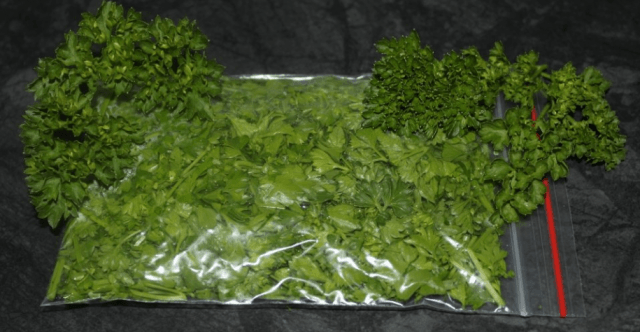
The roots are cut before freezing, drying the cuts in the open air.
It is imperative to label packages of herbs to avoid confusing parsley with another spice.
You can freeze the herb in portions in an ice cube tray with water. These miniature pieces are added to broth during the preparation of first courses. To prepare the plant:
- Finely chop the greens or put them through a blender.
- Place the mixture into ice cube trays, filling them 2/3 full.
- Fill with water.
- Place in the freezer.
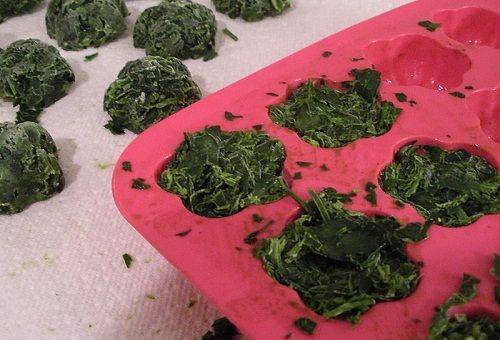
Later, for convenience, the frozen cubes are removed and placed in a single bag. The empty molds are then used to freeze other ingredients. Some cooks skip adding water and simply pack the chopped mixture tightly, allowing it to release its own juices. However, this method of freezing leaves will result in an unsightly appearance. Along with parsley, dill and celery are also frozen in the refrigerator.
Harvesting fresh parsley with vegetable oil
Herbs are well preserved in vegetable oil. To do this, gather the parsley, wash it, and dry the sprigs on a paper towel. Then chop them into pieces and place them in jars. Pour the oil over the herbs until they are completely covered. Be sure to shake the jar to remove any air bubbles.
Take a look Also
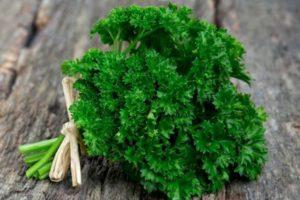
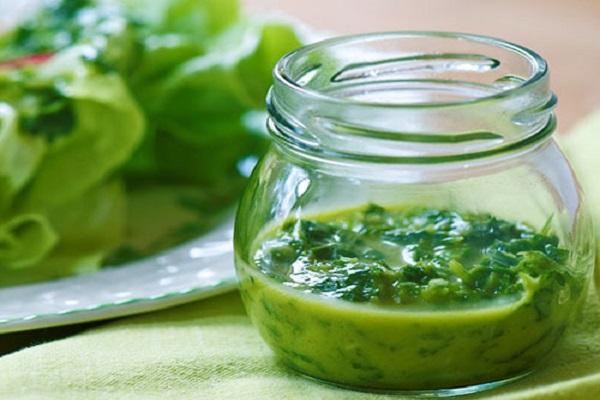 Sometimes the green mass in molds is poured with oil, but then it needs to be frozen.Fresh herbs stored in vegetable oil will keep for 3 to 5 months. They can be used in salads, side dishes, and sauces.
Parsley in marinade
Few people make pickled parsley, but it's worth trying to appreciate its deliciousness. It's wonderful to open a jar of the herb in winter and sprinkle it over a meat dish or boiled potatoes. And if you add several spices to the jar, they'll refresh your diet with new aromas and an unusual flavor.
To make pickled parsley, take 0.5-0.7 liter glass jars. Wash and sterilize them. Then, line the bottom with currant, cherry, and horseradish leaves, along with 2-3 cloves of garlic. Fill the jars with washed and chopped parsley.
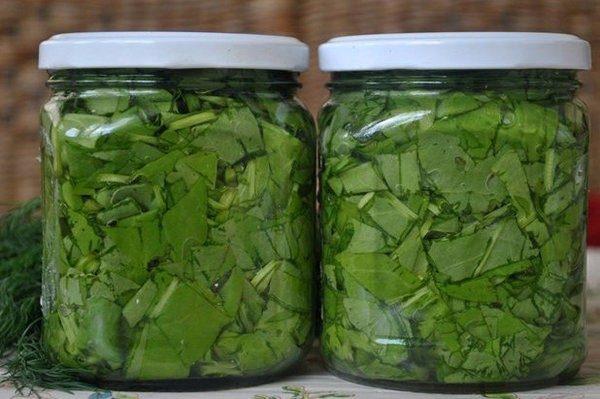
To prepare the marinade, for 0.5 liters of water you need to take:
- a tablespoon of salt;
- 4-5 allspice peas;
- 2 bay leaves.
After boiling the marinade, cool it slightly and add 1 tablespoon of 6% vinegar. The jars must be pasteurized for 5-7 minutes and sealed with metal lids. Store the appetizer in a cool, dark place.
Canning
The methods discussed above aren't the only ones used for preserving parsley for the winter. Preserving it also involves using other herbs and vegetables. Carrots, radishes, tomatoes, and peppers pair well with parsley. Chopped ingredients are either sprinkled with salt or frozen. In winter, these mixtures are a great addition to salads, soups, and main courses.
Storage rules
Depending on the method of preparing parsley for the winter, its storage is organized:
- Jars of dried herbs are kept in a cupboard at room temperature. They should be sealed tightly to prevent the herb's aroma from evaporating.
- Store the salted herb in the refrigerator or basement. It can be used within one year, all winter long, until the following spring.
- Frozen produce should also be used within the winter. It's best not to leave it out for longer. It's better to prepare fresh herbs. Avoid constantly defrosting and freezing herbs, as this will quickly ruin them.
- Parsley can be stored in oil at a temperature no higher than 7 degrees Celsius.
- Pickled herbs can be used in cooking for 1-2 years.
- All products must be inspected throughout their entire shelf life, removing moldy or spoiled ones.
Housewives love parsley; cooking without it is rare. Therefore, preserving it for the winter is essential.
Related posts:
 How to grow parsley in the open ground at your dacha, planting and care instructions, and harvesting times
 Proper sowing of parsley in open ground before winter, which variety to choose, planting and care
 When is the best time to plant parsley seeds in open ground, growing and care
 Description and cultivation of root parsley, planting and care in open ground
 The medicinal properties of parsley for the human body and contraindications, methods of application
 How to grow parsley on a windowsill in winter and recommendations for caring for the crop at home
 The use of parsley root for medicinal purposes, properties and contraindications for use
 How to preserve parsley for the winter at home, with or without freezing, and keep it fresh