
- Types and varieties of parsley
- Root
- Sheet
- Popular variety
- Parsley: combination with other plants
- When to plant parsley
- Preparing seedlings
- Peculiarities of planting parsley in open ground
- Soil requirements
- How to care properly
- Watering parsley
- Fertilizing parsley
- Trimming parsley
- Protection from diseases and pests
- Harvesting and storage
There's hardly a gardener who doesn't grow herbs in their garden. Among the many beds, parsley should also be present, as this aromatic herb enhances any dish. Parsley is added to salads, appetizers, and hot dishes, dried and frozen for the winter, and used in pickling and canning. It can also be eaten fresh. To reap all the benefits of parsley, you need to know how to grow it outdoors.
Types and varieties of parsley
Not everyone knows that in addition to the leaves, the roots can also be used for food. There are many varieties of each species. They differ in planting time, root system, and abundance of green foliage. Each variety can be identified by the appearance of the leaves.
Root
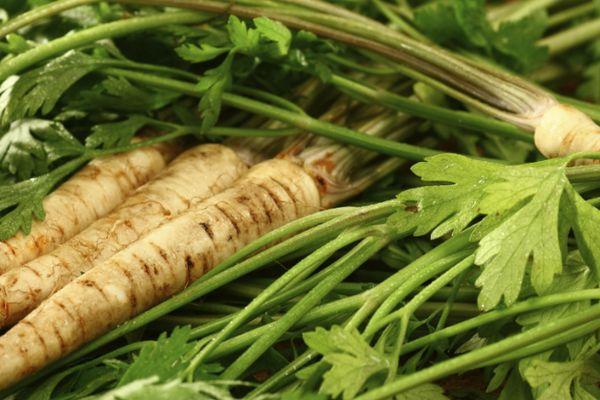
As the name suggests, the crop is grown solely for this part of the plant. During development, all energy is devoted to nourishing the root. Parsley root It's versatile, as both the above-ground portion can be used as food. The root is carrot-like, cylindrical, and quite firm. It can be eaten fresh or cooked.
Sheet
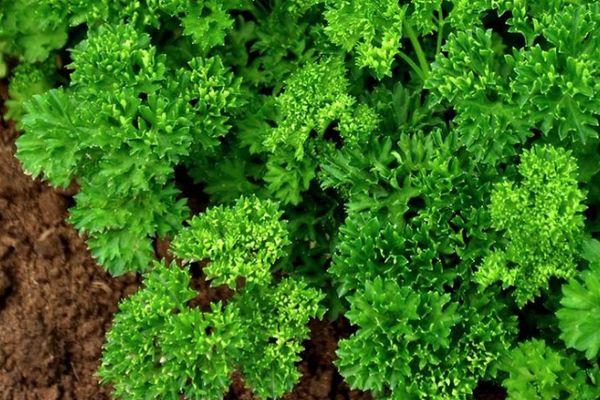
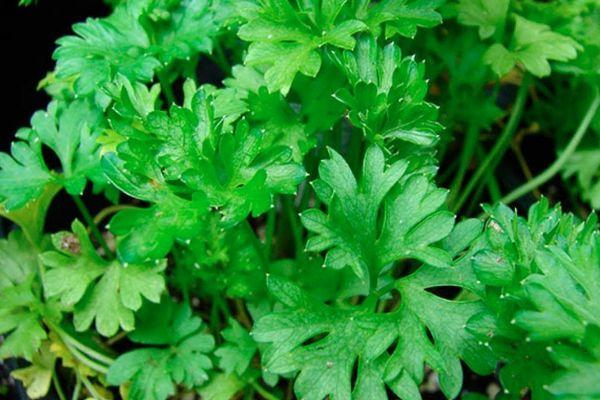
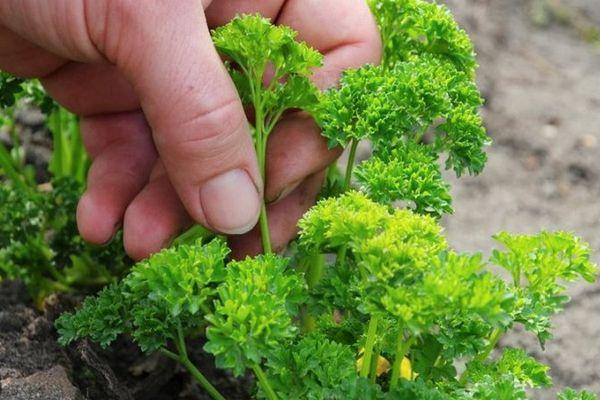
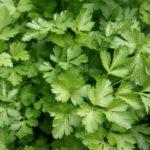
Parsley is further divided into two types: smooth and curly. It is grown in garden beds to produce aromatic greens for salads. It is characterized by rapid shoot growth and abundant greenery. Each variety has a unique aroma and distinctive flavor. Curly parsley is often planted as a decorative element due to the interesting texture of its leaves.
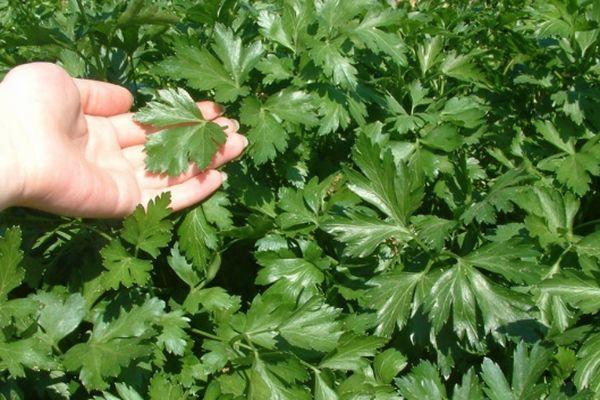
Curly parsley leaves are very prickly at the tips, so some gardeners have abandoned them. This makes it difficult to eat fresh. As for leaf parsley, its leaves are not curled but have jagged edges. The roots of leaf parsley are not suitable for consumption.
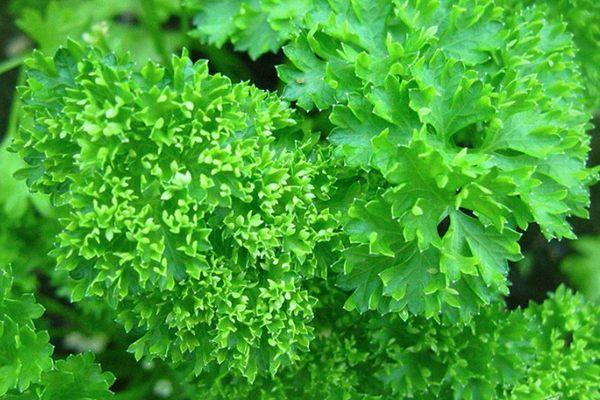 One bush of leaf parsley can grow more than 100 leaves.
Popular variety
Italian Giant is a leaf parsley whose leaves quickly regrow after cutting. It's a mid-season variety, taking two months from germination to maturity. The leaves are triangular, medium-sized, and richly green. The branches are very delicate due to their smoothness, releasing a distinctive aroma.
It is used for preparing various dishes, as well as decorating them.
Parsley: combination with other plants
Greens can be planted near other vegetables in the garden. They thrive alongside various varieties of cabbage. They can be planted with cucumbers and tomatoes, as well as peppers and garlic. Parsley is sown near onions in open soil.
A secret trick to protecting strawberries from snail attacks is planting parsley around the red berry plantings. Parsley is also planted in flower beds to keep it readily available. However, avoid placing it near asters. In the garden, it won't do well with corn.
Combining parsley with other crops allows you to plant the herb in a new location each time, unless it's a perennial variety. This is beneficial because it complies with agricultural practices. Parsley is an excellent precursor to garlic and potatoes. Beans and tomatoes grow well after parsley.
When to plant parsley
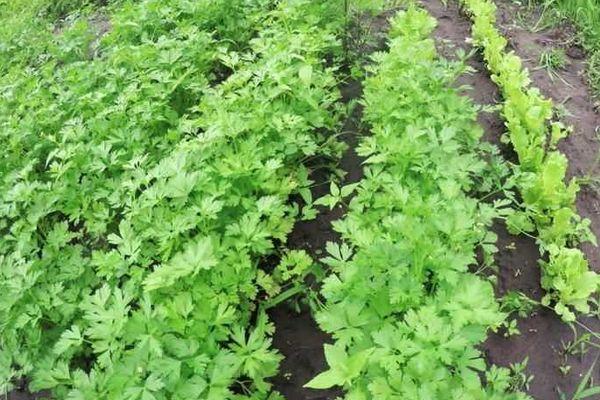
Garden beds are created in mid-spring to the second half of April. This is the period when soil and air temperatures are favorable for the growth and development of green shoots. To obtain early sprouts, seeds are sown in the fall, towards the end of October. Dense sowings are made, placing the seeds as close together as possible. To ensure a large quantity of fresh parsley on the table, repeat the sowing every two weeks.
Preparing seedlings
Parsley can be planted using seedlings or sown in open soil. What's the difference between parsley grown using the first method? The plants grow more lush, and fresh leaves can be enjoyed 4-6 weeks earlier than parsley sown in the garden. Gardeners rarely use this method because it requires some effort.
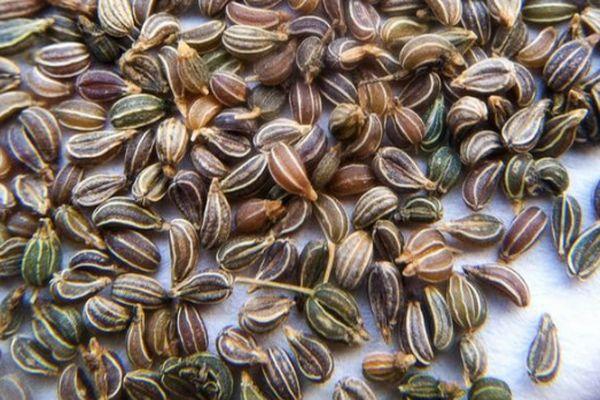
First, to speed up germination, the seeds are germinated. They are covered with water and placed in a warm place for 2-3 days, changing the water once a day. Then the liquid is drained, and the dried seeds are placed in the refrigerator door. Another method of seed treatment is immersion in a cloth that must be constantly moistened.
To obtain early germination and speed up the harvest of leaves, grow parsley in nutrient-rich soil. Plant the seeds no more than 1.5 cm deep. After the seeds are covered with a layer of soil, moisten the soil and cover the containers with glass or plastic. A sunny windowsill is the best place for the parsley seed trays.
Germination can be achieved faster if the room temperature is maintained at 25°C. When the first sprouts appear, remove the film and leave the containers uncovered. From an early age, the seedlings can be not only watered but also fertilized. A mineral solution, applied to the soil or sprayed onto the sprouts, is an excellent choice.
The seedlings should be kept in a place where there is no direct sunlight and should always remain moist.
Peculiarities of planting parsley in open ground
When it's time to plant seedlings in open ground, select the strongest roots. Typically, such specimens are up to 5 cm in diameter and about 10 cm long. If the root is very long, it can be trimmed with a knife. The cut area must be treated with activated charcoal to speed up the plant's recovery.
Take a look Also
Parsley can be grown anywhere. However, it should be in a sunny location with partial shade at certain times of the day. This could be a summer cottage or a vegetable garden in the countryside. If you follow the planting and care guidelines, you'll be enjoying fresh herbs within a month.
Soil requirements
Planting seeds in open ground isn't the most important task a person should follow. It's crucial to prepare the soil in the area where the seeds will be planted. parsley is plantedIdeally, the soil should be cultivated in the fall. Simply dig the area and apply a simple fertilizer.
Clay soils require well-drained soil. This can be achieved with sawdust or river sand. In spring, the soil is loosened and mineral fertilizers are added. To ensure a good harvest, choose a spot in the garden where cucumbers, tomatoes, or onions were grown.
Parsley thrives on light, so it's best to avoid areas with full shade. Sow the seeds 1-1.5 cm deep. After covering the furrows with soil, water the beds thoroughly. Covering the seedlings with agrofibre or regular plastic film will speed up germination.
How to care properly
Cultivation practices include watering, fertilizing, and weed removal. The seeds will germinate at a temperature of 15°C. The young plants are sprayed with warm water. When the plants reach 20 cm in height, the leaves can be harvested.
Even though the root system is in the soil, it still requires oxygen. To achieve this, the soil is constantly loosened. Weeds are regularly removed from the beds. Pests can feed on the nutrients in the soil that the plant needs. Caring for parsley is not difficult, but it does require regular attention.
Watering parsley
The soil should be moistened until the very end of August. The roots especially love water. Moisture is important, as the parsley's flavor depends on its quantity. If the summer is rainy or the plant is constantly watered, the leaves will be soft and practically odorless.
On hot days, lack of watering promotes the accumulation of essential oils in the green parts of the plant. The leaves become fragrant, and the scent can be smelled near the garden bed. However, the texture of the leaves themselves becomes rough. In this case, it gives the person the opportunity to control the plant's hardness and aroma.
Fertilizing parsley
Fertilizing directly affects the plant's appearance. Adding mullein or compost promotes the formation of a full rosette of leaves. Fertilizer preparation:
- Prepare 1 kg of organic matter.
- Dilute the mixture in 10 liters of water.
- Water the beds with parsley plantings generously.
With the onset of August, it's best to avoid using nitrogen-based fertilizers. There's a risk that the substance will accumulate not only in the roots but also in the leaves. Parsley grown in open soil from seeds requires foliar feeding. Micronutrients should be added no more than twice per season.
Trimming parsley
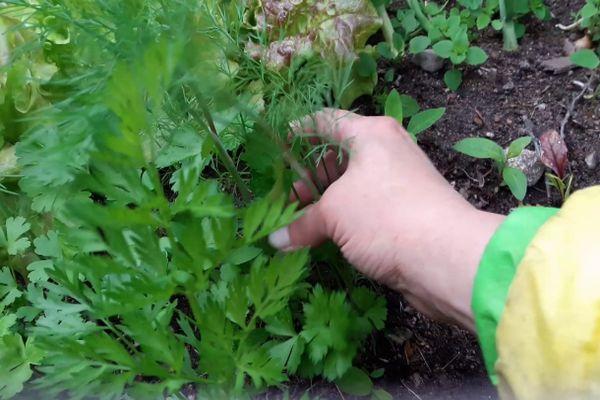
The herb can be harvested at any point during the growing season. Scissors or a sharp knife are suitable for trimming. Parsley sprigs can also be picked by hand, but the results are not as neat. For winter storage, parsley is harvested throughout the summer and into late fall.
Protection from diseases and pests
Thanks to its high essential oil content, parsley is rarely attacked by pests or diseases. Moreover, parsley plants repel pests from other vegetables, herbs, and fruits.
To enhance the protective properties of the crop, the following measures are taken:
- do not sow near coniferous bushes and trees;
- planting is done in early spring, and using seedlings - in mid-winter;
- acidic soil is enriched with lime;
- The beds are made on dry and light soil.
For planting, it is recommended to select seeds collected from a healthy plant. Their quality is assessed by their appearance. They are intact and uniform in size. Additionally, the suitability of the material can be checked.
To do this, take a glass of water and add ammonium nitrate and regular table salt. The required amount of each ingredient is on the tip of a knife. Pour the seeds into the glass with the solution and mix thoroughly. When the liquid subsides, inspect the seeds. Any that float to the top are not suitable for planting.
Insecticides are rarely used to control pests. It's better to choose natural remedies. If a crop is completely infested by disease or parasites, it should be removed from the garden bed. This will help prevent infection of healthy plants and thus preserve the greenery.
Harvesting and storage
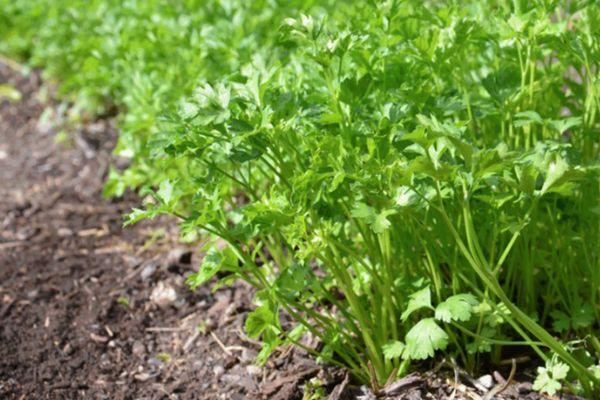
How long does parsley take to grow? Parsley leaves continue to grow until the flowers appear. Regular pruning helps stimulate the growth of new shoots. For this purpose, sprigs are periodically plucked and used for edible purposes. During this time, it is recommended to prepare dried herbs, preserves, and freeze them for the winter, as the plant's yield allows for this.
Harvesting of root varieties is done in the fall, aiming to do so before the first frost. The roots are covered with sand and stored in a basement or cellar. If parsley is not dug up, it's possible to get sprouts in early spring. Planting in flowerpots is an excellent way to have fresh herbs during the cold season.
Related posts:
 The best recipes for harvesting parsley for the winter at home
 Description of the 40 best varieties and types of parsley, what the plant looks like
 Description and cultivation of root parsley, planting and care in open ground
 How to grow parsley on a windowsill in winter and recommendations for caring for the crop at home
 When is the best time to plant parsley seeds in open ground, growing and care
 Proper sowing of parsley in open ground before winter, which variety to choose, planting and care
 The medicinal properties of parsley for the human body and contraindications, methods of application
 Rules for growing parsley in a greenhouse in winter, yield and care