
There aren't many plants in the world, especially those with edible value, that are easy to grow at home. Parsley is one of them. It's easy to care for and takes up very little space. Knowing how to grow parsley indoors, on a windowsill, and even in winter, will allow you to have a supply of fresh herbs year-round.
What varieties of parsley are suitable for a windowsill?
It's not that choosing a specific plant variety is crucial when growing on a windowsill. However, there are still some nuances that prevent this aspect from being completely ignored. The variety chosen determines the ripening time. Early ripening is best.
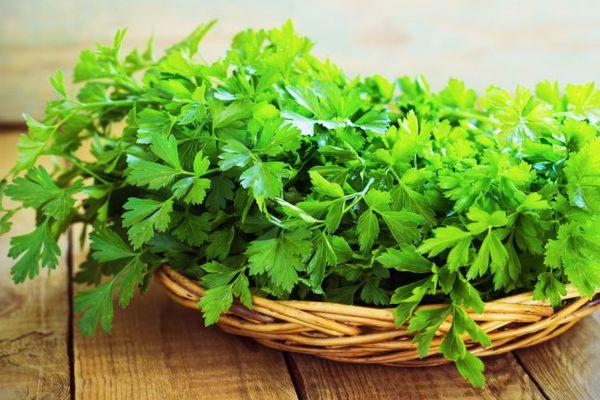
These are the varieties:
- Gloria;
- Emerald lace;
- Aster;
- Morning Freshness Fitness;
- Beads.
These varieties include both curly and leafy greens, so gourmets looking to grow parsley on their windowsill will be pleased. Parsley's early ripening allows for quick, comfortable results in a comfortable indoor environment.
Selecting a container and preparing the soil
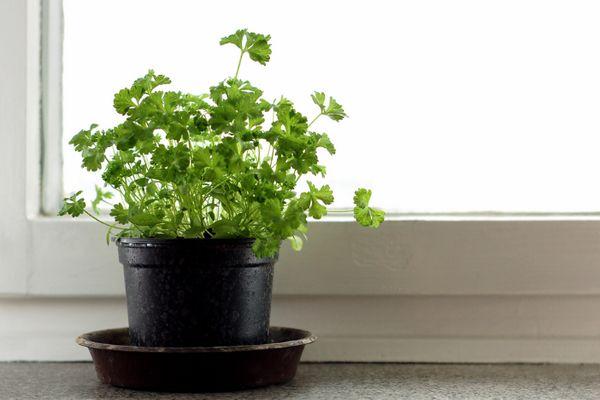
You can sow the plant in either a seedling container or a small pot. Whatever you use, the container should have drainage holes. However, later, when the parsley grows, you will need a container with greater depth, which will accommodate an impressive taproot system..
Seedlings can also be planted in a box if there are no other options and you need to plant many plants. A large pot can be placed directly on the windowsill. This is a convenient and common method. Of course, the windowsills must be sturdy to accommodate the parsley in sufficient quantities.
As for the soil for growing parsley, it should be loose and light in mechanical properties. The soil should contain sufficient nutrients, as the pot space will be limited, and the parsley will need to thrive.
You can take garden soil and mix it with one-quarter of its volume of compost and the same amount of peat. Before mixing, however, water the garden soil with a solution of potassium permanganate. This will eliminate pathogenic microbes.
After the ingredients are mixed, potassium and phosphorus supplements are added. Liming is also applied if necessary. That's all you need to do to ensure your parsley has good soil right in your apartment.
Take a look Also

Growing parsley from seeds
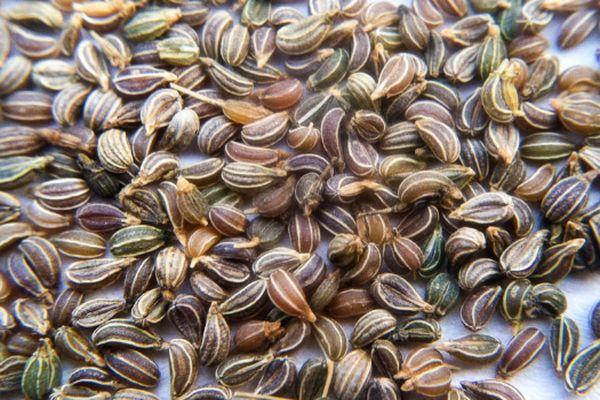
First, soak the seeds in water for one to three days. It's important to change the water twice every day. This pre-sowing treatment will ensure uniform germination and quick emergence. Immediately before sowing, two hours before, soak the seeds in a weak solution of potassium permanganate.
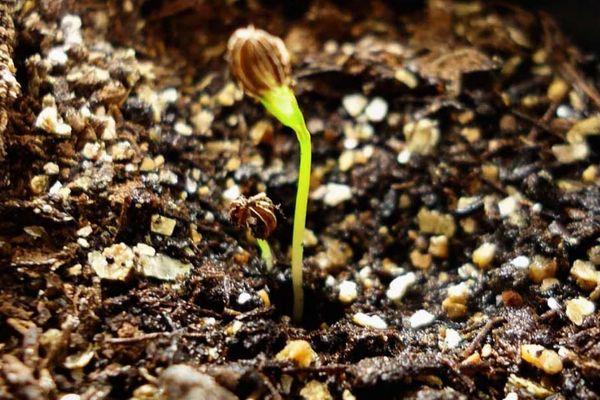
Next, take the container you'll be sowing in and fill it with soil. If you can't get soil from your garden, you can easily find it at any gardening store. However, it's important to carefully examine its properties, as not all soil is suitable for growing parsley.
It's necessary to water the soil with hot water and compact it, but not too hard. This will give the soil the necessary condition so that the parsley can grow without problems. This is especially important given the relatively unnatural growing conditions.
Next, make furrows in the moist soil. It's best to begin planting immediately. Sow the seeds shallowly—just half a centimeter. To prevent a crust from forming on the soil, cover it with a layer of loose soil about 1 cm thick.
Growing parsley from root vegetables
This is perhaps even easier than sowing the plant. Just dig up a few roots. Just make sure to leave the petioles. The ideal diameter for growing is between two and four centimeters. However, this isn't critical.
Yes, you can buy parsley at a grocery store, but it's not guaranteed to be organically grown or free of harmful pesticides. Most modern people are already constantly exposed to unhealthy food, so it's better to grow parsley from your own garden.
The size of the root crop affects:
- duration of the growing season;
- number of kidneys;
- number of leaves.
The larger the diameter of the parsley planting material, the more productive the resulting crop will be. That's why it's best to plant large parsley roots in a large pot, if your windowsill allows.
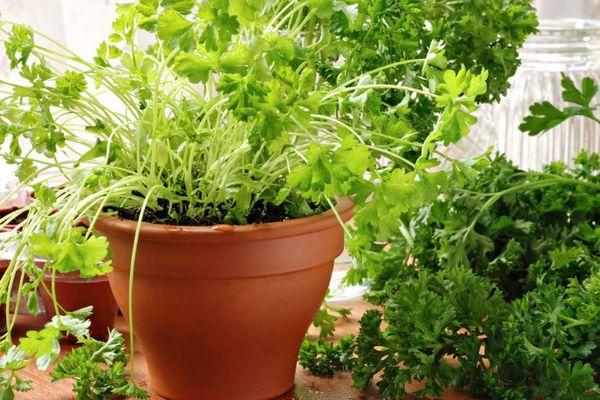
Fill a disinfected container with soil and moisten it. Plant the root vegetables in rows. Space them 4 cm apart, while space the plants within a row 2 cm apart. While the root vegetables should be well-buried, avoid covering their heads with soil. After planting, lightly compact the soil and water.
Aftercare
Important points when growing parsley Houses It's not much, but these points cannot be ignored. It is necessary to provide the plant with the right temperature, proper watering, suitable lighting and fertilizing.Besides, there are other nuances.

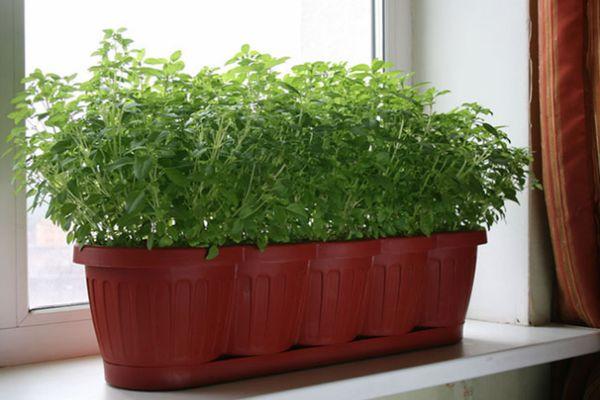
After planting or sowing, move the container to a cool place. Then, once the cuttings begin to grow and develop rapidly, move the plants to a windowsill. Rotate the container occasionally to avoid asymmetrical growth.
Temperature
The ideal temperature would be +20ºC, which is room temperature. A little lower isn't critical. However, temperatures above this value are a negative factor. Most likely, the apartment will have the temperature needed for growing parsley.
As for the off-season, when the heating hasn't been turned on yet, this is unlikely to be a problem if the house is in good condition. A seedling on a windowsill can grow successfully even at 17ºC. Of course, if the temperature drops significantly lower, it will negatively impact the plant.
If it's almost summer outside, but the heating isn't turned off, and the room is unbearably hot, the risk of damage to the sprout on the windowsill is significantly higher. In this case, it's important to ensure ample watering to compensate for the excessively high temperatures.
Watering
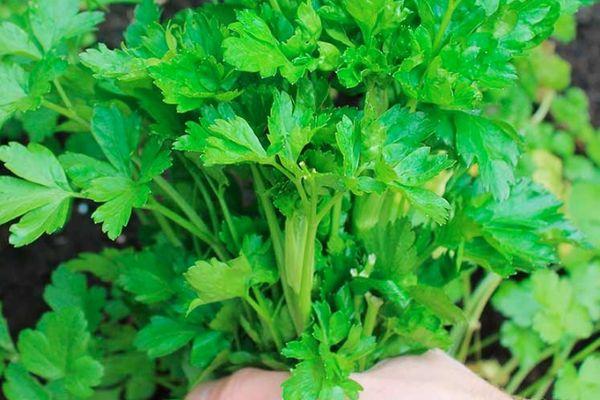
Seedlings are watered moderately. Once the plants begin to grow and are moved to a windowsill, the amount of water is increased. Parsley should be watered generously and frequently. The water should be settled. Cold water is usually preferred, but if watering occurs in winter or on hot days, warm water should be used.
Many people who grow parsley on a windowsill find that watering twice a week is sufficient. However, it's important to keep in mind that this is only true for normal growing conditions. If the weather is unusually hot, if not dry, in the summer, you should consider increasing the frequency of watering. This can be determined based on the condition of the plant and the soil.
Lighting
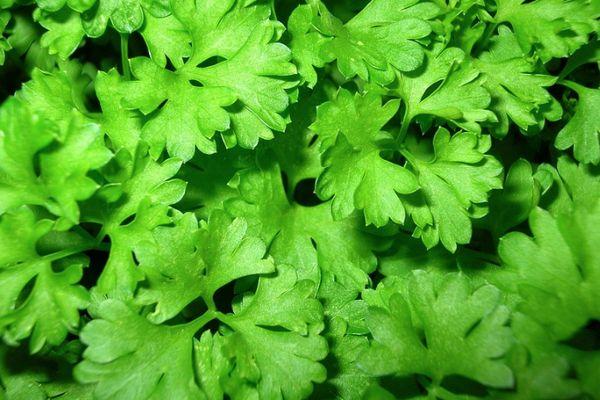
It's important to know that parsley ideally requires at least 13 hours of daylight. However, there's a period when lighting is especially important—when the plant is young. If parsley doesn't receive sufficient light during this period, it will significantly impact its subsequent development. In cloudy weather, additional lighting may be necessary.
It's best to choose a windowsill that receives the most sunlight. This is especially convenient for those living in a private house or an apartment with views on two sides of the house. This increases the likelihood of finding the ideal room for growing plants.
Avoid choosing a windowsill facing a balcony, as this may reduce sunlight exposure. A regular room without access to a balcony is ideal. Avoid choosing a windowsill in the kitchen, as the seedling will be periodically exposed to high temperatures, which are unfavorable for it.
Top dressing
Is your parsley looking undernourished? In that case, it needs some feeding. This can be done with specialized fertilizers. These measures are especially effective after the plant has been placed on the windowsill. Even if the parsley is doing well, it may require a complete fertilizer at least once a month, at a rate of 5 g per liter of water.
"Rost" can also be used as a fertilizer. It's diluted with water at a rate of half a capful per liter. Another product, "Agrolife," should be applied as follows: simply apply one teaspoon of the fertilizer to the top layer of soil.
However, the soil prepared for growing parsley may already have excellent properties, whether it's from a gardening store or homemade. In this case, fertilizing may not be necessary, but it's worth closely monitoring the plant's condition to recognize its need early.
Timing of first shoots and harvest
Sprouts will appear in ten to fifteen days. When grown from seed, parsley will reach full maturity in six weeks if grown in suitable conditions. However, when planting root vegetables, the harvest can be completed in three weeks. Fertilize additionally after each foliage cut. Compared to many other crops, parsley grows quickly. And the fact that it's so easy to grow in a city apartment makes it even more valuable.
In conclusion, it should be noted that the home method growing parsley in winter This is relevant not only for the average city dweller but also for those with a garden. After all, fresh herbs contain far more nutrients. Besides, for some, growing parsley at home may be easier than harvesting it.
Related posts:
 How to grow parsley in the open ground at your dacha, planting and care instructions, and harvesting times
 The use of parsley root for medicinal purposes, properties and contraindications for use
 The best recipes for harvesting parsley for the winter at home
 When is the best time to plant parsley seeds in open ground, growing and care
 Proper sowing of parsley in open ground before winter, which variety to choose, planting and care
 How to quickly grow parsley using hydroponics: rules and timing
 Recipes for inducing menstruation with parsley seeds, how much you need to eat to speed it up
 Rules for growing parsley in a greenhouse in winter, yield and care
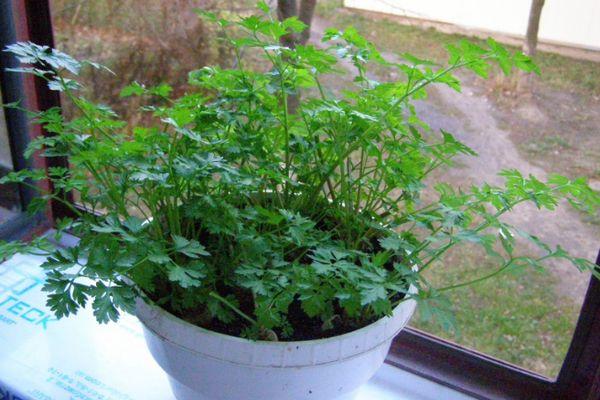
Parsley is conveniently grown on a windowsill; it germinates well in such conditions, and its height is not very high. For additional nutrition, I recommend adding a bioactivator to the soil.BioGrow".