
Parsley can be grown both in a greenhouse and in special containers on a windowsill. These methods allow you to harvest parsley even during the winter. In addition to its pleasant aroma and flavor, the herb contains a large number of beneficial micronutrients that have a positive effect on the human body.
Since greenhouses have a large area, it is much more practical to grow plants there than on a windowsill.
Specifics of growing parsley in a greenhouse
Like some other plants, even a novice gardener can grow parsley, as it's relatively easy to care for. Planting is straightforward, and the harvest is fairly frequent. Parsley is frost-resistant for short periods, and the plant can even survive occasional frosts.
To grow crops in winter, you need to follow these recommendations:
- The plant can grow in an unheated greenhouse until late autumn. A prerequisite is that the temperature not be too low;
- If the greenhouse is heated, it is better to plant seedlings in the middle of winter.
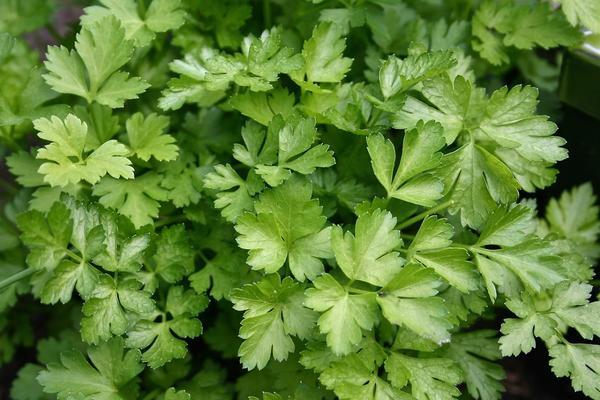
There's a period when greens especially need warmth. The recommended temperature is 12 degrees Celsius. If the greenhouse is heated to 20 degrees Celsius, the plants may experience some discomfort, and at higher temperatures, they may even wilt. To avoid this, greens should be protected from direct sunlight. To ensure a good winter harvest, follow these recommendations:
- Artificial light has a positive effect on growth. Greens don't like too much sunlight, but they do need some daylight, especially in winter.
- To prevent the soil from drying out, the plants are watered after harvesting the greens.
- Stable growth of parsley is only possible with humidity above 75%.
- Constant temperature changes have a negative effect on the plant.
- To maintain recommended conditions, the greenhouse must be ventilated.
Which type and variety should I choose?
Parsley comes in the following varieties:
- Root parsley. Its distinctive features include thick, dense roots. It is used for making sauces and pickles. The greens of this plant are edible, but only after the roots have matured.
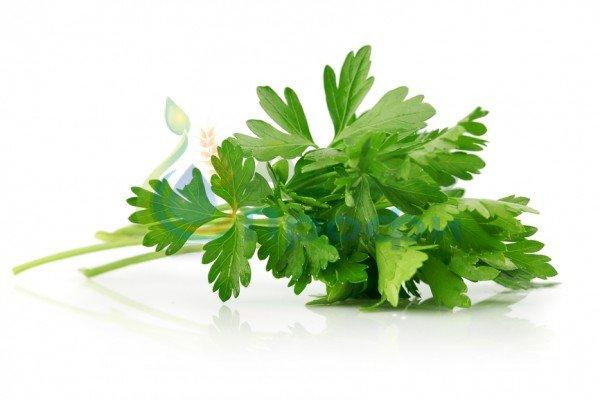
- Leaf parsley. Only the green part is considered edible, as it has a much more delicate flavor. The plants grow up to half a meter in height and 30 centimeters in diameter.
Take a look Also
When choosing a variety, you should decide on the desired product: root or greens.
Soil preparation
Parsley yield The success of the garden depends on several factors. Good soil is essential for growing greens. Before planting seedlings, the soil should be prepared. For this purpose, the soil is enriched with special additives. Autumn is considered the best time for care. Rotting leaves, manure, or compost can also serve as fertilizer.
After fertilizing the soil, the area is watered generously. It is then covered with plastic film. Earthworms help supply the soil with humus. If there's a shortage, the worms will help resolve the problem within a couple of months. This method eliminates the need for questionable additives.
Features of sowing
To save money and speed up harvesting, gardeners grow parsley from roots rather than planting new seeds. Any variety is suitable for this method. The key requirement is that the roots be 5 millimeters thick and 8 millimeters long. If the roots are too long, they are trimmed.
The roots, which are cut in advance, are soaked in sand at a temperature of +2°C (37°F). First, dig 15-centimeter holes. Then, fill them with water, and plant the seedlings in them. The angle between the roots and the soil should be 45 degrees. The roots are planted 5 centimeters apart.
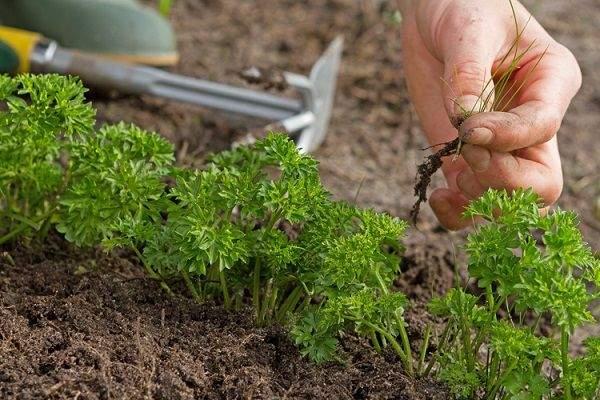
The next step is to cover the roots with soil, ensuring that the head and neck remain above the surface. The soil is then pressed down and watered. The optimal temperature for rooting is considered to be 15 degrees Celsius (59 degrees Fahrenheit). After a month, the parsley leaves will reach 25 centimeters (10 inches). This is when the greens are harvested.
Despite the practicality of the first method, some gardeners also grow parsley from seeds. Before planting, the seeds are kept in folded cheesecloth for five days. They are kept in these conditions until the first sprouts appear. For the next ten days, the seeds are kept at a temperature near freezing (+1°C). This allows for faster growth of fresh herbs.
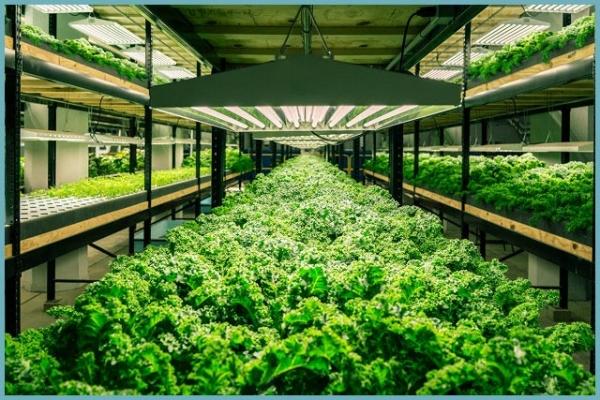
Growing parsley is considered a simple process. The resulting seeds are planted in the soil at a depth of five centimeters. The parsley is then watered. Once the seedlings emerge, the greens will need to be thinned out, leaving the strongest plants.
The key to a productive parsley harvest is maintaining the right humidity and temperature in the greenhouse. If the soil dries out, it should be watered. Supplemental lighting is also recommended. If all conditions are met, you can provide your family with fresh parsley even into winter.
Caring for greenhouse parsley
Proper care will help you grow a bountiful parsley harvest. Remember to water the plants regularly. Fertilized soil will provide the best conditions for a good harvest. If there are weeds growing around the parsley, they will need to be removed. During the early stages of growth, the plants are very sensitive to harmful weeds. It's best not to loosen the soil on the day of watering, but rather leave it for the following day.
Watering
Regular watering of parsley will prevent the soil from drying out. However, excessive moisture can also be harmful to the plant. Leaf-bearing parsley is considered the most demanding variety. It's best to water the plants in the morning or evening. Use soft water, slightly warmed to 20 degrees Celsius.
Top dressing
The soil fertilization schedule is selected depending on the plant variety being grown. Foliar varieties are fertilized twice per season, using saltpeter (at a rate of 50 grams per square meter of plot area). Potassium and phosphorus are suitable for fertilizing the foliage of root varieties. Complex mineral fertilizers are added in the spring.
During the formation of root crops, the plant is fed with superphosphate and potassium salt.
Protection from diseases and pests
Failure to follow proper care and cultivation practices is considered the primary cause of disease development. Powdery mildew and black rot are the main causes of plant damage. Treatment involves spraying with fungicides. As a preventative measure, seeds are treated with special preparations. Simple gardening practices should not be neglected, as something as minor as failing to remove plant debris in a timely manner can negatively impact subsequent harvests.
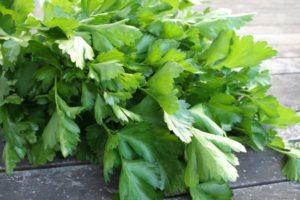
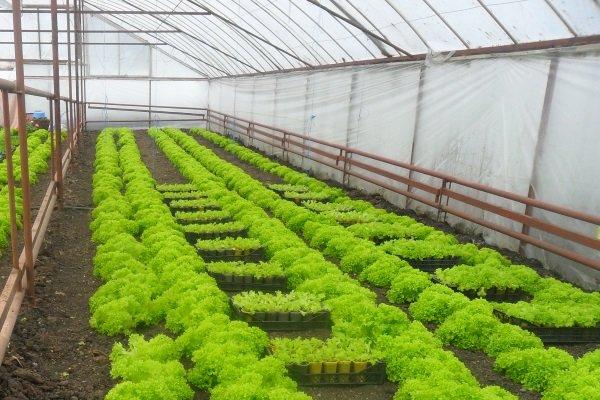
Melon aphids and carrot flies are considered the main insects that parasitize this crop. To protect the beds from these pests, use a solution of soap and onion peels.
Red pepper or tobacco dust can help protect plants from insects. The above tips will ensure a bountiful greenhouse harvest at any time of year.
If you follow the rules for caring for plants, you can collect two kilograms of fresh herbs from one square meter.
Harvesting
Parsley has a very good yield. To understand how long it will take to grow, consider the planting method. The greens can be harvested 20 days after planting treated seeds. If you plant dry seeds, the harvesting period can be extended to 45 days.
When frosts threaten, root parsley varieties are dug up in advance. The roots are stored in the basement, and the greens are trimmed and used for cooking.
If grown in heated greenhouses or hothouses, the crop can be harvested year-round. The harvested greens can be dried and stored in the refrigerator.
Parsley is considered an unpretentious plant, so growing it doesn't require much time or effort. If it's possible to grow the crop in a greenhouse, this method is considered the most profitable, as the green harvest is available year-round. Maintaining the correct temperature is crucial.
Related posts:
 The best recipes for harvesting parsley for the winter at home
 How to grow parsley in the open ground at your dacha, planting and care instructions, and harvesting times
 Proper sowing of parsley in open ground before winter, which variety to choose, planting and care
 The use of parsley root for medicinal purposes, properties and contraindications for use
 When is the best time to plant parsley seeds in open ground, growing and care
 How to grow parsley on a windowsill in winter and recommendations for caring for the crop at home
 The medicinal properties of parsley for the human body and contraindications, methods of application
 Recipes for inducing menstruation with parsley seeds, how much you need to eat to speed it up