
- Description and characteristics of root parsley
- Popular varieties
- Sugar
- Alba
- Jadran
- Eagle
- Fruitful
- Features of crop cultivation
- Planting dates
- Selecting a site
- Soil preparation
- Planting technology
- Subtleties of plant care
- Watering rules
- Fertilizers and dressings
- Is it possible to plant root parsley in winter?
- Diseases and pests of root parsley
- Harvesting
- Winter storage
Among the healthy agricultural plants, root parsley is particularly popular. This well-known root vegetable is rich in nutrients and highly resistant to adverse environmental factors. To successfully grow root parsley in your garden, it's important to understand the basic planting and care procedures.
Description and characteristics of root parsley
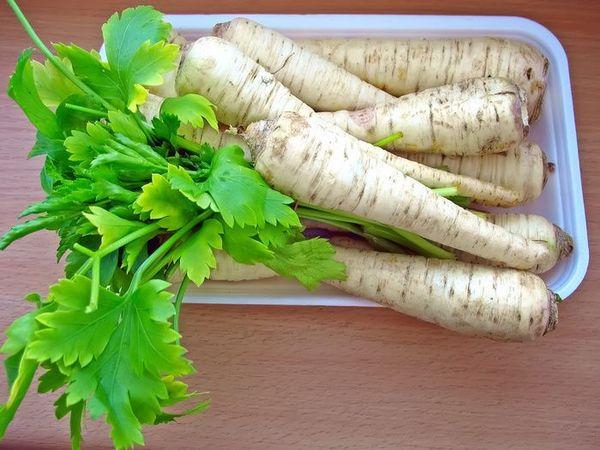
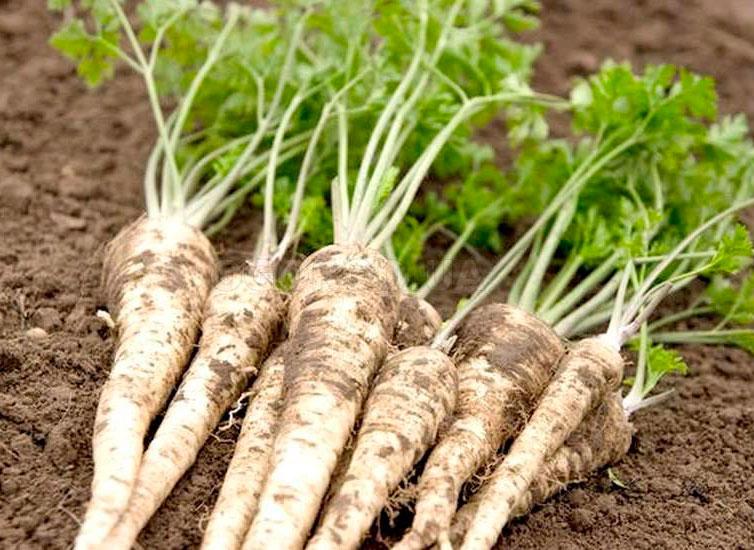
Growing root parsley is not difficult if you understand its characteristics, strengths, and weaknesses. This herb, a member of the Parsley genus, belongs to the Apiaceae family. This biennial plant can reach a height of 1 meter. The root grows quite massive and has a spindle-shaped form.
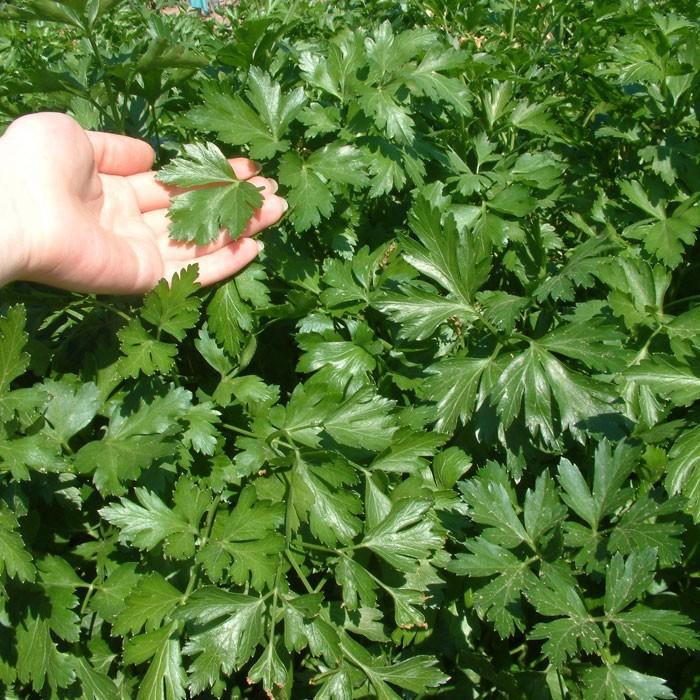
The stem is erect and branched extensively. The foliage is smooth and bright green. The leaflets are deeply dissected, forming dense rosettes of 30-40 leaflets. The flowers bloom in mid-summer. They are miniature and light yellow-green.
In the wild, root parsley grows in rocky areas, mountain slopes, and clearings located near water sources.
Root parsley has proven itself to be an easy-to-grow herb that can be grown not only outdoors, but also in greenhouses and even indoors on a windowsill.
Popular varieties
Experienced gardeners distinguish the most common varieties of root parsley: Sakharnaya, Urozhainaya, Alba, Eagle, and Yadran. Each variety has its own distinctive characteristics, but all produce a bountiful harvest under favorable growing conditions.
Sugar
This variety is distinguished by its early ripening period, with 80-98 days from germination to harvest. This domestically bred variety was added to the State Register back in 1950. Root parsley grows to 20-30 centimeters in length, weighs between 23-65 grams, and has a diameter of 3.7-6.3 grams.
This variety is characterized by a sufficient degree of cold resistance and a high concentration of vitamin C, calcium, and carotene. The yield of this variety ranges from 2.3 to 5.8 kilograms. Consumer qualities varieties are very similar to leaf parsleyBut it's not a good idea to store root vegetables for long; they're best eaten in the summer and fall.
Alba
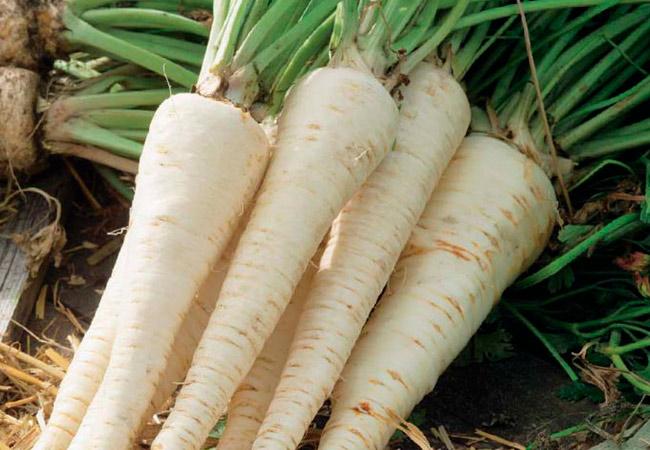
Root parsley is a late-ripening variety, prized by gardeners for its undemanding growing conditions and excellent flavor. Harvesting is possible 170 days after germination.
The bushes grow vigorously and spreadingly. The root crop typically weighs 230 grams. With proper planting and care, the yield is 5 kilograms per square meter. Alba root parsley also has a long shelf life.
Jadran
Late-ripening root parsley matures 193 days after germination. The leaves form a dense, tall, spreading rosette. Thanks to its good shelf life, this variety is ideal for long-term storage in a basement. The root is thickened and does not tend to branch.
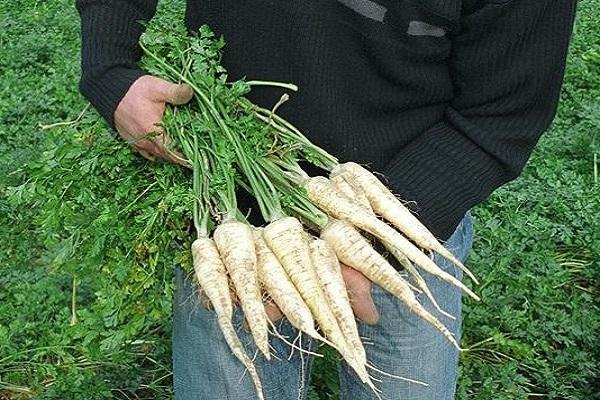
The root vegetable is 20-22 centimeters long, white, and smooth. Root parsley attracts gardeners with its excellent flavor and increased immunity to common diseases.
Eagle
This variety of root parsley can be grown not only outdoors but also indoors for fresh herbs. The root is distinguished by its conical shape, white color, and sweet taste.
This variety of Dutch origin belongs to the category of mid-season agricultural plants.
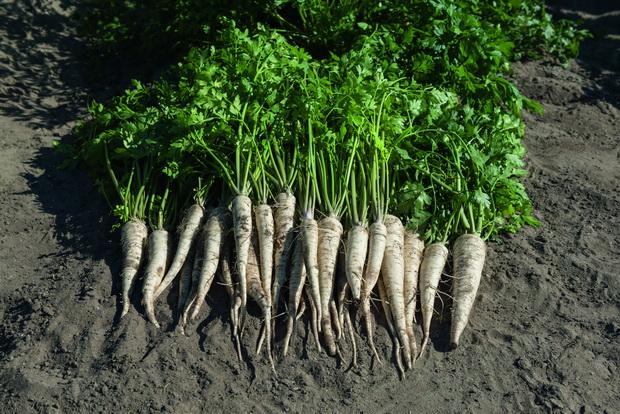
Both the above-ground and underground parts are used for cooking. The root vegetable weighs approximately 130 grams and is 25-30 centimeters long. The advantage of root parsley is its rapid leaf regrowth after cutting, as well as its resistance to most diseases and low and high temperatures.
Fruitful
This mid-season root parsley stands out for its tasty, cone-shaped roots, which range from 18 to 20 centimeters in length. The harvest is suitable for winter storage. This variety has proven itself to be highly resistant to parasitic insects.
Features of crop cultivation
To ensure that root parsley grows tasty and large, you need to know the basic intricacies of planting and caring for it.
Planting dates
It's best to sow in late March. Seedlings can be planted at temperatures starting at +4°C (39°F). Root parsley is a cold-hardy plant and should be planted as soon as the ground thaws. Sowing should be done in moist soil; otherwise, the wait for germination will be long and may not occur at all.
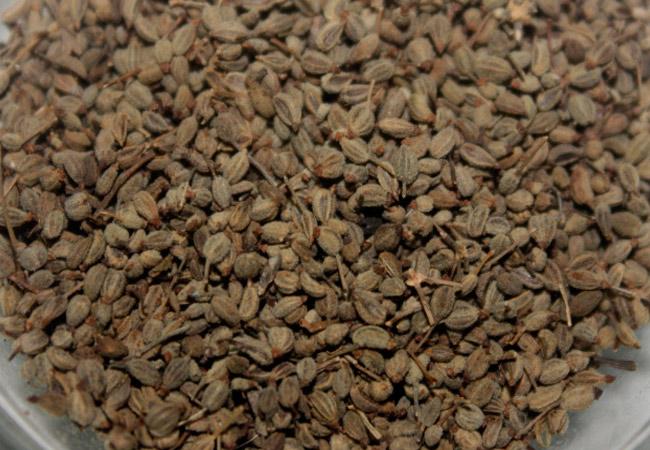 Planting work can be carried out 2-2.5 weeks before the first frost.
Selecting a site
Properly selecting the right location for sowing swollen parsley seeds is the key to a bountiful harvest. The soil should be loose enough to avoid stagnant moisture, otherwise the roots are likely to rot. Sandy loam, sod-podzolic, and light loamy soils are ideal for sowing parsley seeds.
Choose a well-lit area protected from northern winds. When planted in the shade, root parsley grows small and puny. It's also important to consider the previous crops. Root vegetables grow best after planting zucchini, cucumbers, and pumpkins. However, avoid planting in areas previously used for carrots, parsley, or celery.
Soil preparation
For better growth of root parsley, before planting, it is recommended to enrich the soil with mineral complex preparations in the dosage specified by the manufacturer.
It is not advisable to use compost or humus, otherwise the root crops will become coarse and lose their marketable appearance.
The plot should be dug to a depth of 20 centimeters. At the same time, all weeds should be removed from the bed to prevent them from overwhelming the root parsley. When planting in the spring, the furrows should be fertilized with potassium humate before sowing.
Planting technology
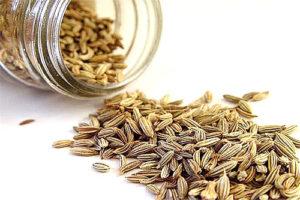
Before planting, it is recommended to soak the seeds in water. Change the water every two days to remove essential oils, which can impede rapid germination. To stimulate growth, add 2-3 drops of Zircon or Epin to the water. To prevent the development of various root diseases, treat the seeds with a weak solution of potassium permanganate.

The landing algorithm involves the following steps:
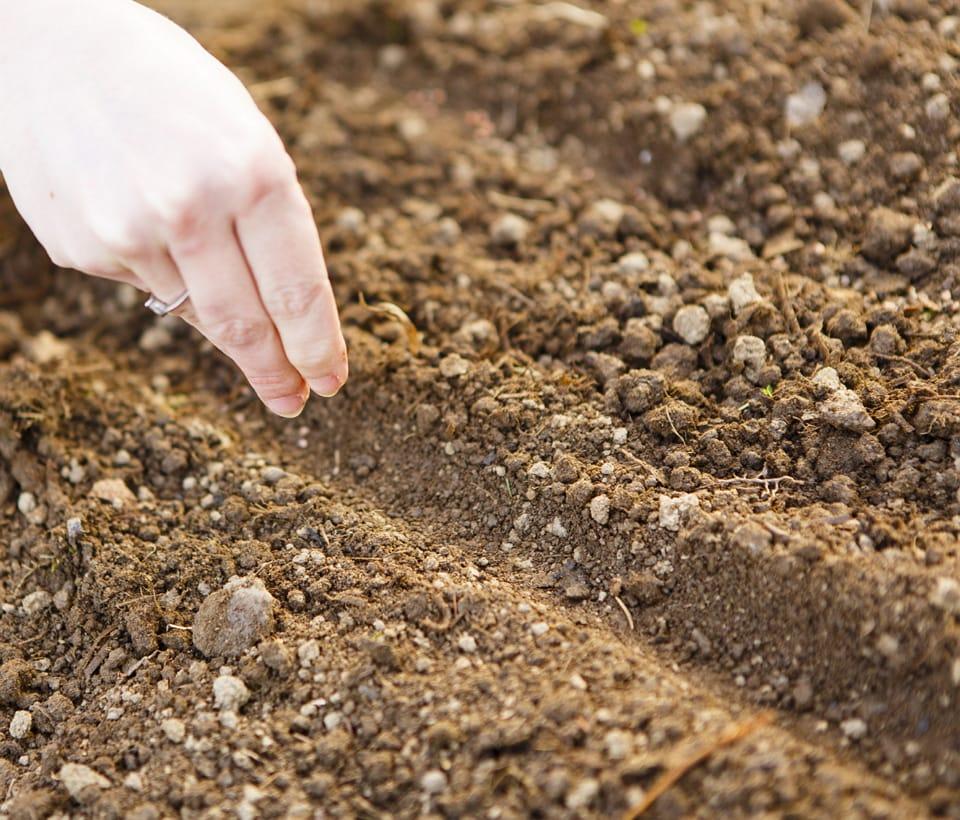
- On the prepared area, make furrows 1.5-2 meters deep, maintaining an interval between them of 15-20 centimeters.
- The soil needs to be moistened.
- Distribute the seeds.
- Mulch crops to retain moisture in the soil.
Root parsley can be planted in open ground not only by seed, but also by seedlings.
Subtleties of plant care
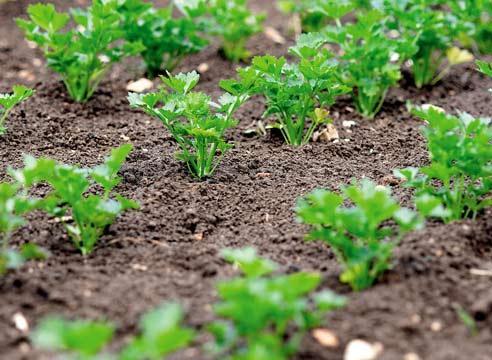
Despite the undemanding nature of the crop, basic care measures will still need to be carried out to achieve high results.
Watering rules
Irrigation should be done sparingly and with warm water. This water should be poured into containers ahead of time to warm it up. It's best to water in the morning or evening after the topsoil has dried.
If the rains are prolonged, it is recommended to protect the plantings with polyethylene material.
When watering root parsley, be careful not to splash it on the leaves, as this can damage them. During the ripening stage of the roots, in August, watering frequency should be increased. Use 20 liters of settled water per square meter.
Fertilizers and dressings
Root parsley responds gratefully to nutrient applications. Even during the trench preparation stage, the soil is enriched with a complex of mineral fertilizers. High-nitrogen fertilizers are applied at the seedling stage.
For these purposes, an infusion of fermented grass is used:
- First, fill a suitable container with weeds;
- fill with clean water;
- cover the container with a lid and place it in a sunny place.
Before use, the concentrate is diluted at a rate of 1 part of the product and 8 parts of water.The second feeding procedure can also be carried out using a mixture of ammonium nitrate (5 grams), superphosphate (10 grams), and potassium salt (5 grams). This nutrient mixture is calculated for one square meter of parsley bed.

Is it possible to plant root parsley in winter?
Yes, planting herbs before winter is not only possible but also necessary; the plants become more resistant to major diseases and pests. The key is to sow them correctly, when the soil warms up sufficiently during the day and freezes deeply at night.
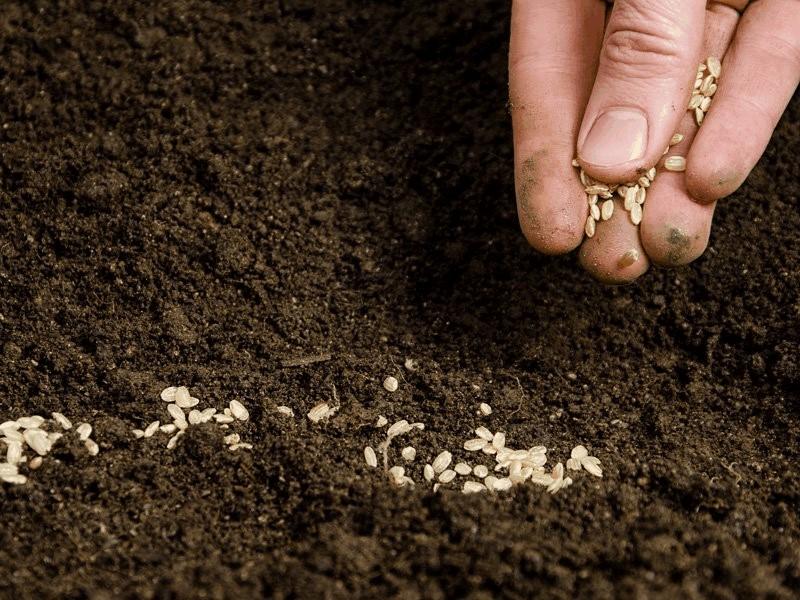
Sowing technology:
- Make shallow grooves (up to 2.5 centimeters).
- In the morning, spread the seeds, using up to 40 seeds per square meter.
- Sprinkle the furrows with fertile soil that has been stored in a warm place.
- Mulch crops with rotted vegetation or peat. This simple technique prevents crust formation after the snow melts.
- If there is no snow, it is good to cover the bed with pine needles and fallen leaves.
- It is not recommended to moisten root parsley.
Irrigation is also not recommended in the spring, as the soil already has sufficient moisture after the winter. After the beds have thawed, the leaves are removed and covered with agrofibre. The first loosening is done after the seedlings emerge.
Diseases and pests of root parsley
In most cases, root parsley is affected by downy mildew (peronosporosis), which appears as white spots on the leaves due to improper care. Diseased leaves should be removed. Rust is identified by orange spots on the parsley leaves. Plants should be treated with a solution of Bordeaux mixture and copper oxychloride.
Parasitic insects attack the crop, including carrot flies, which feed on the roots, and melon aphids, which settle on the underside of leaves and suck out their juices. Dandelion infusions or orange peels can be used to control these pests.
Harvesting
It's recommended to harvest root vegetables in dry, sunny weather. First, cut off the rosette of leaves, leaving a 1-2-centimeter stump. Then, begin pulling the harvest out of the ground.
Winter storage
Before storing, root vegetables should be dried and excess soil removed. They can be stored in the refrigerator in perforated plastic bags or in a basement in damp sand.
Related posts:
 Description of the 40 best varieties and types of parsley, what the plant looks like
 How to grow parsley in the open ground at your dacha, planting and care instructions, and harvesting times
 The best recipes for harvesting parsley for the winter at home
 Proper sowing of parsley in open ground before winter, which variety to choose, planting and care
 The use of parsley root for medicinal purposes, properties and contraindications for use
 How to grow parsley on a windowsill in winter and recommendations for caring for the crop at home
 The medicinal properties of parsley for the human body and contraindications, methods of application
 When is the best time to plant parsley seeds in open ground, growing and care